
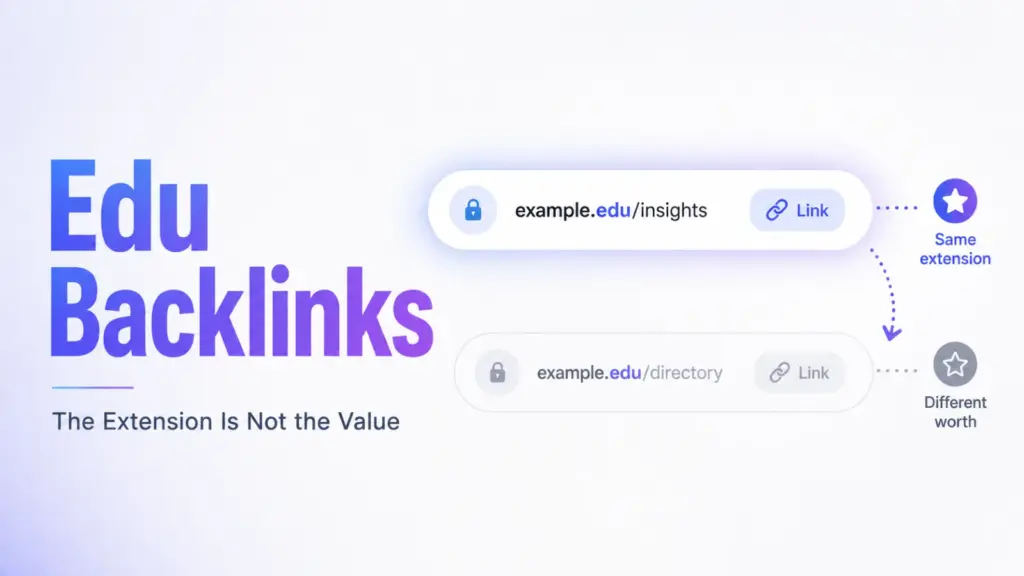

A link does not carry more weight because the domain ends in .edu or .gov. The extension is a registration rule about who’s allowed to buy the domain, and it says nothing about whether a given page has authority.
That’s worth stating plainly, because edu backlinks are still sold as a category, priced as a premium, and chased with tactics that mostly produce nothing.
There is one place institutional domains do appear to count, and it isn’t classic ranking. It’s how AI systems pick sources.
Why the Myth Persists
It persists because the correlation is real even though the cause is wrong. University and government sites tend to be old, heavily linked and rarely commercial, so their strong pages genuinely are strong.
The error is reading that backwards. The authority belongs to specific pages that earned it, not to every page sharing the extension.
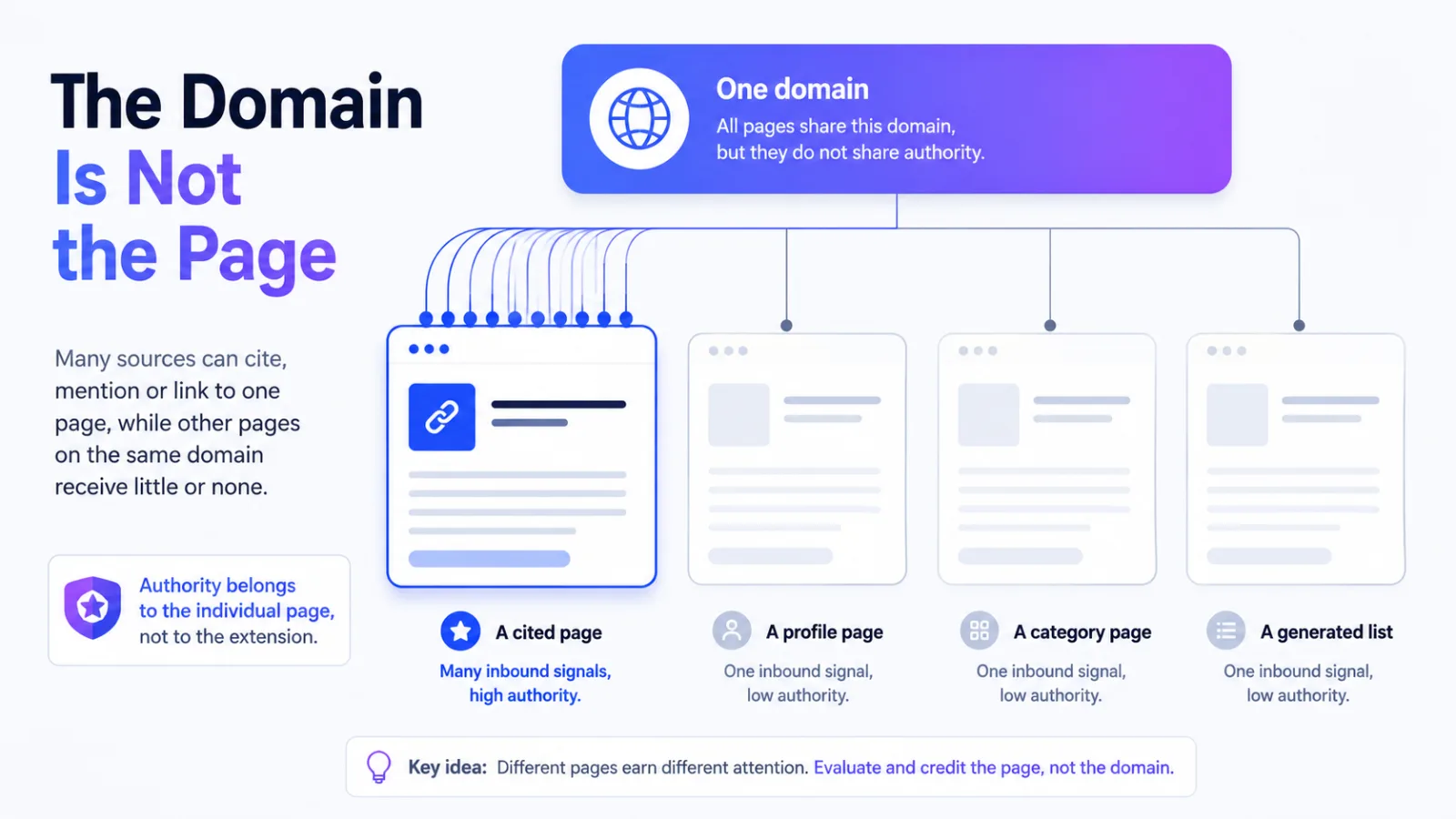
A student profile, a forgotten subdomain and a spammed resource list all share the same extension as the library page everyone cites. Only one of them is worth anything.
What the Extension Controls
Registration eligibility, and nothing else. In the United States, .edu is restricted to accredited institutions and .gov to government bodies, which is why the extensions read as trustworthy.
Search engines evaluate pages on links, relevance and quality signals rather than on the string after the final dot. A weak page on a strong domain is still a weak page, and it doesn’t stop being one because the address looks official.
| What people assume | What decides the value |
|---|---|
| The extension is a ranking factor | The page’s own links and relevance |
| Any .edu link is a strong link | Whether that page is cited by anyone |
| Institutional means editorial | Whether a human chose to link out |
| Harder to get means more valuable | Whether it was earned or placed |
The last row is the one that catches buyers. A link being hard to obtain doesn’t make it useful, and most .edu links sold in packages weren’t hard at all.
Where Institutional Domains Do Carry Weight
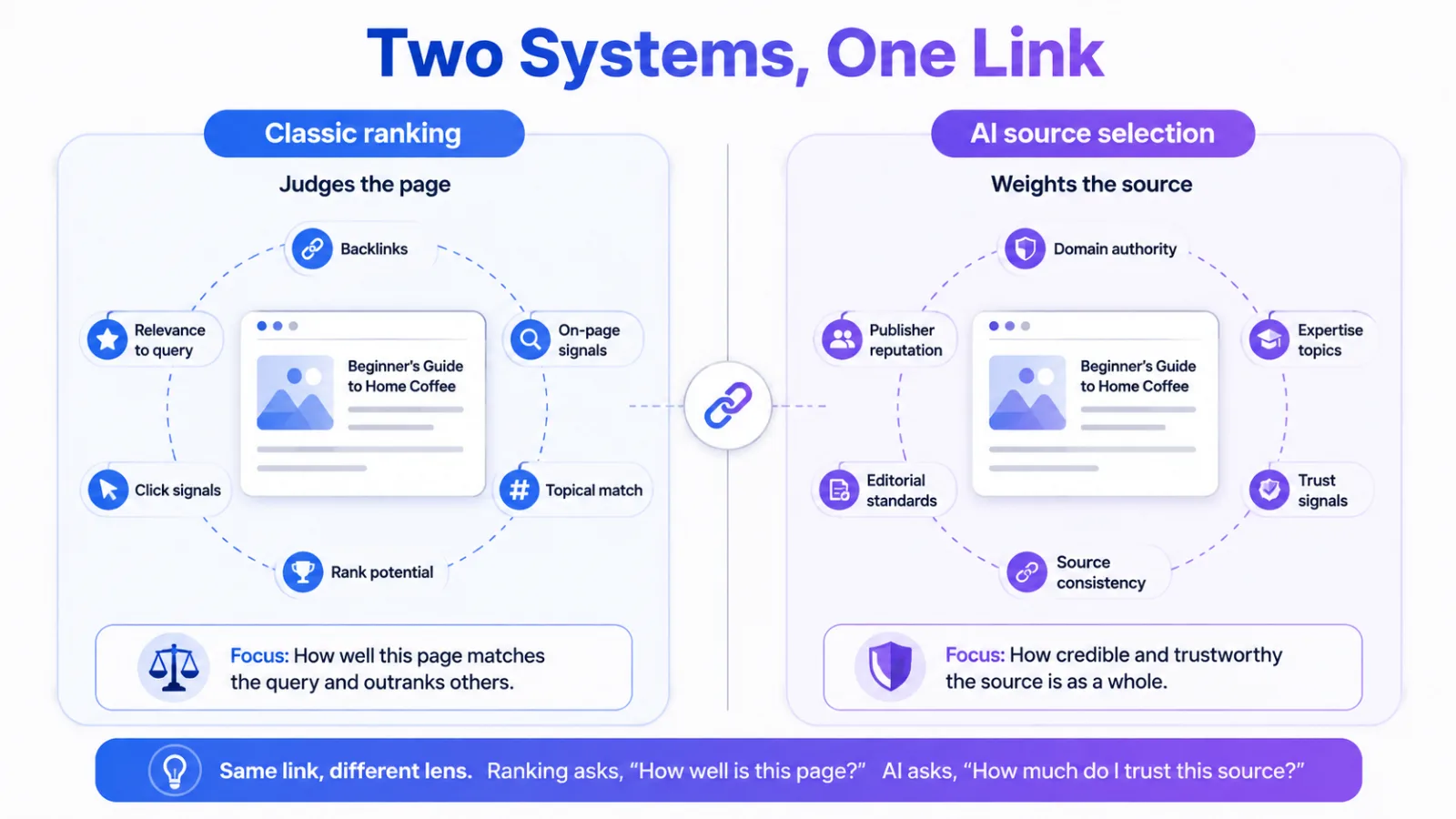
You’ll find the exception in AI source selection. Our own breakdown of how AI crawlers pick sources puts established publishers, .edu and .gov among the trust signals that get heavier weighting.
That’s a different mechanism from ranking. A model choosing which pages to cite in an answer is making a credibility judgement about the source, and institutional domains are a cheap proxy for it.
Being mentioned on an institutional page can therefore matter more for citation than for position. The value is the mention and its context, not the link attribute.
Which does not rescue the tactics
A profile page nobody reads isn’t a source any model would draw from. The weighting applies to pages that get cited, and those are the same pages that were always hard to reach.
Why the Usual Tactics Fail
They fail because each one produces a link on a page with no readers, no editorial decision behind it, and often no crawl priority either.
- Scholarship schemes. You fund a small award so universities list you on a scholarships page. Google has named this pattern as a link scheme, and the pages are link lists nobody visits.
- Profile and directory links. Self-created, usually nofollow, and sitting on pages that exist for members rather than readers.
- Comment and forum links on campus software. Same category as any comment link, with a more impressive address.
- Expired subdomain hunting. Buying or reviving something on an institutional domain is manipulation, and it is the kind that gets noticed.
Every one of them is trying to buy the extension rather than earn the page, and that’s the whole error in one line.
When an Edu or Gov Link Is Worth Pursuing
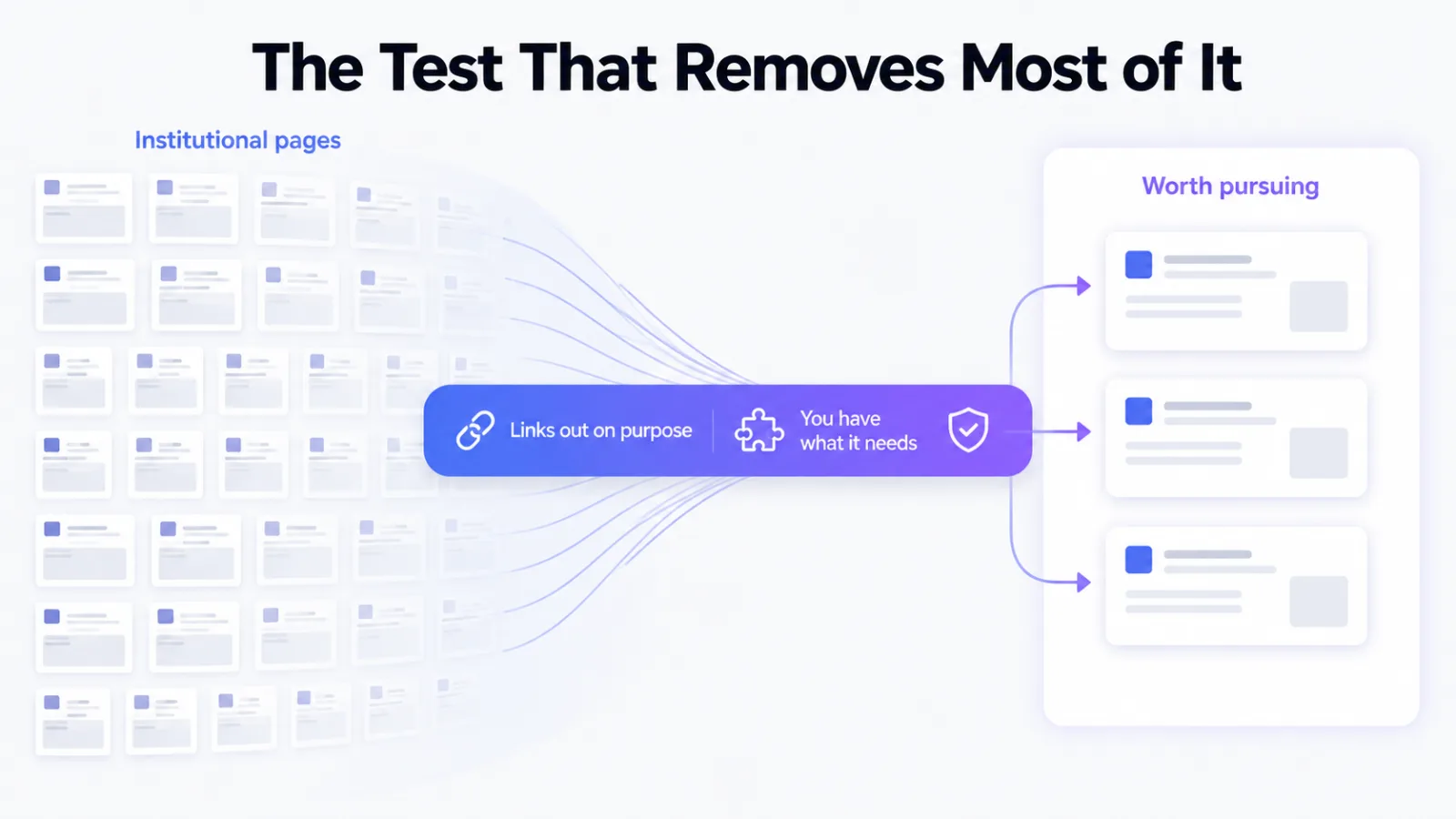
You should pursue it when the page would be worth a link even without the extension. That test removes most of the market and leaves the placements that hold up.
The page links out on purpose
A curated resource list maintained by a librarian or a department is an editorial decision. A form-generated list of every submission isn’t, and the two look alike from a metrics tool.
You have something the page needs
Original research, a free tool students use, or genuine subject expertise gives a curator a reason. That’s the same standard as resource page link building anywhere else, and its own guidance already says to judge relevance rather than the extension.
The relationship is the asset
A department that cites you once will cite you again, and that is worth more than the single link. Institutional relationships are slow and they compound, which is why they can’t be bought in a package.
How to Judge One Before You Pay
You can settle it in a minute, and the checks are the same ones you would run on any domain.
- Does the page rank for anything? A page with no visibility passes no value.
- Does it link out to non-institutional sites already? If not, yours will look out of place.
- Is the link editorial or generated? Anything a form could have created was created by a form.
- Would you want it if the domain ended in .com? That single question resolves most of them.
Teams buying placements at volume can hand that judgement to a managed contextual link building process rather than vetting each list by hand.
Frequently Asked Questions
Are edu backlinks a Google ranking factor
No. The domain extension is a registration rule rather than a quality signal, and search engines evaluate the individual page. Strong .edu pages are strong because they earned links, not because of the extension.
Are gov backlinks different from edu backlinks
Not in how they are valued. Both are restricted registrations that correlate with age and authority, and both contain plenty of weak pages that pass nothing.
Do scholarship link schemes still work
They produce links on pages nobody reads, and Google has named the pattern as a link scheme. Treating it as a tactic means funding an award to reach a list that carries no weight.
Is a nofollow edu link worth anything
It can be worth something as a mention rather than as a link, particularly where AI systems weight institutional sources. Judge it as visibility on a credible page, not as ranking value.
Should I pay for edu links
Paying for links is a scheme whatever the extension, and the ones sold in packages are the profile and directory placements that were never valuable. Fund the asset instead.
Ask the Question Without the Extension
Cover the last part of the address and decide whether you would still want the link. Almost every bad .edu placement fails that test immediately, and the good ones pass it without needing the extension at all.