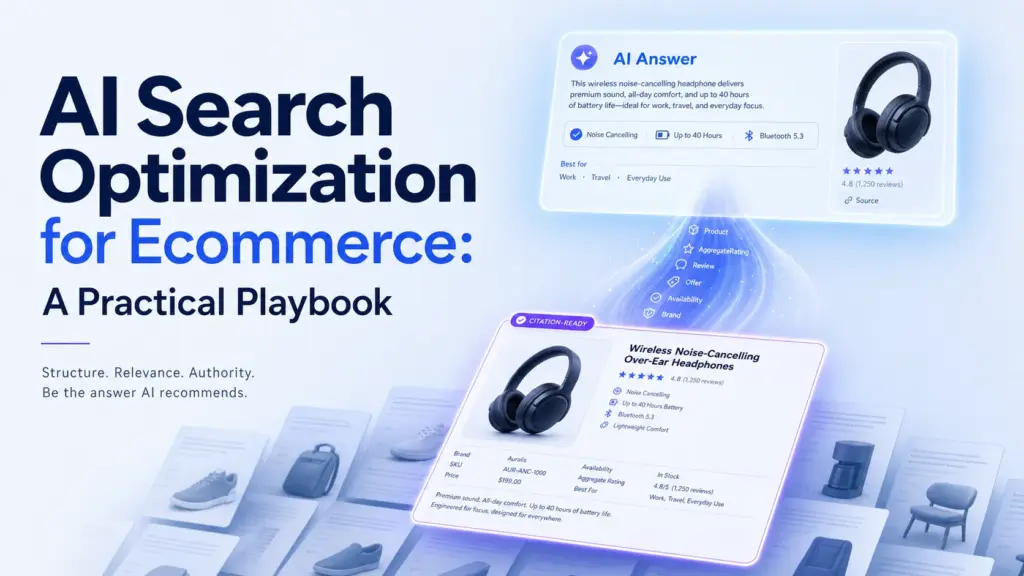

AI search optimization for ecommerce is not a content sprint, it is a visibility rebuild. You do not win by publishing more blog posts. You win by making a focused set of category and product pages so clean, structured, and specific that AI engines can read them, trust them, and quote them back to shoppers.
AI search optimization for ecommerce means making your priority category and product pages crawlable, structured, and conversational so AI engines can cite them in answers, recommend your products, and summarize your brand accurately. That covers Google AI Overviews, Google AI Mode, ChatGPT Search, Perplexity, and Bing Copilot, not just blue-link rankings. This playbook walks you through the exact order: audit where you already appear, fix technical blockers, rewrite pages, add schema, build authority, and measure what moves.
Skip the theory. The stores that win here start narrow and fix the right things first.
What AI Search Optimization for Ecommerce Means and What You Need First
AI search optimization for ecommerce is the work of getting your products cited, recommended, or summarized inside AI-generated answers. A shopper asks ChatGPT for “the best waterproof hiking boots under $150,” and the engine names specific brands. Your goal is to be one of those brands, backed by pages the model can actually parse.
This is different from ranking a product page at position three on Google. In AI search, there may be no list of ten links. There is one answer, and it either mentions you or it does not. The prize is being inside that answer.
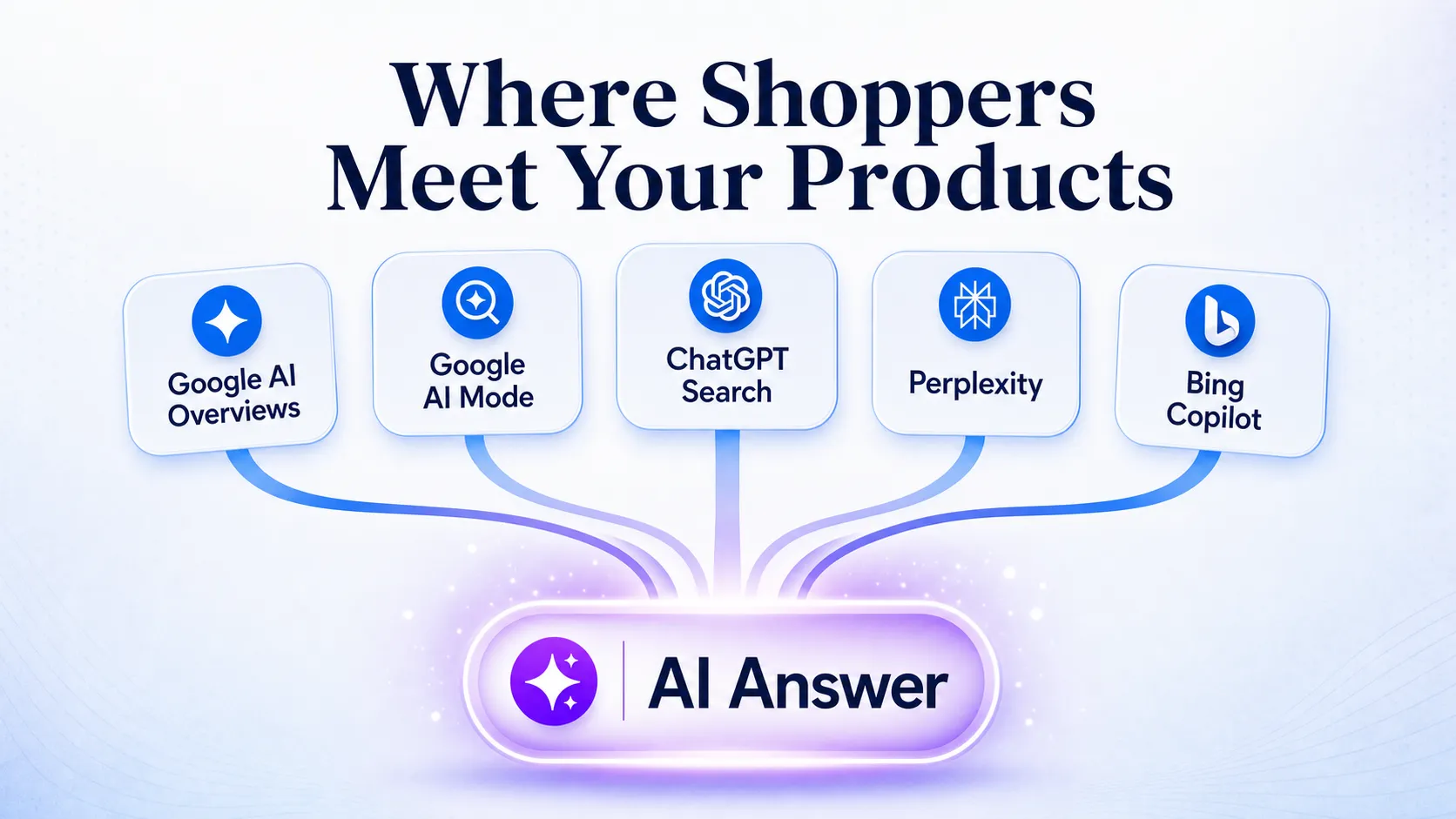
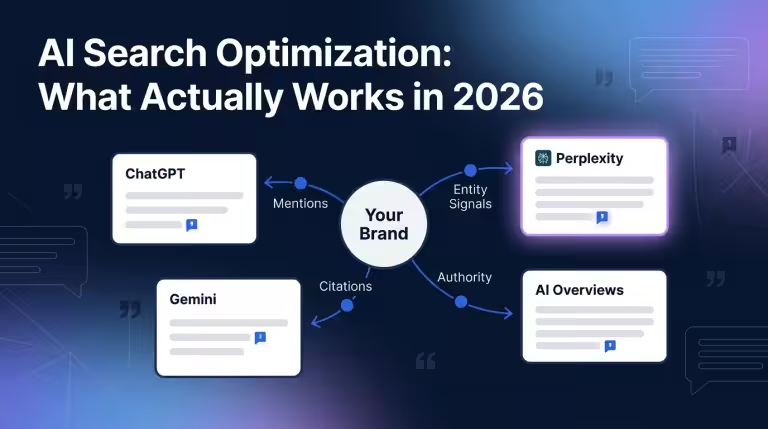
The surfaces worth caring about first are Google AI Overviews, Google AI Mode, ChatGPT Search, Perplexity, and Bing Copilot. Each surfaces products differently. Google and Bing lean on Merchant Center feeds and shoppable carousels. ChatGPT and Perplexity pull from editorial reviews, community threads, and pages that answer questions plainly. You do not need to master all five at once. You need to know which one your buyers use most.
The business goal is plain: get your priority products and categories cited, recommended, or summarized in AI answers, so shoppers hear your name at the moment they are deciding what to buy. Everything that follows serves that one outcome.
Start Here First: The Minimum Setup
Before you touch a single product description, confirm you have the foundations in place. A limited-resource store gets more from doing five things well than fifty things halfway.
- A crawlable site with no accidental blocks on key category and product pages
- Clean product data: accurate names, prices, availability, and SKUs
- Access to Google Search Console and your web analytics
- Clear ownership across SEO, merchandising, and content, so decisions do not stall
- A shortlist of 10 priority pages by revenue and margin, not your whole catalog
What you should not do first: sitewide rewrites or a flood of new blog content. If AI systems cannot crawl your store or your product data conflicts across feeds, more content just adds more noise. Fix the plumbing, then fix the copy.
The trap most teams fall into is chasing new AI platforms too early. A store will spin up a Perplexity experiment before its product feed is even consistent. The fastest wins come from fixing a small set of high-value pages before expanding sitewide. If you are still deciding whether this channel deserves the investment, our take on AI visibility for ecommerce brands lays out what is actually at stake.
Audit Your Current AI Visibility and Choose Priority Pages
You cannot improve what you have not measured. Before any optimization, benchmark where your brand and products already appear across AI surfaces, so you know your starting point and your biggest gaps.
Run manual prompt tests across 3 to 5 AI engines. Ask branded prompts (“What does [your brand] sell?”), nonbranded prompts (“best affordable running shoes for flat feet”), and category-intent prompts (“what should I look for in a standing desk”). Record whether your brand shows up, and how.
Separate the Three Visibility Types
AI search surfaces your brand in three distinct ways, and each one calls for different work.
A mention is when an AI names your brand in prose without linking it. A citation is when the engine points to your page or a page about you as a source. A product recommendation is when the AI actively suggests your specific product for the shopper’s need. Track them separately, because a brand can be mentioned constantly yet never recommended.
Build a Prompt Map for Each Core Category
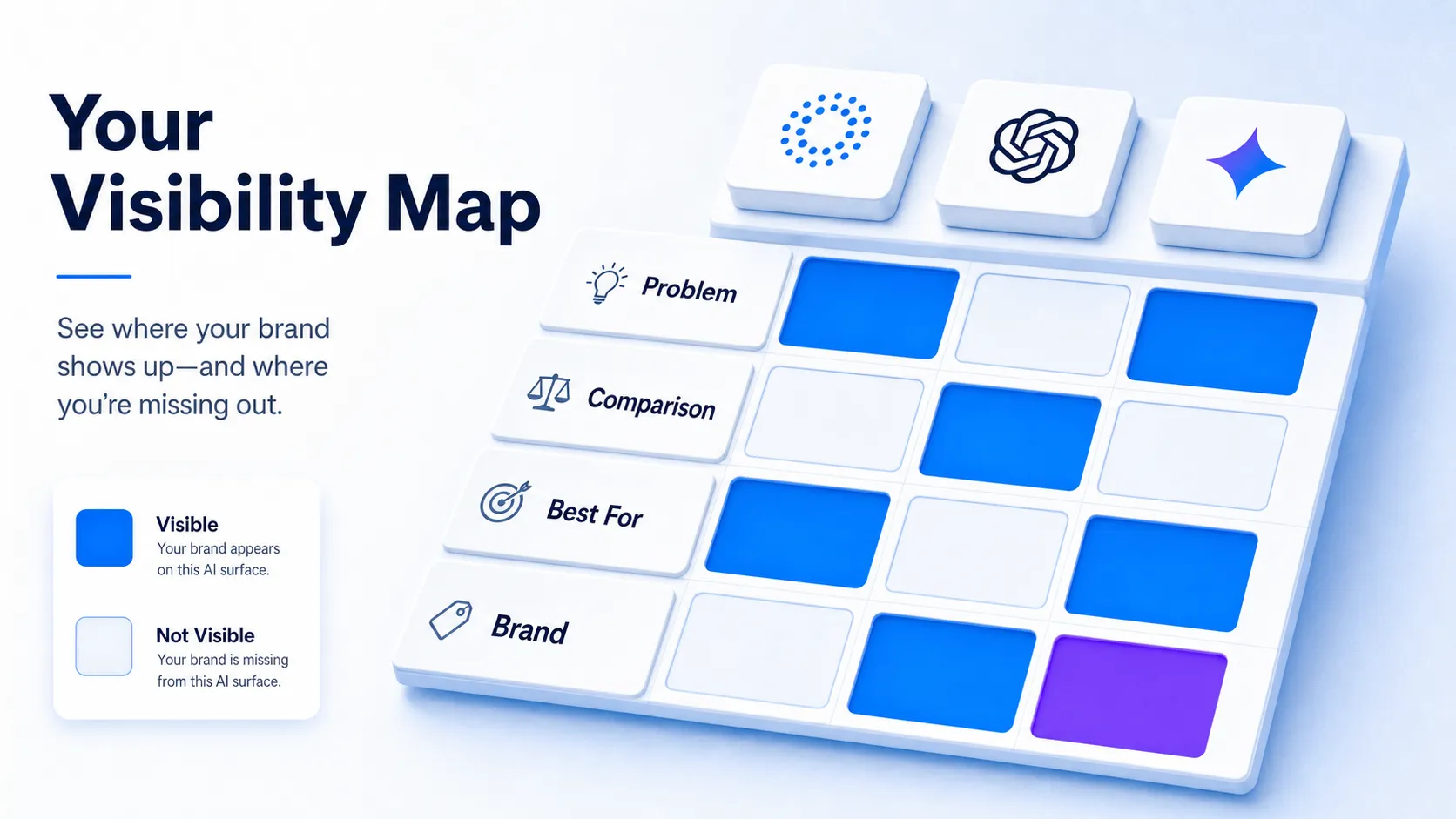
For every core category, write four prompt types and test each one. This turns a vague “are we visible” question into a grid you can act on.
- Problem query: “how do I stop my cast iron from rusting”
- Comparison query: “ceramic versus stainless steel cookware”
- Best-for query: “best cookware for a small apartment kitchen”
- Brand query: “is [your brand] cookware any good”
Rank Priority Pages and Study Competitors
Rank your pages by revenue potential, margin, existing search demand, and strategic importance. The top 10 become your working set. Then note which competitors appear more often than you and what kind of pages the AI cites for them: retailer PDPs, publisher listicles, or community threads.
Baselines usually reveal the same pattern. A store is visible for its own branded queries but invisible for nonbranded “best X for Y” prompts. That gap is exactly where the buyers who do not yet know you are making decisions, and it is the highest-value ground to take. To connect this baseline to the right success metrics, compare notes with our breakdown of AI visibility versus SEO metrics.
Fix Technical Barriers That Stop AI Systems from Reading Your Store
Technical work comes before content work, because a page an AI cannot crawl cannot be cited no matter how good the copy is. Get the machine-readable layer right first.
Step 1: Fix Crawlability and Indexation
Start with the blockers that hide pages entirely. Check your robots rules for accidental disallows on category or product paths. Audit for stray noindex tags on pages you want surfaced. Confirm canonical tags point to the right primary URL. Verify your XML sitemap lists live, indexable pages, and hunt down broken internal paths that dead-end crawlers.
Step 2: Resolve Duplication and Crawl Waste
Faceted navigation, duplicate product variants, and thin filtered URLs quietly burn crawl budget and split authority. When ten near-identical variant URLs exist for one product, AI systems struggle to decide which page represents the item. Consolidate variants under a clean canonical, and use rules to keep low-value filter combinations out of the index.
Step 3: Fix Speed and Mobile Experience
Page speed and mobile UX are extraction enablers, especially on category and product templates that carry the most revenue. Slow, layout-shifting pages get crawled less and read less reliably. Prioritize your PDP and category templates, since fixing one template lifts thousands of pages at once.
Step 4: Tighten Site Architecture and Internal Linking
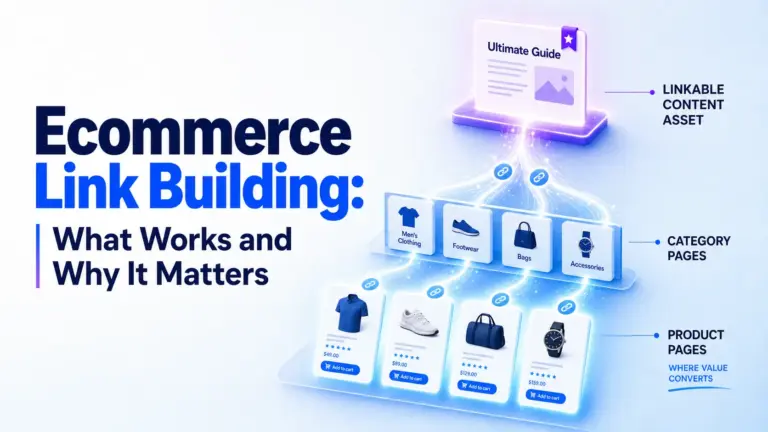
Structure your site so top categories and revenue pages are reachable in a few clicks from the homepage. Strong internal linking tells AI systems which pages matter and how products relate. Orphaned products, the ones no internal link points to, are effectively invisible.
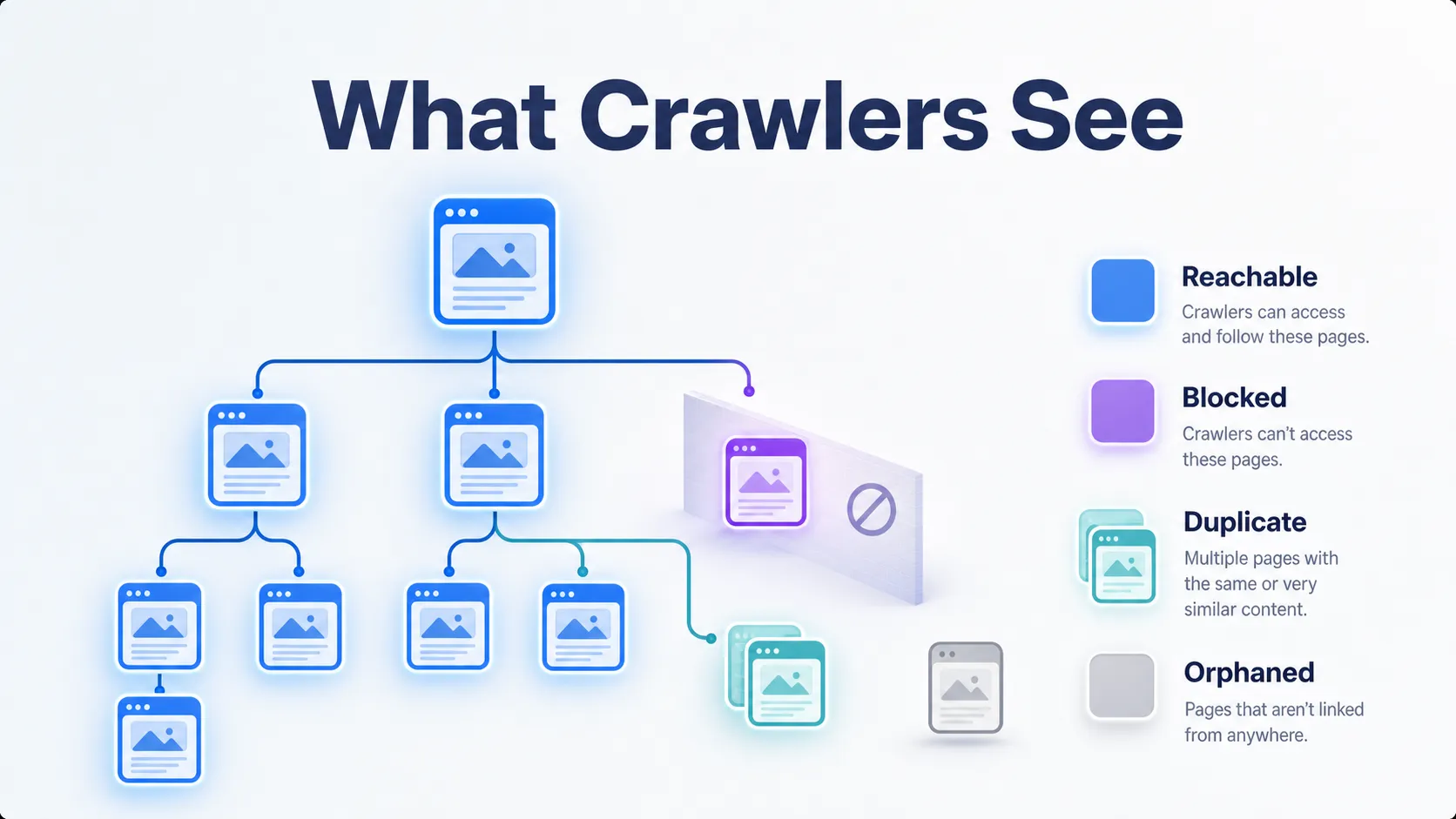
The most common technical failure is not a missing AI feature. It is duplicate product URLs and weak canonicals that split authority across near-identical pages and leave engines unsure which one to trust. Follow the order above: clear blocking indexation issues first, then canonicals and duplicates, then speed and internal linking.
Rewrite Category and Product Pages to Be Conversational and Citation-Worthy
Once AI can read your pages, make them worth quoting. The pages that get cited answer the shopper’s question immediately, in plain language, near the top of the page.
Lead with a Short Answer-First Summary
Add a brief summary near the top of every priority page that answers three things: what it is, who it is for, and why it is different. AI engines quote pages that resolve the question in the first screenful, so give them a clean, self-contained block to lift.
Build Answer Blocks for Real Shopper Questions
Write short, direct blocks that answer the questions shoppers actually ask: sizing, fit, materials, use cases, compatibility, shipping, and returns. Each block should stand alone, because an AI may extract just one.
Source these questions from real signals, not guesses. Mine your support tickets, your onsite search terms, and the objections your sales or service team hears daily. Those are the exact phrasings shoppers type into AI.
Add Comparison Language and Specifics
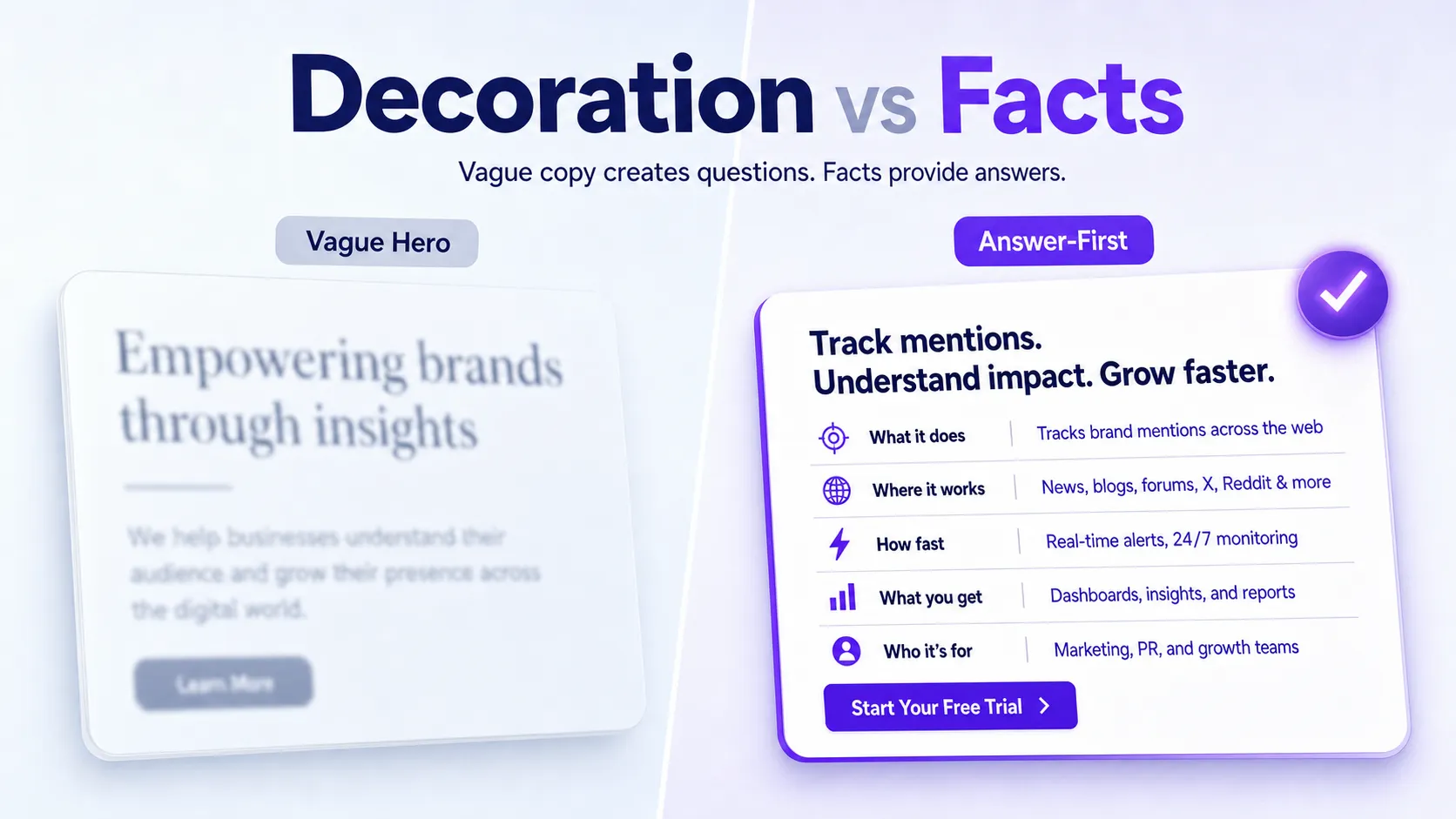
Give AI the language it needs to distinguish your product from similar ones. Explain how this collection differs from the one next to it, and which product suits which use. Write in plain, specific terms about benefits and specs, not vague brand poetry or keyword-stuffed filler. “Machine-washable at 40 degrees, holds shape after 50 washes” beats “premium quality construction” every time.
Here is the shift in practice. A weak hero reads: “Discover our premium collection of thoughtfully designed essentials.” A citation-worthy hero reads: “Merino wool base layers for cold-weather runners, odor-resistant for 3 wears, sized for a snug athletic fit, ships free over $75.” One is decoration. The other is a set of facts an AI can quote directly.
Add Schema, Feeds, and Structured Product Data Correctly
Schema makes your product facts explicit, so AI and search systems do not have to guess them. For ecommerce, a handful of schema types carry most of the weight.
Prioritize the Schema Types That Matter
Focus on Product, Offer, Review, AggregateRating, Breadcrumb, and FAQ markup. Product and Offer describe what the item is and its price and availability. Review and AggregateRating carry trust signals. Breadcrumb clarifies where the product sits in your catalog. FAQ markup exposes your answer blocks in a structured form engines read easily.
Map Every Field to Visible Content
The product data fields that matter most must match what a shopper sees on the page: name, brand, price, availability, SKU, GTIN, variant information, and image. If your markup and your visible page disagree, engines lower trust in both.
| Schema field | On-page element it must match |
|---|---|
| name | Visible product title |
| price | Displayed price, including sale price |
| availability | In-stock or out-of-stock state shown to shoppers |
| aggregateRating | Star rating displayed near reviews |
| brand | Brand name shown on the page |
Keep Feeds Consistent and Validate Everything
Your website content, product feeds, and merchant feeds must agree. When your PDP shows one price and your Merchant Center feed shows another, that conflict undermines the confidence any engine has in surfacing you. Reconcile pricing and availability across all three.
Validate your markup with the Google Rich Results Test and monitor for errors in the rich results report inside Google Search Console. The QA rule is simple: schema should reflect what users can see on the page, never hidden, outdated, or aspirational fields.
The most common schema issue is not a missing field, it is a mismatch. A page shows “in stock” while the structured data still says “out of stock,” or a sale price on the page never made it into the markup. Catch those before they cost you a citation.
See where AI answers put your brand
Twenty minutes with a senior strategist: where the major engines point buyers in your category, who gets named instead of you, and a straight read on what a programme would change.
Book a strategy callBuild Authority Signals, Track AI Visibility, and Know What Success Looks Like
On-site work gets you ready to be cited. Off-site authority is often what gets you actually chosen. AI models lean on consensus, so being named consistently across independent sources moves the needle.
Strengthen the Off-Site Signals AI Relies On
Reviews, publisher mentions, affiliate coverage, digital PR, and community discussions all shape which products AI recommends. When Reddit threads, expert roundups, and review sites all name your product for the same use case, engines treat that agreement as evidence.
Prioritize the signals that carry the most weight first: independent reviews, category listicles, expert roundups, and credible community mentions. These are the sources AI engines cite most often for product recommendations, so earning a place in them compounds your visibility. The mechanics of getting named where buyers already ask are covered in how to track brand mentions in AI search results.
Keep Your Brand Facts Consistent Everywhere
Authority building depends on consistency. The same product facts, brand name, and category positioning should appear across your feeds, your bios, and every third-party reference. When one source calls you a “premium cookware brand” and another calls you “budget kitchen gear,” you dilute your own entity. Building a stable, recognizable brand entity is the foundation, and our guide to entity SEO for 2026 search shows how the pieces fit together.
Define Your Measurement Stack
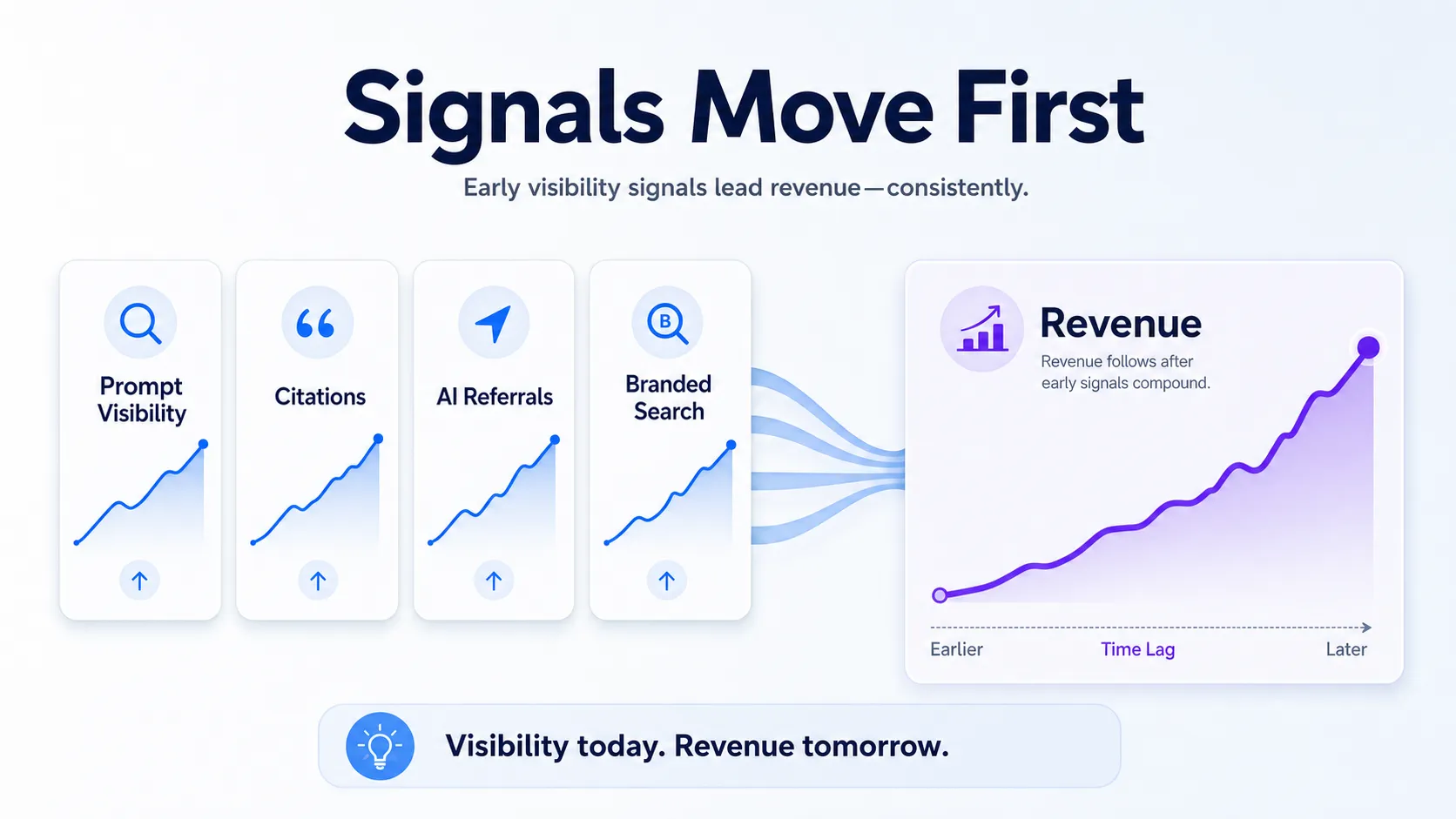
Track five things to know whether the work is moving the needle: prompt tracking (do target prompts name you), citation tracking (are your pages cited as sources), branded query lift, referral traffic from AI surfaces, and assisted conversions. Together they show both the visibility gain and the business result.
Set Realistic Expectations and a First Action Plan
Visibility gains show up before revenue gains. You will see citations and branded discovery climb first, then referral traffic, then assisted conversions. Review progress on a monthly cadence, not weekly, because AI answers shift and single-day readings mislead.
Your 7 to 30 day plan is concrete. Pick your 10 priority pages. Fix technical blockers on them. Rewrite the answer blocks and the top-of-page summaries. Validate the schema. Then begin the off-site authority work by pursuing reviews and category roundups. That sequence delivers the fastest, most durable lift.
Tips and Common Pitfalls
A few patterns separate stores that gain ground from stores that spin their wheels.
Do Not Chase Every Platform at Once
Spreading effort across five AI surfaces thin dilutes everything. Win the one your buyers use most, prove the playbook, then expand. Depth on the right platform beats presence on all of them.
Keep Content and Feeds Fresh
Stale prices, discontinued products still marked in stock, and outdated specs quietly erode trust. AI engines favor current, consistent information. Build a simple cadence to refresh priority pages and reconcile feeds, rather than letting the catalog drift.
Avoid Generic Copy and Over-Optimization
Keyword-stuffed descriptions and interchangeable brand copy give AI nothing specific to quote. So does over-optimizing every page identically. Write distinct, factual content per product, and resist the urge to cram every answer block onto every page whether it fits or not.
FAQ
What is AI search optimization for ecommerce?
AI search optimization for ecommerce is the practice of making your category and product pages crawlable, structured, and specific enough that AI engines cite, recommend, or summarize them in answers. It targets surfaces like Google AI Overviews, ChatGPT Search, and Perplexity, where shoppers now get product recommendations without clicking through a list of links.
How is AI search different from traditional SEO?
AI search delivers one synthesized answer instead of ten ranked links, so the goal shifts from ranking a page to being named inside the answer. Traditional SEO rewards keyword targeting and backlinks. AI search rewards clear, extractable answers, consistent product data, and consensus across independent sources. Our view on why AI search optimization is not SEO with a new label unpacks the deeper difference.
Which ecommerce pages should be optimized first for AI search?
Start with the 10 pages that combine high revenue, healthy margin, and existing search demand, usually your top category pages and best-selling product pages. Optimizing a focused set delivers faster, clearer wins than a sitewide rewrite. Once those pages perform, expand the same treatment to the next tier of your catalog.
Do product pages need schema for AI search visibility?
Yes. Product, Offer, Review, AggregateRating, Breadcrumb, and FAQ schema make your facts explicit, so engines do not have to infer price, availability, or ratings. The critical rule is that schema must match what shoppers see on the page. A mismatch between markup and visible content lowers trust and can cost you the citation.
How do you measure AI search visibility for an ecommerce store?
Track five signals: whether target prompts name your brand, whether your pages are cited as sources, branded query lift, referral traffic from AI surfaces, and assisted conversions. Run prompt tests monthly across your priority engines. Expect visibility metrics like citations and branded discovery to rise before revenue does, and use the AI Overview optimization checklist to keep your on-page signals sharp.
Where This Playbook Leaves You
The honest reality is that AI search optimization rewards focus, not volume. You will see citations and branded discovery move within weeks if you fix the right pages, and revenue follows once the visibility compounds. Do not wait for the perfect catalog-wide rollout. Pick your top 10 category and product pages, fix crawlability and schema, rewrite the answer blocks, then build off-site authority. See where your brand stands in AI search today, then start with the pages that already earn you the most.