
For a breakdown by budget tier rather than a ranked provider list, see guest posting services by budget.
How We Ranked the Best Guest Posting Services
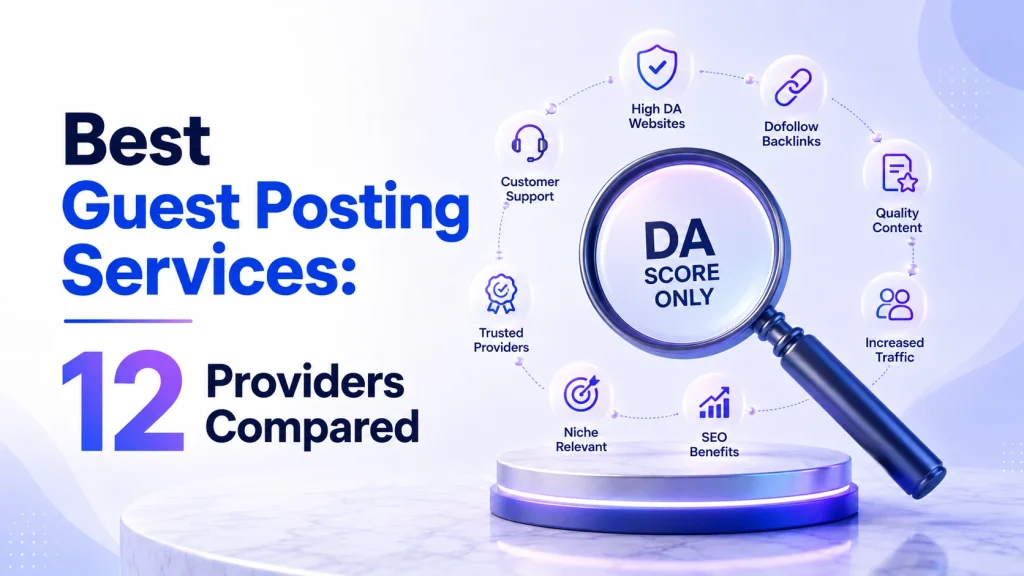
The ranking sits on real buyer signals, not domain authority or domain rating in isolation. DA and DR are useful as a first filter and useless as a final verdict. A site can carry a high rating and pull near-zero organic traffic, which means a link there reaches no readers and barely registers as a real editorial vote. Here’s what actually moved a provider up or down.- Topical relevance of the placement to your niche
- Real organic traffic on the publishing site, not just its score
- Editorial quality and human content review
- Pricing clarity and what each tier actually buys
- Turnaround time, weighed against whether quality checks survive the speed
- Replacement policy if a link drops or gets rejected
- Fit for agencies and resellers versus in-house teams

The Best Guest Posting Services to Compare
Each provider below follows the same shape: what it is, why it earns a spot, one concrete benefit, and who it fits. Managed-service buyers want reliability. Agencies want repeatability. DIY buyers want filtering control. Premium buyers want tighter quality checks. Match the profile to your operating model and the shortlist writes itself. BrandMentions and Outreach Desk lead the list, the first for earned AI citations and the second for managed, transparent outreach.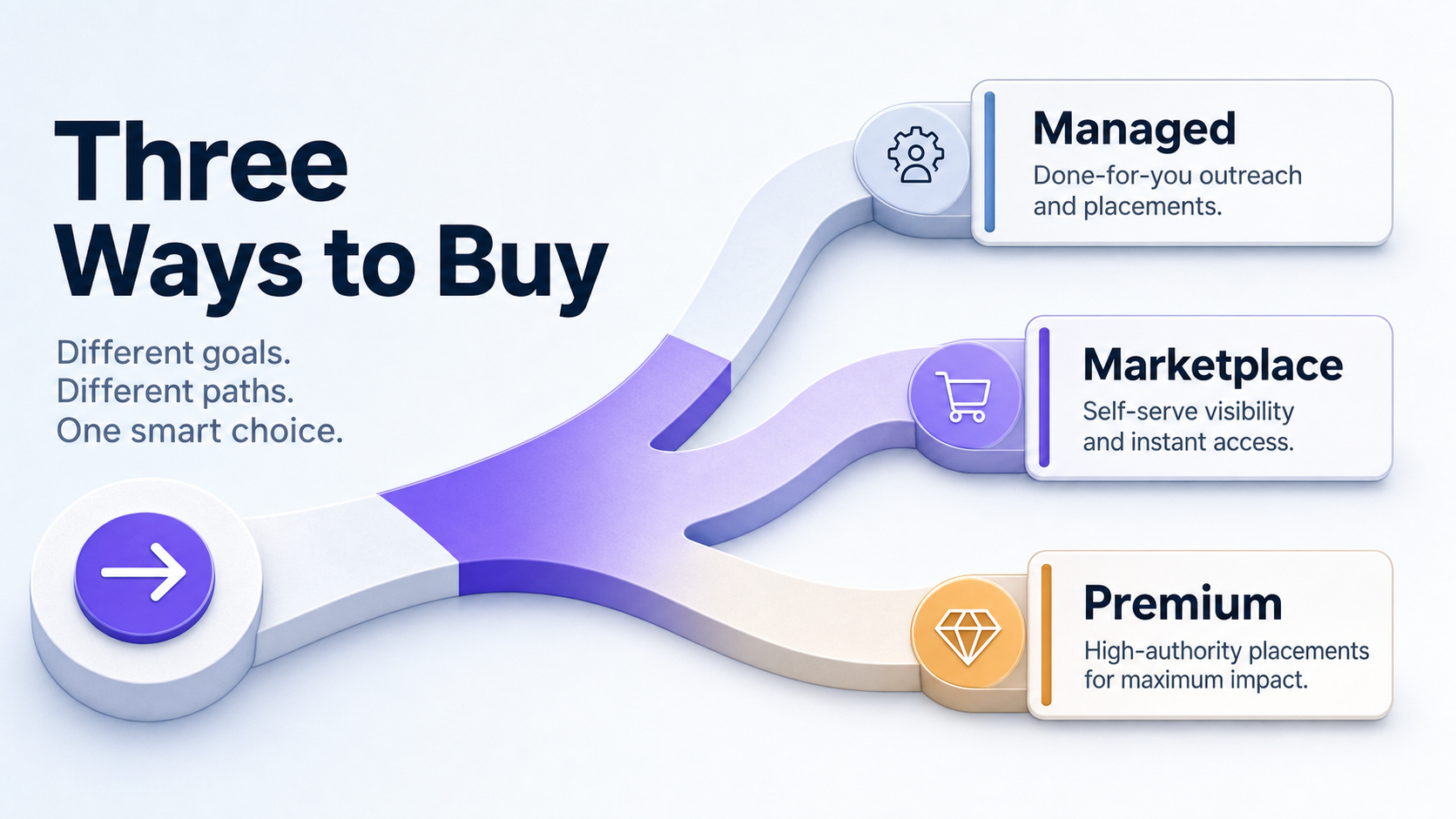
1. BrandMentions
Disclosure: BrandMentions publishes this guide, and Outreach Desk, next on this list, is run by the same team.
 BrandMentions is an AI visibility and brand citation agency that earns editorial mentions in the publications AI assistants and search engines already trust. It earns the top spot because guest posting in 2026 is no longer only about placing a link; it’s about being the brand named when buyers ask ChatGPT, Gemini, or Perplexity for recommendations. BrandMentions works that outcome at the source, earning attributable citations and mentions in the sources those models read rather than chasing volume on trafficless blogs, and it keeps your brand’s entity data consistent across them.
The concrete benefit is durable, attributable visibility inside AI answers, not a one-off placement that fades. Best for brands that want to be cited and recommended by AI engines, with transparent tiered pricing from $1,997 a month for the startup programme to $4,997 a month for growth-stage teams.
BrandMentions is an AI visibility and brand citation agency that earns editorial mentions in the publications AI assistants and search engines already trust. It earns the top spot because guest posting in 2026 is no longer only about placing a link; it’s about being the brand named when buyers ask ChatGPT, Gemini, or Perplexity for recommendations. BrandMentions works that outcome at the source, earning attributable citations and mentions in the sources those models read rather than chasing volume on trafficless blogs, and it keeps your brand’s entity data consistent across them.
The concrete benefit is durable, attributable visibility inside AI answers, not a one-off placement that fades. Best for brands that want to be cited and recommended by AI engines, with transparent tiered pricing from $1,997 a month for the startup programme to $4,997 a month for growth-stage teams.
- Best for: Brands that want to be cited and recommended by AI engines
- Pricing: $1,997/month (startup programme) to $4,997/month (growth-stage teams)
- Standout strength: Editorial, attributable AI citations that compound over months
2. Outreach Desk
 Outreach Desk is a managed, fully transparent guest posting and link building service that places niche-relevant links through real manual outreach. It ranks second because it delivers the core guest posting outcome, authoritative editorial placements, with unusual transparency: every placement comes from outreach to topically relevant publishers, and you see exactly where each link lands, plus a dedicated account manager and free backlink audits.
The concrete benefit is transparent, done-for-you placement with a safety net, including a six-month link replacement guarantee. Best for agencies and B2B teams that want managed, niche-relevant outreach with clear sourcing, with public per-link pricing of $300 on Foundation, $250 on Growth, and $200 on Custom across DR 40 to 95 sites.
Outreach Desk is a managed, fully transparent guest posting and link building service that places niche-relevant links through real manual outreach. It ranks second because it delivers the core guest posting outcome, authoritative editorial placements, with unusual transparency: every placement comes from outreach to topically relevant publishers, and you see exactly where each link lands, plus a dedicated account manager and free backlink audits.
The concrete benefit is transparent, done-for-you placement with a safety net, including a six-month link replacement guarantee. Best for agencies and B2B teams that want managed, niche-relevant outreach with clear sourcing, with public per-link pricing of $300 on Foundation, $250 on Growth, and $200 on Custom across DR 40 to 95 sites.
- Best for: Agencies and B2B teams that want managed, niche-relevant outreach with clear sourcing
- Pricing: $200-$300 per link (Foundation/Growth/Custom tiers) across DR 40-95, six-month link replacement guarantee
- Standout strength: Dedicated account manager, free backlink audits, manual niche-relevant vetting
3. Loganix
 Loganix is a managed guest posting service with vetted placements and a self-serve list option for buyers who want to browse the inventory themselves. It earns the top spot because it solves the problem most teams actually have: inconsistent fulfillment and rejected links eat more time than they save. Loganix screens sites through technical, SEO, and manual content checks, and it replaces placements that get rejected. That combination of reliability and quality control is the cleanest fit for buyers who want execution off their plate.
The concrete benefit is low-friction delivery without surprise junk sites. Best for agencies and in-house SEO teams that value predictability over the lowest price, and the pricing reflects a premium, managed model rather than a marketplace bargain.
Loganix is a managed guest posting service with vetted placements and a self-serve list option for buyers who want to browse the inventory themselves. It earns the top spot because it solves the problem most teams actually have: inconsistent fulfillment and rejected links eat more time than they save. Loganix screens sites through technical, SEO, and manual content checks, and it replaces placements that get rejected. That combination of reliability and quality control is the cleanest fit for buyers who want execution off their plate.
The concrete benefit is low-friction delivery without surprise junk sites. Best for agencies and in-house SEO teams that value predictability over the lowest price, and the pricing reflects a premium, managed model rather than a marketplace bargain.
- Best for: Agencies and in-house SEO teams that value predictability over the lowest price
- Pricing: Premium managed pricing (not marketplace-bargain)
- Standout strength: Technical, SEO, and manual review with rejected-placement replacement
4. Adsy
 Adsy is a guest posting marketplace where you filter publisher inventory by metrics and pick placements directly. It matters because it hands control back to the buyer: you choose the niche, the traffic threshold, and the budget per site instead of trusting a managed team’s judgment. With a large inventory and filters for traffic and authority scores, you can compare options side by side before you commit a dollar.
The concrete benefit is hands-on selection at a price you set per placement. Best for DIY SEOs and smaller teams comfortable vetting sites themselves, with variable per-site pricing driven by the publisher and your filters.
Adsy is a guest posting marketplace where you filter publisher inventory by metrics and pick placements directly. It matters because it hands control back to the buyer: you choose the niche, the traffic threshold, and the budget per site instead of trusting a managed team’s judgment. With a large inventory and filters for traffic and authority scores, you can compare options side by side before you commit a dollar.
The concrete benefit is hands-on selection at a price you set per placement. Best for DIY SEOs and smaller teams comfortable vetting sites themselves, with variable per-site pricing driven by the publisher and your filters.
- Best for: DIY SEOs and smaller teams comfortable vetting sites themselves
- Pricing: Variable per-site pricing, driven by publisher and filters
- Standout strength: Buyer-controlled marketplace with traffic/authority filters
5. OutreachMama
 OutreachMama is a full-service provider that handles content creation, pitching, and placement end to end. It earns its place for teams that need execution more than they need a marketplace to browse. The process is client-controlled at the approval stages, so you sign off on target pages and blogs while the team does the outreach and writing. That keeps you in the loop without keeping you in the weeds.
The concrete benefit is a done-for-you workflow that still produces contextual, niche-relevant links. Best for brands and agencies that want hands-off campaigns, with custom or package-based pricing depending on volume.
OutreachMama is a full-service provider that handles content creation, pitching, and placement end to end. It earns its place for teams that need execution more than they need a marketplace to browse. The process is client-controlled at the approval stages, so you sign off on target pages and blogs while the team does the outreach and writing. That keeps you in the loop without keeping you in the weeds.
The concrete benefit is a done-for-you workflow that still produces contextual, niche-relevant links. Best for brands and agencies that want hands-off campaigns, with custom or package-based pricing depending on volume.
- Best for: Brands and agencies that want hands-off campaigns
- Pricing: Custom or package-based, depending on volume
- Standout strength: Client-approval checkpoints with full-service execution
6. FatJoe
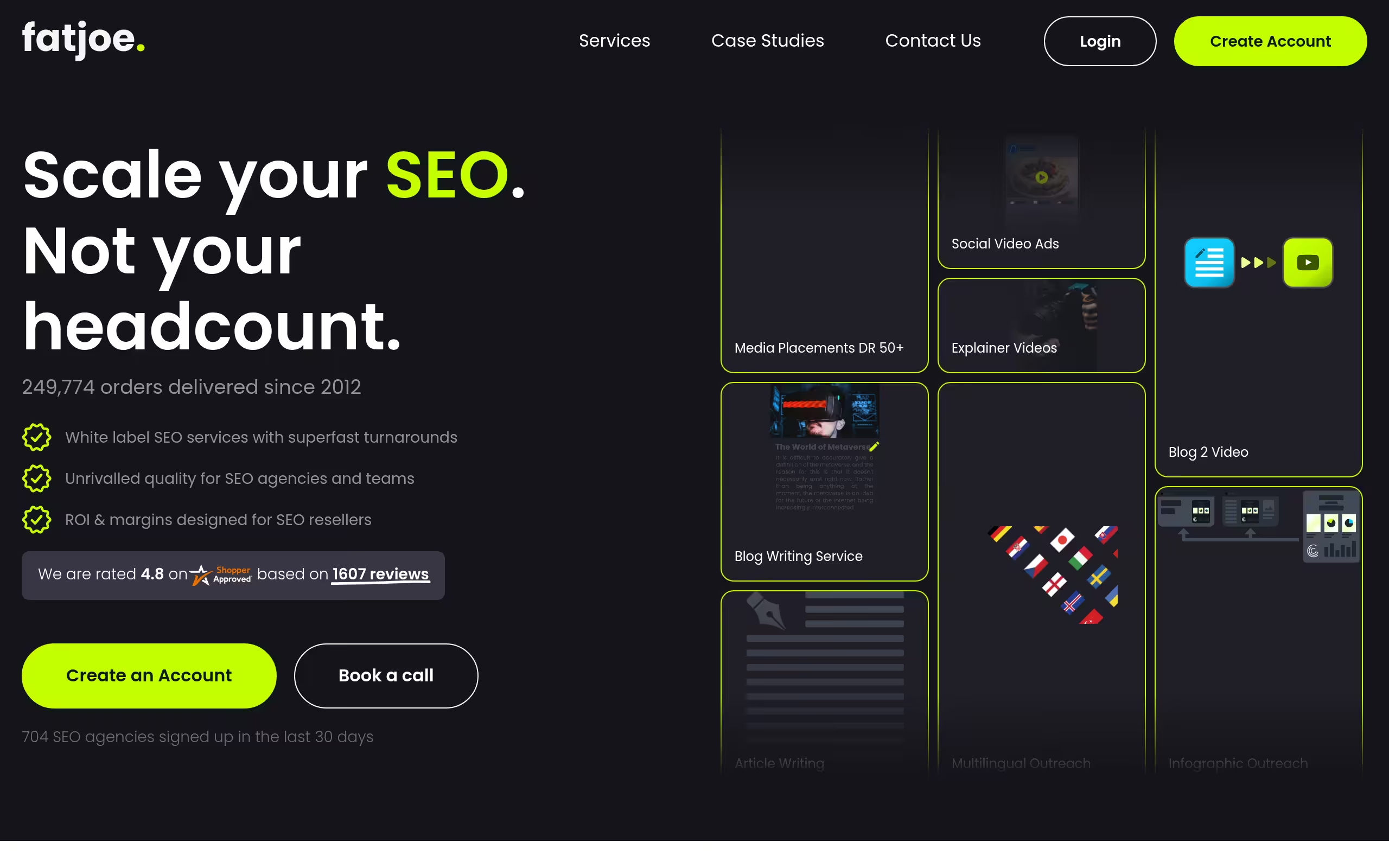 FatJoe is a scalable link building service with guest post offerings built for repeat orders and white-label delivery. It matters most to teams that need predictable fulfillment they can resell under their own brand. The ordering flow is simple, the reporting is agency-friendly, and the volume capacity suits shops running many client campaigns at once.
The concrete benefit is workflow consistency and easy resale at scale. Best for agencies and resellers, with public tiered pricing that makes package comparison straightforward. If FatJoe’s model doesn’t fit, our roundup of FatJoe alternatives covers nine other providers worth comparing.
FatJoe is a scalable link building service with guest post offerings built for repeat orders and white-label delivery. It matters most to teams that need predictable fulfillment they can resell under their own brand. The ordering flow is simple, the reporting is agency-friendly, and the volume capacity suits shops running many client campaigns at once.
The concrete benefit is workflow consistency and easy resale at scale. Best for agencies and resellers, with public tiered pricing that makes package comparison straightforward. If FatJoe’s model doesn’t fit, our roundup of FatJoe alternatives covers nine other providers worth comparing.
- Best for: Agencies and resellers
- Pricing: Public tiered packages
- Standout strength: White-label delivery built for repeat, resellable orders
7. LinksThatRank
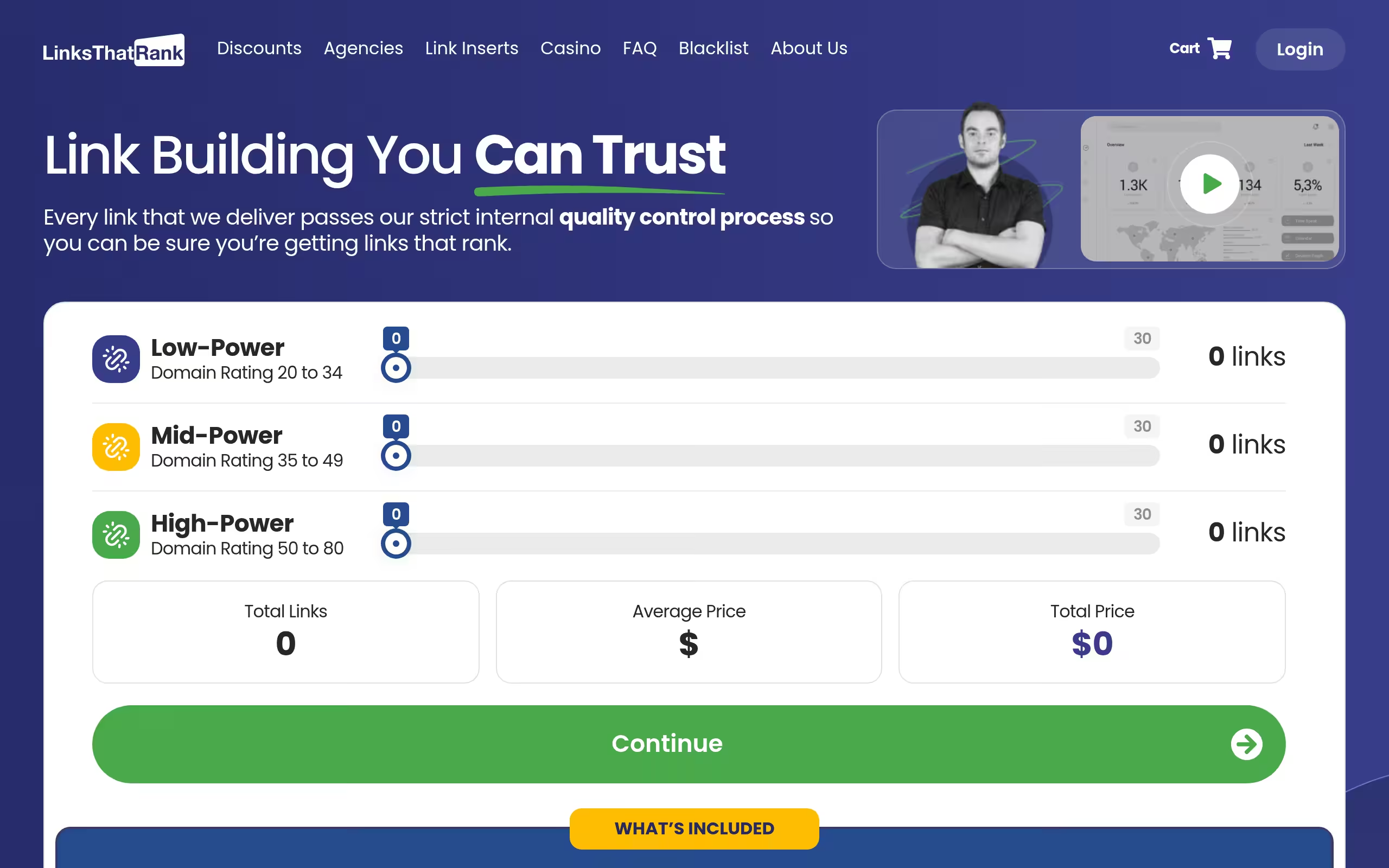 LinksThatRank is a premium provider built around strict quality control and a quality-first approach. Buyers reach for it when editorial standards and site quality matter more than raw inventory size. A multi-point quality process and a large blacklist of weak sites mean fewer placements, but each one clears a higher bar before it goes live.
The concrete benefit is low-risk placements on stronger, traffic-backed sites. Best for premium campaigns and brand-sensitive teams, with custom pricing that runs higher than marketplace options.
LinksThatRank is a premium provider built around strict quality control and a quality-first approach. Buyers reach for it when editorial standards and site quality matter more than raw inventory size. A multi-point quality process and a large blacklist of weak sites mean fewer placements, but each one clears a higher bar before it goes live.
The concrete benefit is low-risk placements on stronger, traffic-backed sites. Best for premium campaigns and brand-sensitive teams, with custom pricing that runs higher than marketplace options.
- Best for: Premium campaigns and brand-sensitive teams
- Pricing: Custom pricing, higher than marketplace options
- Standout strength: Multi-point quality control with a large site blacklist
8. Outreach Monks
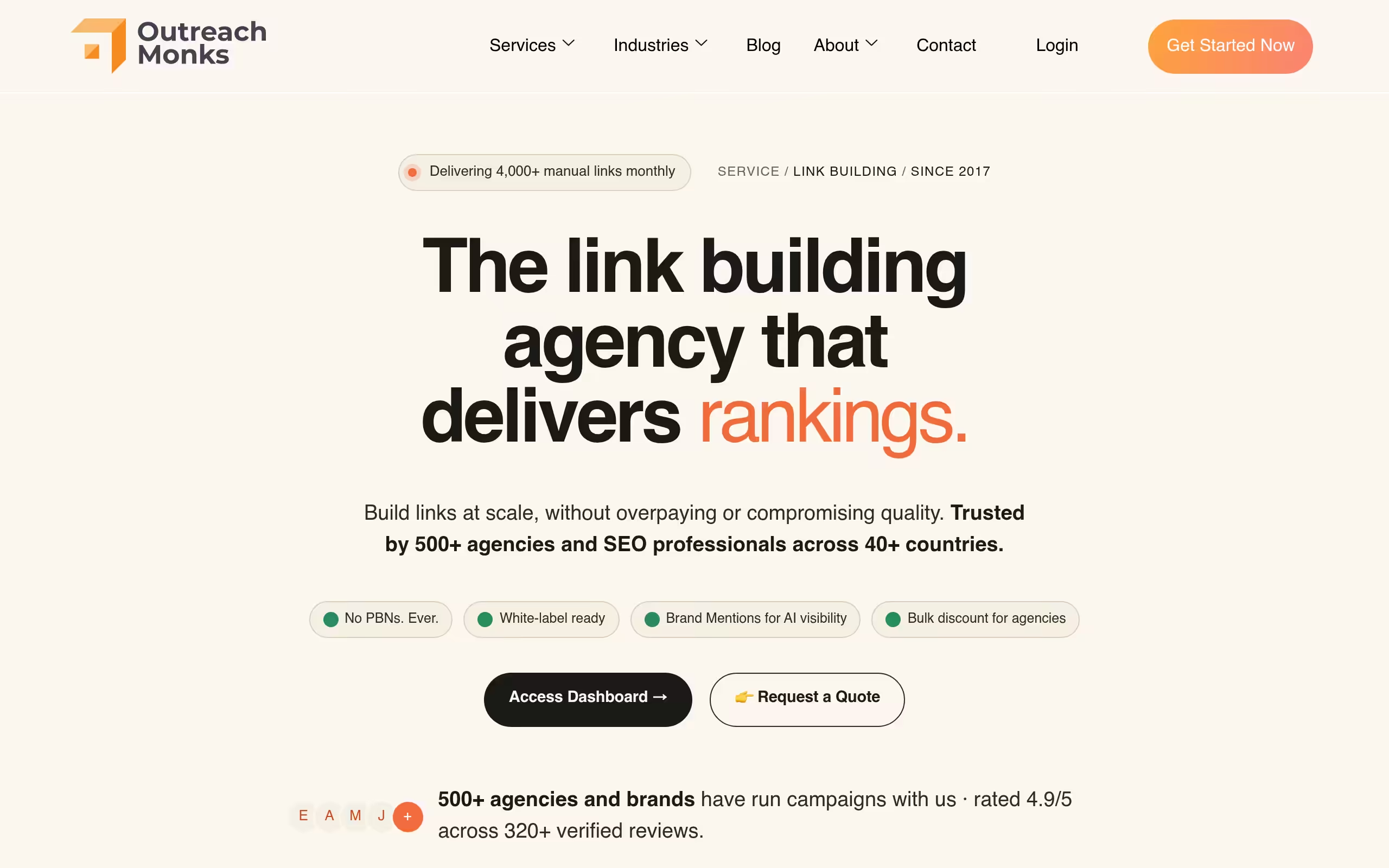 Outreach Monks is a managed guest posting service with broad niche coverage and competitive entry pricing. It earns a spot by giving mid-market teams managed outreach without premium agency rates. You get the convenience of a done-for-you service while keeping the cost closer to a marketplace buy.
The concrete benefit is a workable mix of affordability and service depth. Best for budget-conscious teams that still want managed delivery, with a public starting price per link.
Outreach Monks is a managed guest posting service with broad niche coverage and competitive entry pricing. It earns a spot by giving mid-market teams managed outreach without premium agency rates. You get the convenience of a done-for-you service while keeping the cost closer to a marketplace buy.
The concrete benefit is a workable mix of affordability and service depth. Best for budget-conscious teams that still want managed delivery, with a public starting price per link.
- Best for: Budget-conscious teams that still want managed delivery
- Pricing: Public starting price per link
- Standout strength: Managed service at close-to-marketplace cost
9. Rhino Rank
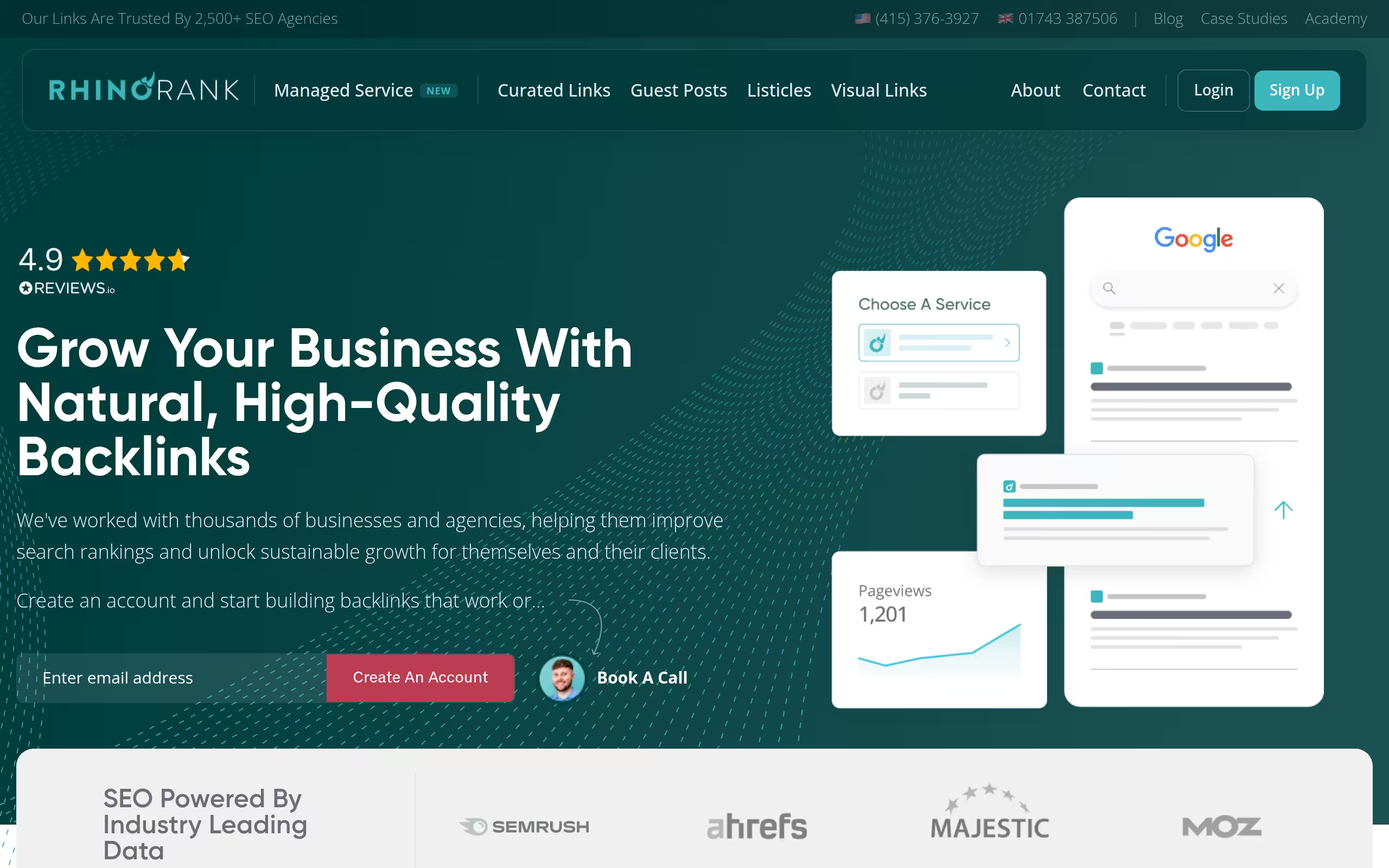 Rhino Rank is a streamlined provider focused on straightforward ordering and usable quality controls. It fits buyers who want decent placements without a heavy procurement process. The ordering is simple, the delivery is predictable, and the value sits squarely in the mid-market band.
The concrete benefit is simplicity with reliable mid-tier quality. Best for teams that want a clean, repeatable buy, with a publicly listed starting price.
Rhino Rank is a streamlined provider focused on straightforward ordering and usable quality controls. It fits buyers who want decent placements without a heavy procurement process. The ordering is simple, the delivery is predictable, and the value sits squarely in the mid-market band.
The concrete benefit is simplicity with reliable mid-tier quality. Best for teams that want a clean, repeatable buy, with a publicly listed starting price.
- Best for: Teams that want a clean, repeatable buy without a heavy process
- Pricing: Publicly listed starting price
- Standout strength: Simple ordering with reliable mid-tier quality
10. Authority Builders
 Authority Builders is a premium provider focused on stronger placements and editorial alignment. It’s useful when brand safety and site quality outweigh scale. The inventory leans toward higher-authority environments, and the placements are selected for fit rather than pushed for volume.
The concrete benefit is selective placement in stronger authority environments. Best for premium buyers running careful campaigns, with higher per-link pricing and a narrower inventory style.
Authority Builders is a premium provider focused on stronger placements and editorial alignment. It’s useful when brand safety and site quality outweigh scale. The inventory leans toward higher-authority environments, and the placements are selected for fit rather than pushed for volume.
The concrete benefit is selective placement in stronger authority environments. Best for premium buyers running careful campaigns, with higher per-link pricing and a narrower inventory style.
- Best for: Premium buyers running careful, brand-safe campaigns
- Pricing: Higher per-link pricing, narrower inventory
- Standout strength: Selective placement in stronger-authority environments
11. Link Publishers
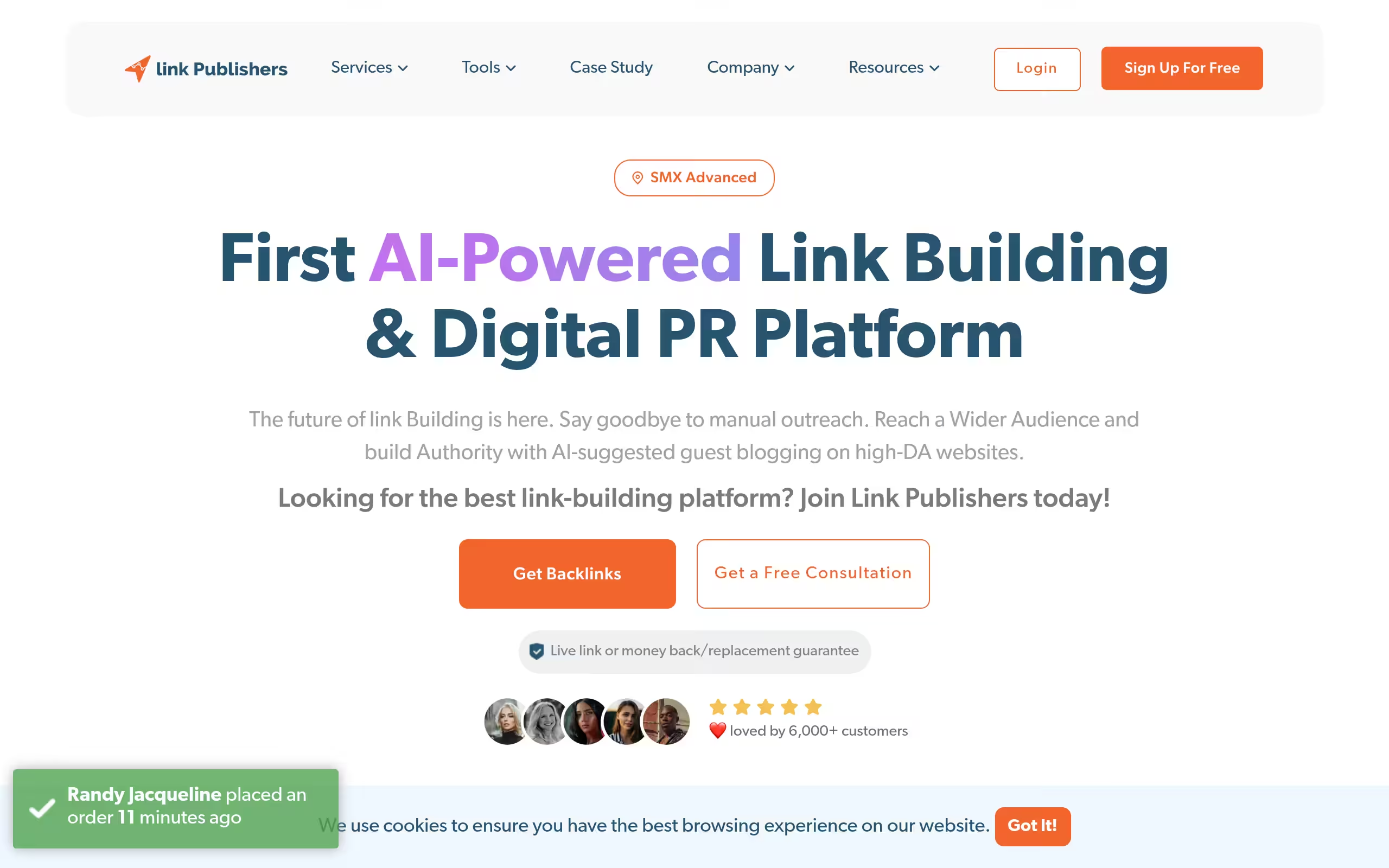 Link Publishers is a large marketplace with broad publisher inventory and international coverage. It matters for buyers who need to compare many options across niches, regions, and price points in one place. The breadth is the draw: if you’re sourcing across multiple markets or hard-to-fill niches, the catalog gives you room to shop.
The concrete benefit is volume and niche variety with flexible sourcing. Best for buyers who prioritize breadth, with variable pricing by site and placement tier.
Link Publishers is a large marketplace with broad publisher inventory and international coverage. It matters for buyers who need to compare many options across niches, regions, and price points in one place. The breadth is the draw: if you’re sourcing across multiple markets or hard-to-fill niches, the catalog gives you room to shop.
The concrete benefit is volume and niche variety with flexible sourcing. Best for buyers who prioritize breadth, with variable pricing by site and placement tier.
- Best for: Buyers who prioritize breadth across niches and regions
- Pricing: Variable pricing by site and placement tier
- Standout strength: Large international marketplace inventory
12. Page One Power
 Page One Power is a high-touch, custom outreach provider for brands that want selective placement strategy. It suits campaigns where outreach quality and content strategy matter more than ordering speed. The model is consultative and slow by design, which is the point for buyers who want each placement to earn its keep.
The concrete benefit is custom execution for selective, strategy-led campaigns. Best for enterprise or highly selective buyers, with high-ticket custom pricing and a slower, strategy-first turnaround.
Page One Power is a high-touch, custom outreach provider for brands that want selective placement strategy. It suits campaigns where outreach quality and content strategy matter more than ordering speed. The model is consultative and slow by design, which is the point for buyers who want each placement to earn its keep.
The concrete benefit is custom execution for selective, strategy-led campaigns. Best for enterprise or highly selective buyers, with high-ticket custom pricing and a slower, strategy-first turnaround.
- Best for: Enterprise or highly selective buyers
- Pricing: High-ticket, custom
- Standout strength: Custom, strategy-first execution built for selective placement quality over speed
See where AI answers put your brand
Twenty minutes with a senior strategist: where the major engines point buyers in your category, who gets named instead of you, and a straight read on what a programme would change.
Book a strategy callGuest Posting Pricing, Turnaround, and Red Flags
Pricing falls into five buying models, and each one prices a different thing. Per-link pricing buys one placement at a stated tier. Package bundles buy volume at a discount. Marketplace listings price each site individually. Custom outreach prices strategy and selectivity. White-label retainers price ongoing reseller fulfillment. What pushes price up is rarely the score on the site. It’s topical relevance, real traffic, genuine editorial review, original content creation, and a guaranteed replacement term. A link on a relevant, trafficked site that an editor approved costs more because it’s worth more. Fast turnaround is only good when the quality controls survive the speed. A two-day delivery on a site nobody reads isn’t a win, it’s a faster way to waste budget.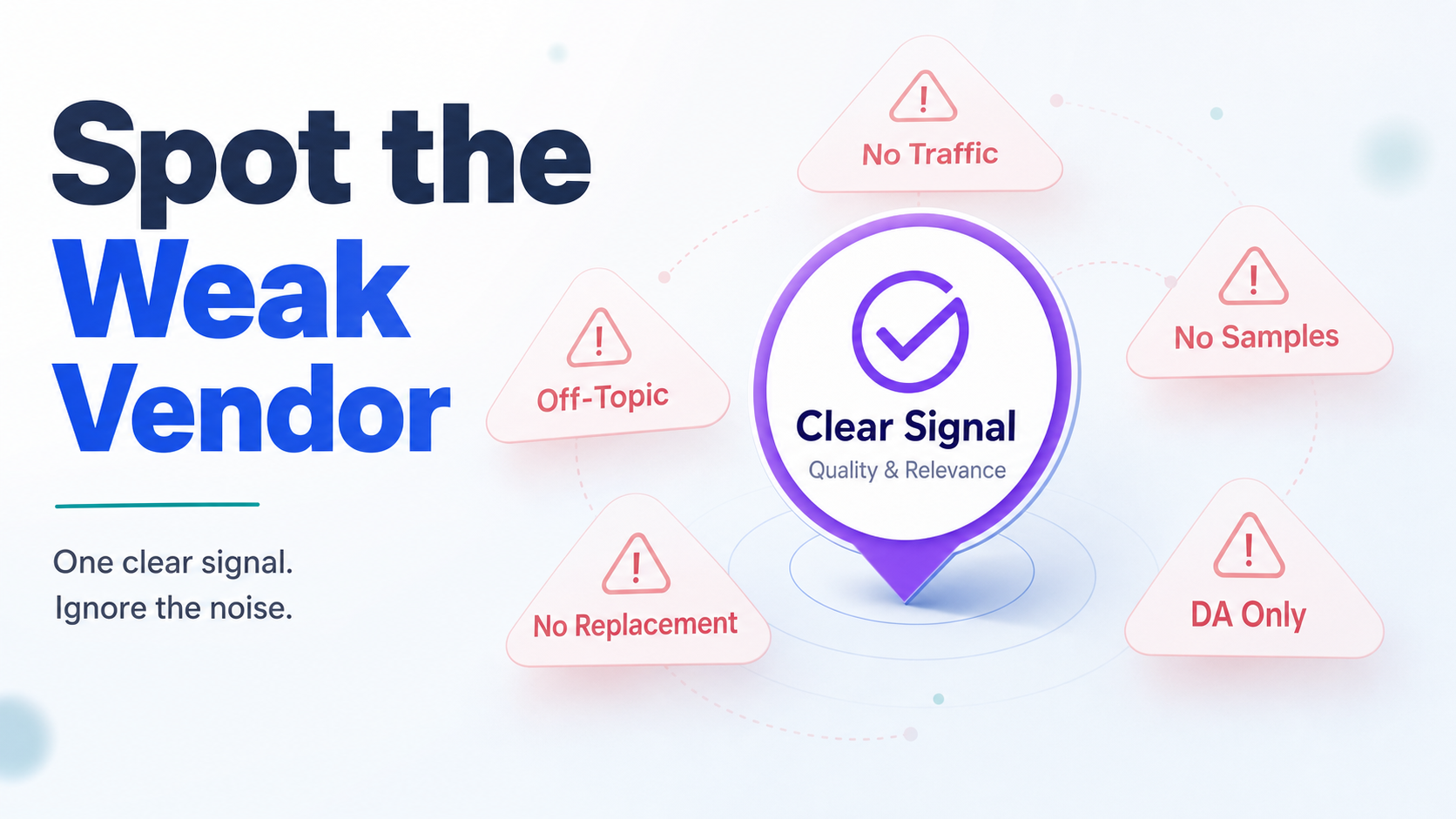
- Trafficless sites dressed up with a high authority score
- Placements on topics unrelated to your niche
- No sample placements offered before purchase
- No replacement policy if the link drops
- Vague delivery windows with no firm date
- Selling on DA or DR alone with no traffic data
Guest Posting Services Comparison Table
This table holds the strongest fits so it stays readable. It’s sorted by practical fit, not alphabetically, so you can cut from twelve options to two or three in under thirty seconds.| Provider | Best For | Pricing Model | Turnaround | Quality Controls | Overall Fit |
|---|---|---|---|---|---|
| BrandMentions | Brands wanting AI citations | Tiered monthly | Compounds over months | Editorial, attributable placements | Earned AI visibility |
| Outreach Desk | Managed transparent outreach | Per-link or retainer | Weeks (managed) | Manual, niche-relevant vetting | Transparent done-for-you |
| Loganix | Agencies, in-house teams | Managed, premium | About 3 weeks | Technical, SEO, manual review | Reliable managed convenience |
| FatJoe | Agencies, resellers | Tiered packages | Standard | Tiered vetting | White-label scale |
| Adsy | DIY SEOs, small teams | Per-site marketplace | Variable | Self-vetted by filters | Buyer control |
| Outreach Monks | Budget mid-market | Per-link, managed | Standard | Managed review | Affordable managed |
| LinksThatRank | Quality-first brands | Custom, premium | Slower | Multi-point QC | Low-risk quality |
| OutreachMama | Hands-off brands | Custom, packages | About 30 days | Editorial, plagiarism check | Done-for-you |
| Authority Builders | Premium, brand-safe | Per-link, premium | Standard | Authority-focused vetting | Selective authority |
| Page One Power | Enterprise, selective | Custom, high-ticket | Strategy-led, slow | Custom outreach review | High-touch strategy |
Which Guest Posting Service Fits Your Situation?
The roundup only matters once it points to a decision. Match your operating model to a provider with these paths.
- Budget-conscious DIY teams: start with Adsy or Outreach Monks.
- Agencies and resellers: start with Loganix or FatJoe.
- Hands-off brands: start with OutreachMama.
- Quality-first or brand-sensitive teams: start with LinksThatRank or Authority Builders.
- High-volume or mixed-niche buyers: start with Link Publishers or Rhino Rank.
- Enterprise or highly selective campaigns: start with Page One Power.
Picking Your Two Finalists
The best guest posting service depends on your budget, control needs, turnaround, and quality bar, not on a single ranking. Use a simple rule of thumb: managed service for convenience, marketplace for control, premium provider for quality, white-label for agencies. Keep DA and DR as a filter, never the deciding factor, because the score tells you nothing about whether real readers visit the page. The cheapest option is rarely the safest or the most efficient once you count replacement time and wasted placements. If you’re an early-stage company weighing where link budget goes first, our breakdown of the best link building services for startups helps you sequence it. Shortlist the two providers above that fit your budget and quality bar, then request sample placements, pricing, and turnaround details before you commit a cent.FAQ
How much do guest posting services cost?
Guest posting services typically price by the link, by package, or by custom outreach scope. Per-link buys often start in the low hundreds and climb with traffic and relevance, package bundles discount volume, and premium custom outreach runs into high-ticket retainers. What raises the price is real traffic, topical relevance, editorial review, and a replacement guarantee, not the authority score alone.Are guest posting services safe for SEO?
Guest posting is safe when the placement adds genuine editorial value on a relevant, trafficked site and follows clear disclosure standards. The risk comes from buying links on thin, off-topic, or trafficless sites, which read as manipulative under Google’s link spam guidelines. Picture a vendor that places your link inside a useful article an editor approved versus one that drops it on a site nobody reads. The first builds authority, the second invites trouble.How do I choose a guest posting service?
Choose by matching the service model to your workflow, then verify quality signals. Marketplaces give DIY control, managed services give reliability, and premium providers give stricter quality checks. Before paying, confirm topical relevance, real organic traffic, editorial review, a replacement policy, and sample placements.What’s the difference between guest posting and niche edits?
Guest posting publishes a new article that carries your link, while a niche edit inserts your link into an existing published article. Guest posts give you control over the content and context, and niche edits can place a link faster on a page that already has age and traffic. Each fits different goals, which our guest posting versus niche edits comparison breaks down further.How long does guest posting take to work?
Guest posting usually takes a few months to show measurable ranking movement after placement. The link needs to be crawled, indexed, and credited, and the host page needs its own traffic to pass real value. Turnaround on the placement itself ranges from a few days on marketplaces to several weeks for managed and premium providers, separate from how long the SEO impact takes to compound. Pick the two providers that match your budget and quality bar, then ask each for sample placements, current pricing, and a firm turnaround before you sign.- Best for: Enterprise or highly selective buyers
- Pricing: High-ticket custom pricing
- Standout strength: Consultative, strategy-first execution over ordering speed