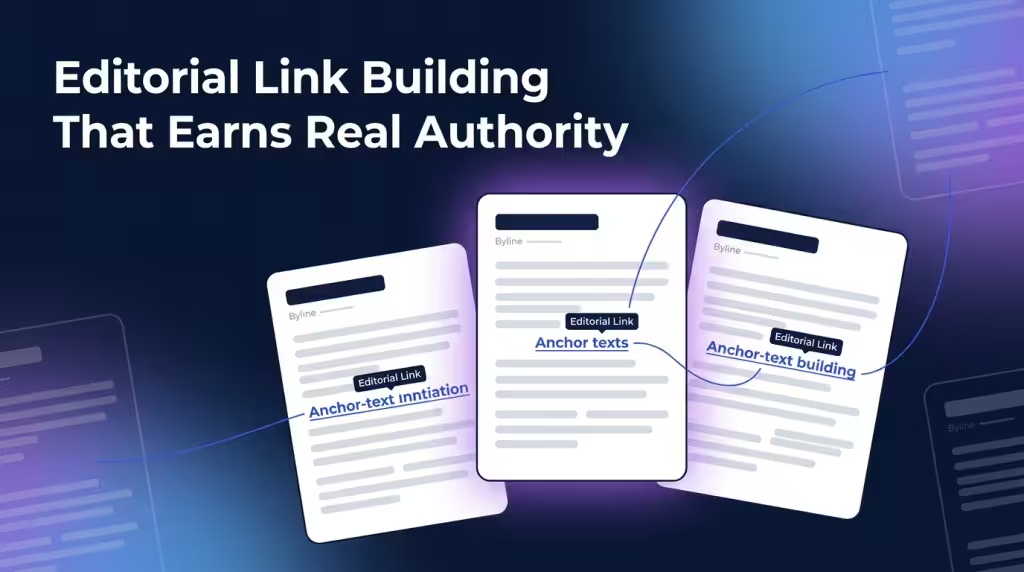

Editorial links aren’t a tactic. They’re a consequence, the byproduct of being worth citing. And in 2026, that distinction matters more than it ever has, because the same signals that earn you a link from a trusted publications are the signals AI models use to decide who deserves a citation in their answers. If you’re still treating link building as an outreach volume game, you’re playing last decade’s sport.
Here’s the working definition: editorial link building is the practice of earning backlinks from publications because your content, data, or expertise is genuinely worth referencing, not because you pitched, paid, or exchanged for the placement. The work isn’t in the outreach. It’s in building something people want to point to.
What You’ll Learn
- The real difference between editorial links and everything else marketers call “editorial”
- Why most link building programs stall, and the specific inputs that actually compound
- A repeatable system for creating assets publications want to cite
- How editorial links influence both Google rankings and AI citations in 2026
- Where digital PR, data research, and journalist sourcing fit in a modern program
Editorial Links vs. Everything Else Sold Under That Name
The term “editorial link building” has been stretched to mean almost anything. Some agencies use it to describe guest posts. Others use it for paid placements dressed up as contributor articles. A few use it for niche edits. Most of these aren’t editorial links, they’re acquired links with better marketing.
| Dimension | Editorial links | Acquired links (guest posts, paid placements, niche edits) |
|---|---|---|
| How the link is obtained | The publication chooses to include it on its own | You pitched, paid, or exchanged for the placement |
| Money or link exchange involved | None | Often (payment, contributor deals, or reciprocal links) |
| Why the reference exists | Your content, data, or expertise added value to their article | You requested or arranged the inclusion |
| Ranking value passed | Yes | Some |
| Referral traffic that converts | Yes | Little |
| Entity authority AI models pick up for citations | Yes, increasingly | Minimal |
A genuine editorial link has three traits: the publication chose to include it, no money or link exchange was involved, and the reference exists because your content added value to their article. That’s it. Anything that doesn’t meet all three is something else, which doesn’t mean it’s worthless, but it means you shouldn’t confuse the categories when you’re planning a program.
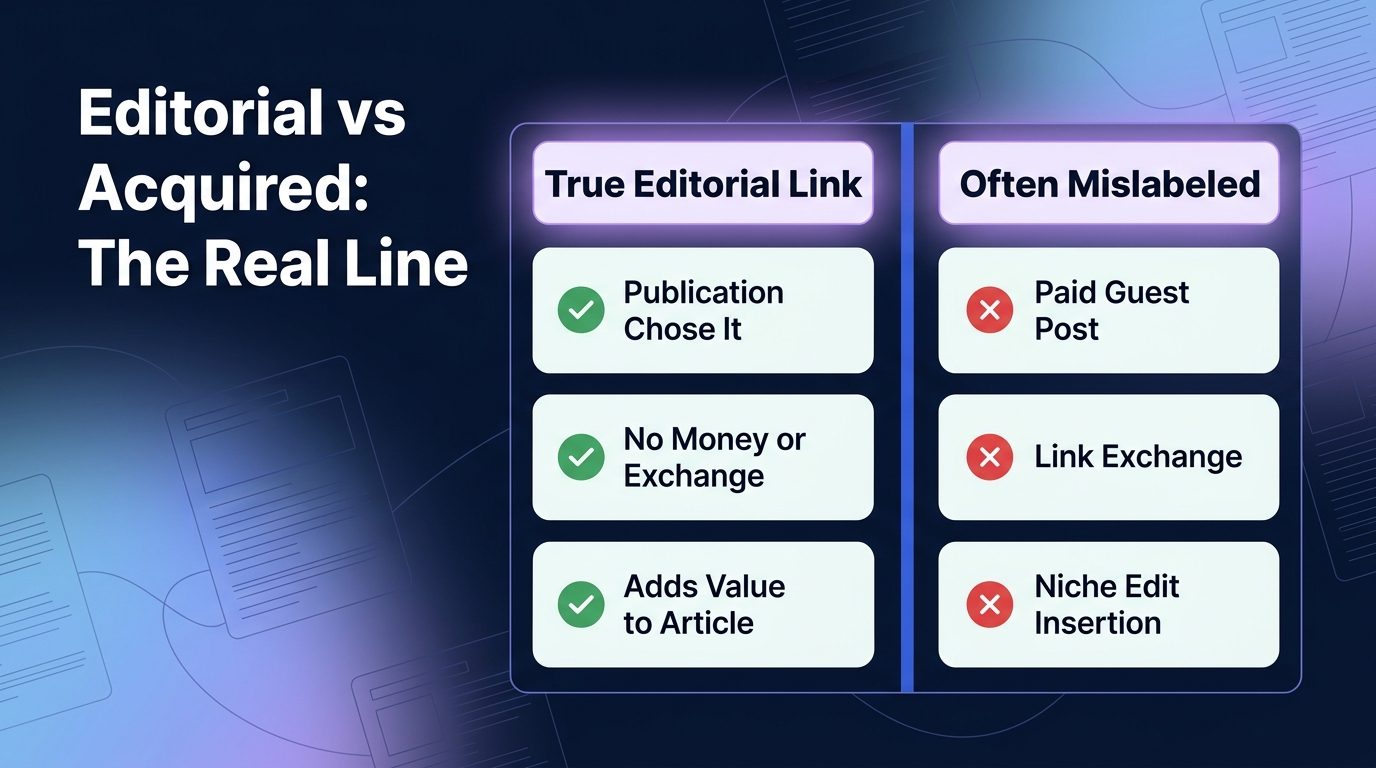
Why does the distinction matter in practice? Because the two link types produce different outcomes. Acquired links tend to pass some ranking value and little else. Editorial links pass ranking value, referral traffic that actually converts, and, increasingly, entity authority that AI models pick up during training. When Perplexity or ChatGPT recommends a vendor in your category, the brands they surface are almost always the ones that earned coverage on sources the models trust.
Why Editorial Link Building Gets Harder, and More Valuable, Every Year
Two things are happening at once. Publications are tightening their editorial standards as AI-generated pitches flood their inboxes, which means the bar for getting cited is higher than it was in 2026. At the same time, the value of each genuine editorial mention is climbing, because those mentions now influence visibility across Google’s organic results, AI Overviews, and large language model answers simultaneously.
In our experience running citation-building campaigns for B2B brands, the pattern is consistent: companies that invested in earning editorial coverage over 12-18 months now show up in AI answers their competitors don’t. The compounding isn’t linear. A brand with 20 editorial mentions across trusted publications behaves differently in AI search than a brand with 3, not 7x better, but categorically different. Models start treating it as an established entity in the category.
The harder-truth version: most teams give up before the compounding starts. Editorial link building is a 6-to-12-month discipline. Month 2 feels like nothing is working. Month 4 you start seeing placements. By month 9, journalists start coming to you. Most programs quit between month 2 and month 4.
The Inputs That Actually Earn Links
You don’t earn editorial links by pitching harder. You earn them by being more useful to reference. Four categories of assets consistently attract links from real publications:
Original Research and Proprietary Data
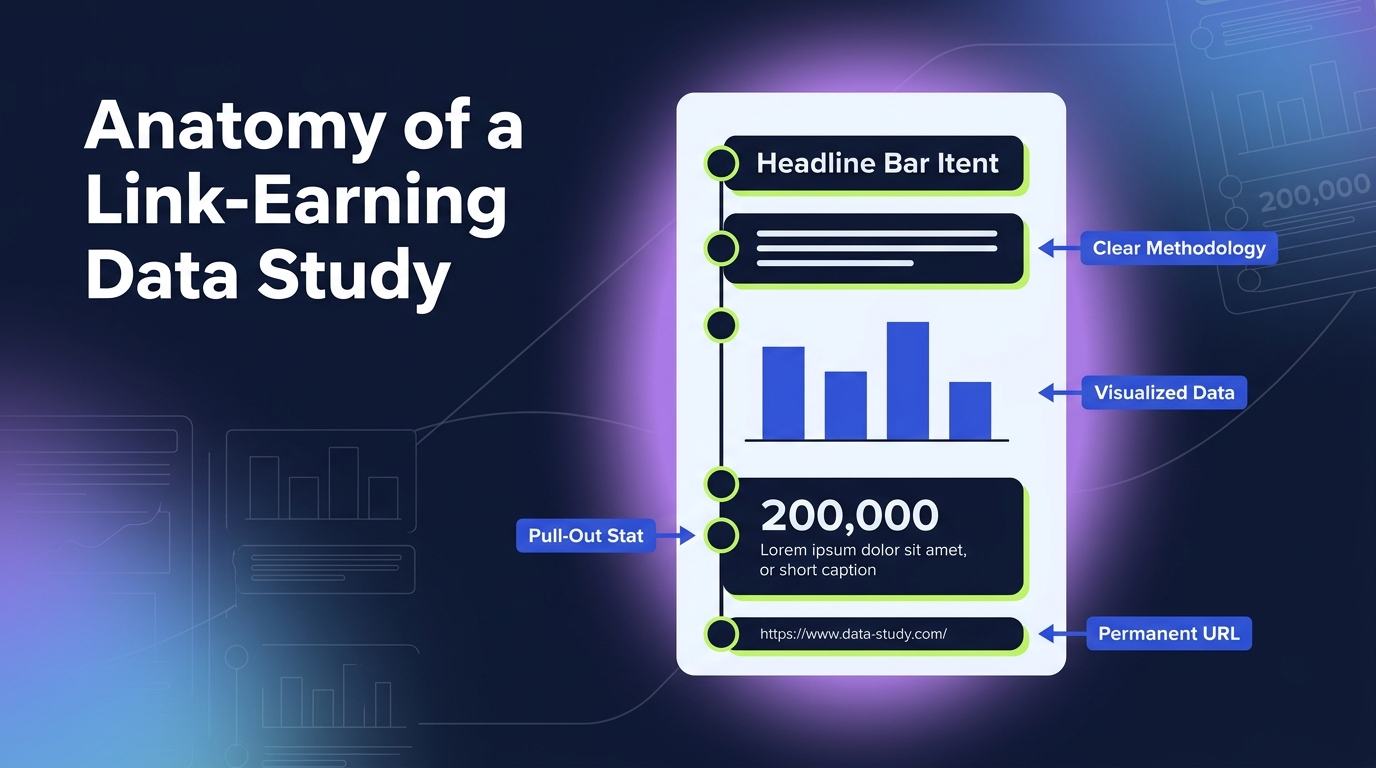
Nothing earns links like numbers nobody else has. If you run a SaaS platform, you’re sitting on behavioral data that journalists would love to cite. If you’re a services firm, your campaign outcomes are research waiting to be published. The work is in structuring it: a clean methodology paragraph, 3-5 pull-out stats that tell a story, a chart or two, and a public URL where the data lives permanently.
One pattern we see across clients: a single well-structured data study earns more editorial links in six months than a year of pitching contributed articles. Journalists cite data. They don’t cite opinions they can get anywhere.
Genuine Expertise Worth Quoting
Journalists on deadline need sources. If your team has operators who’ve done the work, not marketers reciting talking points, you have something newsrooms want. Platforms like Qwoted, Featured, and Help A B2B Writer have largely replaced the old HARO workflow, and they work if you treat them seriously. That means responding within two hours, writing like a human, and offering a specific insight instead of generic commentary.
The teams that win at this assign one person, one hour a day. Not a bulk-response factory. One person, actually reading the query, actually writing a useful answer.
Definitive Guides That Become Reference Material
Some content earns links for years because it’s the resource people link to when they need to explain a concept. These guides share traits: they cover the full topic in one place, they’re updated regularly, they include examples most competitors skip, and they solve a real execution problem instead of repeating definitions.
Writing one takes weeks. Maintaining it takes discipline. But a single guide that becomes the reference in your category can earn links indefinitely. Think of the pieces you’ve personally linked to in the last year. They weren’t thin. They were the ones you trusted.
Tools, Calculators, and Interactive Resources
Free tools that solve a specific, narrow problem are under-built in most B2B categories. A pricing calculator, a benchmark comparator, a template generator, small utilities collect editorial links at a rate that written content rarely matches, because journalists love pointing readers to something they can use immediately.
The Part Most Teams Get Wrong
Here’s what nobody wants to admit: most editorial link building programs fail not because the outreach is bad but because the asset being promoted isn’t worth linking to. Teams spend 90% of their time on outreach and 10% on the thing they’re pitching. The math should be reversed.
A good asset, real data, a genuine framework, a tool people need, earns some links with zero promotion. A weak asset doesn’t earn links even with elite outreach. Before you touch a pitch template, ask one question: if I sent this to a journalist who’d never heard of my company, would they naturally want to include it? If the honest answer is “probably not,” the asset needs more work before the outreach does.
Worth it? Yes. Takes longer than you’d like? Also yes.
A Working System for Earning Editorial Links
Once you have an asset worth linking to, the system for getting it in front of journalists and editors is surprisingly consistent across industries:
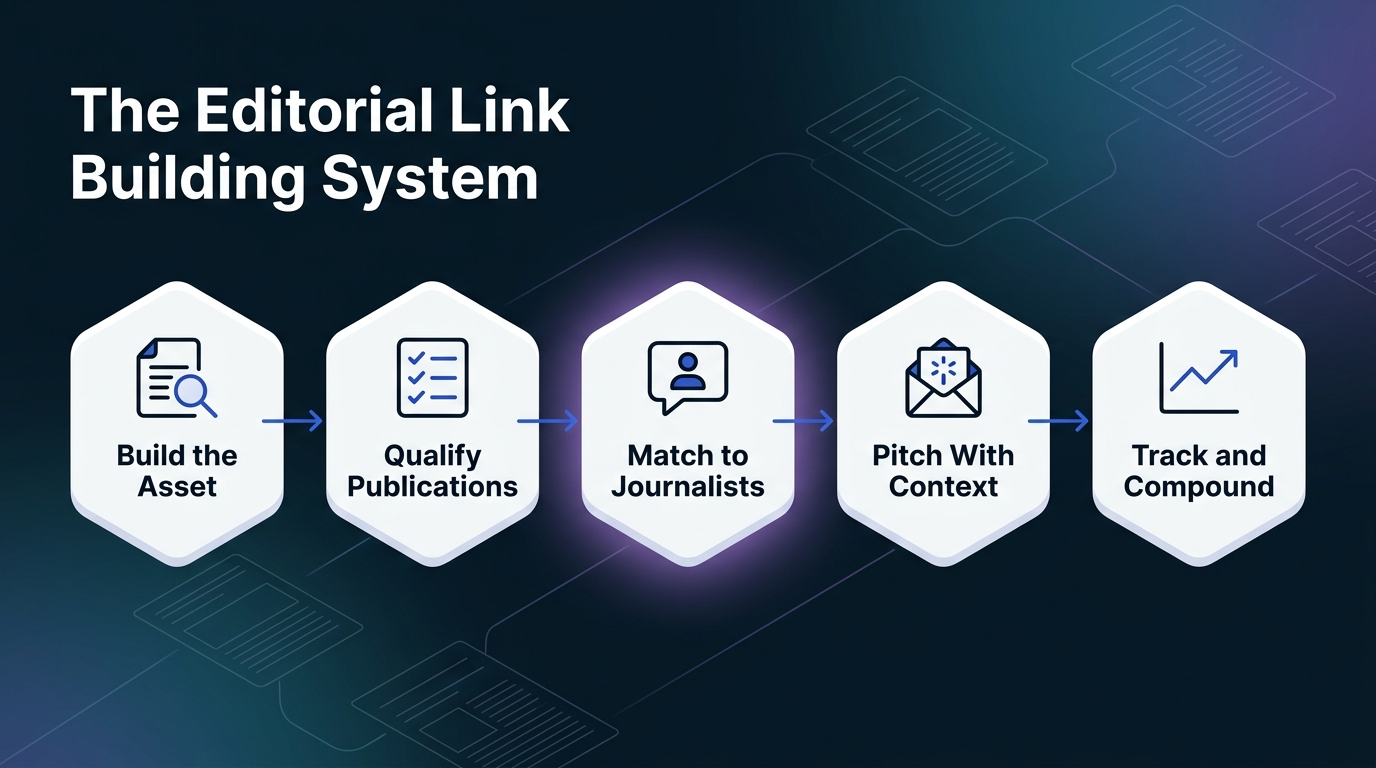
Stage 1: Build the Asset
Pick one of the four asset categories above. Build it with the standard you’d apply to a product launch, not a blog post. Ship it to a permanent URL. This takes 2-6 weeks for most assets. Don’t shortcut it.
Stage 2: Qualify Publications Before You Pitch
Not every publication is worth the outreach effort. Before adding a site to your target list, check three things: does it publish content genuinely related to your asset’s topic, does it have visible editorial oversight (named editors, a masthead, a corrections policy), and does it get cited by AI models when you query your category? That last check is new, it’s what separates a 2024 target list from a 2026 one.
Stage 3: Match Each Asset to the Right Journalists
A generic publication list is the wrong unit of work. The right unit is a journalist who covers your specific angle. Read their last 10 articles. If your asset doesn’t fit naturally into the kind of piece they write, they’re not the target, even if the publication is perfect. One journalist who’d actually use your data is worth fifty who wouldn’t.
Stage 4: Pitch With Context, Not Volume
The pitch template that works in 2026 is boring: a short email that references something specific the journalist recently wrote, explains in one sentence what you have and why it fits, and offers the asset without asking for anything. No follow-up sequences every three days. No tracking pixels. Send it once, send it to a real person, move on.
Stage 5: Track and Compound
When a placement lands, two things should happen. You log it with the anchor text, URL, and context. And you look at what the piece was about, because the answer tells you which angle of your asset resonated, which informs what to build next. A link program that doesn’t feed back into the next asset never compounds.
See where AI answers put your brand
Twenty minutes with a senior strategist: where the major engines point buyers in your category, who gets named instead of you, and a straight read on what a programme would change.
Book a strategy callHow Editorial Links Show Up in AI Answers
A quick note on the 2026 reality, because it affects how you prioritize. Editorial links from trusted publications now influence two distinct visibility channels: Google’s organic rankings (where they’ve mattered for two decades) and AI model recommendations (where they’ve mattered for about 18 months). The mechanism is different but the input is the same, a citation from a source the system trusts.
Google treats the link as a ranking signal. AI models treat the mention, with or without a link, as an entity-association signal. Which means an editorial placement that mentions your brand in context but forgets to link you still has value in AI search, even as it’s suboptimal for SEO. The article covering brand mentions versus backlinks digs deeper into that distinction, and reclaiming unlinked mentions is worth reading if you’re auditing what’s already out there.
Editorial Link Building FAQ
What is editorial link building?
Editorial link building is the practice of earning backlinks from publications because your content or expertise is genuinely worth citing, not because you pitched, paid, or exchanged for the placement. The publication chooses to include the link because it adds value to their article.
How is an editorial link different from a guest post link?
A guest post is content you wrote for a publication, typically with an agreement to include your link. An editorial link appears in content someone else wrote, because they decided your resource was worth referencing. The first is acquired. The second is earned. Both have value, but only one is genuinely editorial.
How long does editorial link building take to produce results?
Most programs show meaningful placements between month 3 and month 6, with compounding effects on rankings and AI visibility appearing between month 6 and month 12. Teams that quit before month 4 almost always quit right before the results arrive.
Do editorial links still matter if AI search is replacing Google?
They matter more, not less. Editorial links from trusted publications influence both Google rankings and AI model citations. AI systems use the same trust signals, coverage on reputable sources, to decide which brands to recommend. A strong editorial footprint protects visibility across both channels simultaneously.
Can you buy editorial links?
No. Once money changes hands, the link isn’t editorial, it’s an acquired link, regardless of how it’s labeled. Paid placements can still have marketing value, but calling them editorial misrepresents what they are and misleads your internal metrics.
What’s the single biggest mistake teams make?
Spending 90% of their time on outreach and 10% on the asset they’re pitching. A weak asset doesn’t earn links no matter how good the outreach is. Invert the ratio and the program starts working.
The Honest Take
Editorial link building in 2026 rewards patience, judgment, and craft, three things most marketing teams aren’t structured to protect. The programs that win aren’t the ones with the biggest outreach teams or the slickest pitch sequences. They’re the ones that ship one genuinely useful asset every quarter, treat journalists like humans, and let the compounding do its work.
Start with one asset. Make it undeniable. Put it in front of twenty journalists who actually cover your space. Then build the next one. That’s the whole game.
Want to go deeper on the adjacent disciplines? The natural link building and contextual link building guides cover the broader link-earning landscape, and the trust flow and citation flow primer explains how to evaluate publication quality before you pitch.