

If you need to shortlist brand tracking companies this week, start with the method and the buyer fit, not the feature list. The eight companies below cover the four ways brands actually get tracked: syndicated daily measurement (YouGov BrandIndex), global research programs (Kantar), B2B buyer panels (Wynter), always-on dashboards (Tracksuit), custom survey software (Qualtrics), social listening (Brandwatch), agency-led custom studies (Basis Global), and budget DIY surveys (Pollfish). Pick by how your team uses brand data, not by which name you recognize. Most buyers eliminate vendors first by methodology and turnaround, then by reporting depth and budget. The framework below mirrors that order so you can narrow your list in one read.
Criteria for Choosing Brand Tracking Companies
The best brand tracking companies are not the same kind of provider, and treating them as interchangeable is the fastest way to pick wrong. Some run syndicated trackers off a standing panel, some are self-serve survey platforms, some are agency-led research partners, and some are social listening tools that read public conversation instead of asking questions. Each answers a different question about your brand.
So the comparison here scores vendors on factors a real buyer weighs before signing anything.
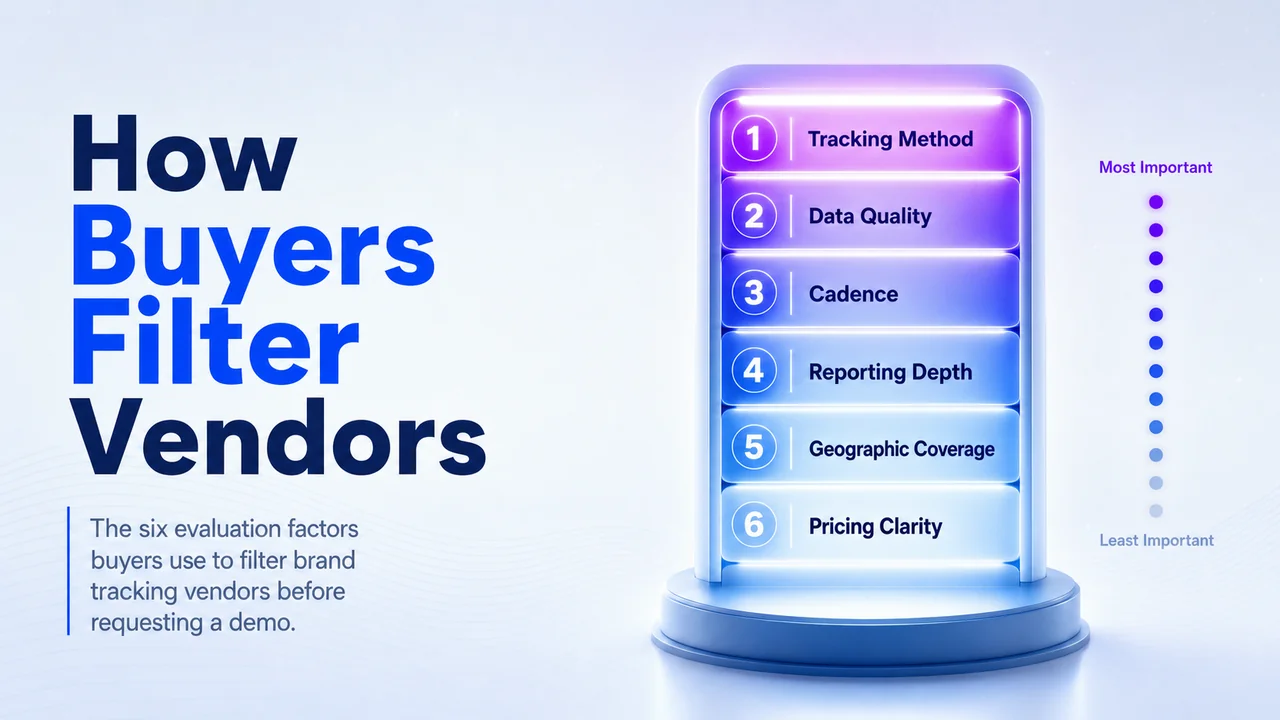
Tracking method comes first because it decides everything downstream. A survey tells you what people say they think; social listening tells you what they say in public; syndicated data tells you how you move against competitors over time. Data quality follows: who the respondents are, how they are verified, and whether the panel matches your audience. A consumer panel does little for a niche B2B buyer.
Cadence separates daily and always-on trackers from quarterly or one-off studies, and the right answer depends on how fast your category moves. Reporting depth covers whether you get a dashboard you read yourself or an analyst who interprets the shift and tells you what to do. Geographic coverage matters the moment you track more than one market. And pricing transparency is treated as a ranking signal here even when exact numbers stay private, because a vendor that hides its model usually hides its minimums too.
One honest note on what “best” means: it depends entirely on the buying scenario. Enterprise brand health, B2B audience research, startup benchmarking, and always-on social listening pull toward different vendors. This roundup favors clear differentiation over name recognition, so a smaller specialist can outrank a household research name when it fits your job better.
8 Best Brand Tracking Companies to Shortlist
Each company below leads with a “Best for” label so you can self-select fast, then a plain description of what it is, why it earns its place, and one concrete benefit. The data block under each uses the same fields so you can scan across them. Read the label first, skip the ones that obviously do not fit your stage, and shortlist two or three.
1. YouGov BrandIndex
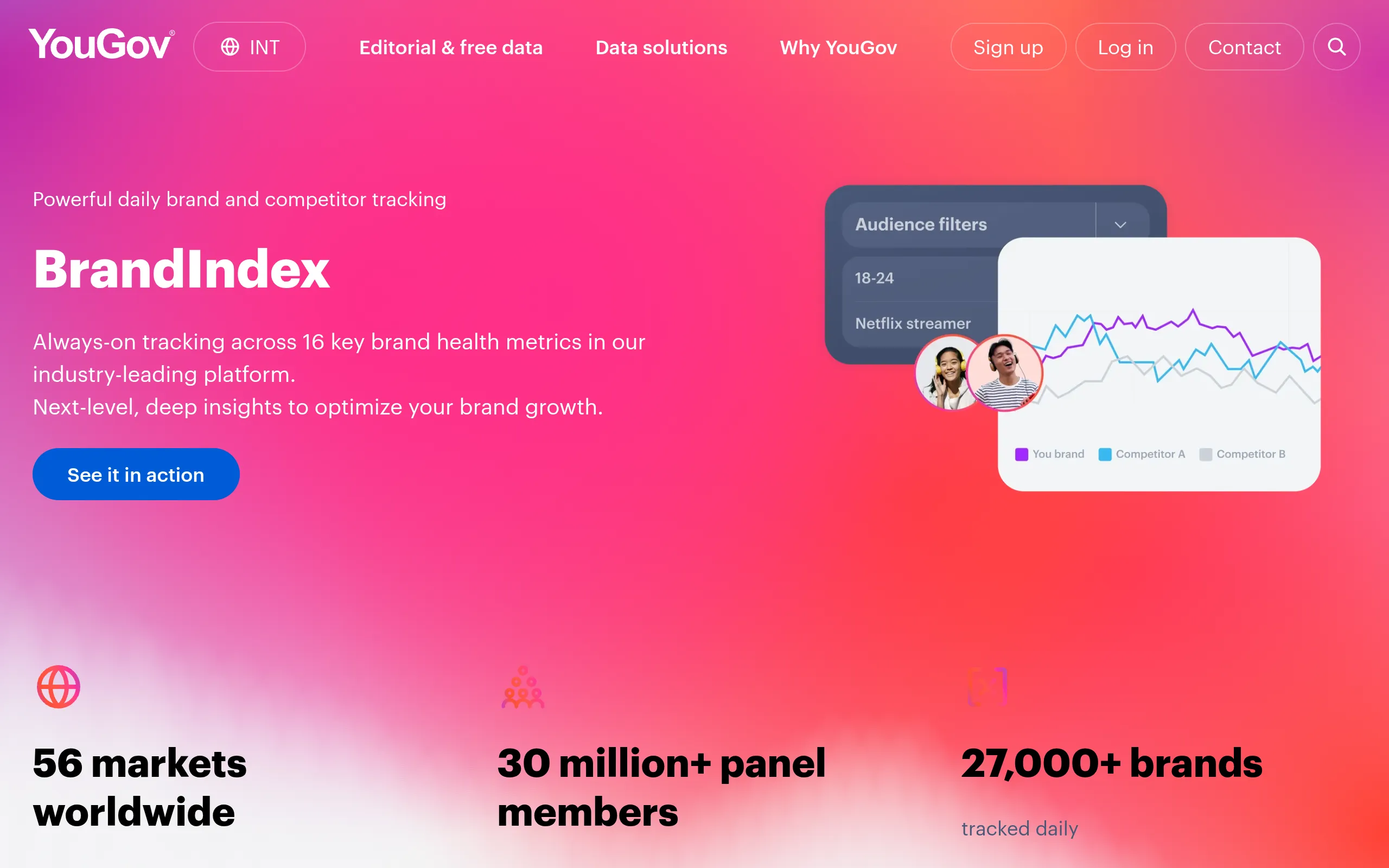
YouGov BrandIndex is a large-scale, syndicated brand tracker that measures brand health daily, built for enterprise teams that need consistent benchmarking across competitors and markets. It reads off a standing panel rather than a study you commission each time, so the data is already moving when you log in.
What earns its spot is scale paired with history. YouGov reports tracking tens of thousands of brands across 50-plus markets with years of trend data behind each metric, which means you can see directional brand movement without building a custom research program from scratch. The trade-off: syndicated metrics tell you that perception shifted, not always the granular why behind it, so deep diagnostic work still needs custom research layered on top.
- Best for: Enterprise brands and category leaders wanting ongoing brand health visibility
- Tracking method: Syndicated daily panel
- Ideal company size: Enterprise
- Turnaround: Daily, always-on
- Pricing transparency: Custom, not public
2. Kantar
Kantar is a research-led brand tracking provider built for large, multinational measurement programs. It fits the company that needs rigorous sampling, market-by-market comparison, and reporting senior stakeholders will trust without a fight.
Kantar earns its place on credibility and governance. When a tracking program feeds board decisions across multiple regions, the methodology has to be defensible, and Kantar’s scale and research heritage give you that. The honest limitation is the flip side of the same coin: enterprise research depth comes with enterprise timelines and pricing, which makes it overkill for a lean team that needs a directional read this week.
- Best for: Global brands and mature enterprises with formal insights functions
- Tracking method: Agency-led custom research
- Ideal company size: Enterprise
- Turnaround: Periodic, study-based
- Pricing transparency: Custom, not public
3. Wynter
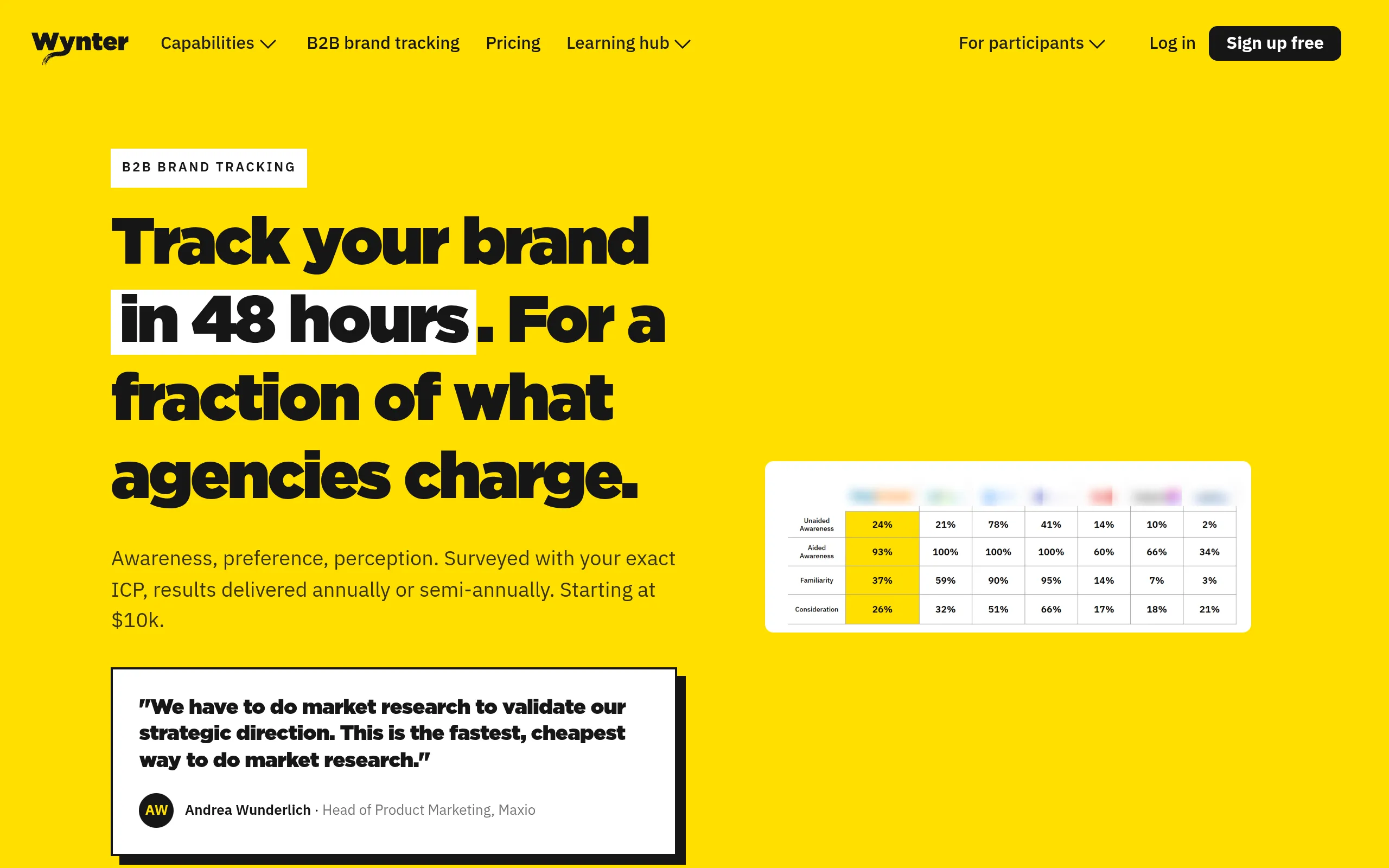
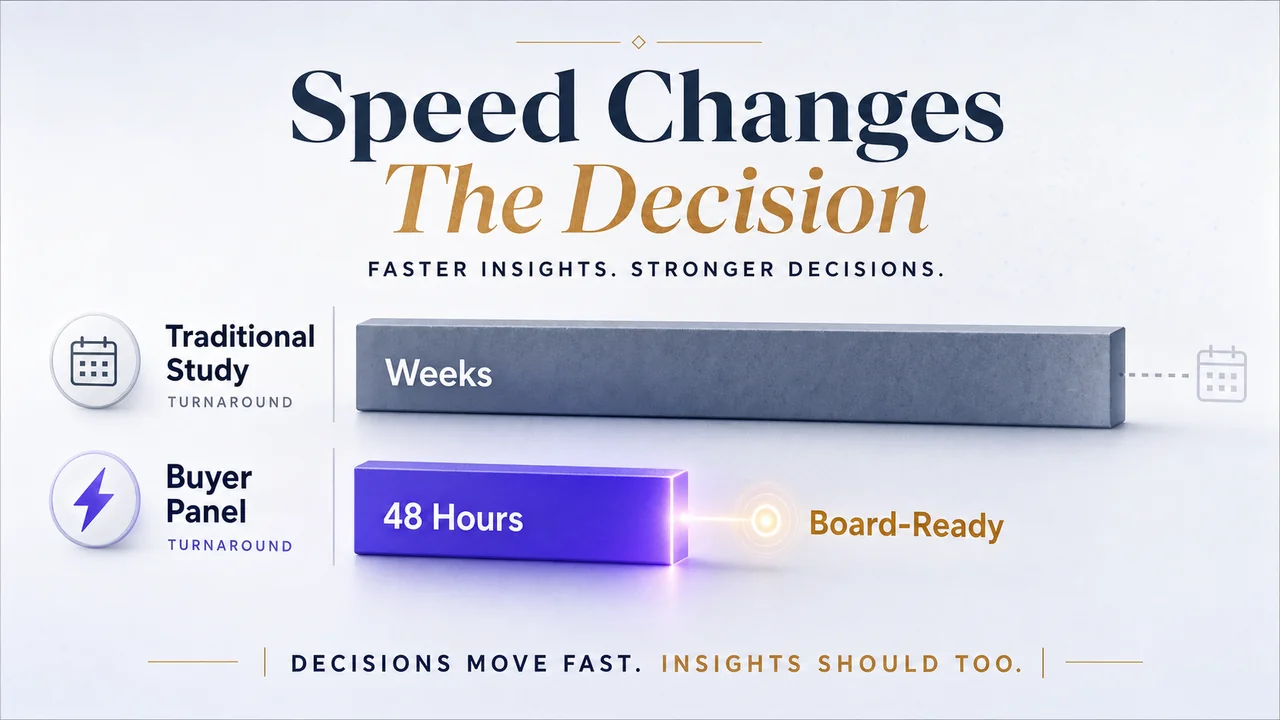
Wynter is a B2B brand tracking platform that surveys verified buyers and returns results in roughly 48 hours. It is the strongest fit for SaaS and B2B teams testing awareness, preference, and perception without waiting on agency timelines.
The differentiator is speed plus audience relevance. Wynter matches respondents to your ideal customer profile, so you are hearing from actual buyers rather than a generic consumer panel, and you can validate a positioning change before the next launch meeting. Wynter publishes a starting point around $10K, which is rare candor in this category. The caveat: a fast buyer panel is a snapshot, not a continuous syndicated trend line, so pair it with an always-on tracker if you need to watch movement month over month.
- Best for: B2B and SaaS teams with narrow ICPs needing board-ready answers fast
- Tracking method: Verified B2B buyer panel
- Ideal company size: Mid-market B2B
- Turnaround: About 48 hours
- Pricing transparency: Public starting point, around $10K
4. Tracksuit
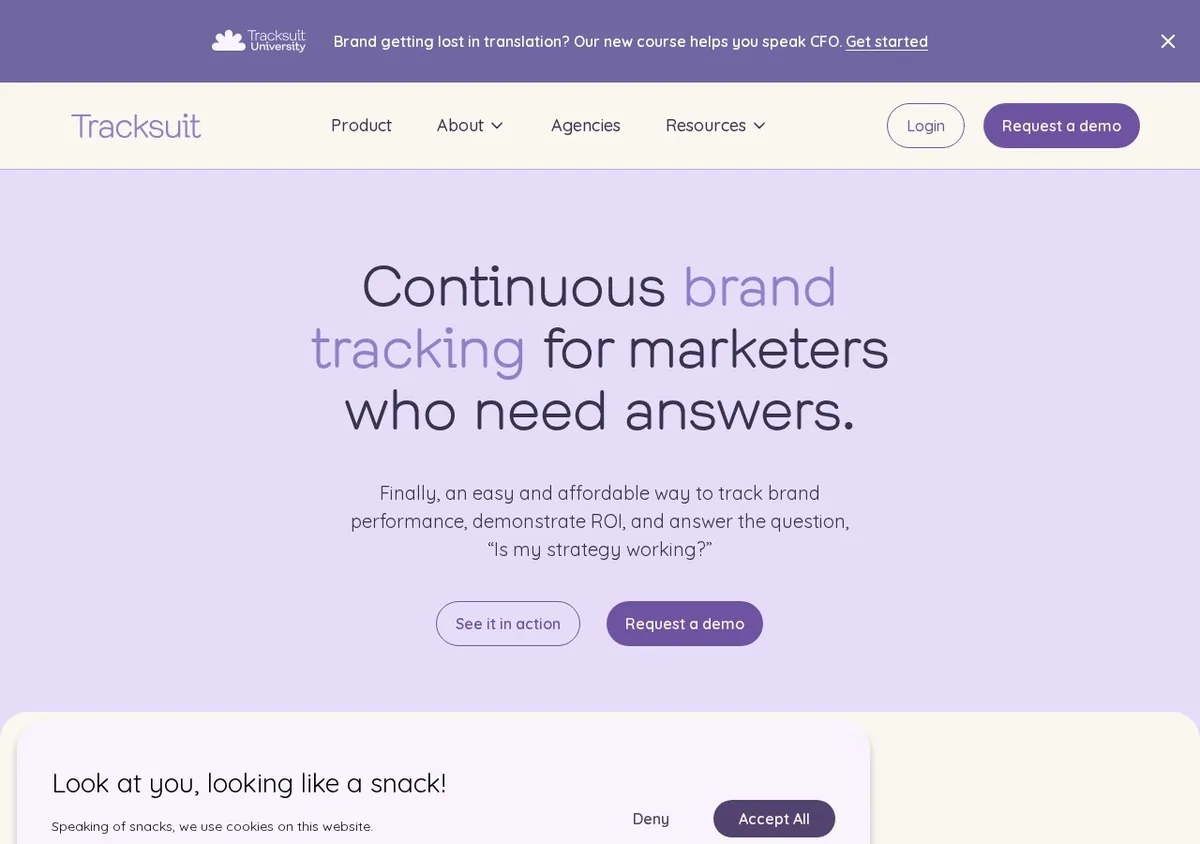
Tracksuit is an always-on brand tracker built around simplicity and a clean dashboard, made for mid-market and growth-stage teams that want ongoing visibility without a heavy research-ops setup. It gives you cadence and clarity rather than statistical complexity.
Its value is approachability. A scaleup brand lead who does not have a dedicated insights function can read Tracksuit’s dashboard and act on it, which is exactly the gap enterprise tools leave open. The trade-off is scope: the simplicity that makes it easy also means it is less suited to deeply custom study design or the multi-market governance an enterprise program demands.
- Best for: Startups, scaleups, and lean brand teams wanting continuous tracking
- Tracking method: Always-on survey tracking
- Ideal company size: Mid-market
- Turnaround: Always-on dashboard
- Pricing transparency: Custom, not public
5. Qualtrics
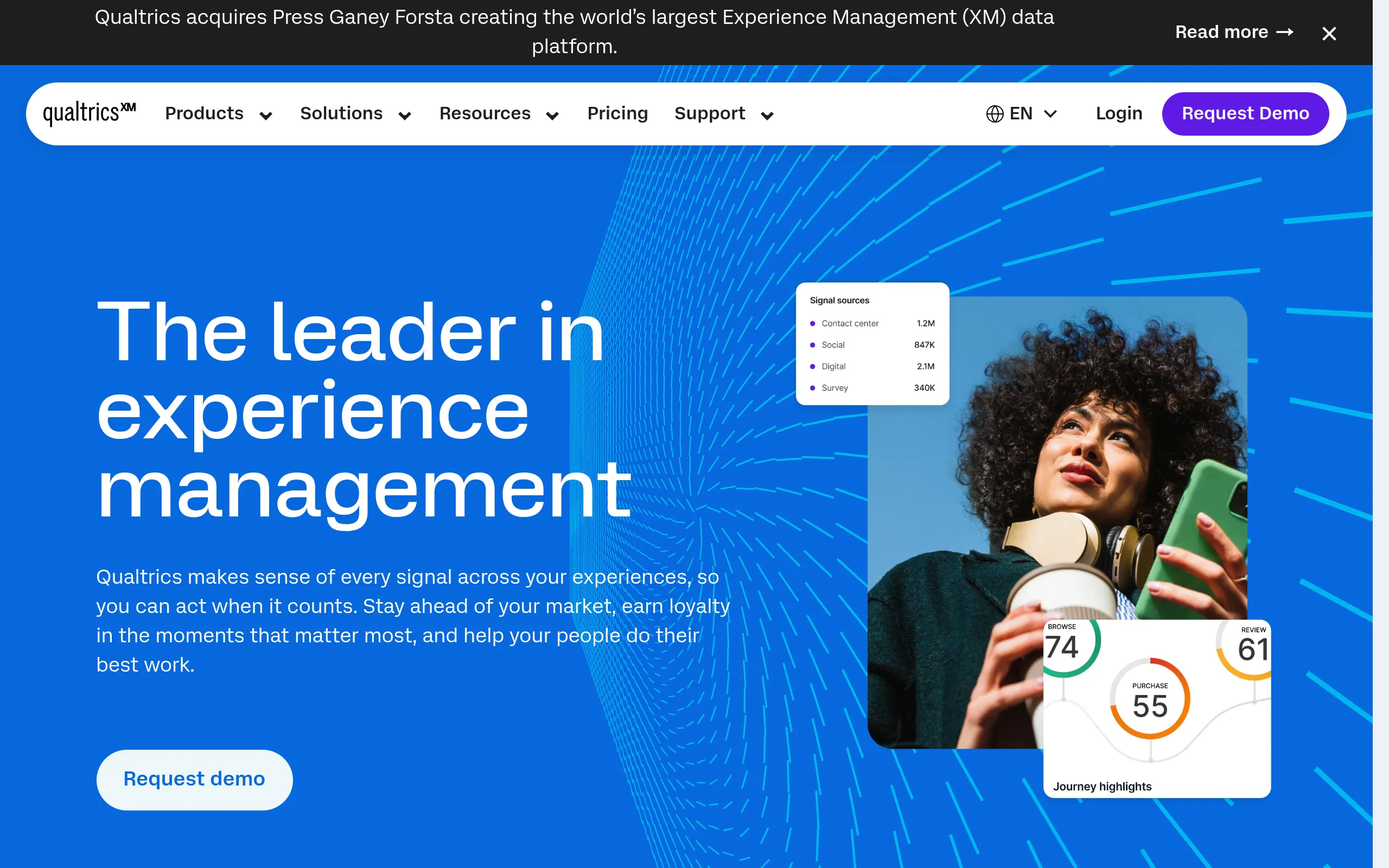
Qualtrics is an enterprise survey and research platform used to build custom brand tracking studies end to end. It fits teams that want full control over survey structure, logic, governance, and reporting rather than a packaged tracker.
The reason it belongs here is flexibility. If your organization already runs research internally, Qualtrics lets brand tracking slot into an existing stack instead of forcing a separate tool and workflow. That power is also the catch: a configurable platform expects you to bring the research design and the people to run it, so it rewards mature insights teams and frustrates lean ones that wanted a turnkey answer.
- Best for: Enterprise insights teams with internal research resources
- Tracking method: Custom survey software
- Ideal company size: Enterprise
- Turnaround: Self-managed, varies
- Pricing transparency: Custom, not public
6. Brandwatch
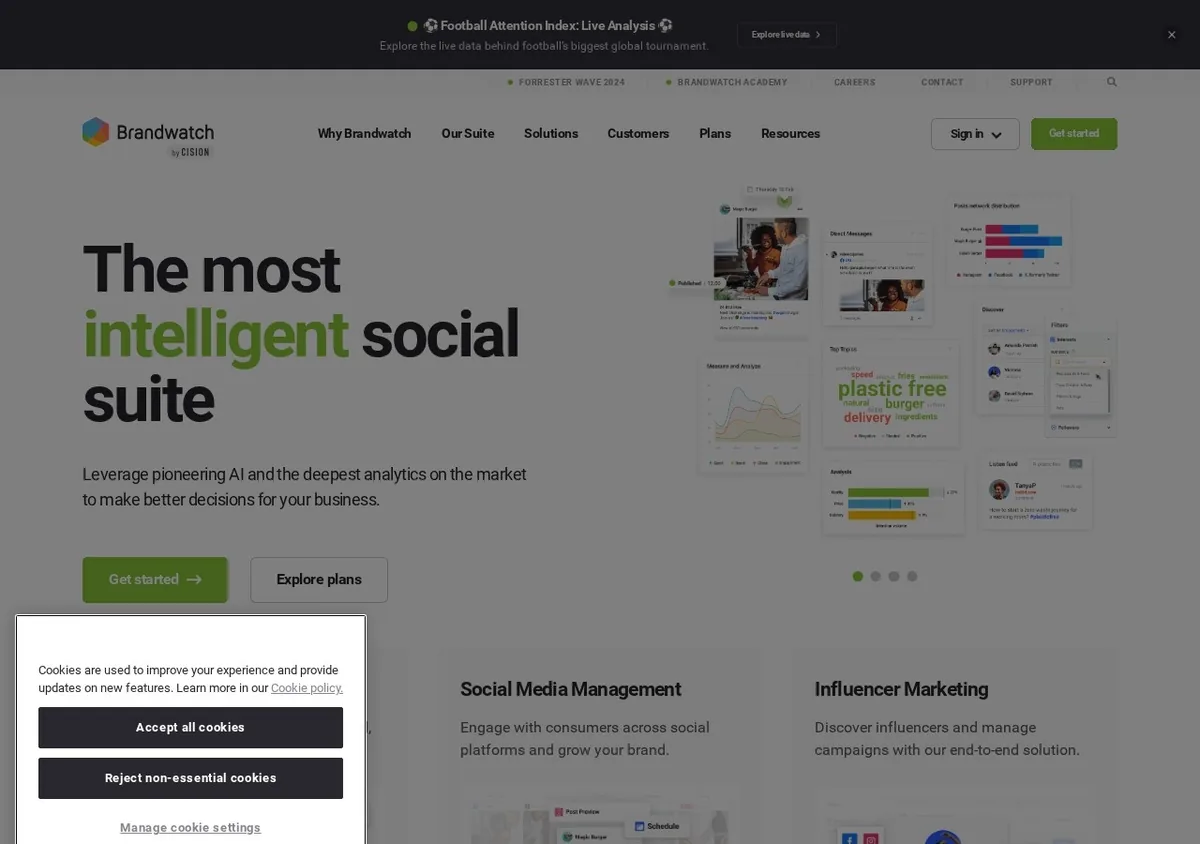
Brandwatch is a social listening and consumer intelligence platform that tracks online conversation and sentiment rather than survey responses. It is the best fit when brand perception is shaped by social channels, reviews, and real-time public discussion.
It earns its place by reading what people actually say unprompted, which surveys miss. For marketing, comms, and reputation teams watching share of voice and sentiment trends, that visibility is the point, especially during a launch or a crisis when perception moves by the hour. The honest limit: listening captures the loud and the public, not the quiet majority who never post, so it complements survey tracking rather than replacing it. If you want to understand why surveys and listening tell different stories, our take on why sentiment analysis misses the brand story is worth a read.
- Best for: Marketing, comms, and reputation teams tracking sentiment and share of voice
- Tracking method: Social listening
- Ideal company size: Mid-market to enterprise
- Turnaround: Real-time
- Pricing transparency: Custom, not public
7. Basis Global
Basis Global is an agency-led brand tracking partner built for complex markets and high-stakes decisions. It suits companies that want a tailored research partner and human interpretation, not software alone.
Its differentiator is custom methodology paired with strategic reading of the data. When the brand question is nuanced or politically sensitive inside the organization, having an analyst frame what changed, why it matters, and what to do next is worth more than a self-serve dashboard. The trade-off is the usual agency one: more hands-on support means less self-serve control and a heavier engagement than a packaged tool. If you are weighing the partner route generally, our guide on how to pick the right brand tracking agency covers the questions to ask first.
- Best for: Larger consumer and B2B brands with nuanced measurement needs
- Tracking method: Agency-led custom research
- Ideal company size: Enterprise
- Turnaround: Weeks, study-based
- Pricing transparency: Custom, not public
8. Pollfish
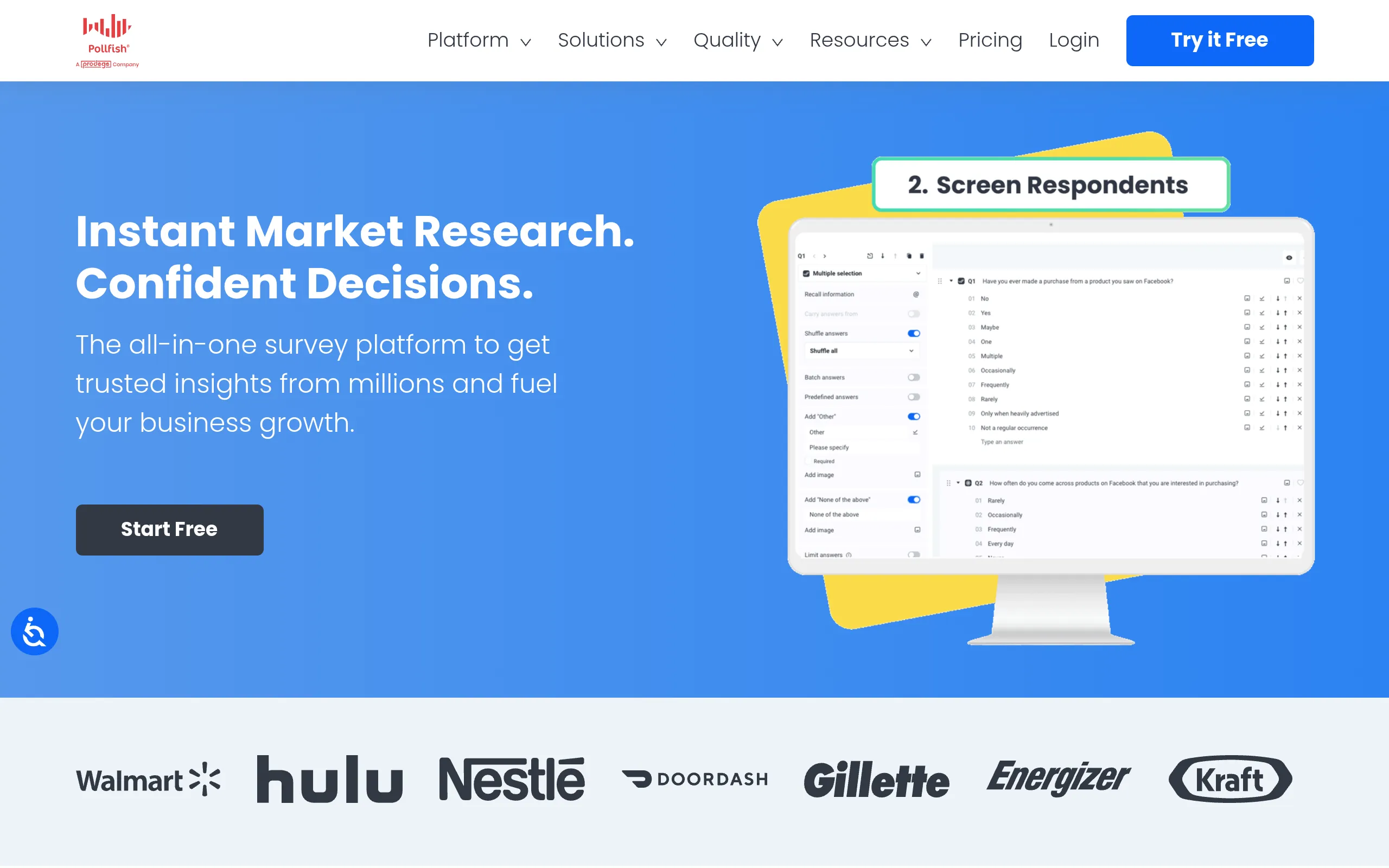
Pollfish is a self-serve survey platform that lets you run brand tracking studies quickly with pay-per-response economics. It rounds out the shortlist as the budget-friendly DIY option for smaller teams and researchers.
Its strength is cost control and speed of setup. With pricing reported to start around $0.95 per completed response, you can launch custom tracking without enterprise minimums or long onboarding, which makes it a practical way to test brand tracking before scaling into a bigger program. The caveat sits with all DIY survey work: respondent quality and survey design are on you, so the rigor of the output depends on the rigor you bring to building it.
- Best for: Smaller teams and researchers wanting transparent, low-cost survey tracking
- Tracking method: DIY survey platform
- Ideal company size: Startup to mid-market
- Turnaround: Hours to days
- Pricing transparency: Public, from $0.95 per response
Brand Tracking Companies Compared at a Glance
This table puts the eight vendors side by side on the fields buyers sort by first. Read down the “Tracking method” and “Ideal size” columns to eliminate fast, then compare the survivors on turnaround and pricing clarity.
| Company | Best for | Tracking method | Pricing transparency |
|---|---|---|---|
| YouGov BrandIndex | Enterprise daily benchmarking | Syndicated daily panel | Custom, not public |
| Kantar | Global multinational programs | Agency-led research | Custom, not public |
| Wynter | Fast B2B buyer research | Verified B2B panel | Public, around $10K |
| Tracksuit | Always-on for growth teams | Always-on survey | Custom, not public |
| Qualtrics | Custom enterprise survey design | Survey software | Custom, not public |
| Brandwatch | Social listening and sentiment | Social listening | Custom, not public |
| Basis Global | Agency-led complex studies | Agency-led research | Custom, not public |
| Pollfish | Budget DIY surveys | DIY survey platform | Public, from $0.95 per response |
How we picked: each company had to represent a distinct tracking method, serve a clear buyer scenario, and carry enough public detail to compare honestly. We weighted method fit, cadence, and pricing transparency over name recognition, and we sourced every pricing figure from each vendor’s own public materials, leaving a “custom” note where numbers stay private rather than guessing.
How to Choose the Right Brand Tracking Company
The shortlist only helps once you map it to your own situation. Work through the five decisions below in order, because each one narrows the field before the next.
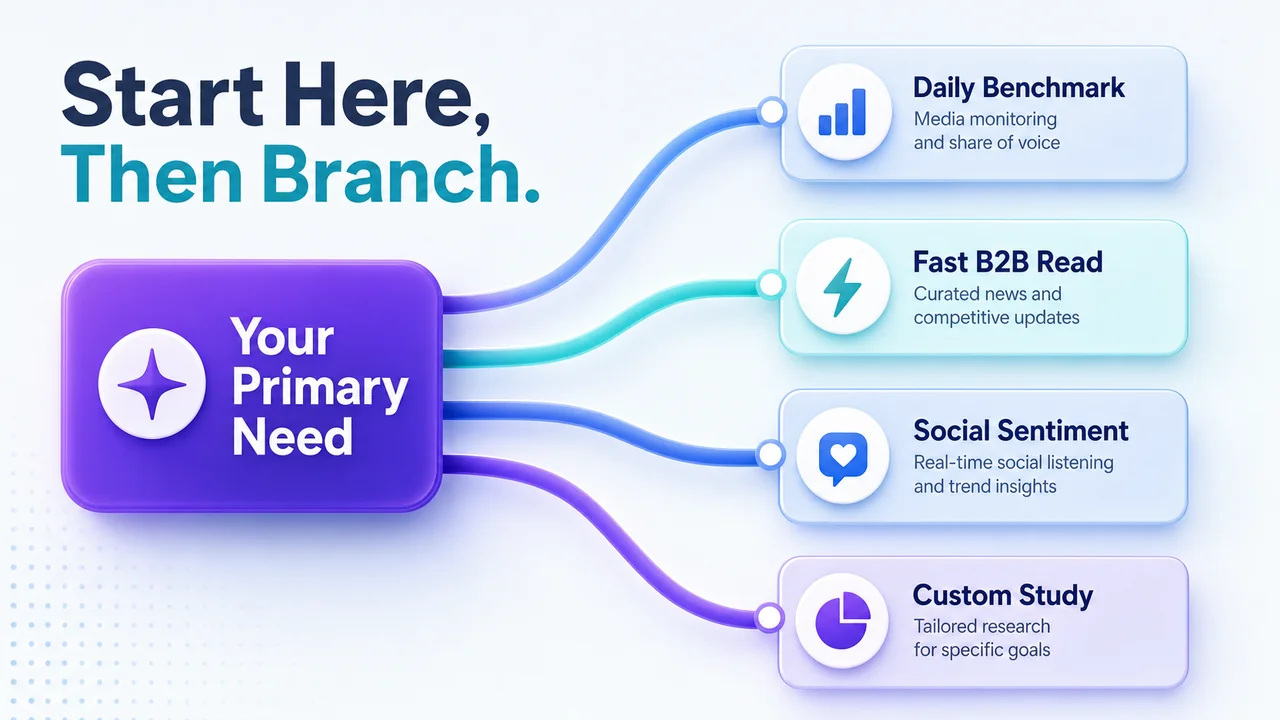
Step 1: Pick the Tracking Method First
Decide whether you need survey data, syndicated benchmarks, social listening, or an agency-led study. This single choice removes most of the list. If you want to know what buyers say they think, go survey-led. If you want to know what they say in public, go social listening. The methods answer different questions, and no vendor does all of them equally well.
Step 2: Match the Vendor to Your Company Stage
Enterprise programs reward Kantar, YouGov, and Qualtrics; mid-market and growth teams fit Tracksuit; B2B specialists fit Wynter; budget testers fit Pollfish. A startup buying an enterprise research program overpays and underuses it, and an enterprise relying on a DIY survey tool underbuilds the governance leadership expects.
Step 3: Decide How Fast the Data Must Move
Daily, monthly, quarterly, or on-demand is a real constraint, not a preference. Fast-moving categories and active campaigns need always-on or rapid-turnaround tools; stable categories can run periodic studies. If you only act on brand data once a quarter, you do not need to pay for daily measurement.
Step 4: Confirm Coverage of Your Markets and Competitors
Check that the vendor tracks the markets, audiences, and competitors that actually matter to you. A global panel is wasted on a single-market B2B brand, and a strong domestic tool falls short the moment you expand. Ask for the specific competitor set and geographies before you commit, since this is where promising demos quietly fail.
Step 5: Pressure-Test Pricing, Onboarding, and Reporting
Ask about pricing transparency, onboarding effort, dashboard access, and whether reporting is self-serve or analyst-led. The operating model matters as much as the data: a team without research staff needs interpretation, while a mature insights function may prefer raw configurability. To go deeper on the metrics your tracker should surface, see our breakdown of the brand tracking metrics that predict pipeline, and if you are still comparing platforms over partners, our roundup of brand tracking software tested for B2B sits alongside this list.
Frequently Asked Questions
What does a brand tracking company do?
A brand tracking company measures how your brand’s awareness, perception, and preference change over time, then reports the movement so you can act on it. Some do this with recurring surveys of a target audience, some read public conversation through social listening, and some run agency-led custom studies. The common thread is continuity: a single snapshot tells you where you stand today, while tracking tells you whether you are gaining or losing ground against competitors.
How much do brand tracking companies cost?
Pricing ranges widely by method, and most vendors keep exact numbers private. At the accessible end, DIY survey tools like Pollfish report rates from about $0.95 per completed response, and B2B platforms like Wynter publish starting points around $10K. Enterprise research programs from providers like Kantar or syndicated trackers like YouGov are quoted as custom, and they run materially higher because the panel scale, market coverage, and analyst support cost more to deliver.
Which is better for brand tracking, survey data or social listening?
Neither is better outright; they answer different questions, and strong programs use both. Survey data tells you what a representative audience thinks when prompted, including the quiet majority who never post online. Social listening tells you what people say unprompted in public, which surfaces emerging issues faster but skews toward the loud and the engaged. If you can only start with one, choose survey data for structured benchmarking and add listening when reputation and real-time sentiment matter.
How often should you track brand health?
Match cadence to how fast your category moves and how often you act on the data. Stable categories often track twice a year, while fast-moving markets, active campaigns, or a rebrand justify monthly, quarterly, or always-on measurement. There is no point paying for daily tracking if your team reviews brand performance once a quarter, so set the cadence to your decision rhythm, not the vendor’s maximum.
What should I ask in a brand tracking vendor demo?
Ask the questions that expose fit, not features. Start with who the respondents are and how they are verified, then confirm the markets and competitor set the vendor can actually track. Push on turnaround time, whether reporting is self-serve or analyst-led, and what the real starting price is rather than a vague range. A vendor that answers those plainly is showing you the transparency you will rely on later.
Shortlist Two, Then Ask for Proof
There is no single best brand tracking company, only the one that fits how your team uses brand data. Use the method-first framework to cut the list, match the survivors to your company stage and reporting cadence, and pick the two or three that match. Then ask each for a demo, a sample report, and a real starting price before you commit. The right vendor should fit your operating model, not force you to rebuild it. Compare your top matches above, then request proposals from the two that fit your stage and budget most closely.