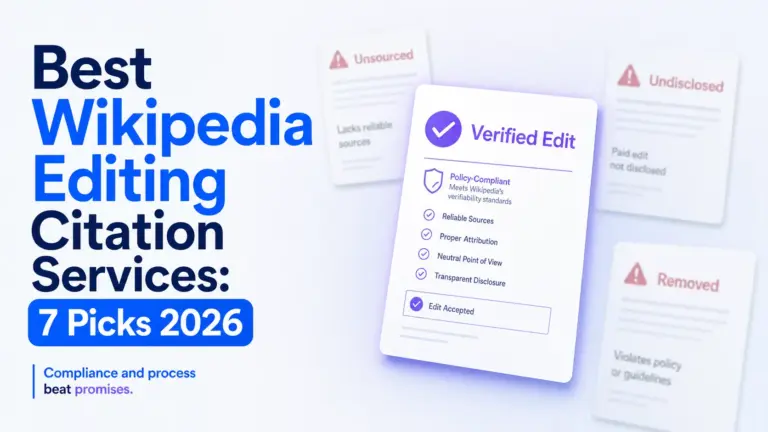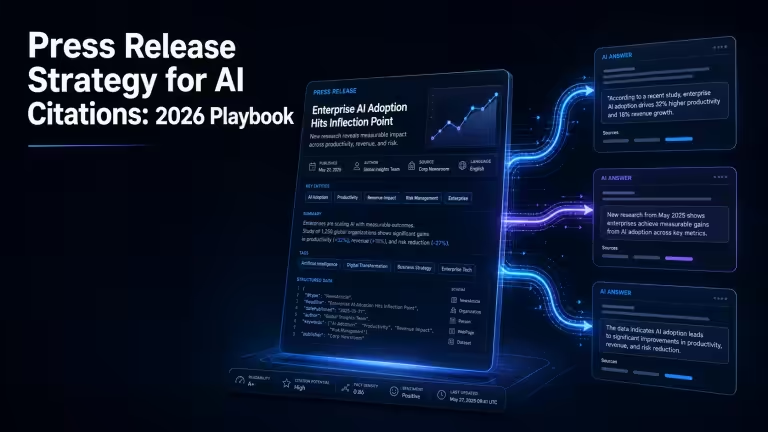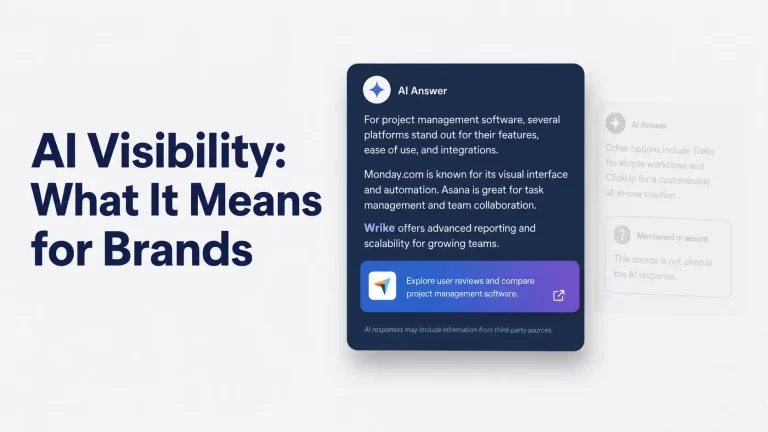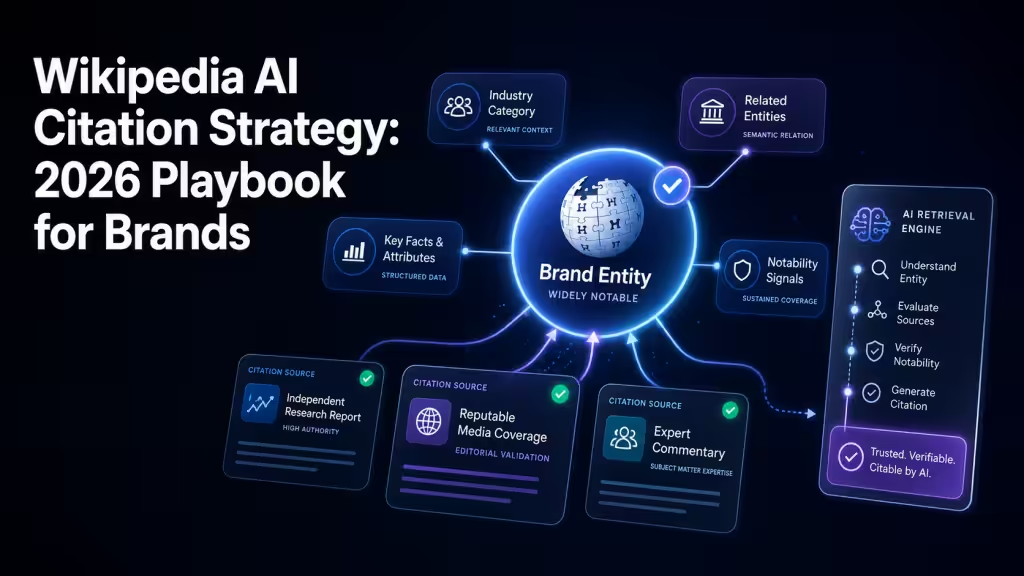

A working Wikipedia AI citation strategy starts with one hard truth: you don’t optimize a Wikipedia page the way you optimize a blog post. You build the off-Wikipedia evidence that earns a page, then you make sure the page that exists is accurate, well-sourced, and aligned with how ChatGPT, Gemini, Perplexity, and Google AI Overviews read entities. Skip the first part and the second part collapses. This playbook walks through both, plus the workarounds when your brand isn’t notable enough yet.
Why Wikipedia Sits at the Center of AI Citations
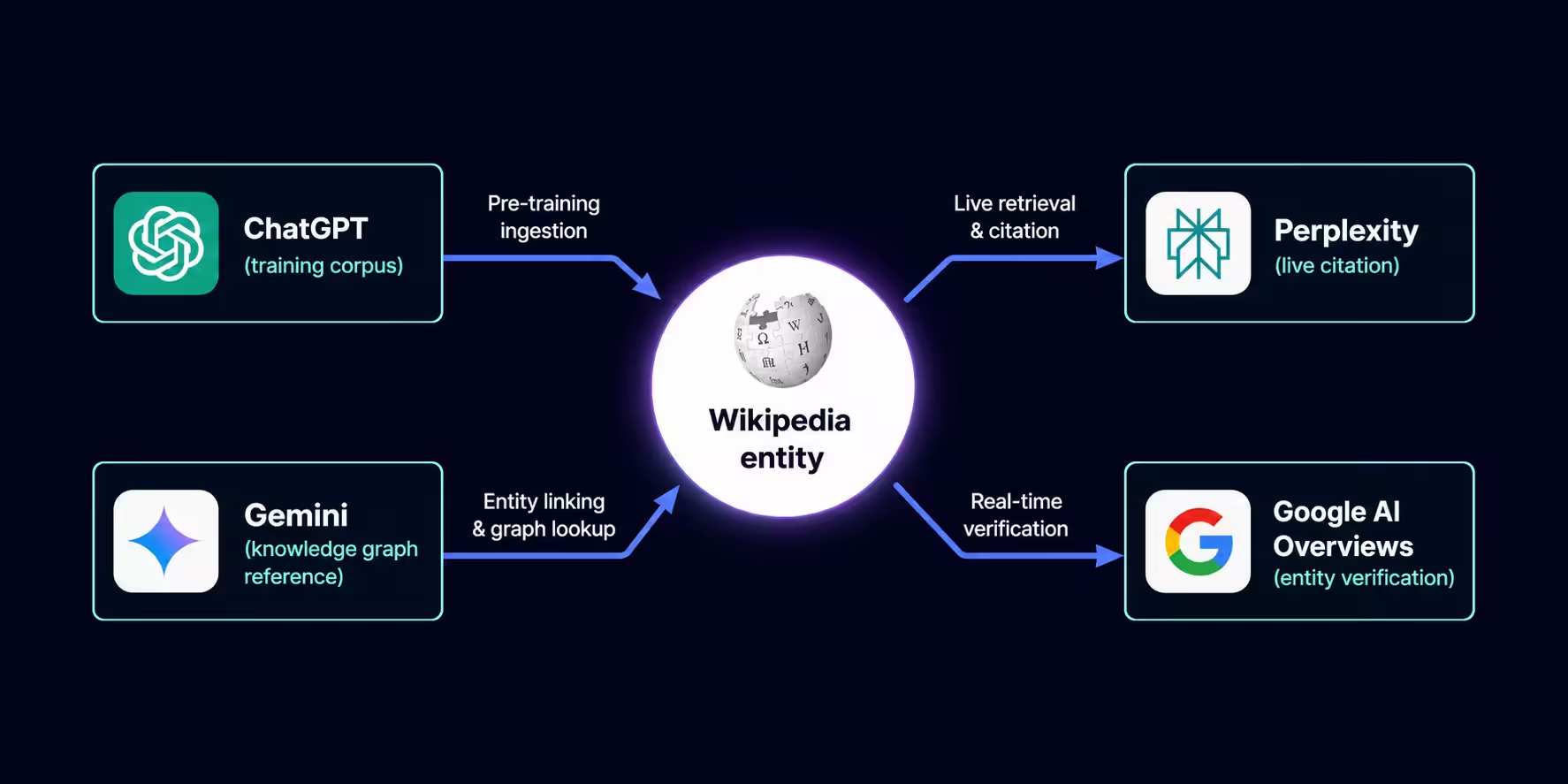
Large language models were trained on Wikipedia. Retrieval-augmented systems like Perplexity and Google AI Mode pull from it live. When an AI assistant describes your company, your category, or your founder, the Wikipedia entry is often the silent backbone behind the answer, even when it isn’t visibly cited.
What Actually Happens Inside the Models
ChatGPT learned the general shape of your industry from a Wikipedia snapshot. Gemini cross-references Wikipedia with Google’s Knowledge Graph. Perplexity cites Wikipedia directly in its source list. Each engine uses the same source differently, but they all treat it as a baseline truth layer.
That’s why a thin, outdated, or missing Wikipedia entity creates a ceiling on your AI visibility. The model has no anchor to attach your facts to.
The Strategic Problem Most Brands Get Wrong
Most teams treat Wikipedia like a press release distribution channel. They draft a page, hire an “expert” to push it through, and watch it get deleted within a week. The problem isn’t tactical execution. It’s that Wikipedia isn’t a publishing platform. It’s an editorial review system with stricter sourcing standards than most newsrooms.
The Notability Test Before You Write Anything
Before you draft a single sentence of a Wikipedia entry, you need to know whether your brand qualifies. Wikipedia calls this notability, and it has a specific definition that has nothing to do with how well-known you are inside your category.
What Notability Actually Requires
Notability means significant coverage in reliable, independent, secondary sources. Read that phrase carefully. Each word does work.
- Significant coverage: more than a passing mention. The source addresses your brand directly and in depth.
- Reliable: publications with editorial oversight. Trade press counts. Press release wires don’t.
- Independent: not written by your team, your PR agency, or anyone paid by you.
- Secondary: the source analyzes, interprets, or contextualizes, it doesn’t just repeat your announcement.
A funding announcement in TechCrunch is borderline. A Bloomberg feature on how your product changed an industry is solid. Three or four of the second kind, across different outlets, over more than 12 months, is roughly where notability becomes defensible.
The Quick Self-Audit
Open a clean spreadsheet. List every piece of media coverage your brand has received in the past 24 months. For each one, mark whether it passes all four notability tests. If you can’t list at least five rows that pass cleanly, you don’t have a Wikipedia case yet. You have a PR project.
In the citation-building campaigns we’ve run over the last 18 months, the brands that succeeded on Wikipedia had an average of nine qualifying sources before they tried. The ones that failed averaged three.
Building the Source Stack That Earns a Page
If notability is the gate, your source stack is the key. This is where most of the work happens, and it happens off Wikipedia entirely.
| Notability requirement | What it means | Sources that pass | Sources that fail |
|---|---|---|---|
| Significant coverage | The piece addresses your brand directly and in depth, not in passing | A feature or analysis centered on your company | A one-line mention in a roundup or list |
| Reliable | Published by an outlet with real editorial oversight | Trade press and edited publications | Press release wires and self-published posts |
| Independent | Not produced by you or anyone you pay | Third-party reporting written by the outlet | Your own team, your PR agency, or sponsored placements |
| Secondary | Analyzes, interprets, or contextualizes rather than repeating your announcement | Commentary that evaluates what your news means | A funding announcement that just restates your release |
The Three Tiers of Sources Wikipedia Editors Trust
Not all coverage is equal in the eyes of a Wikipedia editor. Sort your existing and target coverage into three buckets.
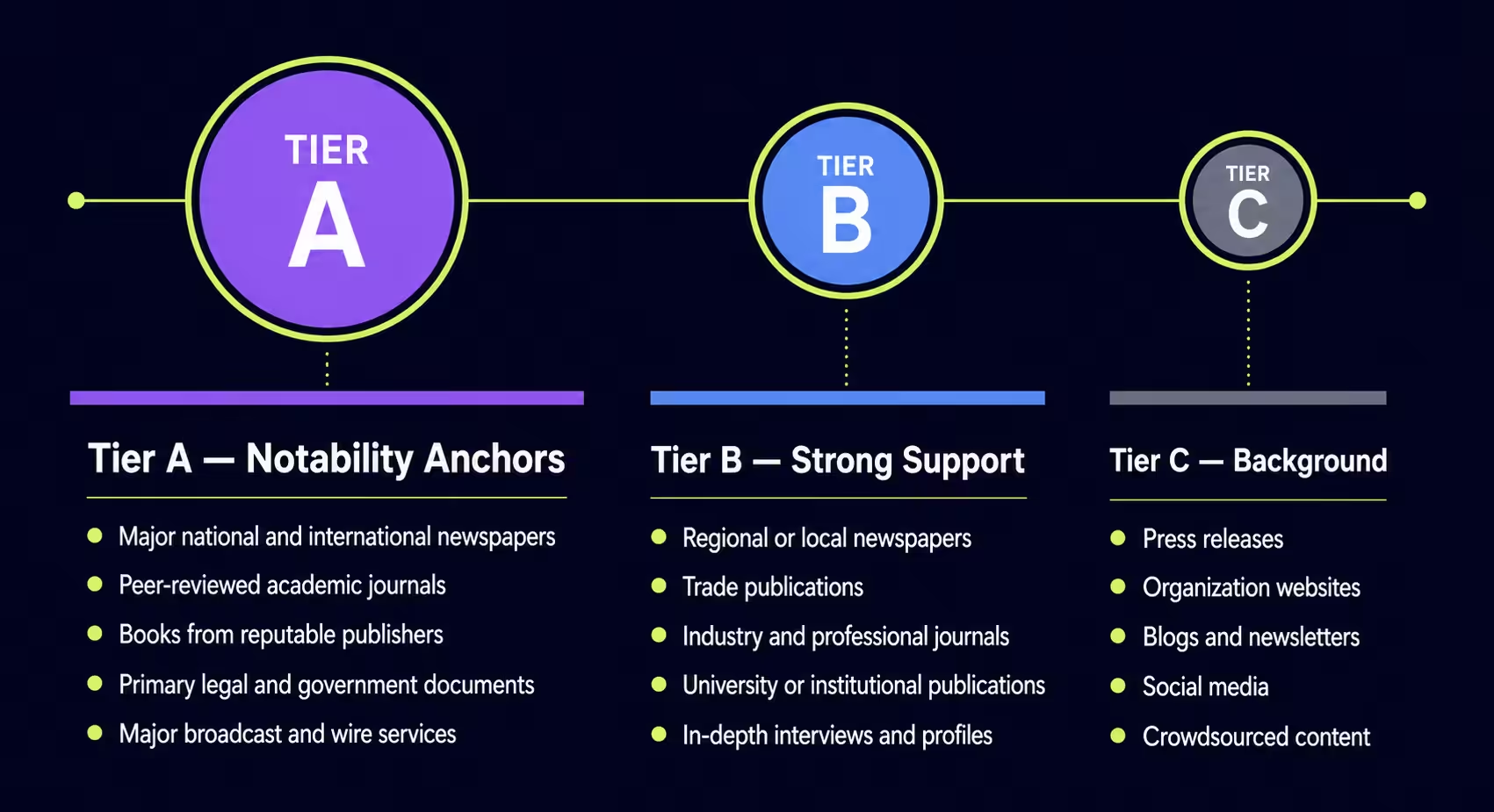
Tier A: major national press (Bloomberg, Reuters, The New York Times, The Wall Street Journal, BBC, Financial Times, The Economist), peer-reviewed academic papers, books from established publishers, and government or NGO reports that name your brand specifically.
Tier B: respected trade publications with editorial standards (Harvard Business Review, MIT Technology Review, Wired, Forbes staff articles, not contributor posts), and industry-specific outlets with clear editorial review.
Tier C: niche blogs, contributor posts on large sites, podcast transcripts, and conference proceedings. These rarely carry notability weight on their own but can support a page that already qualifies.
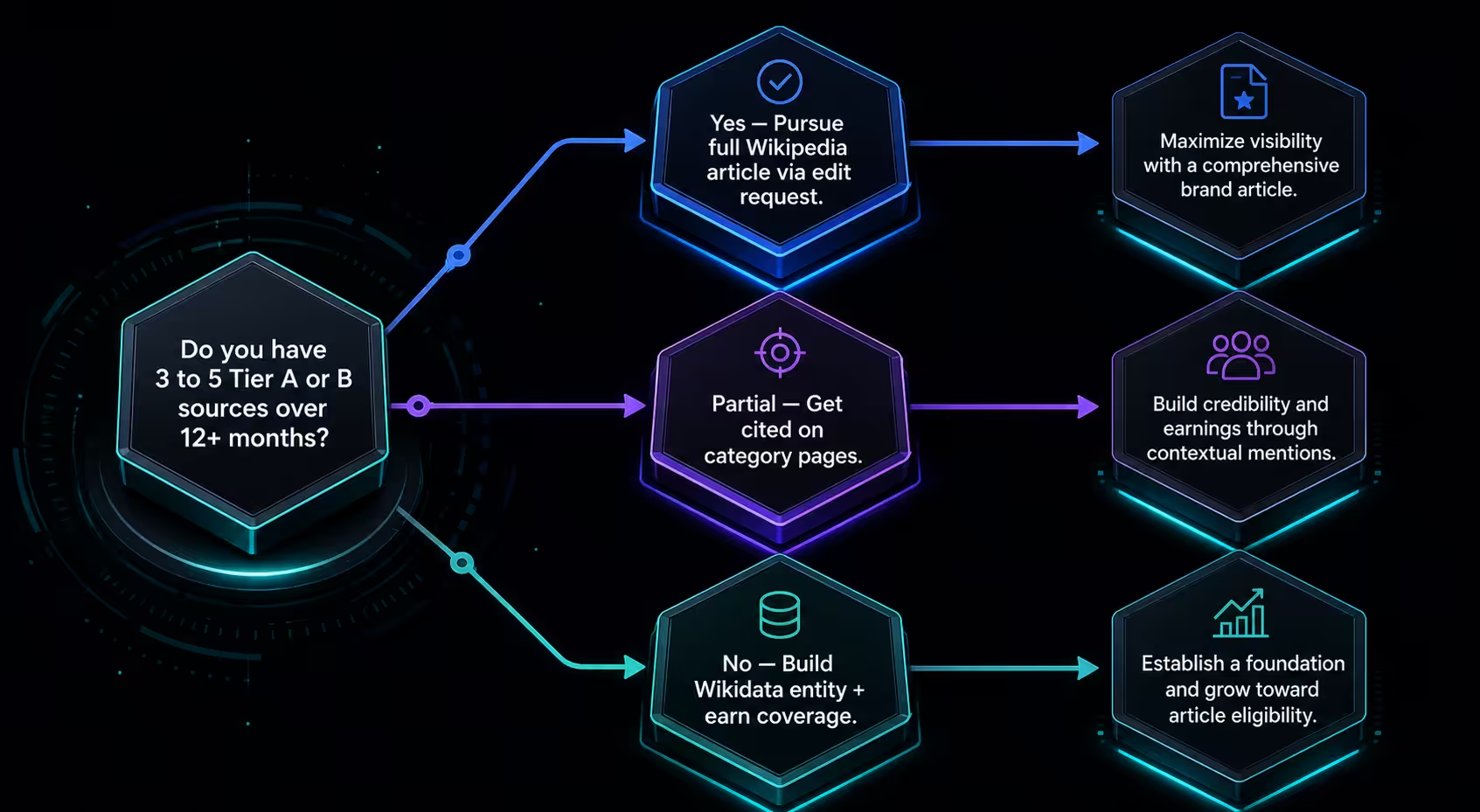
A defensible Wikipedia case typically needs three to five Tier A or Tier B sources at minimum. Tier C alone won’t move an editor.
Where the Source Stack Usually Breaks
Three patterns we see consistently when an editor declines a draft.
First, recency clustering. Six sources, all published the same week, all tied to the same funding announcement. To an editor that looks like one PR event, not sustained notability. Spread coverage across at least 12 months.
Second, source independence. A “feature” written by a freelancer who also does paid work for your agency is not independent. Wikipedia editors check bylines and disclosures.
Third, depth. Coverage that names your brand in a list of 10 vendors does not establish notability. The source must focus on your brand specifically.
The Edit Request Workflow That Doesn’t Get Reverted
Here’s where most internal teams break the rules without realizing it. If you have a paid relationship with the brand whose page you’re touching, you have a conflict of interest, and Wikipedia requires you to disclose it and use the edit request process, not direct edits.
The Process, Step by Step
- Create a Wikipedia account under your real name and disclose your employer or client on your user page.
- Go to the Talk page of the article you want to influence (or the related article where your brand might fit).
- Open a new section titled “Edit request” or use the formal request edit template.
- State the exact change proposed, in the exact wording.
- Provide the full citation for each supporting source.
- Wait. Independent editors review and decide.
This process is slow. It’s also the only path that survives. Direct edits by paid contributors are routinely reverted, and the edit history follows the page forever.
What to Actually Request
Resist the urge to add promotional language. Editors smell it instantly. Request factual additions: founding date corrections, accurate funding history, leadership changes, product launches that received independent coverage, and removal of factual errors.
The strongest edit requests read like wire copy. Dry, sourced, neutral. If your draft contains the word “leading” or “innovative,” cut it before submitting.
What to Do When You Don’t Qualify for a Page
Most early-stage brands don’t qualify for their own Wikipedia article. That doesn’t mean Wikipedia is closed off as a citation surface. There are three ways in.
Get Cited on Adjacent Pages
Your brand might not deserve a page, but your data, research, or executive commentary might deserve a citation on a page about your category. If your team published original research on AI adoption in fintech, that finding can be cited on the Wikipedia article about AI in finance. The brand name appears in the citation footnote and the running text where appropriate.
This is how we got a Series B SaaS client cited on three category pages within four months. They never had a brand page. They didn’t need one to start showing up in Perplexity citations and Gemini answers about their category.
Build a Strong Wikidata Entity
Wikidata is Wikipedia’s structured data layer. It feeds knowledge graphs across the open web and into AI systems. Unlike a Wikipedia article, a Wikidata item has a lower bar, your brand needs to be verifiable, not significantly covered.
A well-structured Wikidata entity with founders, founding date, headquarters, industry, key products, and source references gives AI systems machine-readable facts about your brand. Building entity authority through Wikidata is often the right first move before a full Wikipedia push.
Build the Source Stack You’ll Need Anyway
If you don’t qualify today, the work to qualify is the same work that drives AI citation visibility regardless. Earning Tier A and Tier B coverage moves the needle on ChatGPT, Perplexity, and Gemini citations independently of whether Wikipedia ever lists your brand. This is the longest-term lever and the one most teams underinvest in.
Aligning Wikipedia With Your Owned Properties
AI systems cross-check facts. If your Wikipedia entry says you were founded in 2018 and your About page says 2019, the model sees ambiguity and may surface either or neither.
The Consistency Checklist
Pull every public fact about your company from these surfaces and reconcile:
- Wikipedia article (if one exists)
- Wikidata entity
- Google Business Profile
- LinkedIn company page
- Crunchbase, PitchBook, Tracxn profiles
- Your own About page and press kit
- Founder bios on personal sites and LinkedIn
Founding date, headquarters, founder names, current CEO, product categories, parent company. These should match across every surface. Inconsistency creates the kind of “low-trust signal” that pushes AI systems toward your competitor’s facts instead.
What Schema Can and Can’t Do Here
Organization schema on your own site reinforces these facts for crawlers. It doesn’t replace Wikipedia. It supports it. Don’t treat schema markup as a substitute for earning third-party verification.
Measuring Whether the Strategy Is Working
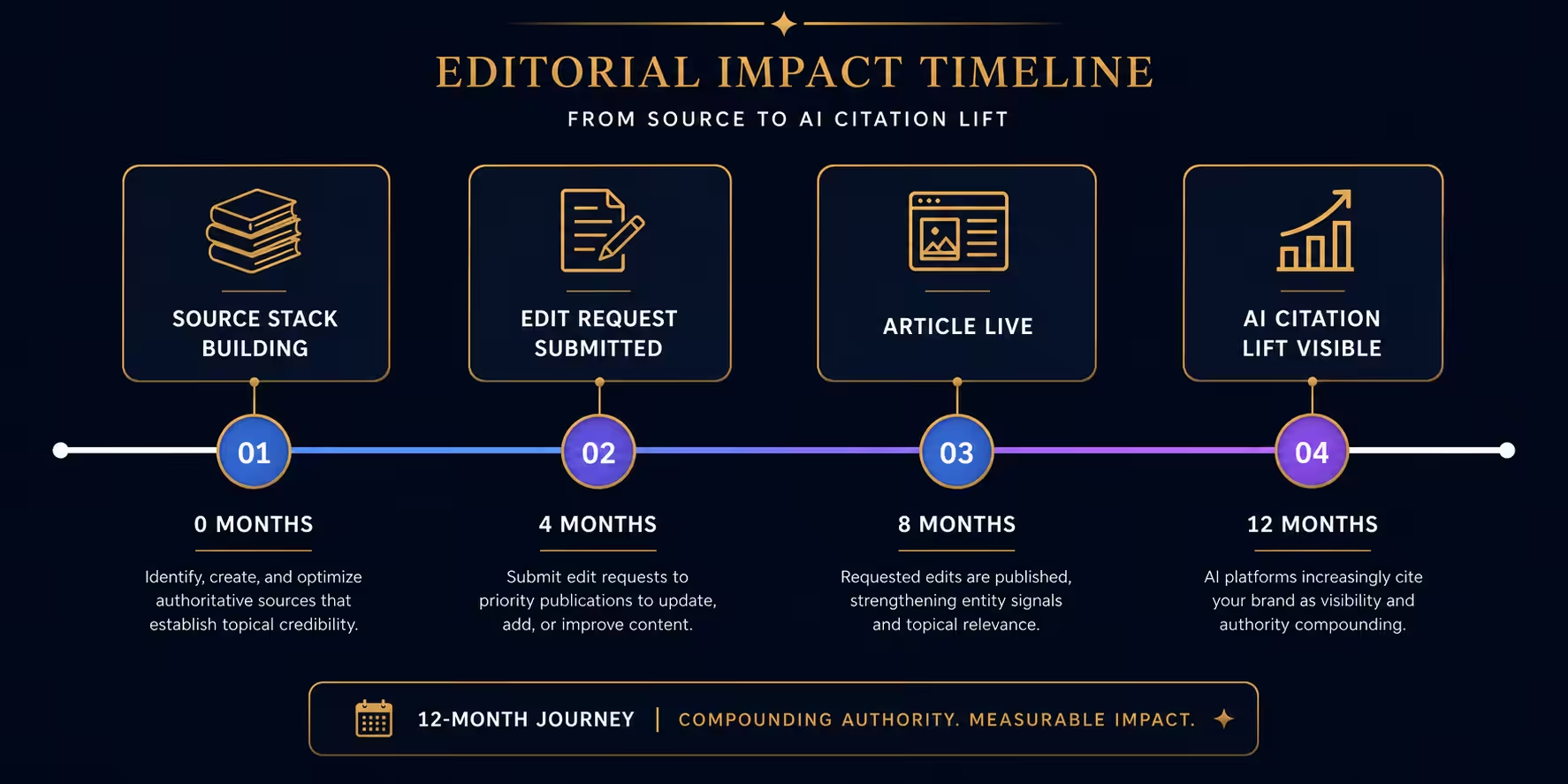
Wikipedia work is slow. The feedback loop from a successful edit request to a measurable lift in AI citations runs 60 to 120 days in our campaign data.
The Four Metrics Worth Tracking
Track these in parallel, not in isolation:
- Citation frequency in Perplexity: run your brand and category prompts weekly. Note when Wikipedia appears as a cited source and whether your brand is named.
- Mention frequency in ChatGPT and Gemini: ChatGPT and Gemini don’t always show citations, but you can probe whether the model names your brand in category-level answers.
- Knowledge panel appearance: Google’s knowledge panel for your brand is a downstream signal that Wikipedia and Wikidata facts are being ingested.
- AI Overview citation: Google AI Overviews citing Wikipedia in answers about your category is the surface where Wikipedia work pays off most visibly.
For a deeper measurement framework, the citation tracking framework covers the full set of signals worth tracking across engines.
The Honest Timeline
From start of source-stack building to a published Wikipedia article: typically 6 to 12 months. From a published article to consistent AI citation lift: another 2 to 4 months. Anyone promising faster is selling something that will get reverted.
The Mistakes That Reliably Kill the Strategy
Five failure patterns we see across declined drafts and reverted edits.
Paid Editing Without Disclosure
Hiring an undisclosed editor to write or push your page violates Wikipedia’s terms of use. When the relationship is discovered (and it usually is), the page is deleted and the brand picks up a permanent negative footprint on Wikipedia’s noticeboards.
Promotional Tone Anywhere in the Draft
“Leading provider,” “innovative solution,” “world-class platform”, any of these in the first paragraph triggers immediate rejection. The neutral point of view standard isn’t negotiable.
Sourcing the Page to Your Own Site
Citations to your blog, your About page, your press releases, or your funded research don’t count as independent sources. Even if the facts are true, the editor will request third-party verification.
Trying to Scrub Negative Coverage
If your brand had a public incident covered by reliable sources, attempting to remove that from the Wikipedia article is a fast path to having the page tagged, locked, or scrutinized harder. Accuracy beats sanitation.
Treating Wikipedia as a Volume Play
One well-sourced page about your brand beats five mentions scattered across pages where your brand barely fits. Volume isn’t the goal. Accuracy and entity clarity are.
How This Fits With the Rest of Your AI Visibility Stack
Wikipedia is one surface. It’s an important one, but it doesn’t work alone. The brands that show up consistently across ChatGPT, Perplexity, Gemini, and Google AI Overviews layer Wikipedia work alongside:
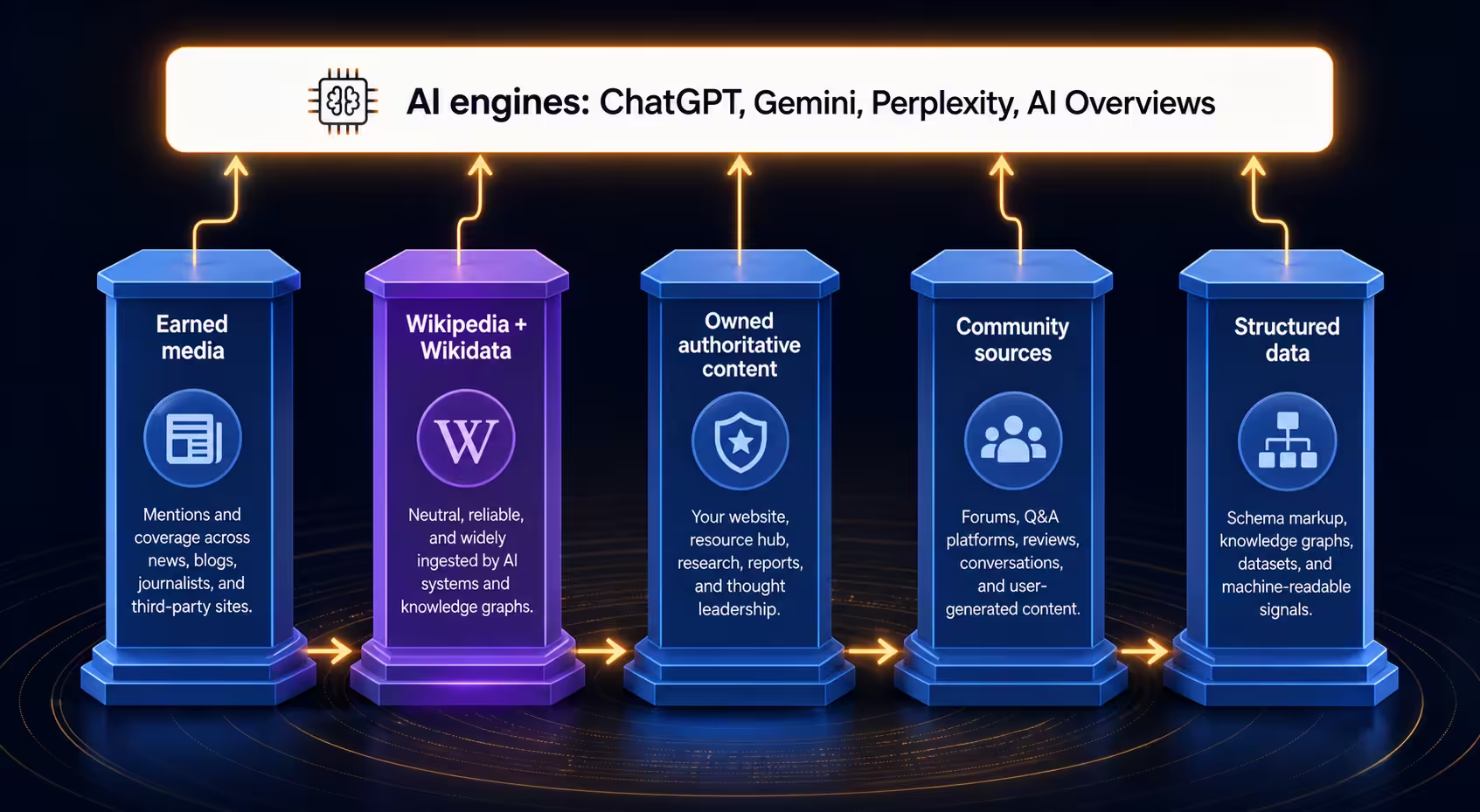
- Earned media in Tier A and Tier B publications
- Authoritative owned content that answers category-level questions
- Citations and mentions in respected community sources where they fit naturally
- Clean structured data and consistent entity signals across the open web
If you’re earlier in this work, the guide to how AI crawlers pick sources covers the upstream selection logic. For category-specific playbooks, the AI brand mentions overview walks through how the full stack fits together.
Frequently Asked Questions
Can I write my own Wikipedia page if I disclose I work for the brand?
Technically yes, but it’s a bad idea. Even disclosed paid editors face higher scrutiny, and the page is more likely to be challenged or deleted. The safer path is to use the edit request process on the Talk page and let an independent editor make the changes.
How long until a new Wikipedia article actually influences ChatGPT?
ChatGPT’s training data has a cutoff date, so a new article won’t appear in the base model until the next major training cycle. However, retrieval-augmented systems and live-browsing modes can pick up the article within days. Perplexity and Google AI Mode tend to reflect changes fastest.
Do brand mentions on existing Wikipedia pages count for AI citations?
Yes, and often more efficiently than building your own page. A well-placed mention with a citation footnote on a high-traffic category page can drive more AI citation lift than a thin standalone article about your brand.
What’s the difference between Wikipedia and Wikidata for AI visibility?
Wikipedia is the human-readable article. Wikidata is the structured data behind the scenes. AI systems use both, but Wikidata has a lower notability bar and is often the right first step for early-stage brands that don’t yet qualify for a Wikipedia article.
Will Wikipedia ever stop being important for AI citations?
Not soon. Even as AI engines diversify their source mix, Wikipedia remains the most widely-trusted structured knowledge base on the open web. The dependency may shrink over time, but the floor stays high.
The Honest Take
A Wikipedia AI citation strategy works when you treat it as a long-cycle reputation project, not a content marketing campaign. The teams that win this work patiently, earning real coverage, submitting clean edit requests, and aligning their facts across every surface where a model might look. The teams that try to shortcut it get reverted, get caught, and end up further behind than where they started.
If you want a clear picture of where your brand currently sits across AI engines and what the realistic path to Wikipedia and broader citation visibility looks like, book a short strategy call. We’ll show you what ChatGPT, Gemini, and Perplexity say about you today and where the highest-leverage moves are.