
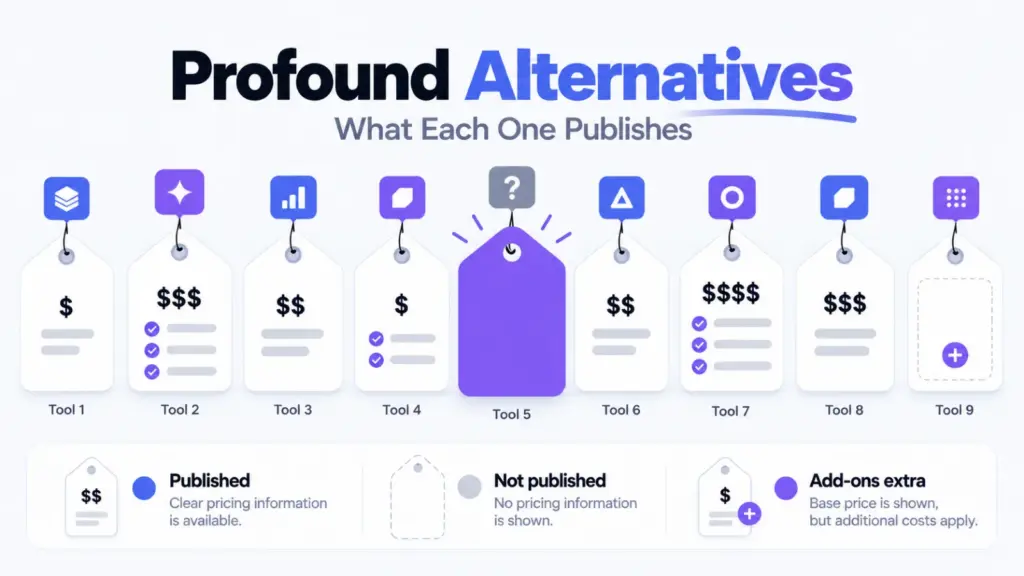

Every other list ranking for this search was written by one of the tools on it, and each one puts itself first.
We sell a service, not a seat, so we’ve no tool to rank first. This list of Profound alternatives carries the price each vendor publishes on its own pricing page, read on 15 October 2026, plus what each one leaves unpublished.
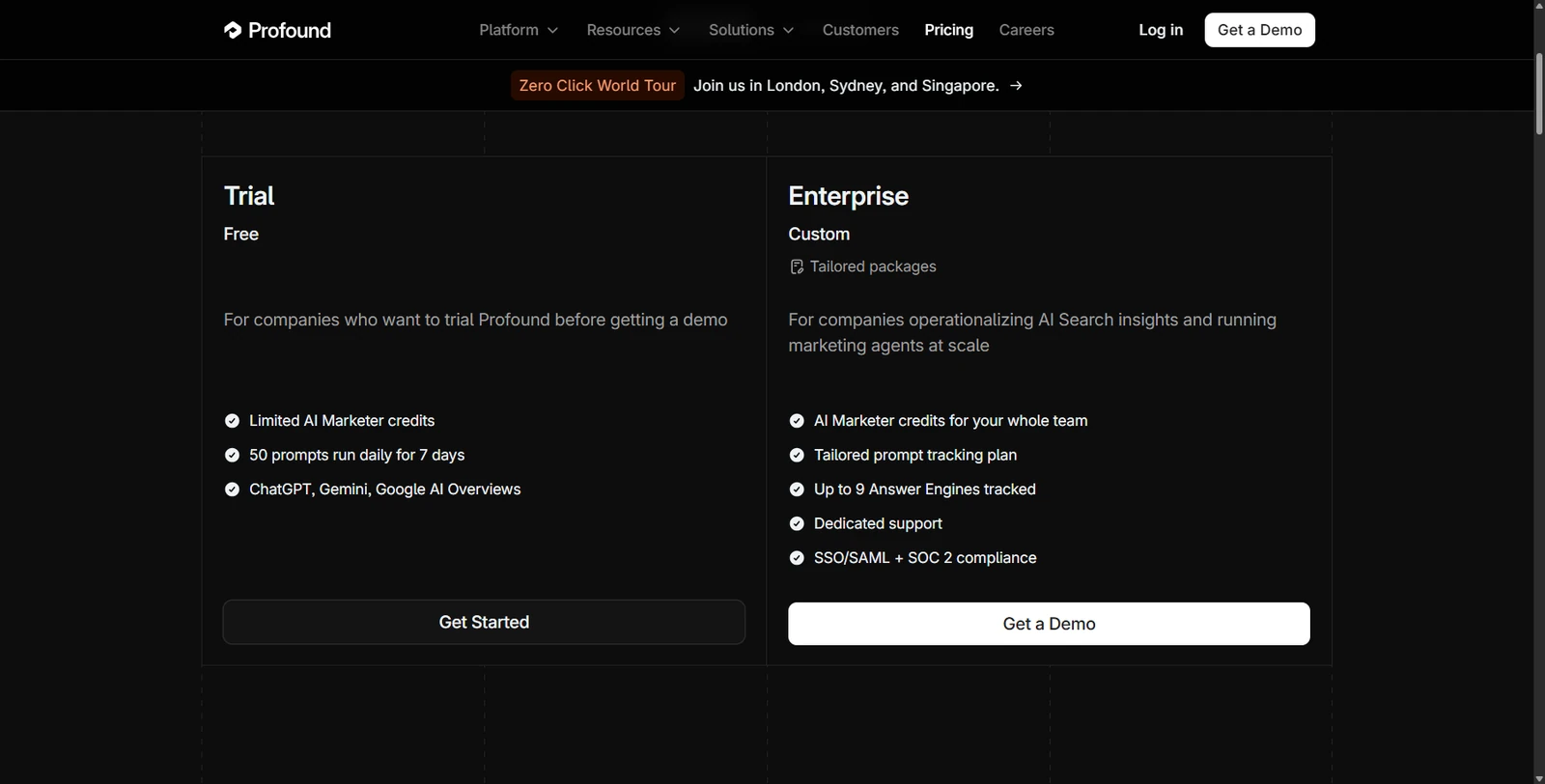
Start with the fact that decides most of these evaluations: Profound’s own pricing page carries no dollar figure at all. There are two plans on it. A free seven-day trial that runs 50 prompts a day across ChatGPT, Gemini and Google AI Overviews, and an Enterprise plan priced “Custom”.
So the $99 and $399 figures circulating in other comparisons aren’t Profound’s published prices. They’re third-hand.
How We Priced These
Every figure here came off the vendor’s own pricing page on 15 October 2026, and nothing came from a review site.
Where a vendor publishes no price, this list says so instead of repeating a number from somewhere else. That applies to Profound and to Brandlight, whose pricing URL returns a 404.
Prices move, and two of these vendors changed owner this year, so check the linked page before you budget. Each price below links to the page it came from.
Why Teams Start Looking
It’s rarely the price, because Profound doesn’t publish one. Three other reasons come up.
The first is that Profound stopped being the thing people compared. It launched as visibility analytics and now sells an AI marketing platform with agents that research, write and report. Its own FAQ answers “Is Profound only for AI search?” with “No.”
The second is the sales gate. Past the seven-day trial, every route is a demo booking. A self-serve Agency Growth plan exists, at 400 credits a month per client workspace, with no published price.
The third is scale mismatch. Profound raised a $180 million Series D in September 2026 and says it serves over 1,000 enterprise brands and more than a third of the Fortune 100. A product built for that buyer prices for that buyer.
The Nine Alternatives, Priced From Their Own Pages
Each entry gives the published price, the engines the vendor names, and the part that costs more than the headline suggests.
1. AthenaHQ: the closest like-for-like
Published price: a free Essential tier with 300 credits, then Starter at $295 a month, or $245 billed annually. Enterprise is custom.
Engines named: 11, including ChatGPT, Perplexity, AI Overviews, AI Mode, Gemini, Claude, Copilot, Grok, DeepSeek, Meta AI and Mistral.
The catch: billing is per AI response. One credit buys one response, so 3,600 credits spread across 11 models is a smaller prompt set than it sounds. Add-on pricing isn’t published.
It’s the only tool here with both a real free tier and a published price for the tier above it.
2. Peec AI: the agency dashboard
Published price: $95, $245 or $495 a month for 50, 150 or 350 prompts, with 15% off annual billing.
Engines named: ChatGPT, AI Mode, AI Overviews, Copilot, Perplexity and Gemini, with Enterprise claiming up to 13 models.
The catch: every self-serve tier includes three models. A fourth costs $30, $70 or $140 a month depending on tier, so matching Profound’s nine engines means stacking add-ons.
Users are unlimited on every plan, which matters if the whole team needs access.
3. Otterly.AI: the cheapest way in
Published price: $29, $189 or $489 a month for 15, 100 or 400 prompts. Enterprise starts at 1,000 prompts.
Engines named: paid tiers track four, which are ChatGPT, Google AI Overviews, Perplexity and Microsoft Copilot.
The catch: Claude is an add-on at $29, $109 or $439 a month, and Google AI Mode and Gemini are $9 each on the entry tier. The $29 headline buys four engines and 15 prompts.
ChatGPT ads tracking is included on every tier, including the cheapest.
4. Rankscale: the one with no engine upsell
Published price: $17 a month billed yearly for Essentials, then $99, $229, $385 and $780 for Pro, Pro+, Growth and Enterprise.
Engines named: 11 named of a claimed 17 or more, and the site states there are no per-engine upsell tiers.
The catch: it meters credits instead, at roughly 0.25 credits per engine per prompt. Unused credits roll over rather than expiring.
It’s the only vendor here publishing a price all the way to its top tier.
5. Scrunch AI: now a Sitecore company
Published price: Core at $250 a month for 125 prompts and 5,000 responses. Enterprise isn’t priced.
Engines named: four on Core, which are ChatGPT, Perplexity, Google AI Overviews and Copilot. Enterprise lists nine.
The catch: Scrunch was acquired by Sitecore and now trades as “Scrunch, a Sitecore Company”. It still operates standalone, and a roadmap inside a larger suite is a different bet from an independent one.
Its Agent Experience Platform serves a separate rendered experience to AI crawlers, which nothing else here does.
6. Ahrefs Brand Radar: breadth without setup
Published price: custom prompts from $50 a month, the AI Visibility Index at $199, and all models at $699.
Engines named: AI Overviews, AI Mode, ChatGPT, Perplexity, Gemini and Copilot, with Claude on custom prompts.
The catch: the entry price is metered in checks, and Claude consumes eight checks per update. Full model coverage is the $699 line, not the $50 one.
It’s buyable without an Ahrefs subscription, and its index is modelled from real search data rather than prompts you write yourself.
7. Semrush AI Visibility Toolkit: now owned by Adobe
Published price: $99 a month per domain for 25 custom prompts. Enterprise is custom.
Engines named: mentions from ChatGPT, Google AI, Gemini and Perplexity. No consolidated engine list is published.
The catch: two of them. It needs an underlying paid Semrush subscription, and Adobe completed its acquisition of Semrush on 28 April 2026, folding it into Adobe’s enterprise suite.
Twenty-five prompts at $99 is the smallest tracked set on this list.
8. Evertune: measurement plus paid media
Published price: Pro at $800 a month for 100,000 prompts across 11 models. Enterprise is custom.
Engines named: nine, including ChatGPT, Claude, Gemini, AI Overviews, AI Mode, Perplexity, Copilot, DeepSeek and Meta.
The catch: both tiers are demo-gated, so the $800 isn’t self-serve. The product also reaches past measurement into ChatGPT ads and AI retargeting.
It samples each prompt 100 times and claims a margin of error around 2 points, which is a different methodology from single-run tracking.
9. Brandlight: enterprise only, no price
Published price: none. The pricing URL returns a 404 and no plans page exists anywhere on the site.
Engines named: none in prose. The site says “all AI engines” and names specific ones only inside product screenshots.
The catch: there’s no trial, no free tier and nothing self-serve. Every route is a sales conversation.
If Profound’s sales gate is the reason you’re looking, this one is the same shape.
What Each One Publishes
The entry price and what it includes, side by side.
| Tool | Published entry price | Engines at that price | Prompts at that price |
|---|---|---|---|
| Profound | Not published | 3 on the free trial | 50 a day for 7 days |
| Otterly.AI | $29 a month | 4 | 15 |
| Rankscale | $17 a month, billed yearly | No per-engine limit | Credit metered |
| Ahrefs Brand Radar | $50 a month | 6, Claude on custom prompts | Check metered |
| Peec AI | $95 a month | 3 | 50 |
| Semrush | $99 a month per domain | 4 named | 25 |
| Scrunch AI | $250 a month | 4 | 125 |
| AthenaHQ | Free, then $295 a month | 11 | Credit metered |
| Evertune | $800 a month | 9 | 100,000 |
| Brandlight | Not published | Not stated | Not stated |
Why These Prices Don’t Compare
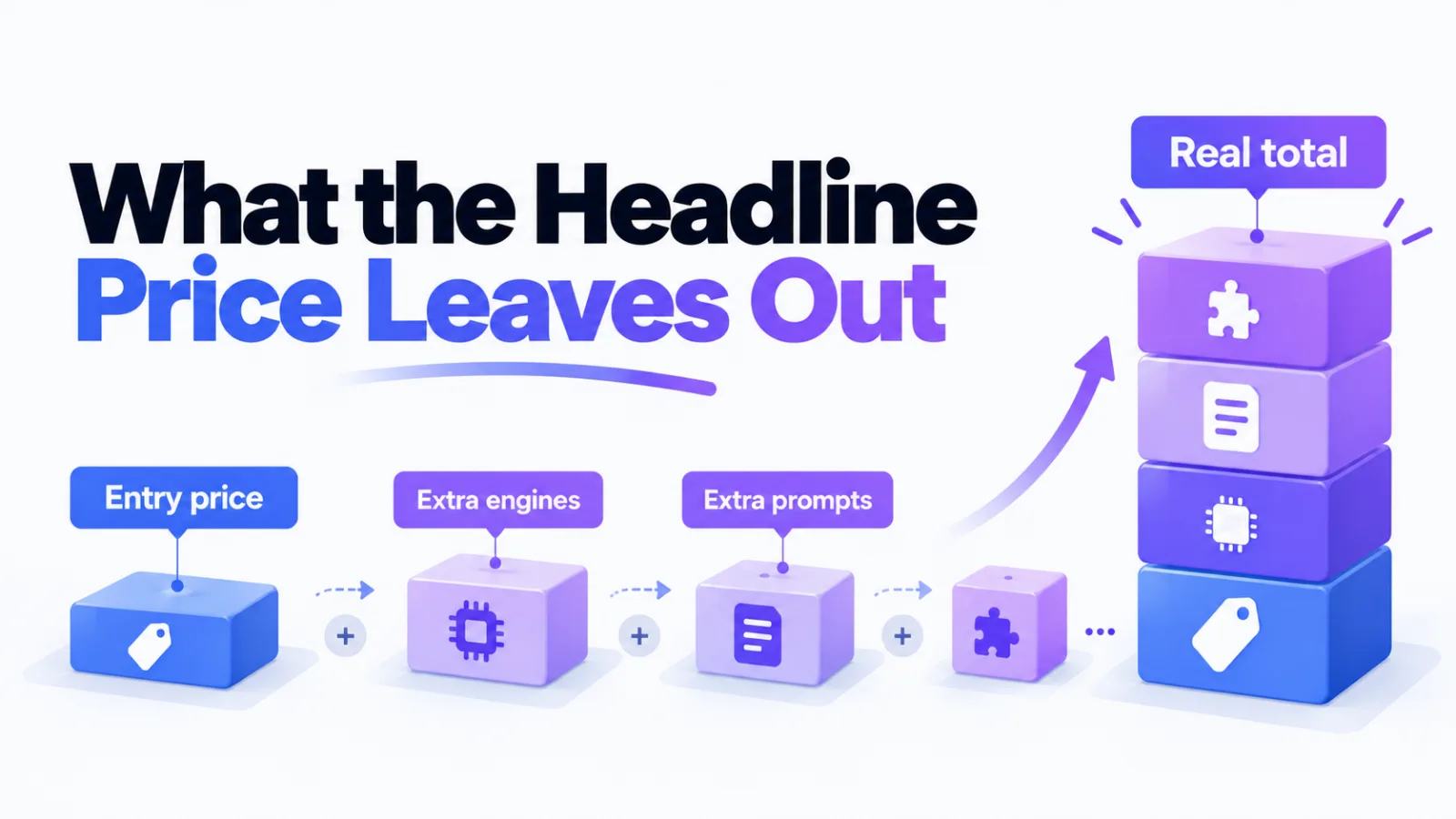
It’s because these vendors sell four different units, so the numbers never measure the same thing.
Otterly, Peec and Scrunch sell engine access, so the headline buys a subset and the rest costs extra. AthenaHQ, Rankscale and Ahrefs sell credits or checks, so the ceiling moves with the number of models you run.
Semrush sells a domain, at 25 prompts each. Evertune and Brandlight sell a contract, so neither price is self-serve.
Work out the cost of the engines you need before comparing anything. Otterly at $29 plus Claude at $29 is a different product from Otterly at $29.
We keep a wider list of these platforms in best tools for monitoring ChatGPT mentions. Two vendor-specific comparisons sit alongside it, Ahrefs Brand Radar alternatives and Semrush brand monitoring alternatives.
Two of These Are No Longer Independent
It changes what you’re buying, so it belongs in the evaluation.
Adobe completed its Semrush acquisition on 28 April 2026, and Sitecore acquired Scrunch, which now trades as a Sitecore company. Both products still ship, and both roadmaps now answer to a larger suite.
That isn’t a reason to rule either out. It’s a reason to ask where the product sits in the parent’s plans before signing an annual contract.
The Numbers Also Depend on How Each Tool Asks
Two trackers can report different visibility for the same brand on the same day, because they sample differently.
Most run a prompt once per update and record what came back. Evertune runs each prompt 100 times across every model, and publishes a claimed margin of error near 2 points against roughly 31 for single-run tracking.
Ahrefs takes a third route. It models its prompts from real search data instead of asking you to write them, which is why it reports with no setup.
None of that is visible in a price table, and it decides whether a 4-point drop in your score is a real change or noise.
How to Pick One
You can settle this with four questions, faster than any feature table.
- Which engines do your buyers use? Price every tool on that set, not on its entry tier.
- How big is your prompt set? Fifteen prompts tracks a brand name, not a market.
- Who needs the dashboard? Per-seat limits bite a quarter after you sign.
- Do you want the data or the outcome? Only one of those is what a tracker sells.
That last question is the real fork, and AI visibility agency vs tool works through it properly.
The Option These Lists Leave Out
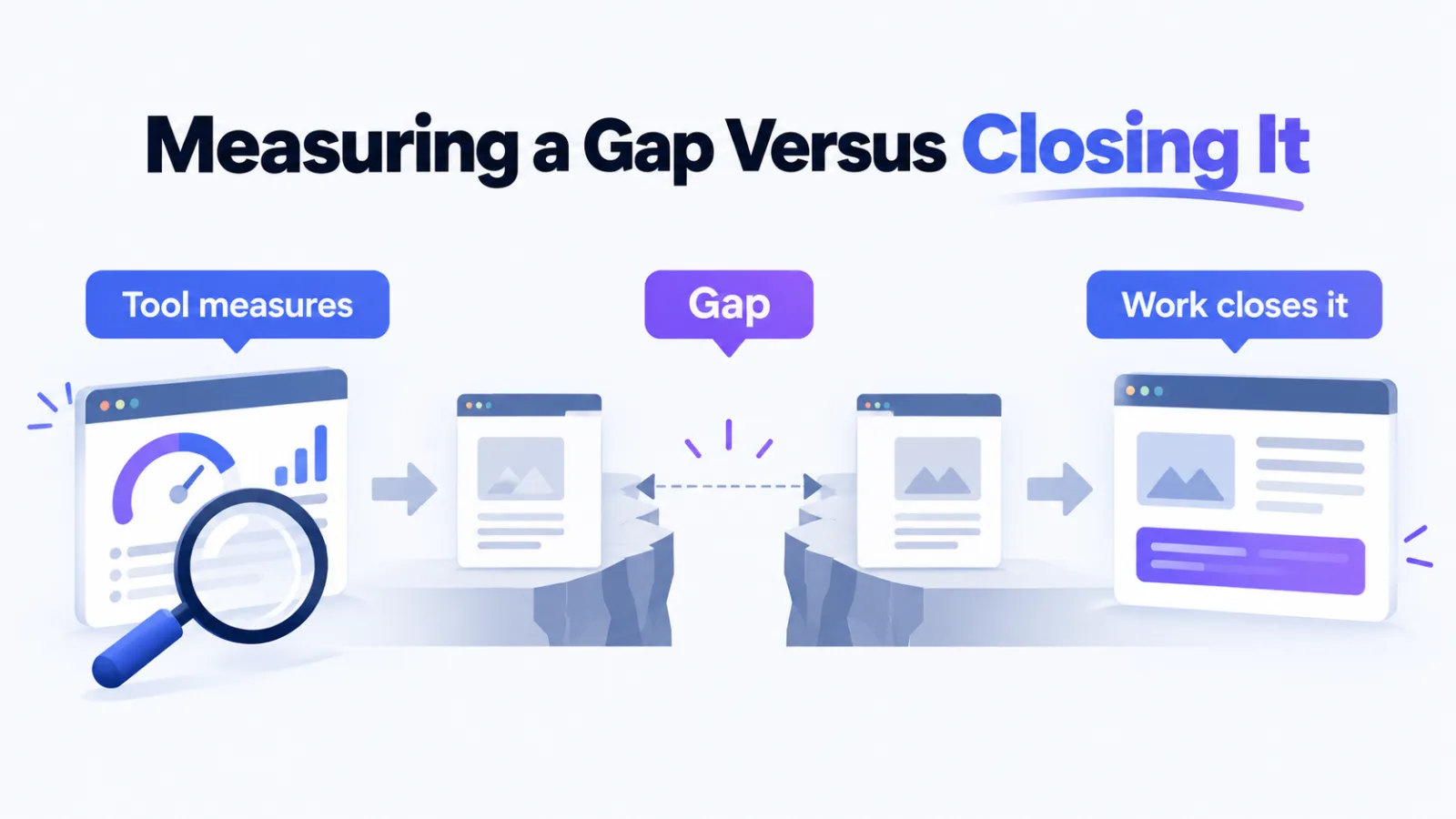
Every tool here measures. None of them earns you the mention.
A tracker tells you that a competitor is named in ChatGPT and you aren’t. Closing that gap means getting cited in the sources the models read, which is editorial work rather than dashboard work.
If you’d rather buy the outcome than the measurement, our AI brand mentions programme covers it, reporting on citation share rather than seats.
Frequently Asked Questions
How much does Profound cost?
Profound doesn’t publish a price. Its pricing page shows a free seven-day trial and an Enterprise plan marked Custom, with no dollar figure anywhere on the page as of 15 October 2026. Comparisons quoting $99 or $399 are using third-party numbers, not Profound’s published rates.
What is the cheapest Profound alternative?
The cheapest is Rankscale at $17 a month billed yearly, then Otterly.AI at $29 a month. Both headline prices are narrow: Otterly’s buys 15 prompts across four engines, and Rankscale meters credits. Price the engines you need before treating either as the cheapest option.
Which Profound alternative has a free tier?
AthenaHQ, which gives 300 credits and $25 of free credit on its Essential plan. Profound, Scrunch and Ahrefs Brand Radar offer trials rather than free tiers, and Brandlight offers neither.
Do any of these track all the same engines as Profound?
AthenaHQ names 11 models and Rankscale claims 17 or more, both above the nine Profound lists for Enterprise. The caution is that engine counts and prompt budgets trade against each other, so more models on the same credit budget means fewer prompts per model.
Has anything changed in this market recently?
Two of the nine changed owner. Adobe completed its acquisition of Semrush on 28 April 2026, and Sitecore acquired Scrunch AI, which now trades as a Sitecore company. Profound itself moved from visibility analytics toward a broader AI marketing platform.
Is a tool enough, or do I need an agency?
A tool is enough if you have the editorial capacity to act on what it reports. Trackers measure which sources AI engines cite, and changing that list means earning placements in those sources. Teams without that capacity buy the measurement and then watch the gap stay open.