AEO tools for brand mentions in ChatGPT help you track, measure, and strengthen how AI platforms reference your brand when answering user questions. As of 2026, these tools have become essential for any B2B marketing team serious about AI visibility — because if ChatGPT, Perplexity, or Gemini doesn’t mention your brand, a growing share of your potential buyers never sees you at all.
This article breaks down how AEO tools work, what to look for when choosing one, and how to combine tracking with strategic brand mention building to move from invisible to consistently cited across AI search platforms.
Key Takeaways
- AEO tools monitor how often — and in what context — AI platforms like ChatGPT mention your brand in response to user queries.
- Tracking alone doesn’t improve visibility. You need a strategy that builds the editorial footprint AI models learn from.
- Most AEO tools use prompt simulation to test AI responses. The best ones also track sentiment, competitor positioning, and citation sources.
- Brand mentions on high-authority publications directly influence whether AI models recommend you, according to research from the Allen Institute for AI.
- As of 2026, no single tool covers every AI platform perfectly — combining a tracking tool with a proactive placement strategy produces the strongest results.
- The gap between brands that appear in AI answers and those that don’t is widening fast, especially in competitive B2B categories.
What Are AEO Tools and Why Do They Matter for ChatGPT Brand Mentions?
An AEO tool (Answer Engine Optimization tool) is software designed to monitor and analyze how your brand appears inside AI-generated responses. Unlike traditional SEO rank trackers that show your position on a search results page, AEO tools show whether ChatGPT, Perplexity, Claude, Gemini, or Copilot actually names your brand when a user asks a relevant question.
A brand mention in this context is any instance where an AI platform references your company by name — whether it recommends you, compares you to competitors, or cites your content as a source.
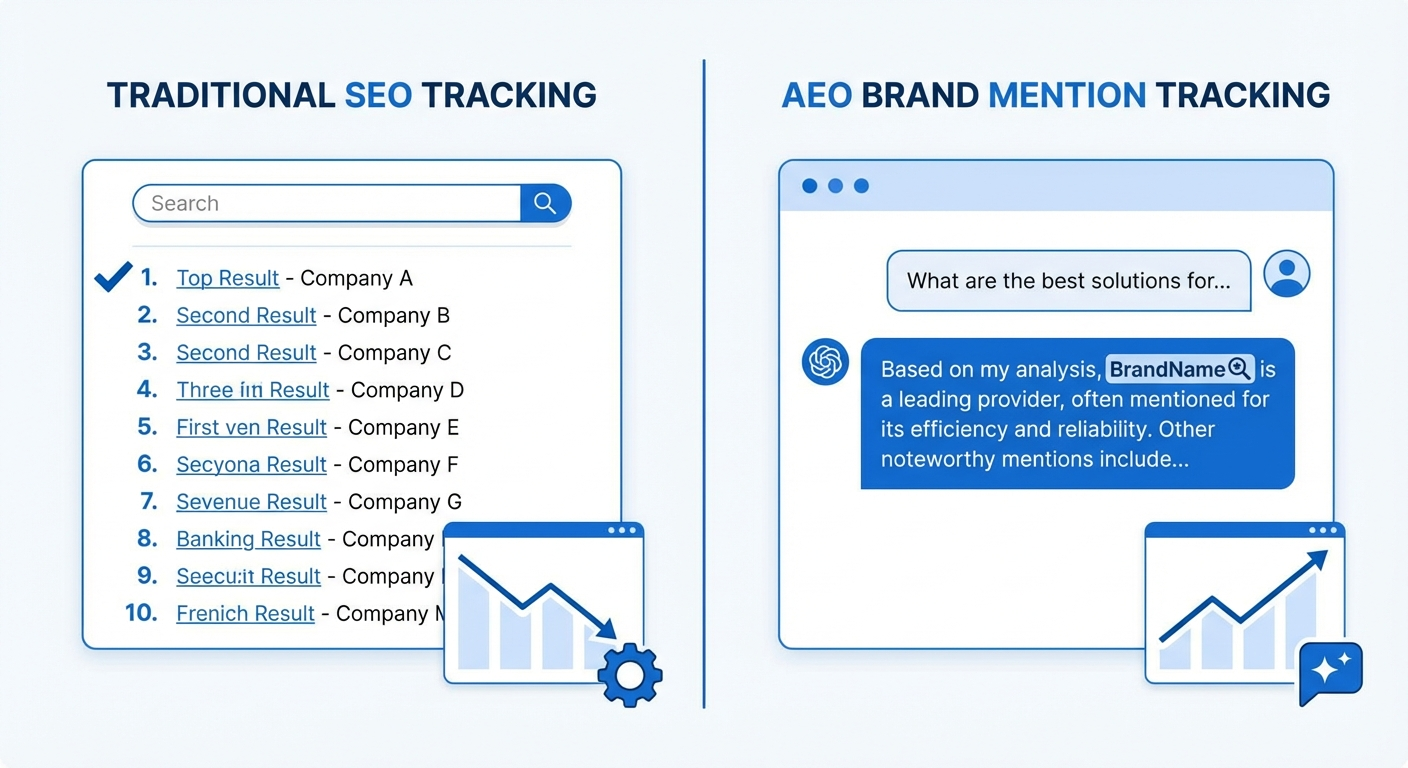
This matters because user behavior has shifted. A 2025 Gartner forecast projected that traditional search engine traffic would drop 25% by 2026 as AI-powered answer engines absorbed more research queries. Semrush’s July 2025 AI Search study estimated AI search traffic could surpass traditional search within two to four years. These aren’t theoretical projections anymore — the shift is happening now.
When a VP of Marketing at a B2B SaaS company asks ChatGPT “What tools help with lead generation for mid-market companies?” and your competitor gets named but you don’t, that’s a missed touchpoint you can’t recover from with a Google ranking alone.
How AEO Tools Track Brand Mentions in ChatGPT
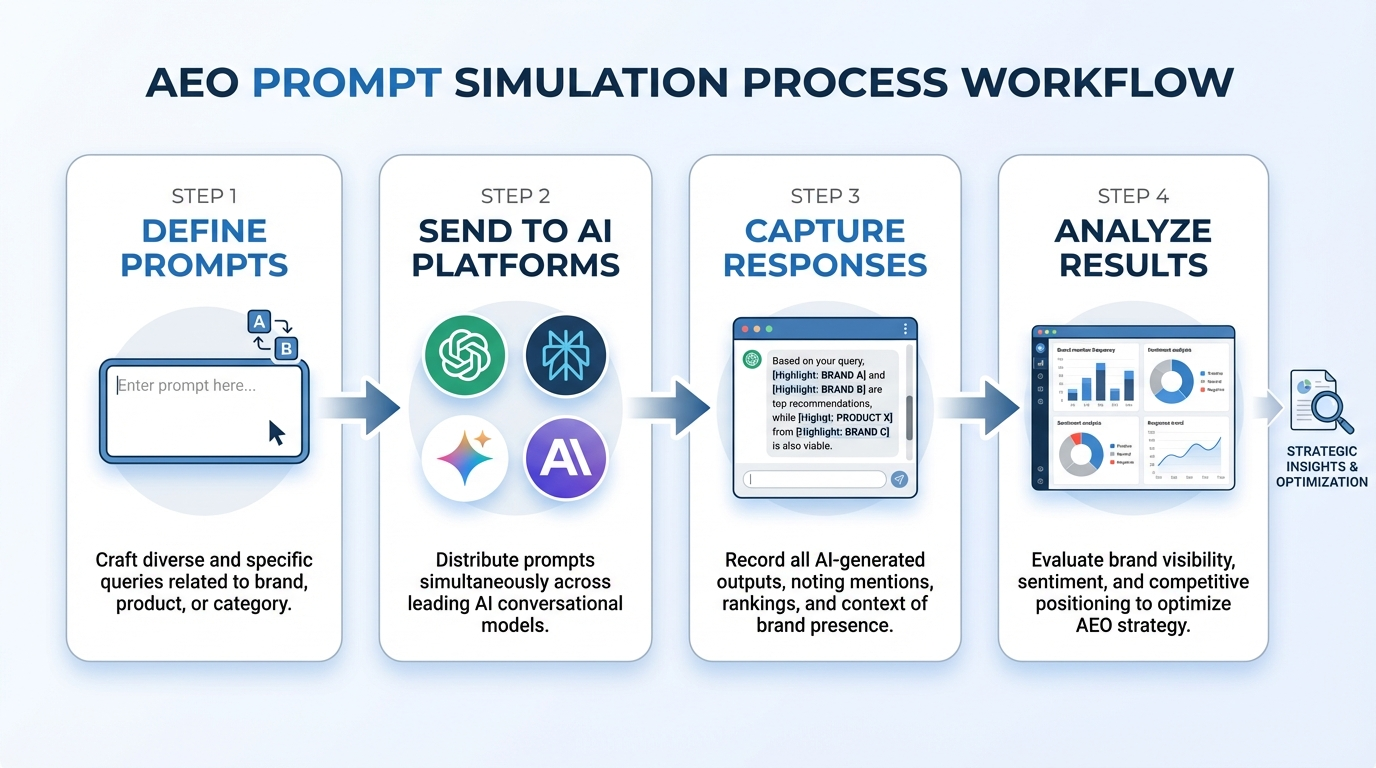
Most AEO tools operate on the same core mechanic: prompt simulation. The tool sends queries to AI platforms — the same types of questions your potential buyers would ask — and records whether your brand appears in the response.
The Prompt Simulation Process
- Query library creation: You define prompts relevant to your category. For example, “What are the best project management tools for remote teams?” or “Which CRM works best for Series A startups?”
- Automated testing: The tool sends these prompts to ChatGPT, Perplexity, Claude, Gemini, and other AI platforms at regular intervals — typically daily or weekly.
- Response capture: The tool records the full AI response, including which brands are mentioned, their position in the answer, and whether links or citations are included.
- Analysis: Results are aggregated into dashboards showing share of voice, sentiment, citation frequency, and competitive positioning over time.
What the Best AEO Tools Measure
Not all AEO tools measure the same things. Here are the metrics that matter most for understanding your ChatGPT brand mention performance:
- Share of voice: The percentage of relevant queries where your brand appears compared to competitors.
- Citation frequency: How often AI platforms reference your content or name your brand across all tested prompts.
- Sentiment analysis: Whether mentions are positive, neutral, or negative — and how that compares to competitors.
- Source attribution: Which websites or publications AI models cite when mentioning your brand.
- Prompt-level detail: Which specific questions trigger your brand mention and which don’t.
- Competitor tracking: Side-by-side comparison of how you perform against named competitors across the same prompts.
Pro Insight: Source attribution is one of the most actionable metrics an AEO tool provides. When you can see which publications AI models cite alongside your brand, you can focus your content and outreach strategy on the sources AI already trusts.
What AEO Tools Can — and Can’t — Do
AEO tools are strong at measurement. They give you a clear picture of where you stand in AI search today. But there’s an important limitation most tool vendors don’t emphasize:
Tracking brand mentions doesn’t create brand mentions.
Knowing that ChatGPT mentions your competitor 4x more often than you is useful data. But the tool itself won’t close that gap. Closing it requires building the editorial footprint, structured content, and entity authority that AI models learn from when they update their training data or retrieve information through search.
Think of it this way: an AEO tool is like a blood pressure monitor. It tells you your numbers. But lowering your blood pressure requires diet, exercise, and sometimes medication — not a better monitor.
Where Tracking Tools Excel
- Establishing a baseline for AI visibility
- Identifying which competitors dominate AI recommendations in your category
- Spotting trends over time — are you gaining or losing share of voice?
- Detecting inaccurate or negative mentions before they spread
- Proving ROI to leadership when AI visibility investments start working
Where Tracking Tools Fall Short
- They don’t publish content on high-authority sites that AI models learn from
- They can’t build the entity associations that make AI “know” your brand belongs in a category
- They don’t improve the structured data, schema markup, or content architecture on your site
- They don’t replace the editorial and digital PR work required to earn citations
The most effective approach in 2026 pairs an AEO tracking tool with a proactive AI brand mentions strategy that builds the underlying signals AI platforms rely on.
Evaluating AEO Tools: What to Look for in 2026
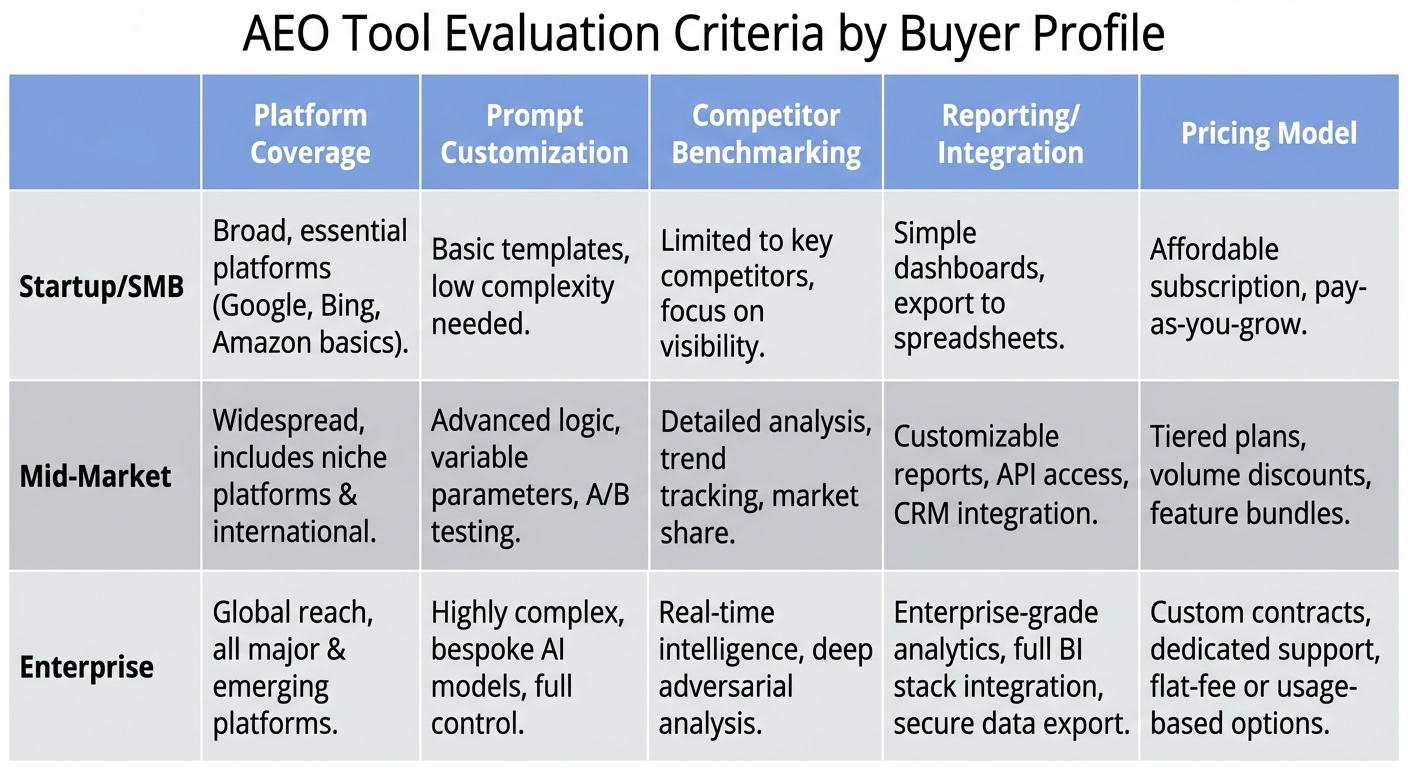
The AEO tool landscape has expanded rapidly since 2024. Choosing the right tool depends on your team size, budget, and how deeply you need to integrate AI visibility tracking into your marketing operations.
Platform Coverage
Not every tool tracks every AI platform. ChatGPT is the most commonly covered, but your buyers may also use Perplexity, Claude, Gemini, or Microsoft Copilot for research. Verify which platforms a tool supports before committing.
For B2B companies in the U.S. market, ChatGPT and Perplexity tend to generate the highest-intent research queries. Google AI Overviews matter for brands that also depend on organic search traffic. Claude and Gemini are growing but currently represent smaller query volumes for most B2B categories.
Prompt Customization
Generic, pre-built prompt libraries rarely match how your specific audience asks questions. Look for tools that let you create custom prompts reflecting your category, use case, and buyer persona. The more precisely your prompts mirror real buyer language, the more accurate your tracking data becomes.
Competitor Benchmarking
Knowing your own mention frequency is only half the picture. You need to see how competitors perform on the same queries. Strong AEO tools let you track multiple competitors side by side and alert you when a competitor gains or loses AI visibility.
Reporting and Integration
Consider how the tool fits your existing workflow. Can it export data to your BI tools? Does it offer API access? Can you generate client-facing reports if you’re an agency? For enterprise teams, integration with existing analytics platforms reduces friction and speeds adoption.
Pricing Models
AEO tool pricing varies widely. Based on publicly available pricing as of early 2026:
- Free tier options exist for basic assessments (e.g., HubSpot’s AEO Grader), useful for establishing an initial baseline.
- $30–$100/month tools offer fundamental tracking suitable for startups and small teams.
- $100–$350/month tools provide broader platform coverage, competitor tracking, and more custom prompts — strong for mid-market B2B brands.
- $500+/month enterprise solutions add compliance features, advanced analytics, multi-brand support, and dedicated account management.
Tip: Start with a free assessment tool to understand your baseline before investing in a paid subscription. If you don’t know your current AI visibility, you can’t evaluate whether a tool is helping.
Why Tracking Must Be Paired With Strategic Placement
This is where most content about AEO tools stops — at the tracking layer. But the brands seeing real results in 2026 aren’t just watching dashboards. They’re actively building the editorial signals that AI platforms rely on.
Large language models like GPT-4 and its successors learn brand-category associations from their training data, which includes content from high-authority publications across the web. Research published by the Allen Institute for AI demonstrated that the sources LLMs reference most heavily are those with strong domain authority, consistent publishing cadence, and topical relevance.
In practical terms: if your brand appears consistently in editorial content on publications that AI models learn from — industry media, technology outlets, business publications, and relevant niche sites — your probability of being cited in AI answers increases substantially.
How AI Models Decide Which Brands to Mention
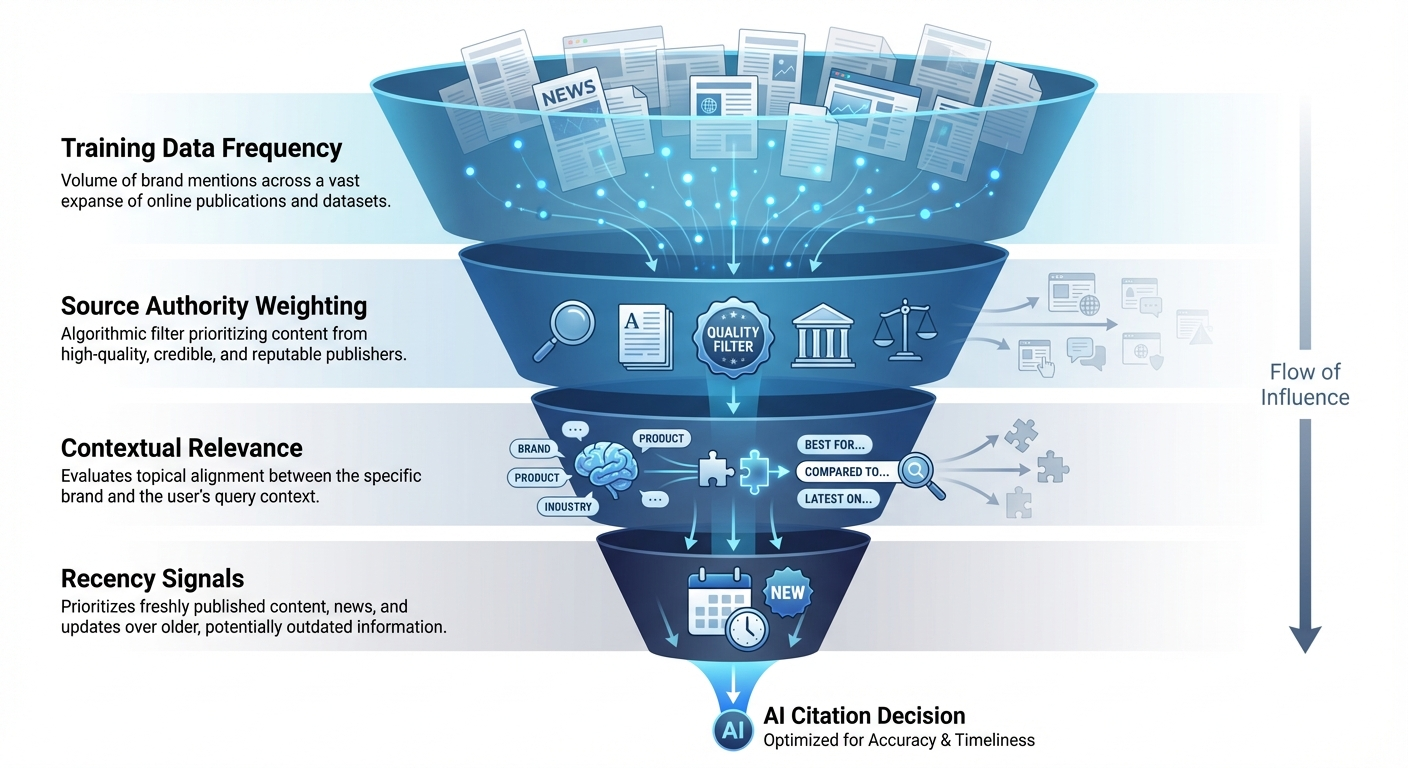
AI platforms don’t randomly select brands. Their citation behavior follows patterns:
- Training data frequency: Brands mentioned more often across trusted sources during model training become more likely to appear in responses.
- Source authority weighting: A mention on a high-authority publication carries more influence than dozens of mentions on low-quality sites.
- Contextual relevance: The brand must appear in the right topical context. A SaaS company mentioned in articles about “B2B lead generation” builds a different association than one mentioned only in company press releases.
- Recency signals: For AI platforms using retrieval-augmented generation (RAG) — which includes ChatGPT with web search, Perplexity, and Google AI Overviews — recently published content on trusted domains carries significant weight.
Agencies like BrandMentions address this by placing contextual brand mentions across 140+ high-authority publications that AI models actively learn from during training. This approach targets the root cause of low AI visibility rather than just measuring the symptom.
The Compound Effect of Strategic Mentions
In campaigns across 67+ B2B companies, the BrandMentions team found that brands with consistent editorial mentions achieved AI recommendation rates 89% higher than those relying solely on traditional SEO. The key word is consistent. A single placement rarely moves the needle. Sustained mention building across relevant, authoritative publications creates compound visibility over time.
This mirrors how traditional SEO authority building works — except the target outcome isn’t a Google ranking position. It’s being named in an AI-generated answer when your buyer asks a category-level question.
How to Build a Combined AEO Tracking and Placement Strategy
Here’s a practical framework for B2B marketing teams looking to improve brand mentions in ChatGPT and other AI platforms in 2026.
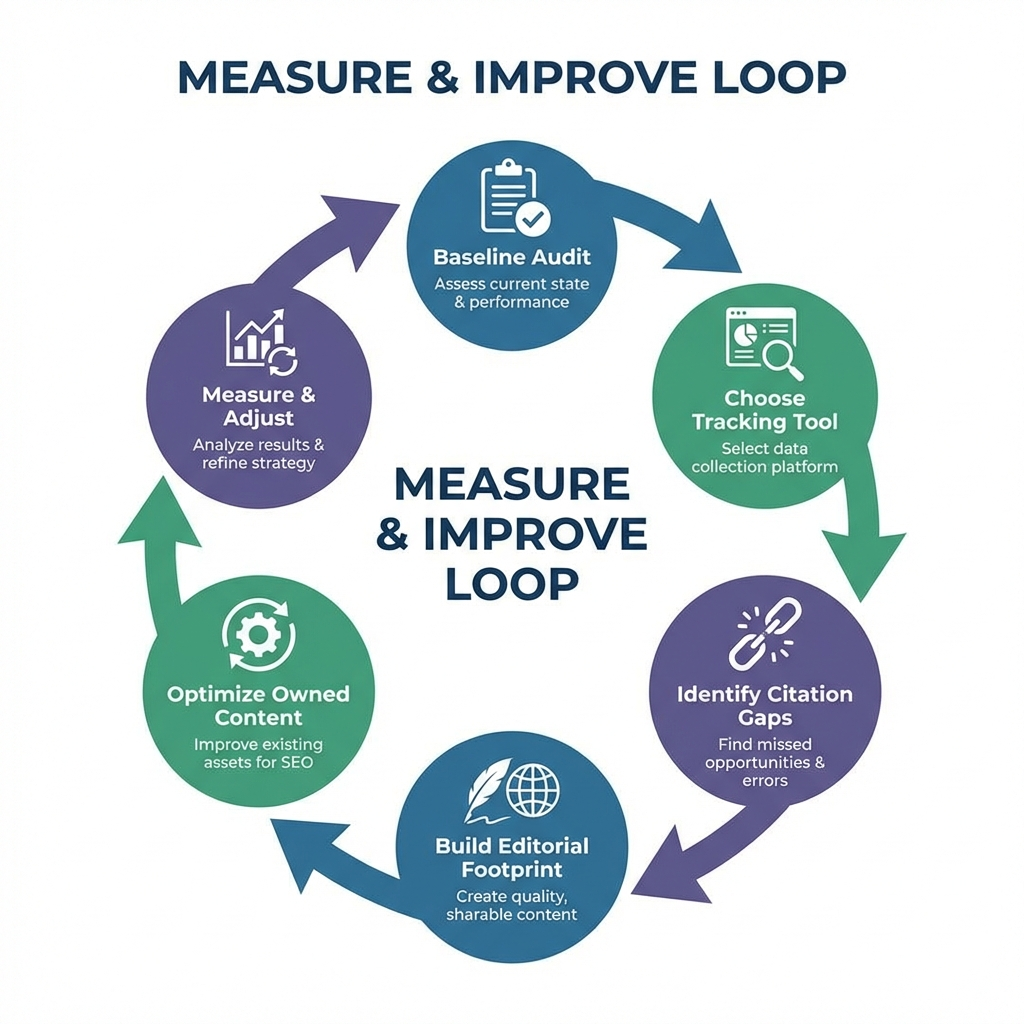
Step 1: Establish Your AI Visibility Baseline
Before investing in any tool or strategy, understand where you stand today.
- Manually test 15–20 queries your buyers would ask AI platforms. Document which brands appear.
- Use a free AEO assessment tool to get a structured baseline score.
- Record your current share of voice versus your top three competitors.
If you need a structured approach to this baseline audit, the guide to tracking brand mentions in AI search walks through the process step by step.
Step 2: Choose a Tracking Tool That Matches Your Maturity
Don’t overspend on enterprise features you won’t use. Match the tool to your stage:
- Early-stage or first audit: Free tools or sub-$100/month options with ChatGPT and Perplexity coverage.
- Growth-stage with active content programs: Mid-tier tools ($100–$350/month) that track competitors and offer prompt-level detail.
- Enterprise with multi-brand or compliance needs: Full-featured platforms ($500+/month) with API access, multi-brand support, and SOC 2 compliance.
Step 3: Identify Your Citation Gaps
Your AEO tool will reveal which queries trigger competitor mentions but not yours. These are your citation gaps — the specific topics and questions where your brand is invisible.
For each gap, ask:
- Does authoritative content about our brand and this topic exist on the web?
- Are we mentioned on the types of publications AI models typically cite?
- Is our content structured so AI platforms can easily extract answers?
If the answer to any of these is “no,” that’s where your placement strategy starts.
Step 4: Build Your Editorial Footprint
This is the action that actually moves your brand mention numbers. Focus on:
- High-authority placements: Earn mentions on publications with strong domain authority and topical relevance to your category.
- Contextual relevance: Ensure your brand appears in content that covers your specific category, use case, or solution area — not just generic business articles.
- Consistent cadence: One-off placements fade from AI memory. Sustained editorial presence builds lasting associations.
- Diverse source types: AI models cross-reference multiple independent sources. Mentions across different publications, formats, and contexts carry more weight than concentrated mentions on a single site.
The BrandMentions citation network is one example of how this works at scale — coordinating placements across a diverse set of trusted publications that AI models actively reference.
Step 5: Optimize Your Owned Content for AI Extraction
Your website content also influences AI citations, especially for platforms using RAG (retrieval-augmented generation) to supplement their training data with live web results.
- Structure key pages with question-based headings that mirror how users query AI platforms.
- Place direct, concise answers immediately after each heading — the first 40–60 words are the extraction zone.
- Use schema markup (FAQ, Organization, HowTo) to help AI crawlers interpret your content structure.
- Include specific data points, named entities, and sourced claims rather than vague generalizations.
For a deeper look at how brand mentions and SEO intersect in 2026, including how site-level authority affects AI citations, see that breakdown.
Step 6: Measure, Adjust, Repeat
AI visibility isn’t static. Models update their training data, adjust retrieval methods, and shift citation behavior over time. BrandMentions tracks when major AI models update their training data and times placements to maximize inclusion in each knowledge refresh cycle.
Set a monthly cadence for reviewing your AEO dashboard. Look for:
- Changes in share of voice relative to competitors
- New queries where your brand started or stopped appearing
- Shifts in sentiment across platforms
- Correlation between new editorial placements and citation gains
Common Mistakes That Undermine AEO Efforts
After working across dozens of B2B campaigns, certain patterns emerge. Avoid these:
Obsessing Over Tracking Without Taking Action
Some teams check their AEO dashboard daily but never execute on the insights. If your tool shows you’re invisible for a high-priority query, the next step isn’t refreshing the dashboard tomorrow — it’s creating the editorial presence that closes the gap.
Treating AI Visibility as a One-Time Project
A single round of content creation or digital PR won’t produce lasting AI citations. AI models continuously ingest new data. If your competitors maintain an active presence and you don’t, their visibility compounds while yours erodes.
Ignoring Platform Differences
ChatGPT, Perplexity, and Google AI Overviews each retrieve and present information differently. A brand that appears in Perplexity responses may not appear in ChatGPT, and vice versa. Your strategy should account for platform-specific behaviors rather than assuming uniform results.
Focusing Only on Your Brand Name
AI citation tracking should include category-level queries, not just branded searches. If your tool only monitors “What is [Brand Name]?” you’re missing the queries that matter most — the ones where a buyer asks about your category and your brand either does or doesn’t appear.
Publishing Low-Authority Content at Scale
Volume of mentions on low-quality sites doesn’t improve AI citations. AI models weight source authority heavily. Fifty mentions on unknown blogs carry less influence than five placements on publications AI models trust. Quality of the publication matters more than quantity of mentions.
What Has Changed Since 2024–2025
The AEO tool market has matured significantly. Here’s what’s different as of 2026:
- Platform coverage expanded: In 2024, most tools only tracked ChatGPT. By 2026, the leading tools cover five or more AI platforms including ChatGPT, Perplexity, Claude, Gemini, and Copilot.
- Sentiment analysis is standard: Early tools only reported mention/no-mention binary data. Current tools assess whether mentions are positive, negative, or neutral — and whether AI describes your brand accurately.
- RAG-based citation became a priority: As ChatGPT and other models increasingly supplement training data with live web retrieval, the importance of maintaining fresh, high-authority web content has grown. This makes the connection between ongoing editorial placements and AI visibility even stronger than it was in 2024.
- Enterprise adoption accelerated: In 2024, AEO was an experimental metric for most B2B companies. By 2026, VP-level marketers at funded SaaS companies and enterprise brands are reporting on AI share of voice to their leadership teams.
- Integration with SEO workflows deepened: Leading SEO platforms (Semrush, Ahrefs, SE Ranking) added AI visibility modules, making it easier for teams to track AI brand mentions without adopting entirely new tools.
Frequently Asked Questions
Do AEO tools guarantee my brand will appear in ChatGPT?
No. AEO tools measure your current visibility and track changes over time. They don’t directly influence whether AI platforms mention your brand. Improving your brand’s appearance in AI responses requires building editorial authority, structured content, and consistent brand mentions on publications AI models learn from.
How often should I check my AEO tracking dashboard?
A monthly review is sufficient for most B2B teams. AI responses change less frequently than Google rankings, so daily monitoring typically adds noise without actionable insight. Set a monthly cadence and align it with your content and digital PR calendar.
Can I improve ChatGPT brand mentions without a paid AEO tool?
Yes. You can manually test relevant prompts on ChatGPT and other platforms to establish a baseline. The strategic work that actually improves visibility — building editorial mentions, strengthening entity authority, and optimizing content structure — doesn’t require a tracking tool. A tool makes measurement systematic and scalable, but it’s not a prerequisite for action.
Which AI platforms matter most for B2B brands in the U.S.?
As of 2026, ChatGPT and Perplexity generate the highest-intent research queries for B2B categories. Google AI Overviews matter significantly for brands that depend on organic search traffic. Claude and Gemini are growing but represent smaller query volumes. Prioritize tracking the platforms your specific buyers use most heavily.
How long does it take for brand mentions to improve after starting a placement strategy?
Most B2B brands see measurable changes in AI share of voice within 60–90 days of consistent editorial placement, based on campaign data from BrandMentions. Brands in less competitive categories may see faster movement. Highly competitive categories (e.g., CRM, cybersecurity, marketing automation) typically require sustained effort over four to six months before citations compound noticeably.
Does traditional SEO still matter if I focus on AEO?
Absolutely. AI platforms — especially those using retrieval-augmented generation — rely on search engine indexes to discover content. A strong SEO foundation ensures your content is crawled, indexed, and accessible to AI systems. AEO builds on top of SEO rather than replacing it. For more on this relationship, see the full breakdown of AI search tracking methods.
Your Brand’s AI Visibility Is a Strategic Asset
AEO tools give you the data to understand where your brand stands in AI search. Strategic brand mention building gives you the lever to improve it. In 2026, the B2B brands gaining disproportionate visibility in ChatGPT, Perplexity, and Google AI Overviews aren’t relying on either tracking or placement alone — they’re running both in parallel.
Start by understanding your baseline. Identify the queries where your competitors get cited and you don’t. Then build the editorial presence, content structure, and entity authority that closes the gap — consistently, over time.
The compounding nature of AI visibility means the cost of waiting increases every quarter. The brands building these signals now are establishing positions that become harder to displace as AI search matures.
See where your brand stands in AI search. Request a free AI visibility audit to find out what ChatGPT, Perplexity, and Gemini say about your brand — and what it will take to change the answer.