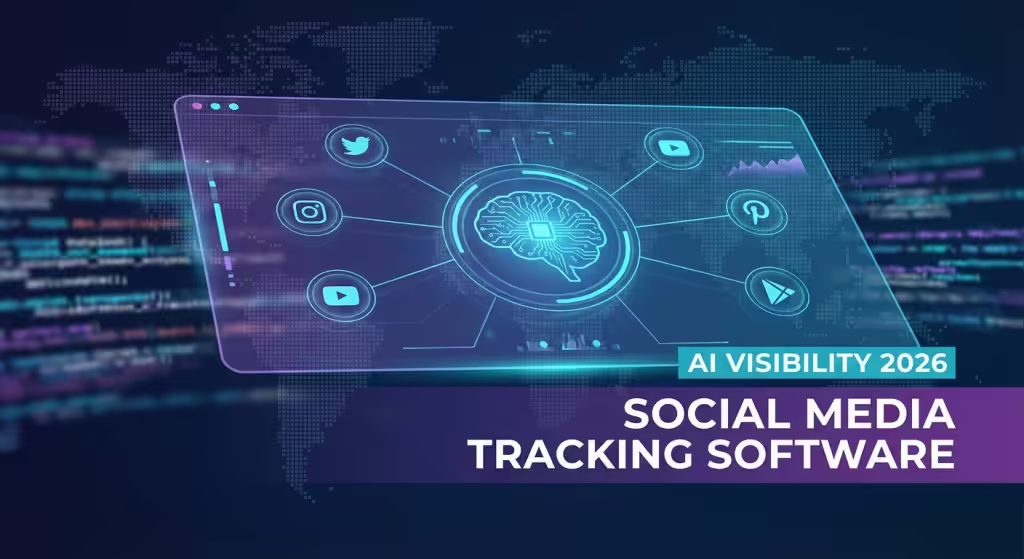

Social media tracking software monitors brand mentions, competitor activity, and audience conversations across platforms, giving marketing teams a single view of what matters. As of 2026, the category has expanded well beyond scheduling dashboards into AI-powered listening, predictive alerts, and cross-platform sentiment analysis.
Choosing the right tool depends on whether you need real-time crisis detection, competitive benchmarking, or deeper insight into how social signals feed into AI search visibility.
This article breaks down what social media tracking software actually does in 2026, which features separate useful tools from expensive shelf-ware, and how to match a platform to your team’s specific workflow. You’ll also see where the category is heading, particularly the growing overlap between social tracking and AI brand visibility.
What You’ll Learn
- How social media tracking software differs from scheduling and publishing tools
- The core features that matter most for B2B and mid-market teams in 2026
- How AI and LLM-driven search have changed what “tracking” means for brands
- A practical evaluation framework for comparing platforms without getting lost in feature lists
- Where social tracking data connects to AI visibility and brand citation strategy
- Common mistakes teams make when selecting and implementing these tools
What Social Media Tracking Software Actually Does in 2026
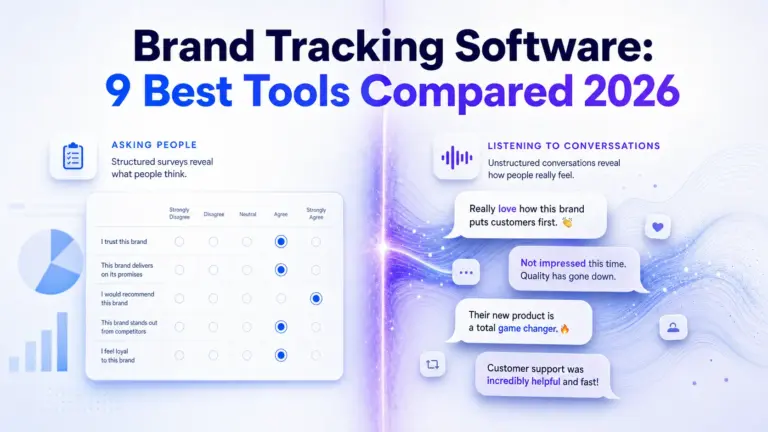
Social media tracking software is any platform that collects, organizes, and analyzes data about brand mentions, keywords, hashtags, competitor activity, and audience sentiment across social networks, forums, news sites, and the broader web.
The category includes tools focused purely on monitoring (listening for mentions) as well as broader platforms that combine tracking with publishing, engagement, and reporting.
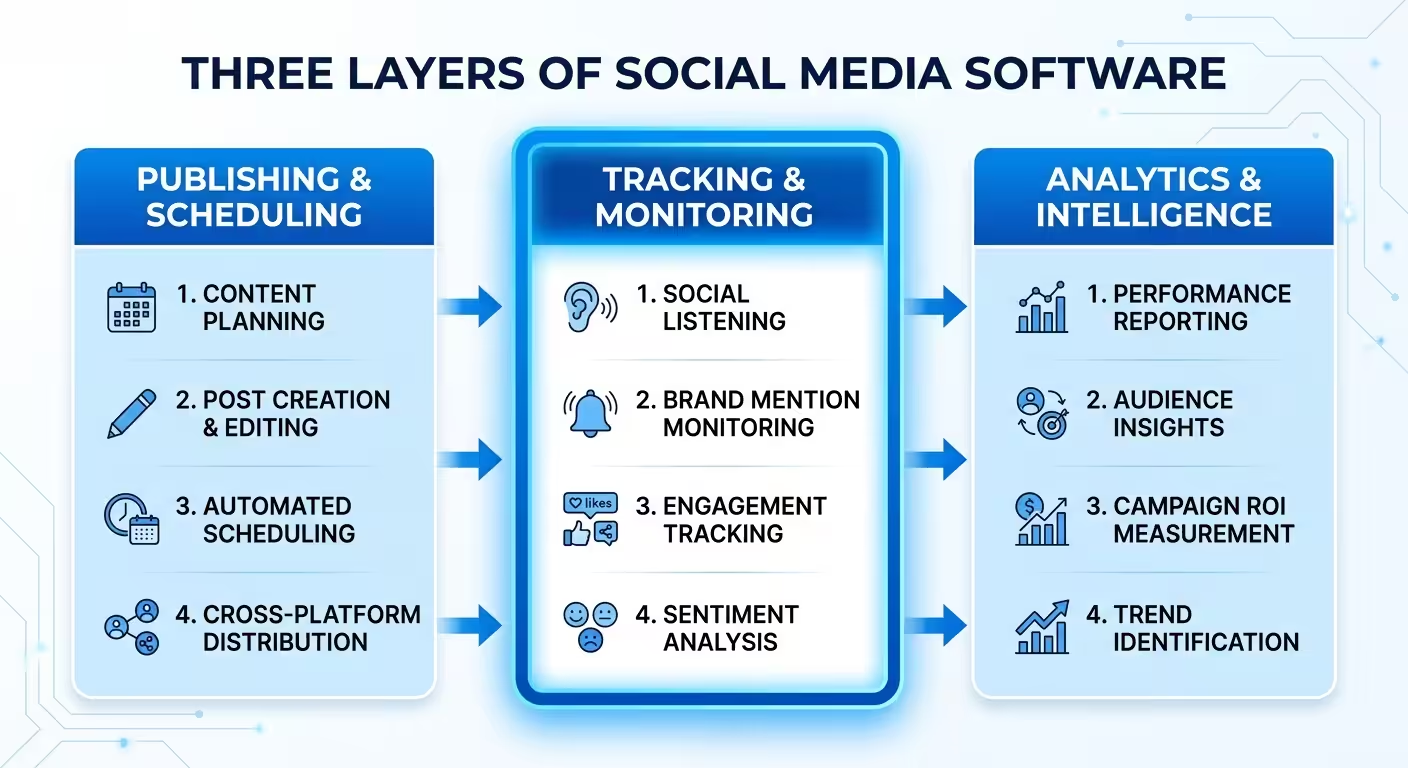
The distinction matters. A scheduling tool like Buffer helps you post content.
A tracking tool like Awario or Mention helps you understand what people say about your brand after you post, or when you haven’t posted at all. Many platforms in 2026 combine both, but the tracking layer is where strategic value lives.
Monitoring vs. listening vs. tracking, what’s the difference?
These terms get used interchangeably, but they describe different scopes:
- Social media monitoring focuses on real-time detection, catching brand mentions, tags, and direct messages as they happen so your team can respond.
- Social media listening analyzes patterns over time, sentiment trends, topic shifts, emerging conversations, to inform strategy rather than trigger immediate action.
- Social media tracking is the broadest term. It encompasses both monitoring and listening, plus competitive benchmarking, hashtag performance, influencer identification, and campaign measurement.
When someone searches for “social media tracking software,” they typically want the full picture, not just alerts, but the analytical layer that turns raw mentions into decisions.
Core Features That Separate Useful Tools From Noise
Feature lists on vendor websites can run into the dozens. Most of those features sound impressive but don’t change outcomes for your team. Based on how B2B marketing teams actually use these platforms, here are the capabilities that consistently drive value.
Real-time mention detection across platforms
The foundation. Your tool needs to catch mentions of your brand, products, executives, and key terms on the social networks where your audience is active.
In 2026, that means at minimum: LinkedIn, X (formerly Twitter), Reddit, YouTube, Instagram, TikTok, and Facebook. Bluesky and Threads support is increasingly relevant for B2B brands targeting tech-forward audiences.
Speed matters. A tool that surfaces mentions 24 hours later won’t help you manage a PR incident. Look for platforms that deliver alerts within minutes, not hours.
Sentiment analysis that goes beyond positive/negative
Basic sentiment scoring (positive, negative, neutral) has been standard for years. In 2026, more capable platforms offer nuanced sentiment, distinguishing between frustration, sarcasm, enthusiasm, and confusion. This granularity matters when you’re tracking responses to a product launch or measuring brand perception shifts after a competitor’s move.
According to a 2025 Forrester report on social intelligence platforms, fewer than 35% of marketing teams trust the accuracy of their sentiment analysis tools. If your tool’s sentiment scoring doesn’t match what you see when you read the actual posts, the feature is decorative, not functional.
Competitive benchmarking
Tracking your own mentions without context is like checking your score without knowing what the other teams scored. Strong social media tracking software lets you monitor competitor profiles, share of voice, content performance, and audience growth, all without needing access to their accounts.
This is particularly valuable for competitive analysis when entering new markets or evaluating how your brand stacks up in a specific category conversation.
Custom keyword and Boolean search
Generic keyword tracking pulls in noise. If your brand name is a common word, or you’re tracking an industry term with multiple meanings, you need Boolean search capabilities. Boolean operators (AND, OR, NOT) let you build precise queries that filter irrelevant results before they reach your dashboard.
Example: A B2B cybersecurity company tracking “shield” would need to exclude mentions of Marvel’s S.H.I.E.L.D., Captain America’s shield, and countless gaming references. Without Boolean filtering, the data is unusable.
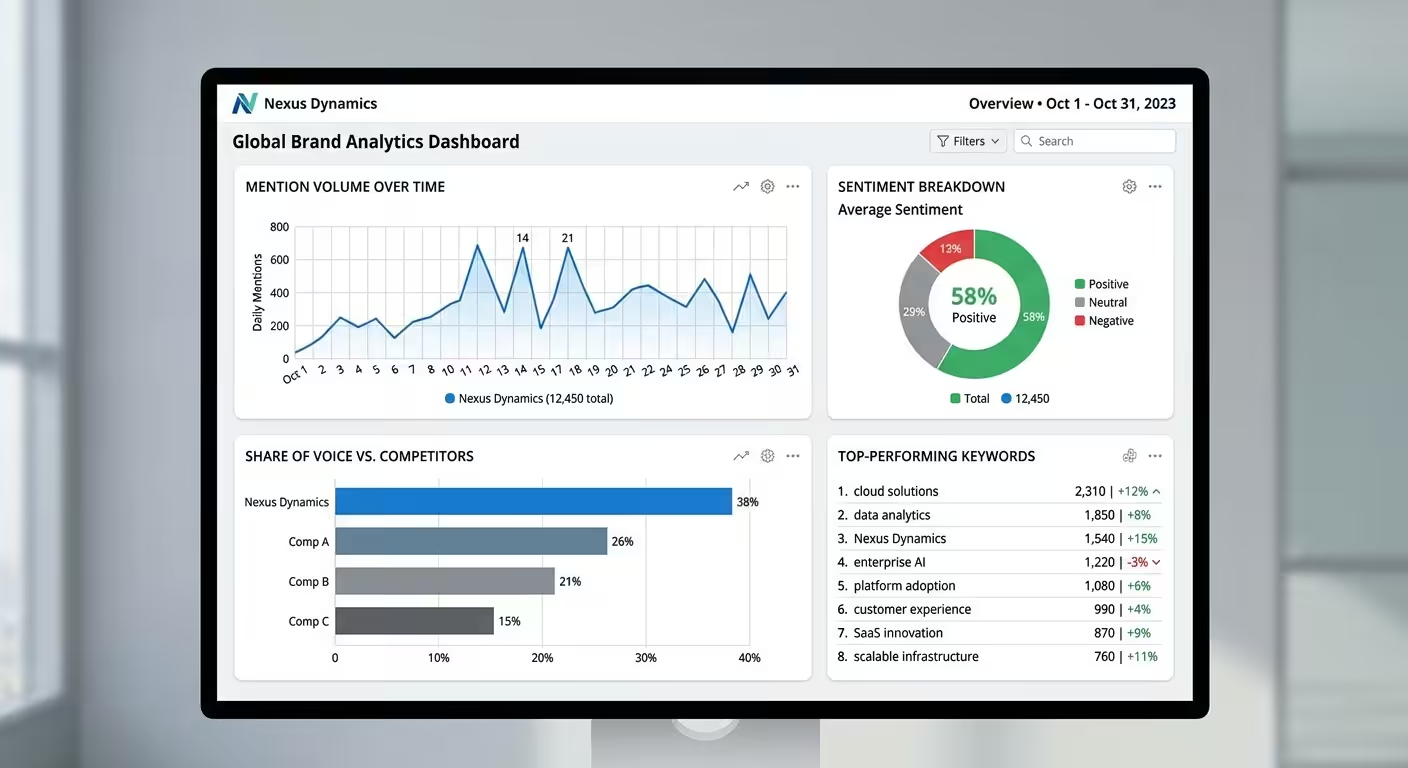
Cross-channel reporting and dashboards
Your leadership team doesn’t want seven platform-specific reports. They want one view that shows how social conversations connect to business outcomes. Look for tools that consolidate data from all tracked channels into unified dashboards with exportable reports (PDF, PowerPoint, Google Slides, or CSV).
Influencer and advocate identification
Social media tracking software can surface people who mention your brand frequently, have large or highly engaged followings, or drive outsized conversation in your category. This turns passive monitoring into an active pipeline for influencer partnerships and customer advocacy programs.
Crisis detection and real-time alerts
A sudden spike in negative mentions can signal a product issue, a viral complaint, or a PR crisis in the making. The best tracking tools let you set threshold-based alerts, for example, triggering a Slack notification when negative sentiment about your brand increases by more than 20% within a two-hour window.
For teams managing brand reputation, this feature alone can justify the cost of a tracking platform.
How AI Search Has Changed What “Tracking” Means
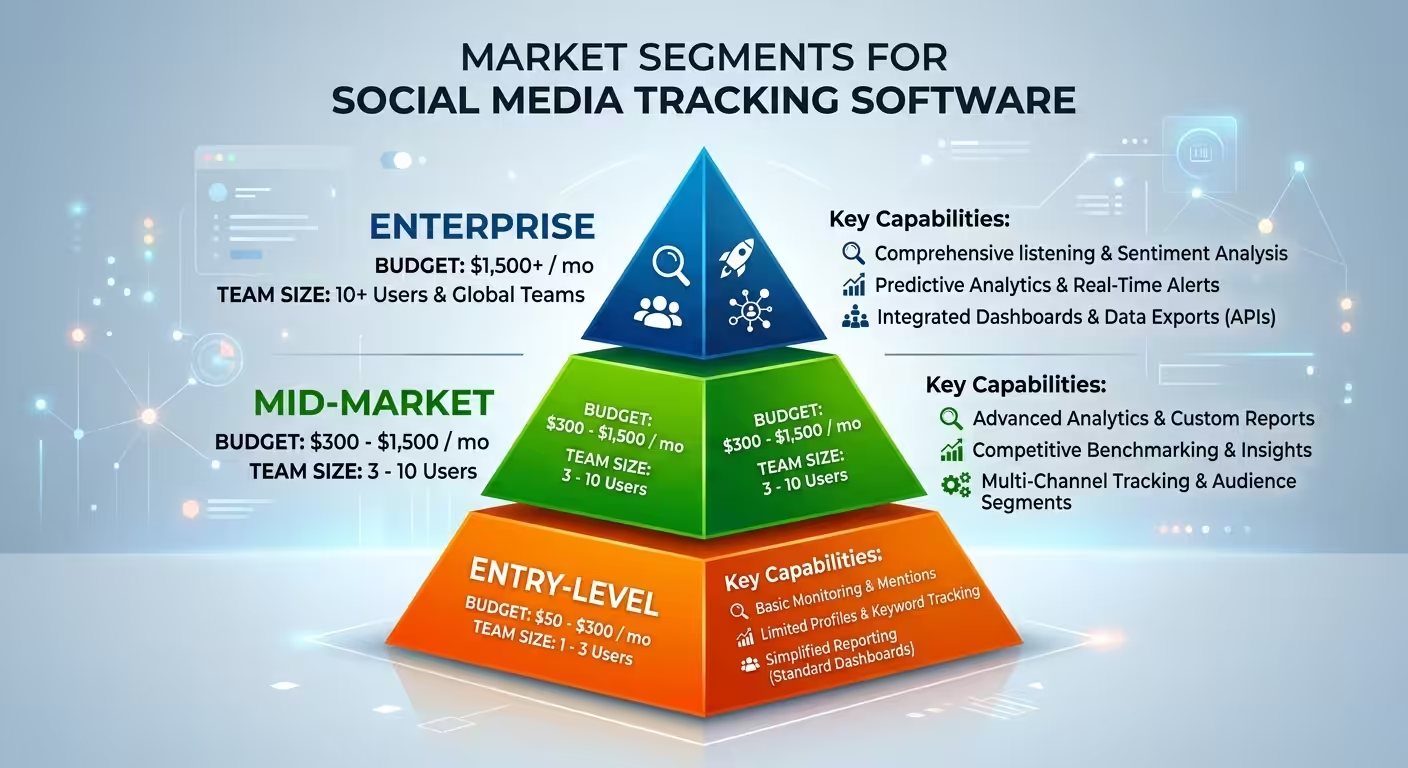
Until recently, social media tracking was a closed loop: monitor social platforms, analyze the data, adjust your social strategy. As of 2026, that loop has expanded. AI search engines, including Google’s AI Overviews, ChatGPT, Perplexity, and Gemini, now pull from social conversations, editorial coverage, and online mentions when generating answers and recommendations.
This means your social media presence feeds into whether AI assistants mention your brand. A surge of positive mentions on Reddit, LinkedIn, or industry forums can influence how large language models associate your brand with specific topics and categories.
The connection between social signals and AI visibility
Large language models (LLMs) learn brand-category associations from the data they’re trained on, which includes social media content, news articles, forums, and web pages.
The frequency and context of brand mentions across high-authority sources likely affect how confidently an AI model references that brand in its responses.
Social media tracking software gives you visibility into one layer of this equation, the real-time conversation layer. But understanding how those conversations translate into AI recommendations requires a broader view that includes editorial mentions on publications AI models learn from.
If you’re exploring how social mentions feed into AI search, this breakdown of how brand mentions impact AI visibility is a useful starting point.
What social tracking tools can and can’t tell you about AI
Social media tracking software excels at showing you what people say about your brand on social platforms. It doesn’t tell you:
- Whether AI models are citing your brand in their responses
- Which editorial mentions AI training data includes
- How your brand’s entity authority is developing in knowledge graphs
For that, you need dedicated AI citation measurement tools that monitor brand mentions across LLM outputs. Social tracking and AI visibility tracking are complementary, not interchangeable.
Evaluating Social Media Tracking Software: A Practical Framework
Vendor comparison pages tend to list features in a vacuum. This framework helps you evaluate tools based on how they’ll actually perform for your team.
Step 1: Define what you’re tracking and why
Before comparing platforms, write down your top three use cases. Common ones include:
- Brand health monitoring, tracking sentiment trends and mention volume over time
- Competitive intelligence, benchmarking against 3-5 competitors across key metrics
- Campaign measurement, attributing social conversation spikes to specific campaigns or launches
- Crisis prevention, detecting negative conversation spikes before they escalate
- Customer insight, understanding what your audience discusses, recommends, and complains about
Your use cases determine which features are non-negotiable and which are nice-to-have.
Step 2: Match platform depth to team size and budget
A three-person marketing team at a Series A startup has different needs than a 40-person enterprise marketing department. Here’s how the market segments in 2026:
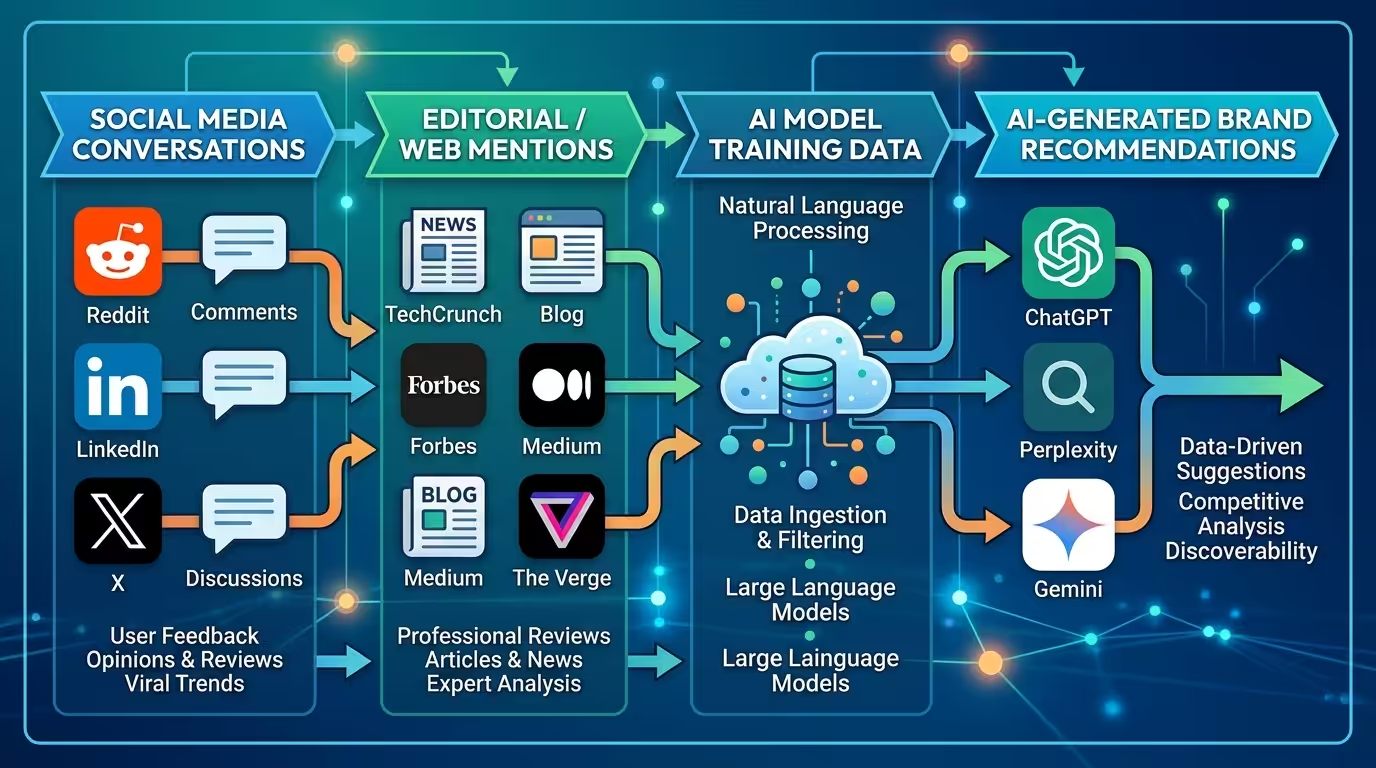
| Segment | Monthly Budget Range | Typical Team Size | Platform Examples | Key Strengths |
|---|---|---|---|---|
| Entry-level | $0 to $50/month | 1-3 users | Metricool, Buffer (free tier), Google Alerts | Basic mention tracking, scheduling, simple analytics |
| Mid-market | $50 to $250/month | 3-10 users | Awario, Mentionlytics, Sendible, Agorapulse | Boolean search, sentiment analysis, competitive tracking, reporting |
| Enterprise | $250 to $1,000+/month | 10+ users | Hootsuite (with Talkwalker), Sprout Social, Sprinklr, Meltwater | Predictive analytics, multilingual monitoring, API access, advanced integrations |
Step 3: Test data accuracy, not just feature count
The most common complaint about social media tracking tools, across every price tier, is inaccurate or incomplete data. Before committing to a platform:
- Run a trial period tracking a known brand mention (your own or a competitor’s) and manually verify results against what you find directly on each platform.
- Check sentiment accuracy by reviewing 20-30 mentions the tool has classified. How many does it get right?
- Test mention speed. Post something mentioning your brand on a public account and time how long it takes to appear in the tool.
No tool catches 100% of mentions. But the difference between catching 70% and 90% is the difference between useful intelligence and false confidence.
Step 4: Evaluate integration with your existing stack
Social tracking data is most valuable when it connects to your CRM, project management, or reporting workflows. Check whether the platform integrates with the tools your team already uses, Slack for alerts, HubSpot or Salesforce for lead context, Looker Studio or Google Sheets for custom reporting.
API access matters too, especially for mid-market and enterprise teams that want to build custom dashboards or feed social data into broader analytics pipelines.
Step 5: Assess the reporting experience
Dashboards are only useful if someone looks at them. Evaluate whether the platform’s reporting is easy enough for non-analysts to understand and polished enough to share with executives. The best tools let you create white-labeled reports that can go directly to leadership or clients without manual formatting.
Common Mistakes When Choosing Social Media Tracking Software
The tooling mistake we see most often is teams buying for dashboard polish and discovering six weeks later that the platform’s keyword matching is too loose to stay useful at their volume.
Before any purchase, run a two-week trial with your actual brand, product, and competitor terms, and count how many of the flagged mentions are ones you’d actually want a human to see. If the noise ratio is high, no feature list will fix it.
After years of watching B2B teams implement and abandon these platforms, certain failure patterns repeat.
Buying enterprise features you’ll never use
Predictive analytics, AI-powered trend forecasting, and multilingual monitoring sound impressive. They’re also expensive, and most teams with fewer than 10 people never configure them properly. Pay for what you’ll actually use within the next 12 months, not what sounds good in a vendor demo.
Ignoring Reddit and forums
Many teams focus tracking on LinkedIn, Instagram, and X while overlooking Reddit, Quora, and industry forums. In 2026, Reddit is one of the most influential platforms for purchase decisions and category conversations, particularly in B2B software, where subreddit discussions directly influence both buyers and AI models that reference Reddit content in their training data.
Confusing mention volume with impact
A thousand mentions from low-relevance accounts are worth less than ten mentions from respected industry voices. Prioritize tools that show you mention quality, reach, engagement, domain authority of the source, not just count.
Treating social tracking as a standalone function
Social media tracking data becomes exponentially more valuable when combined with other brand intelligence: brand tracking across news and editorial publications, share of voice analysis, and sentiment analysis across non-social channels. The teams that get the most from their tracking tools are the ones that integrate social data into a broader monitoring ecosystem.
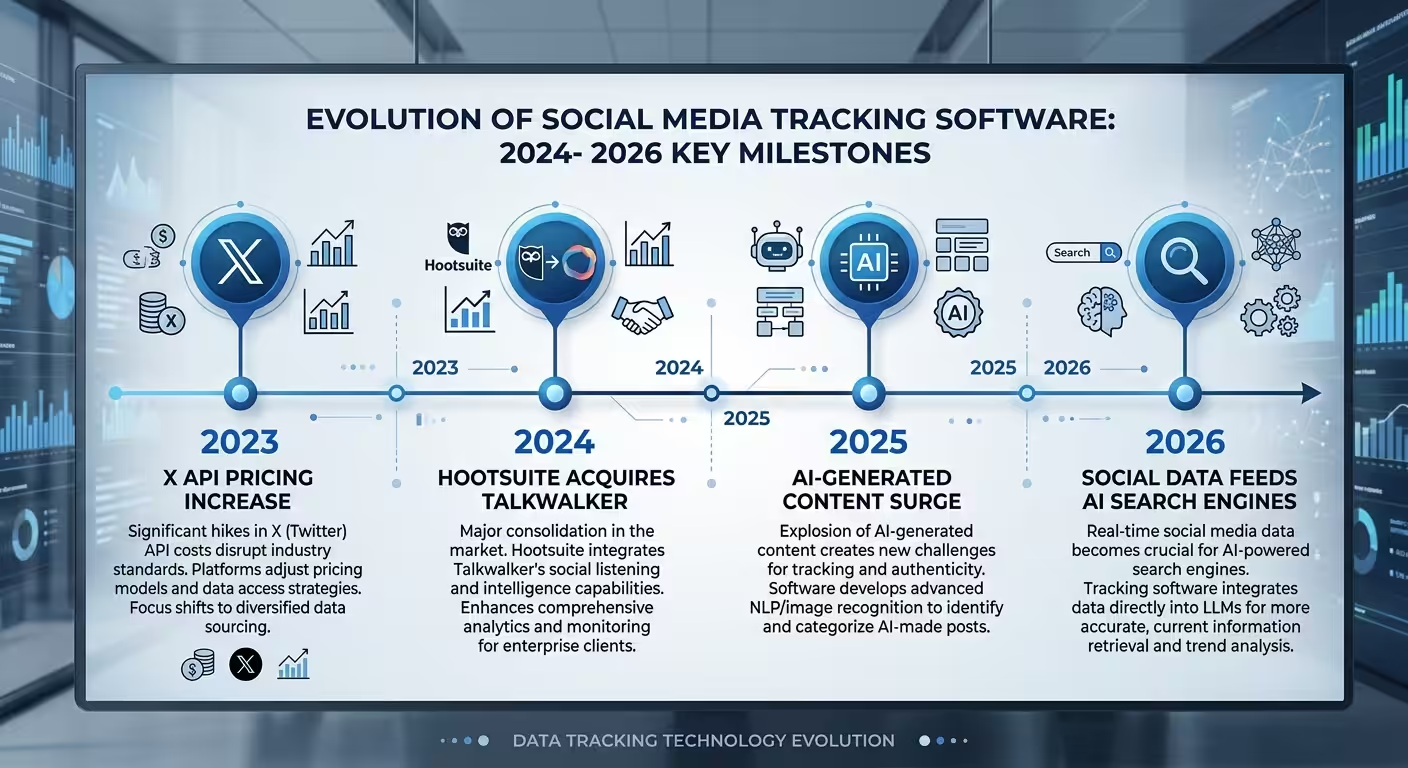
What’s Changed in Social Media Tracking Since 2024
The category has shifted meaningfully over the past two years. Here’s what’s different heading into 2026:
API access has become more expensive and restrictive
X (formerly Twitter) significantly increased API pricing in 2023, and the effects have rippled through the industry. Many mid-tier tracking tools have reduced their X monitoring capabilities or moved them to higher-priced plans.
Instagram and TikTok have also tightened data access. The result: tools that offer broad, accurate coverage across platforms are more valuable, and more expensive, than they were in 2026.
AI-generated content has increased monitoring noise
The volume of AI-generated social media content has surged, according to a 2025 Sparktoro analysis of social platform activity. This makes sentiment analysis harder (AI-generated posts often lack genuine sentiment signals) and increases the importance of tools that can distinguish between organic human conversation and automated content.
Social data now feeds AI search results
As discussed earlier, AI search engines increasingly reference social platform data, especially Reddit threads, LinkedIn discussions, and YouTube content, when generating answers. This has elevated the strategic importance of social media tracking from a “marketing nice-to-have” to a component of AI search visibility strategy.
Consolidation is reshaping the vendor landscape
Hootsuite acquired Talkwalker in 2026, merging social management with enterprise-grade listening. Sprout Social expanded its listening features significantly.
Smaller players are differentiating by going deeper on specific platforms (like Typefully for text-based networks) rather than trying to cover everything. For buyers, this means fewer truly independent listening-only tools and more bundled suites.
Where Social Tracking Fits in a Broader Brand Intelligence Stack
For the AI-search side of that intelligence stack, see ChatGPT brand visibility audit steps and monitoring how LLMs reference your brand, which walk through the cross-platform cadence that sits alongside social tracking.
Social media tracking software is one piece of a larger puzzle. For brands that want a complete view of their online presence, including how they appear in AI-generated answers, the stack typically includes:
- Social media tracking, real-time conversations on social platforms (what this article covers)
- Brand monitoring tools, mentions across news, blogs, forums, and the web
- Brand mention monitoring, tracking linked and unlinked brand mentions for SEO and authority signals
- AI search tracking, monitoring whether AI platforms like ChatGPT, Perplexity, and Gemini mention your brand in their outputs
- Brand reputation analysis, aggregating sentiment and perception data across all channels
The most effective marketing teams in 2026 don’t rely on a single tool. They build a monitoring ecosystem where social tracking data informs content strategy, editorial placement decisions, and AI visibility efforts.
The pattern we see repeatedly in audits is that brands combining sustained editorial coverage on category-relevant publications with an active social presence show up in AI answers far more reliably than those leaning on social activity alone. Social tracking tells you where conversations happen. Editorial citation strategy determines whether AI models absorb those conversations.
Choosing Your Tool: A Decision Checklist
Use this checklist during your evaluation process. Score each platform 1-5 on each criterion, then compare totals.
- Platform coverage: Does it track the specific networks where your audience is active?
- Mention accuracy: During your trial, did it catch the mentions you verified manually?
- Sentiment reliability: When you spot-checked classified mentions, was the sentiment correct at least 80% of the time?
- Alert speed: Do mentions appear within minutes, not hours?
- Boolean/advanced search: Can you build precise queries to filter noise?
- Competitive tracking: Can you monitor competitor profiles and benchmark share of voice?
- Reporting quality: Can you generate executive-ready reports without manual reformatting?
- Integration depth: Does it connect to your CRM, Slack, and reporting tools?
- Pricing transparency: Is the pricing clear, or do critical features require upsells?
- Data export: Can you export raw data for custom analysis?
No platform will score a 5 on every criterion. The goal is to find the one that scores highest on the criteria that matter most for your specific use cases.
FAQ
What is social media tracking software used for?
Social media tracking software monitors brand mentions, keywords, hashtags, competitor activity, and audience sentiment across social platforms, forums, and the web. Marketing teams use it to manage brand reputation, measure campaign impact, detect emerging crises, and gather competitive intelligence, all from a centralized dashboard.
How much does social media tracking software cost in 2026?
Pricing ranges widely. Free tiers (Metricool, Buffer) cover basic tracking for small teams.
Mid-market tools (Awario, Mentionlytics, Agorapulse) typically cost $50 to $250 per month. Enterprise platforms (Hootsuite with Talkwalker, Sprout Social, Meltwater) start at $200 to $500 per month and can exceed $1,000 for advanced features like predictive analytics and multilingual monitoring.
Can social media tracking software show whether AI mentions my brand?
Standard social media tracking tools monitor social platforms and the web, not AI model outputs. To track whether ChatGPT, Perplexity, Gemini, or other AI assistants mention your brand, you need dedicated AI brand mention monitoring tools.
Social tracking and AI tracking are complementary: social data shows what humans say, while AI tracking shows what models recommend.
What’s the difference between social media monitoring and social listening?
Social media monitoring detects specific mentions and conversations in real time so teams can respond quickly. Social listening analyzes conversation patterns, sentiment trends, and audience behavior over time to inform strategy. Most modern tracking platforms include both capabilities, though the depth of listening features varies by price tier.
Do social media mentions affect AI search results?
Yes. AI models like those powering ChatGPT and Perplexity learn from web and social data, including Reddit threads, LinkedIn posts, and forum discussions.
Frequent, contextual brand mentions in these spaces can influence how AI associates your brand with specific topics. However, editorial mentions on high-authority publications tend to carry more weight in AI training data than social mentions alone.
If you want a baseline before committing to a tool or process, book a short strategy call. We’ll run 25 category-relevant prompts across ChatGPT, Perplexity, Gemini, and Google AI Overviews so you can see exactly which sources each platform trusts for your category, and which competitors are capturing citations you’re not.