
Monitoring your brand mentions in ChatGPT requires purpose-built AI visibility tools, not traditional SEO software, because ChatGPT offers no native analytics, no search console, and no notification system for when your brand appears in its responses.
As of 2026, the most reliable approach combines manual prompt auditing with automated AI monitoring platforms that simulate real user queries and track your brand’s inclusion, sentiment, and competitive positioning over time. Whatever tool you use, the workflow is the same: a fixed prompt set, a daily or weekly run cadence, and a dashboard that captures every mention with its cited sources.
If you’ve been relying on Google Search Console or social listening dashboards to understand your brand’s discoverability, you’re missing an entire decision layer. ChatGPT now processes billions of queries daily, a large share of which involve product recommendations, brand comparisons, and buying decisions, conversations where your brand either shows up or doesn’t exist.
This guide walks you through exactly how to monitor ChatGPT brand mentions in 2026, from building your first manual audit to setting up automated tracking that scales. You’ll also learn what to do with the data once you’ve it, because monitoring without action is just expensive curiosity.
Key Takeaways
- ChatGPT has no built-in brand alert system, you need external tools or manual prompt testing to track mentions
- Manual auditing gives you a fast baseline, but it doesn’t scale beyond a handful of prompts
- Automated AI visibility platforms simulate user queries and track brand inclusion, citations, sentiment, and competitor displacement weekly
- The metrics that matter most are inclusion rate, sentiment accuracy, citation sources, and competitive share of AI voice
- Monitoring is only valuable if it feeds a content and authority-building strategy that improves future AI responses
- Brands with consistent editorial mentions on high-authority publications achieve measurably higher AI recommendation rates than those relying on traditional SEO alone
Why ChatGPT Brand Monitoring Requires a Different Approach
However you phrase the question, the answer is the same: pick one dedicated tool, lock in a 25-prompt set, set a daily or weekly cadence, and review the captured response data on a fixed rhythm.
Traditional brand monitoring tools track social media posts, news articles, blog mentions, and forum discussions. They scan public content and alert you when your brand name appears. ChatGPT brand monitoring works differently because AI-generated responses aren’t indexed, not public, and not consistent across sessions.
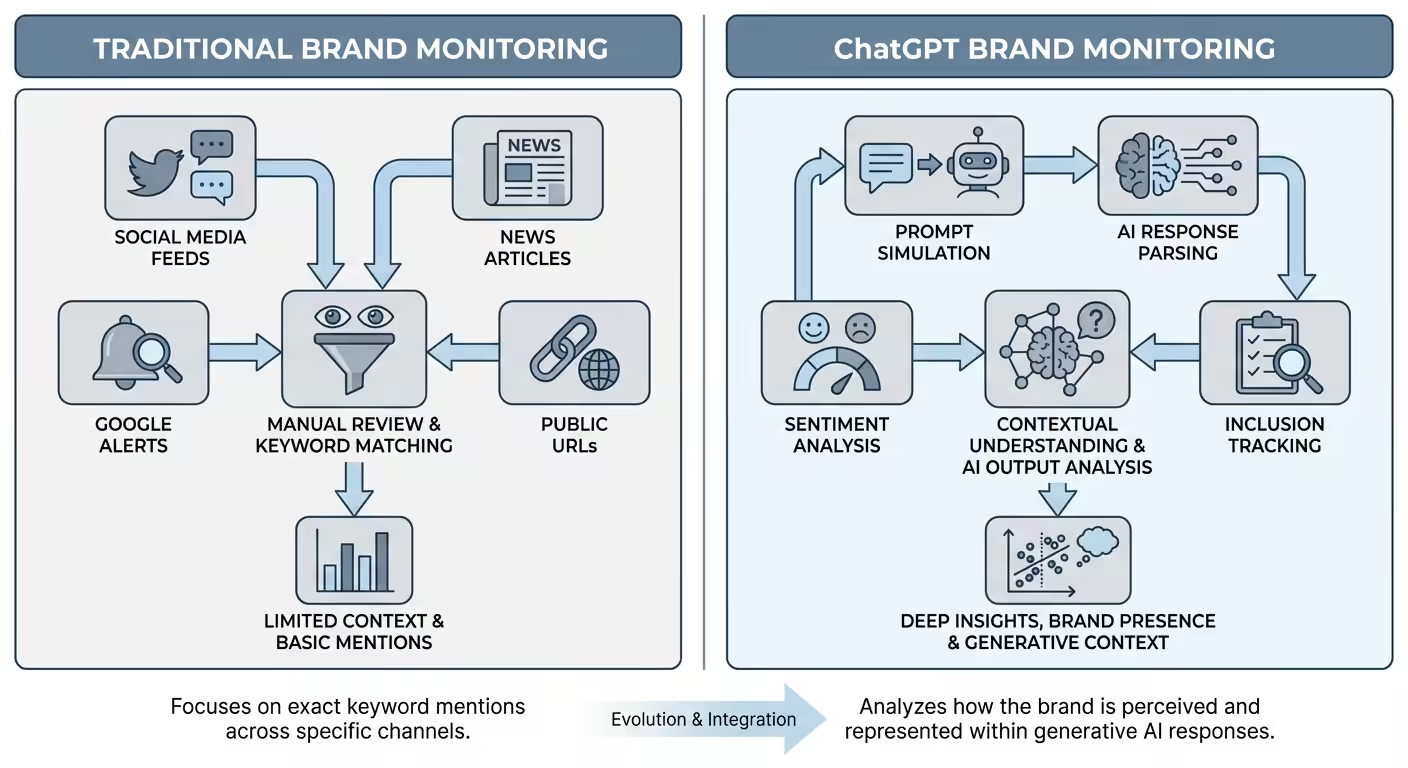
When a user asks ChatGPT “What’s the best project management tool for remote teams?”, the response is synthesized on the fly. It pulls from training data, real-time web browsing (when enabled), and patterns learned from authoritative sources. There’s no permanent URL you can monitor. There’s no impressions count. There’s no feed to subscribe to.
This creates three specific challenges:
- No native analytics: ChatGPT provides zero data about how often your brand is mentioned, in what context, or to how many users
- Response variability: The same prompt can produce different brand mentions depending on the model version, browsing mode, conversation history, and user location
- Invisible competition: A competitor could be recommended in thousands of AI conversations daily, and you would never know without proactive monitoring
That’s why dedicated ChatGPT monitoring tools exist, they bridge the gap between what traditional analytics can see and what AI assistants actually say about your brand.
How to Run a Manual ChatGPT Brand Audit
A quick note from watching teams run this for the first time: the biggest unexpected finding is almost never “ChatGPT never mentions us”, it’s “ChatGPT mentions a specific wrong thing about us.” Outdated pricing, the wrong use-case positioning, a product feature that no longer exists. That’s the finding you want to surface fastest, because it’s the easiest to fix and has immediate revenue impact. Run the manual audit with that outcome specifically in mind.
Before investing in any tool, start with a manual audit. It takes 30-60 minutes and gives you a clear snapshot of whether ChatGPT knows your brand, how it describes you, and which competitors it recommends instead.
Step 1: Build Your Prompt List
Write 10-15 prompts that mirror how your potential customers actually ask questions. Don’t just search your brand name, search the problems you solve and the category you compete in.
Strong prompt categories to include:
- Category queries: “What are the best [your product category] tools in 2026?”
- Comparison queries: “How does [Your Brand] compare to [Competitor]?”
- Problem-solving queries: “How do I [specific pain point your product addresses]?”
- Recommendation queries: “Which [product type] should I use for [specific use case]?”
- Direct queries: “What do you know about [Your Brand]?”
Category and problem-solving prompts are the most important. They reflect how real buyers discover new brands, not by searching your name, but by describing their need.
Step 2: Run Each Prompt in a Fresh Chat
Open a new ChatGPT conversation for each prompt. Don’t chain prompts together in the same session, because conversation history influences responses. Use the same ChatGPT model version for all tests (GPT-4o or whichever version is current) and note whether web browsing is enabled.
For each response, document:
- Whether your brand is mentioned at all (inclusion: yes or no)
- Your position in any list (first mentioned, third, fifth, not present)
- How your brand is described (leading, niche, affordable, alternative)
- Which competitors are mentioned alongside you
- Whether any citations or source links reference your website
- Whether any information is inaccurate or outdated
Step 3: Document Your Baseline
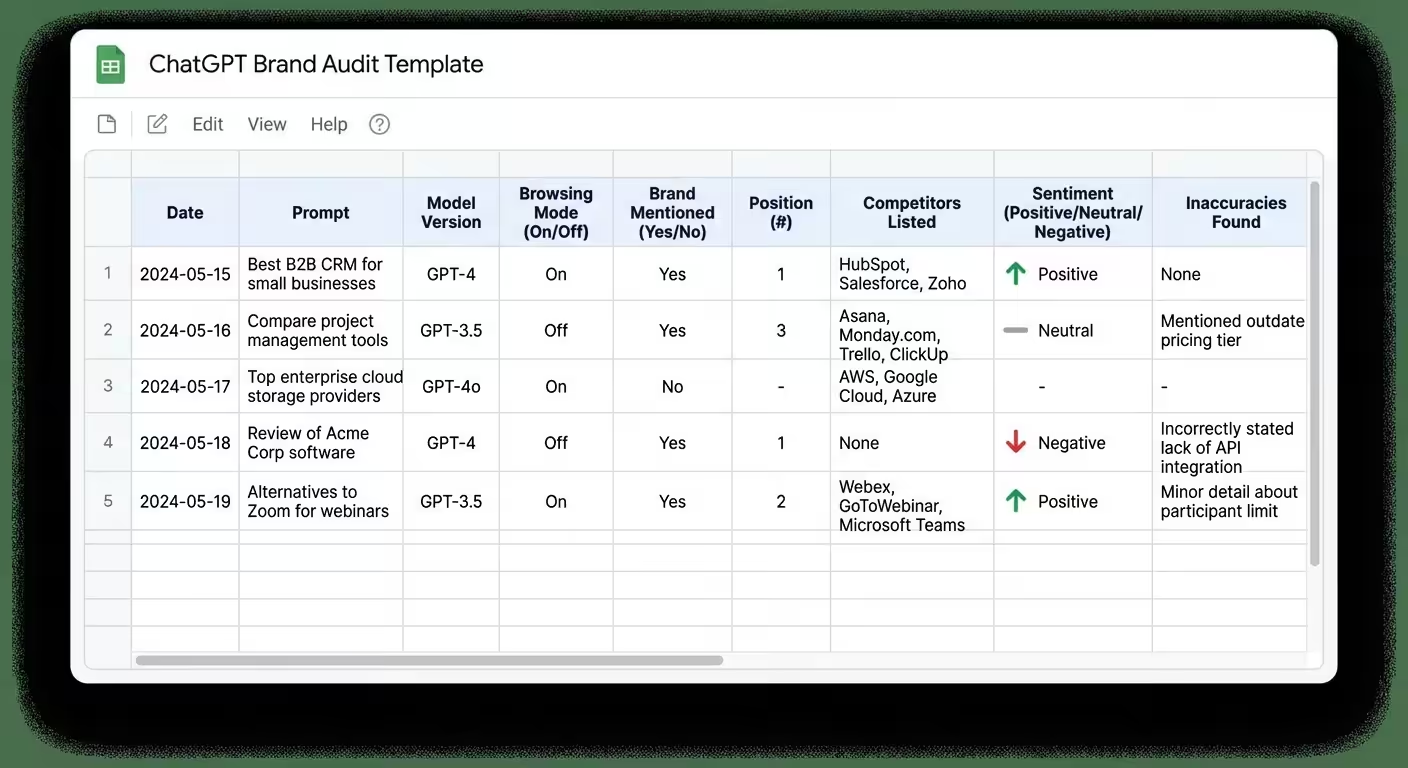
Use a simple spreadsheet with columns for date, prompt text, model version, browsing mode, your brand mentioned (yes/no), position, competitors mentioned, sentiment (positive/neutral/negative), and any inaccuracies. This becomes your Version 1 baseline, the benchmark every future measurement compares against.
Pro Insight: Ask two or three colleagues to run the same prompts from different accounts and locations. ChatGPT responses can vary by session, so multiple data points reduce noise in your baseline.
Manual auditing gives you fast, actionable insight. But it has clear limits, it’s a snapshot, not continuous monitoring. You can’t manually test hundreds of prompts weekly. That’s where automated tools take over.
How Automated ChatGPT Monitoring Tools Work
Whichever way you phrase it, whether that’s monitoring brand mentions in ChatGPT generally or tracking your brand’s performance in responses over time, the setup is the same: a fixed prompt set, a dedicated tool, weekly review cadence.
In 2026, tools built for this include Scrunch AI, AthenaHQ, Peec AI, and Waikay.io. Each captures full response text, citation URLs, and per-prompt visibility trends.
Once your manual audit has given you a baseline, the natural next step is comparing automated tools. The separate guide to the best ChatGPT monitoring tools compares 10 platforms side-by-side on pricing, coverage, and fit, start there once you’re ready to buy.
An AI visibility monitoring tool is software that systematically queries ChatGPT (and often other AI platforms) on your behalf, captures the full response, extracts brand mentions and citations, and tracks changes over time. It replaces manual prompt testing with a repeatable, scalable system.
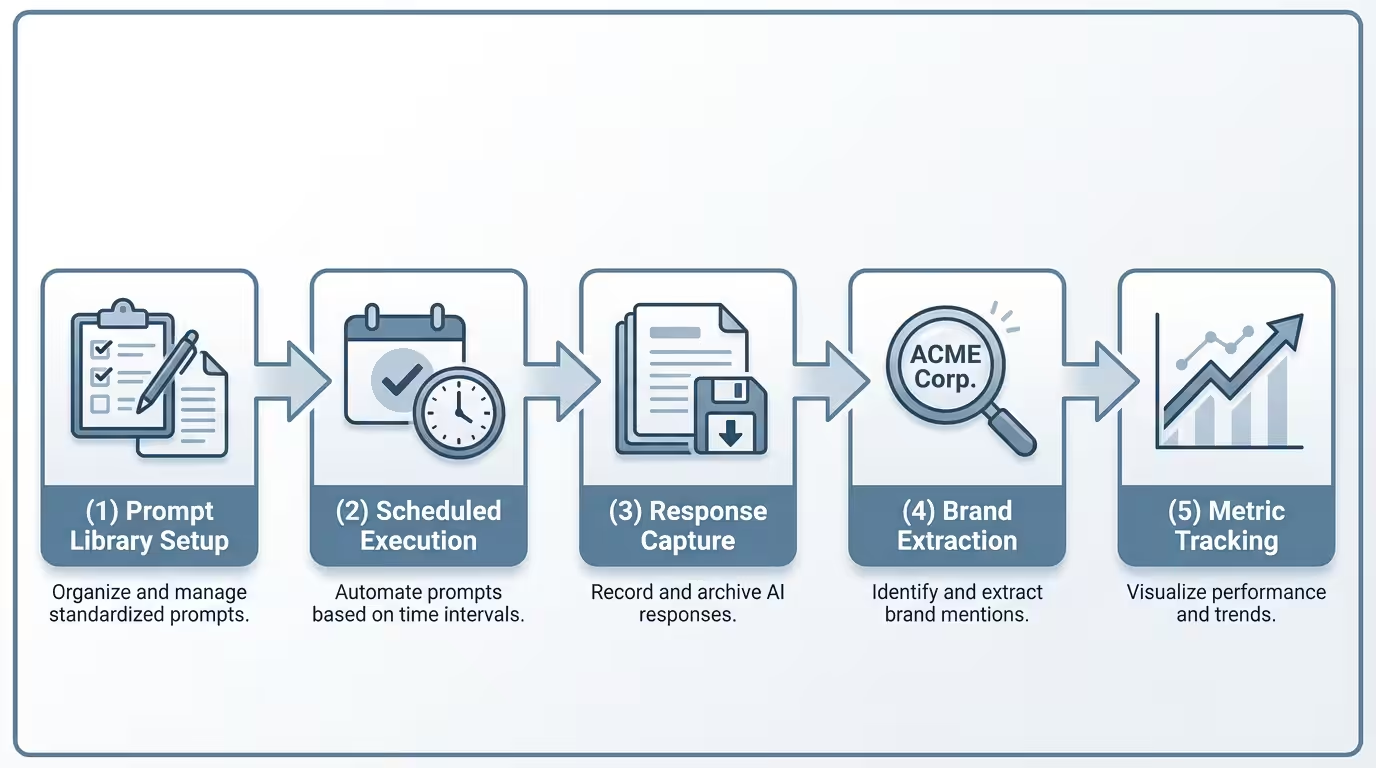
The core workflow follows this sequence:
- Prompt library setup: You define the prompts that matter to your brand, category queries, comparison prompts, and use-case questions
- Scheduled execution: The tool runs your prompts against ChatGPT at regular intervals (daily, weekly, or monthly)
- Response capture: The full AI-generated answer is saved, including any cited sources
- Brand extraction: The tool identifies which brands are mentioned, their order, and the context
- Metric calculation: Inclusion rate, sentiment, competitive share, and citation sources are scored and tracked over time
This is fundamentally different from tracking Google rankings. There’s no “position 1” in ChatGPT. Instead, you’re measuring whether your brand is included at all, how it’s described, and how often it appears relative to competitors across a defined set of prompts.
Most tools in this space as of 2026 cover ChatGPT specifically, with many also supporting Gemini, Perplexity, and Google AI Overviews. If you need cross-platform AI monitoring, look for tools that track multiple models from a single dashboard.
What Metrics to Track When Monitoring ChatGPT Mentions
Collecting data is only valuable if you measure the right things. These are the metrics that connect ChatGPT monitoring to actual business outcomes.
Inclusion Rate
Inclusion rate measures the percentage of your tracked prompts where ChatGPT mentions your brand at all. If you track 50 prompts weekly and your brand appears in 12 responses, your inclusion rate is 24%.
This is your most fundamental metric. Before worrying about sentiment or positioning, you need to know whether you’re in the conversation. An inclusion rate below 10% for category-relevant prompts signals a significant visibility gap.
Competitive Share of AI Voice
Share of AI voice compares your brand’s mention frequency against competitors across the same prompt set. If ChatGPT mentions five brands total across your 50 prompts, and your brand appears in 12 while your top competitor appears in 31, you’ve a clear picture of who owns the AI conversation in your category.
Track this weekly. If a competitor’s share grows while yours stays flat, they’re building authority faster, and the gap compounds over time.
Sentiment and Framing Accuracy
Being mentioned isn’t enough if ChatGPT describes your brand inaccurately. Monitor how the AI frames your brand:
- Is it described as a leader, an alternative, a budget option, or a niche player?
- Are product features and pricing accurate?
- Does the sentiment align with your actual market position?
Outdated or incorrect framing can actively harm your brand. If ChatGPT tells users your product lacks a feature you launched six months ago, that misinformation reaches millions of conversations.
Citation Sources
When ChatGPT browses the web in real time, it sometimes cites specific sources. Track which URLs ChatGPT references when mentioning your brand, and which sources it cites when recommending competitors instead.
This reveals the authority signals that influence AI responses. If a competitor’s G2 profile, Wikipedia entry, or industry publication feature keeps getting cited, you’ve identified exactly which off-site assets to strengthen.
Prompt-Level Positioning
In list-style responses, order matters. Being mentioned first carries different weight than being mentioned fifth. Track your position within each response, and watch for displacement patterns where a competitor consistently appears above you.
Key Definition: AI share of voice is the proportion of AI-generated answers in your category that mention your brand compared to total brand mentions across the same prompt set. It measures competitive visibility within AI conversations, similar to how share of voice works in traditional media monitoring.
Which Prompts Should You Monitor?
The most common mistake we see in prompt-list design: teams use the queries they wish buyers would search instead of the queries buyers actually search. The fastest way to write a usable prompt library is to pull 15 recordings from recent sales calls and transcribe the exact phrases prospects used when describing their problem. Those, not category-level generic queries, are what your ChatGPT monitoring should track.
The prompts you choose to track determine whether your monitoring produces useful intelligence or irrelevant noise. Focus on three prompt categories that directly connect to your business.
Category Discovery Prompts
These are the prompts buyers use when they’re early in their research. They don’t know your brand yet, they’re exploring options.
- “Best [product category] for [industry] in 2026”
- “Top [product type] tools for [specific use case]”
- “What software should I use to [solve problem]?”
If your brand doesn’t appear here, you’re invisible at the most critical discovery stage.
Comparison and Evaluation Prompts
These prompts indicate a buyer who already knows about you, or knows about a competitor, and is evaluating options.
- “[Your Brand] vs [Competitor], which is better for [use case]?”
- “Alternatives to [Competitor Brand]”
- “[Your Brand] reviews, is it worth it?”
Monitoring these prompts reveals how ChatGPT positions you head-to-head and whether your differentiation comes through clearly.
The 6-Step ChatGPT Monitoring Workflow That Actually Works
Most teams set up brand monitoring tools and forget about them. Then six months later, they realize they have no actionable data. The workflow below takes 45 minutes a week and produces trend data you can act on.
Step 1: Pick your 10 to 15 core buyer prompts
These are the questions buyers in your category actually ask. Not “what is brand X” but “best tool for B2B SaaS founders to track brand mentions” or “how do I get cited by ChatGPT for B2B SaaS.” Specific, intent-rich queries. Write them once. Reuse them every week.
Step 2: Run each prompt in ChatGPT, fresh session
Open a new ChatGPT session for each prompt. Old sessions carry memory bias from prior conversations. Use the same model (GPT-4o or GPT-5) across all your prompts so results are comparable. Don’t use ChatGPT Plus’s “Memory” feature for this work; it skews results toward your interests.
Step 3: Log results in a spreadsheet
Four columns: prompt, date, brand cited (yes/no), competitor brands cited. Keep it simple. Over weeks, the patterns reveal themselves: which prompts cite you, which cite competitors, which cite nobody from your category at all.
Step 4: Identify the “always cited” and “never cited” prompts
After three weeks, group your prompts into three buckets: always cites you, sometimes cites you, never cites you. The “never cites you” bucket is your highest-priority gap. The “sometimes” bucket is where you’re closest to claiming a citation slot with the right content.
Step 5: For never-cited prompts, find what IS being cited
Open the never-cited prompts and look at the sources ChatGPT references. Those are the publications, sites, or platforms training the model. Your action plan: get mentioned in those specific sources. Generic backlinks don’t help. Citations from the specific sources ChatGPT pulls from do.
Step 6: Re-measure monthly
AI citation shifts happen on monthly cycles, not weekly. Don’t make strategy changes after one bad week. Wait 30 days, compare your monthly snapshots, then decide. The brands winning AI citations in 2026 are the ones with patience for monthly cadence over reactive daily churn.
What Most Teams Skip (and Why It Costs Them)
The biggest gap we see across teams trying to monitor ChatGPT mentions is treating it like Google Analytics: set up once, check the dashboard, react to spikes. That mental model breaks here because ChatGPT responses aren’t traffic data. They’re samples from a probabilistic system.
The three things most teams skip:
Source-Level Analysis
Tracking whether your brand is mentioned without tracking WHICH sources ChatGPT cited means you can’t fix the gap. You can’t earn citations from sources you haven’t identified.
Competitor Coverage in the Same Prompts
If a competitor gets cited in 8 of your 10 prompts and you get cited in 2, that’s the gap. Tracking yourself in isolation hides the relative picture.
Monthly Trending
Single-snapshot monitoring tells you nothing. A 3-month rolling view shows whether your AI visibility is compounding, flat, or declining.
Brands that close these gaps move from “we sometimes appear in ChatGPT” to “we’re cited in 70 percent of buyer prompts in our category” within 6 to 9 months. The work isn’t glamorous. The compounding is real.
Problem-Solution Prompts
These prompts describe the user’s pain point without naming any brand. They’re the highest-intent queries because the user is ready to act.
- “How do I reduce customer churn for my SaaS product?”
- “What’s the fastest way to build a brand presence in AI search?”
- “How can I track what AI says about my company?”
Winning in these prompts means ChatGPT associates your brand with solving specific problems, the strongest form of AI visibility.
A practical prompt library starts at 10-15 prompts and expands as you learn which query patterns produce the most valuable insights. Review and update your prompt list quarterly, because buyer language shifts as AI search behaviors evolve.
How to Interpret and Act on Your Monitoring Data
Data without action is overhead. Here’s how to turn monitoring insights into measurable improvement.
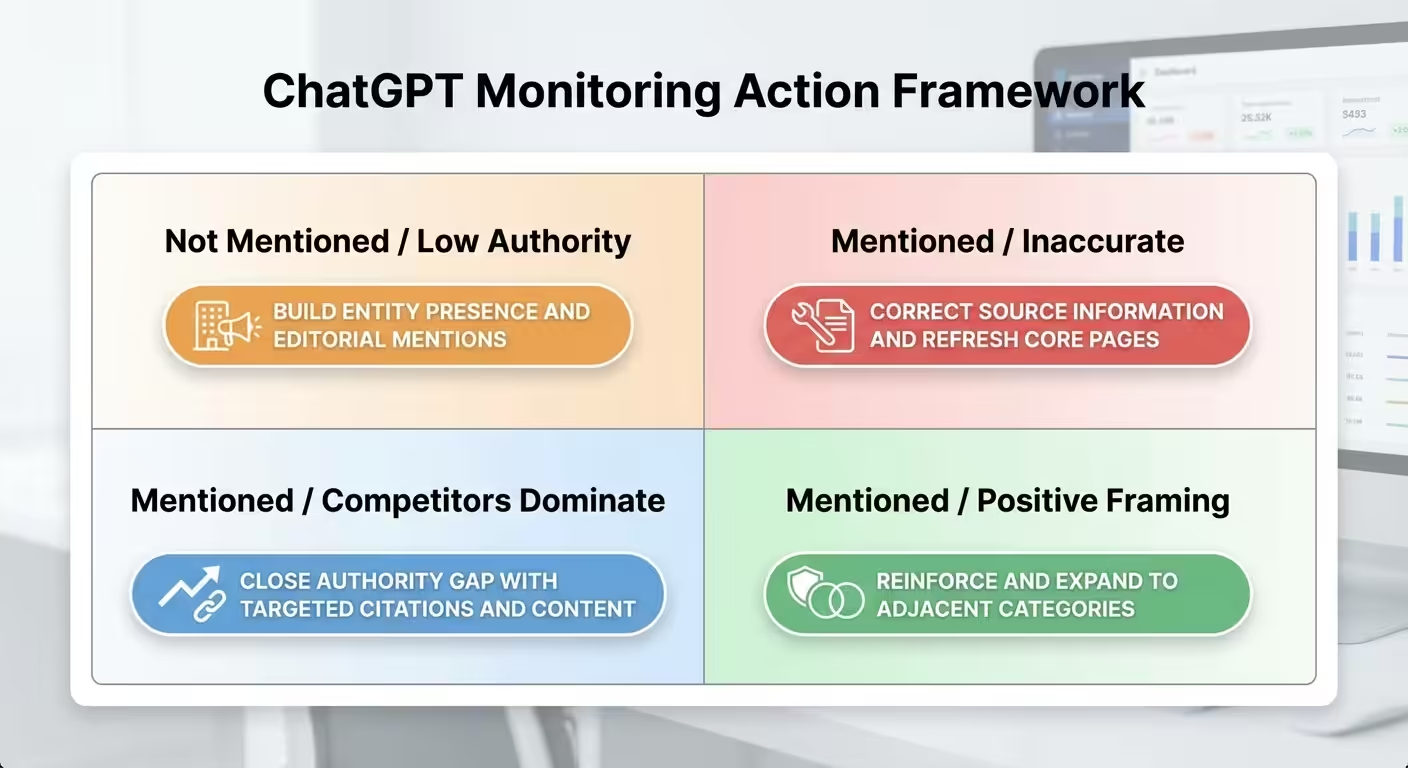
If ChatGPT Doesn’t Mention Your Brand at All
Zero mentions across category prompts means ChatGPT doesn’t have enough authoritative information to associate your brand with the problems you solve. This is an entity recognition and authority gap.
Your action plan:
- Audit your online presence: Is your brand name, category, and value proposition clearly stated on your website, Wikipedia (if eligible), LinkedIn company page, G2, Crunchbase, and relevant industry directories?
- Build editorial authority: Publish in-depth content that directly answers the prompts where you’re absent. Structure it with clear headings, concise answers, and specific data points that AI models can extract.
- Earn mentions on high-authority publications: AI models learn brand-category associations from training data gathered across the web. Contextual mentions on trusted publications strengthen those associations significantly, the mechanism behind any AI citation service worth running.
- Implement structured data: Add Organization, Product, FAQ, and Review schema markup to your website. This helps AI systems understand your brand entity accurately during web browsing sessions.
Building AI visibility from zero is a multi-month process. Expect to see initial changes within 4-8 weeks of consistent effort, with meaningful improvement over 3-6 months as new content enters AI training data and web browsing indexes.
If Your Brand Is Mentioned With Inaccurate Information
Inaccurate mentions can be worse than no mentions at all. If ChatGPT describes outdated pricing, discontinued features, or incorrect positioning, it’s actively steering buyers away.
Trace the problem to its source:
- Check whether outdated information exists on your own website, review sites, or third-party profiles
- Refresh your core pages, About, Product, Pricing, FAQ, with current, accurate details
- Publish corrective content that explicitly addresses the outdated claims
- Update your directory listings and review site profiles
ChatGPT’s browsing capability means it can surface current information from the web. Updating your authoritative sources is the fastest path to correcting AI-generated misinformation.
If Your Brand Appears but Competitors Dominate
Showing up is progress. But if competitors consistently appear first, get described more favorably, or are recommended more often, you need to close the authority gap.
Analyze what competitors are doing differently:
- Which citation sources does ChatGPT reference when recommending them?
- Do they have stronger Wikipedia entries, more recent press coverage, or better-structured product pages?
- Are they mentioned on industry roundups and comparison articles that your brand is absent from?
Then target those specific gaps. If a competitor’s G2 profile is frequently cited, strengthen yours with updated reviews and detailed product information. If industry publications mention them but not you, develop a targeted editorial mentions strategy to close the coverage gap.
If Your Brand Has Strong Positive Mentions
Positive mentions mean your digital footprint is working. Reinforce what’s effective:
- Identify which strengths ChatGPT associates with your brand and amplify that messaging across your website and marketing materials
- Continue publishing authoritative content on the topics where you already appear
- Expand monitoring to adjacent prompts and categories where your authority might extend naturally
Strong AI visibility compounds over time. Each mention reinforces the brand-category association, making future mentions more likely. The key is consistency, brand mentions impact AI visibility most when they’re sustained across multiple authoritative sources over months, not delivered in a single burst.
Monitoring ChatGPT vs. Monitoring Other AI Platforms
ChatGPT is the most widely used AI assistant in the U.S. as of 2026, but it’s not the only platform where brand visibility matters. Google AI Overviews, Perplexity, Gemini, Claude, and Microsoft Copilot all generate brand recommendations, and their citation behavior varies.
| Platform | How It Sources Brand Information | Citation Behavior | Monitoring Priority |
|---|---|---|---|
| ChatGPT | Training data + real-time web browsing (Bing-aligned) | Sometimes shows source links when browsing is active | High, largest user base for direct brand queries |
| Google AI Overviews | Google Search index + Knowledge Graph | Shows source cards with clickable links | High, integrated into Google search results |
| Perplexity | Real-time web search with explicit citations | Always shows numbered source citations | Medium-high, growing user base, strong citation transparency |
| Gemini | Google Search index + training data | Shows source links in some response modes | Medium, growing integration into Google ecosystem |
| Claude | Training data only (no web browsing as of early 2026) | Rarely provides source links | Medium, influential with technical and enterprise audiences |
A strong monitoring strategy covers at least ChatGPT and Google AI Overviews. If your audience skews technical or research-heavy, add Perplexity. The cross-platform tracking approach gives you a more complete picture of your AI visibility, because a brand that shows up in ChatGPT but not Google AI Overviews still has a significant gap.
What changed since 2024-2025: AI monitoring as a category barely existed in 2026. By mid-2025, several dedicated tools launched. As of 2026, cross-platform AI visibility monitoring is an established practice among growth-focused B2B marketing teams. The tools are more mature, the metrics are more standardized, and the link between AI mentions and pipeline impact is better understood.
How Often Should You Monitor ChatGPT Mentions?
Monitoring frequency depends on your goals and resources. Here’s a practical framework:
- Weekly monitoring: Ideal for brands actively building AI visibility. Weekly scans detect changes quickly and let you correlate improvements with specific content or PR actions. This is the cadence most B2B marketing teams should use.
- Biweekly monitoring: Suitable for brands with established AI presence who want to maintain awareness without daily operational overhead.
- Monthly monitoring: Minimum viable cadence. Works for smaller teams or brands just starting to explore AI visibility. Monthly checks risk missing short-term shifts, but they still build a useful trend line.
Whatever cadence you choose, consistency matters more than frequency. Running the same prompt set at the same interval creates comparable data points. Random spot-checks create noise.
Tip: Schedule your monitoring scans on the same day and time each week. AI responses can vary by time of day and model load. Consistent timing reduces variability in your data.
Connecting ChatGPT Monitoring to Your Broader AI Visibility Strategy
For the unified cross-platform cadence, see our LLM monitoring guide, and for the tool shortlist that scales the manual workflow, the ChatGPT monitoring tools comparison covers 10 options ranked by coverage and fit.
Monitoring tells you where you stand. Strategy determines where you go next. The most effective ChatGPT monitoring programs feed directly into three interconnected workstreams.
Content Strategy
Use monitoring data to identify the specific prompts and topics where your brand is absent. Then create content that directly addresses those gaps, structured for both human readers and AI extraction.
Content that performs well in AI citations tends to share specific characteristics: clear entity definitions, specific data points, direct answers to common questions, and authoritative sourcing. This aligns closely with how brand mentions work across AI systems.
Authority Building
Monitor which citation sources ChatGPT references when mentioning competitors. Then build your presence on those same sources. If competitor mentions consistently cite industry publications, G2 profiles, or comparison articles, those are your priority targets.
The pattern we’ve consistently observed is that category-discovery prompts, the ones where buyers don’t yet know which brand to pick, are the queries where editorial presence on authoritative publications pays off the most. Once a buyer has decided on a shortlist of named brands to compare, ChatGPT mostly surfaces what’s already associated with each brand. The upstream battle is the category query, and consistent editorial mentions are what teach the model which brand to surface when no name is specified yet.
Reputation Management
AI-generated responses mirror the information ecosystem around your brand. Negative or outdated information on review sites, forums, and third-party profiles shows up in AI answers. Monitoring gives you early warning. Proactive content and profile management corrects the record before misinformation reaches scale.
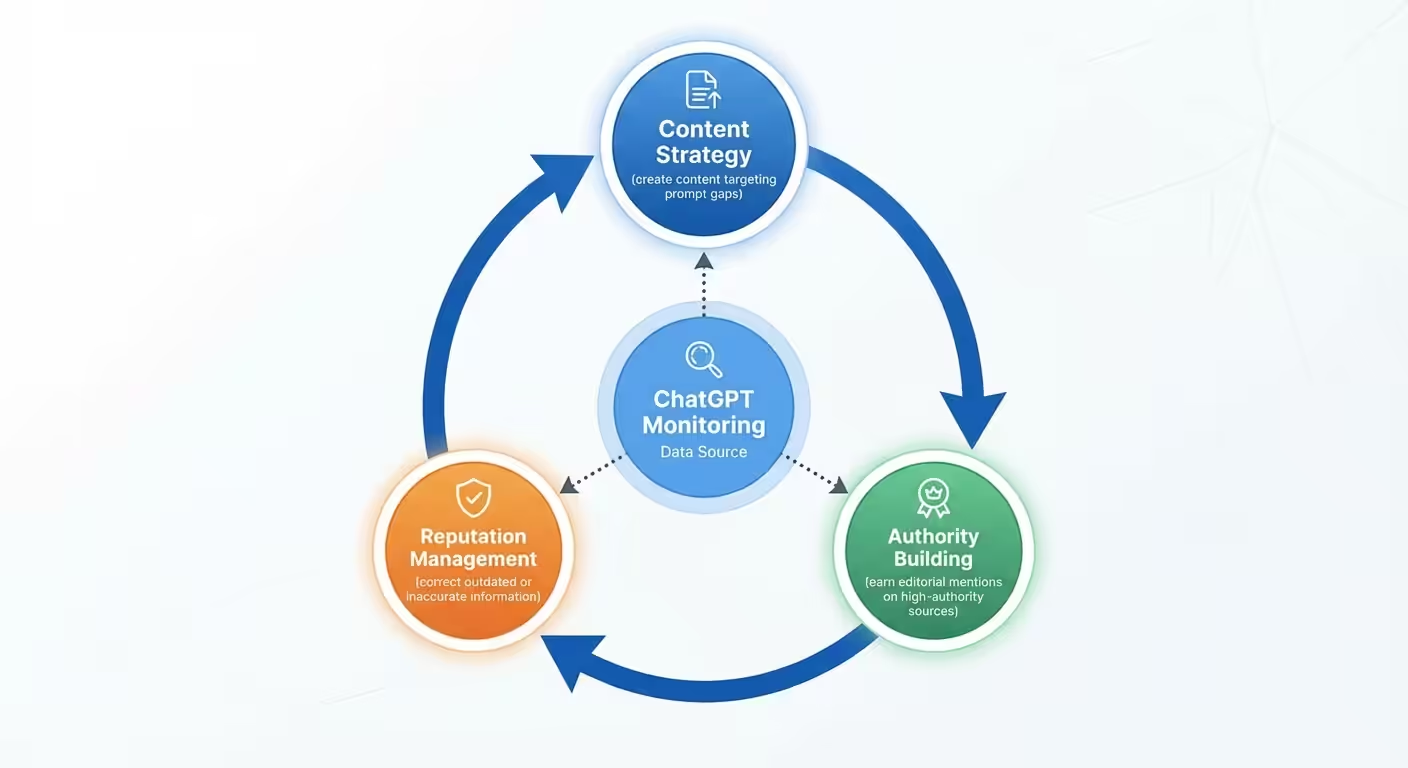
These three workstreams, content, authority, and reputation, create a feedback loop. Better content and stronger authority signals improve your AI mentions. Improved mentions confirm what’s working. Monitoring keeps the loop running with real data instead of assumptions.
Common Mistakes That Undermine ChatGPT Monitoring
The error we flag most in audits is single-account bias. A team runs all 25 prompts through the same ChatGPT Plus account every week and treats the output as representative, but memory, temporary chat settings, and custom instructions on that one account quietly skew every result. Minimum setup: two accounts, both with memory off and custom instructions cleared, run in alternation, with each run tagged by account in the tracking sheet.
Monitoring only works if the methodology is sound. Avoid these errors that frequently compromise data quality.
- Testing prompts in the same chat session: Conversation context influences responses. Always use a fresh chat for each prompt.
- Mixing model versions: Running prompts on GPT-4o one week and a different model the next creates incomparable data. Lock your model version.
- Tracking only branded prompts: Searching “What do you know about [Brand]?” tells you whether ChatGPT has basic awareness. But buyers rarely search that way. Category and problem-solving prompts reveal whether you appear in actual purchase decision moments.
- Reacting to single responses: One ChatGPT response is an anecdote, not a trend. Make decisions based on patterns across multiple prompts and multiple weeks.
- Monitoring without acting: Data that sits in a dashboard doesn’t improve visibility. Every monitoring cycle should produce at least one specific action, a content update, a profile correction, or a targeted outreach opportunity.
Before automating ChatGPT monitoring, run a manual check first to understand the baseline. The step-by-step ChatGPT brand check covers the manual baseline workflow.
What a “Good” Inclusion Rate Looks Like
If your baseline audit (Step 3 above) shows an inclusion rate under 20% on category-discovery prompts, you’re within the normal range for a growing brand, not necessarily failing.
The more useful number to track monthly is the trend line, not the absolute rate. Fresher pages earn more AI citations than stale ones, which is one direct reason a monthly re-measurement cadence (Step 6) outperforms a quarterly one.
Related ChatGPT Monitoring Resources
Depending on what you need next: a quick manual check if you just want a fast read, the full tool comparison if you’re evaluating platforms, AEO tools tested for improving mentions if you want to act on what you find, a decision framework to pick a single tool fast, or a pricing-tier breakdown of what each budget level gets you.
What Drives ChatGPT to Mention a Brand
ChatGPT does not rank websites. It synthesizes from training data and, when browsing is active, from web search results. The brands it mentions are the ones it has the strongest, most consistent signals about, not necessarily the ones with the highest domain authority.
- Entity clarity: consistent naming, descriptions, and categorization across your site, directories, and review platforms help the model confidently associate your brand with a topic.
- Source authority: mentions on high-authority publications and recognized review sites carry more weight than mentions on low-authority blogs.
- Content structure: clear headings, direct Q&A formatting, and schema markup are easier for the model to parse and extract.
- Bing ranking signals: for Plus-tier users, ChatGPT’s web search leans heavily on Bing results, so brands ranking well on Bing for category queries carry a real advantage in browsing-enabled responses.
Frequently Asked Questions
Can I set up alerts for when ChatGPT mentions my brand?
ChatGPT has no native alert system. You can’t receive notifications directly from OpenAI when your brand is mentioned. Automated AI monitoring tools solve this by running scheduled prompt scans and alerting you to changes in inclusion, sentiment, or competitive positioning. Some platforms offer Slack or email notifications when your brand is added to or removed from monitored prompt responses.
Does good Google SEO mean my brand will appear in ChatGPT?
Strong Google rankings improve your chances but don’t guarantee ChatGPT inclusion. ChatGPT sources information from training data and web browsing that draws heavily from Bing-indexed content. About 87% of ChatGPT’s citations match Bing’s top results, according to a 2025 analysis by Keyword.com. Optimizing for Bing, building structured data, and earning high-authority editorial mentions strengthen your position across both traditional and AI search.
How long does it take to improve ChatGPT brand visibility?
Improvements from on-site changes (structured data, content updates) can reflect within days when ChatGPT’s browsing mode is active. Broader improvements to training-data-based responses take longer, typically 2-6 months, because they depend on AI model updates and training data refreshes. Consistent editorial authority building produces the most durable results over time.
Should I monitor ChatGPT if my brand is small or new?
Yes, especially if you’re small or new. Monitoring reveals exactly what ChatGPT does and doesn’t know about your brand. That intelligence directs your limited resources toward the highest-impact actions: establishing clear entity information, building foundational authority, and targeting the specific prompts where early visibility can differentiate you from established competitors.
What’s the difference between a ChatGPT mention and a ChatGPT citation?
A brand mention is any instance where ChatGPT includes your brand name in its response text. A citation is when ChatGPT provides a clickable source link to your website or content. Citations carry more value because they drive direct traffic and signal that ChatGPT treats your content as an authoritative source. Not all mentions include citations, many are synthesized from training data without linking to a specific URL.
How can I monitor ChatGPT brand mentions easily?
The easiest way to monitor ChatGPT brand mentions is to pick one dedicated tool (Waikay.io and Scrunch AI are among the more beginner-friendly), set up 25 category-relevant prompts, and review the dashboard weekly. Trying to monitor brand mentions in ChatGPT manually using copy-paste prompts breaks down within a week; the volume is too high and the runs stop being comparable.
What does ChatGPT brand monitoring or ChatGPT brand mention monitoring cover?
ChatGPT brand monitoring (also called ChatGPT brand mention monitoring) covers the full surface where your brand can appear in ChatGPT responses: name mentions, citation links, comparative context (positive vs negative), and competitive share of voice. The right ChatGPT mentions monitoring tool will track all four and surface week-over-week trends so you can tie movement back to specific content or PR work.
Can I do ChatGPT monitoring for product pages specifically?
Yes, ChatGPT monitoring for product pages works the same way as brand-level monitoring, you just shape the prompt set around product-specific queries (“best [product category] for [use case]”) instead of brand queries. The tool runs your product-prompt set, captures responses, and shows whether your product name appears versus competitors. Useful for product marketing teams running launches.
Running Your First ChatGPT Monitoring Baseline
Start with a manual audit this week. Write 10-15 prompts your buyers would ask. Run them in fresh ChatGPT sessions. Document your baseline. That alone puts you ahead of most brands who assume traditional SEO coverage translates to AI visibility.
Once you’ve a baseline, decide whether manual spot-checks serve your needs or whether automated monitoring, with weekly tracking, competitive benchmarking, and citation analysis, fits your growth goals better.
If you want to understand exactly how AI platforms perceive your brand before building a monitoring system, request a quick AI visibility audit and we’ll run 25 category-relevant prompts across ChatGPT, Gemini, and Perplexity so you know exactly what your competitors are capturing that you’re not.