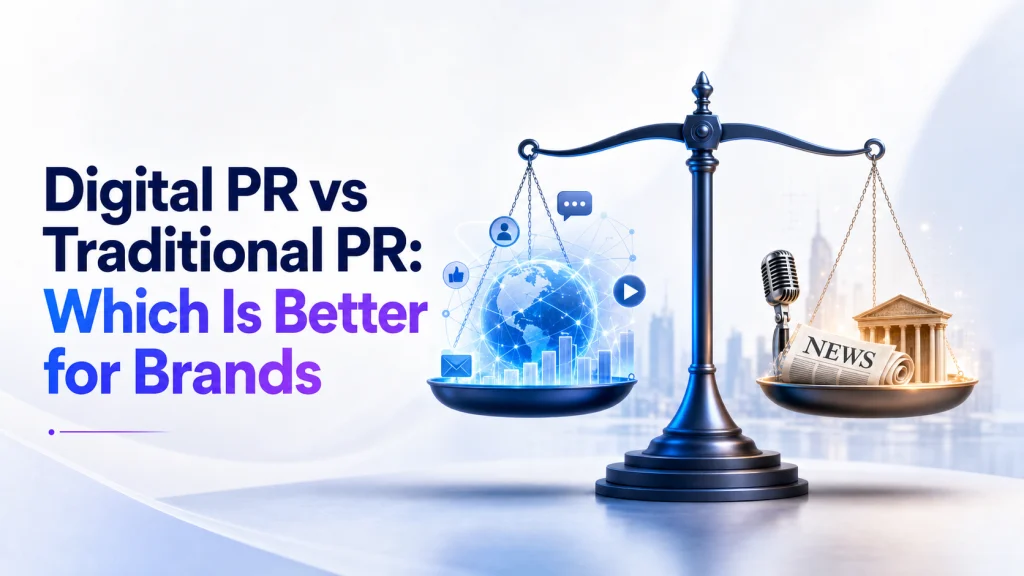

If your goal is measurable visibility, digital PR and traditional PR are not interchangeable, they are different bets with different payoffs. Both build awareness and credibility, but they run on separate distribution systems with separate scorecards.
Digital PR is usually the stronger choice for measurable online growth, SEO, and scalable visibility, while traditional PR still wins for offline trust, legacy media reach, and some crisis situations. The right call depends on the KPI you are chasing, not on which type of story your brand prefers to tell. This guide compares both across reach, ROI, SEO, credibility, and cost, then hands you a verdict by use case.
For scenario-based guidance on which one wins in your specific situation, see when to choose digital PR over traditional PR.
What Digital PR vs Traditional PR Actually Means
Traditional PR is offline, legacy-media-led work. It runs through print, broadcast, events, trade publications, and direct relationships with journalists who control coverage in those channels.
Digital PR is online-first earned media. It runs through online publications, creators, social amplification, linkable content assets, and the search visibility those placements generate.
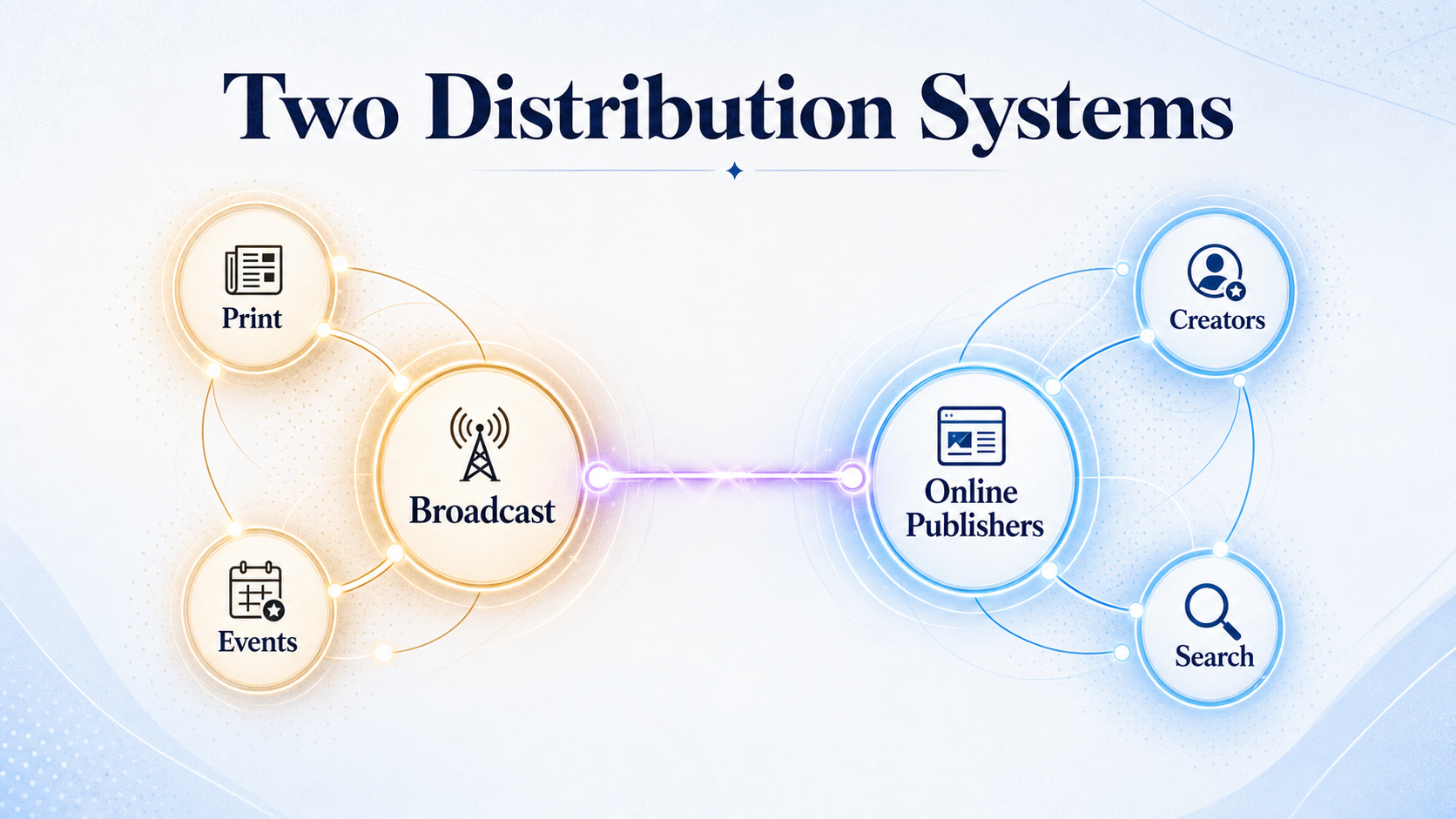
Both are still about the same things: awareness, credibility, and reputation. The split is in how each one distributes a story and how you measure what it returned.
This comparison keeps them head-to-head rather than collapsing them into a hybrid plan too early. Hybrid has a place, but you cannot allocate budget across two models until you know what each one actually does well.
One clarification before the criteria. “Digital” does not mean social media only, it covers earned placements, publisher coverage, and content that ranks. And “traditional” does not mean outdated, it still moves audiences that legacy media reaches better than anything online.
In practice, channel choice gets decided by where your audience consumes news and which number you are accountable for. A founder who likes a glossy magazine feature still needs to ask whether the buyers exist in that magazine’s readership.
The Criteria That Decide Which PR Wins
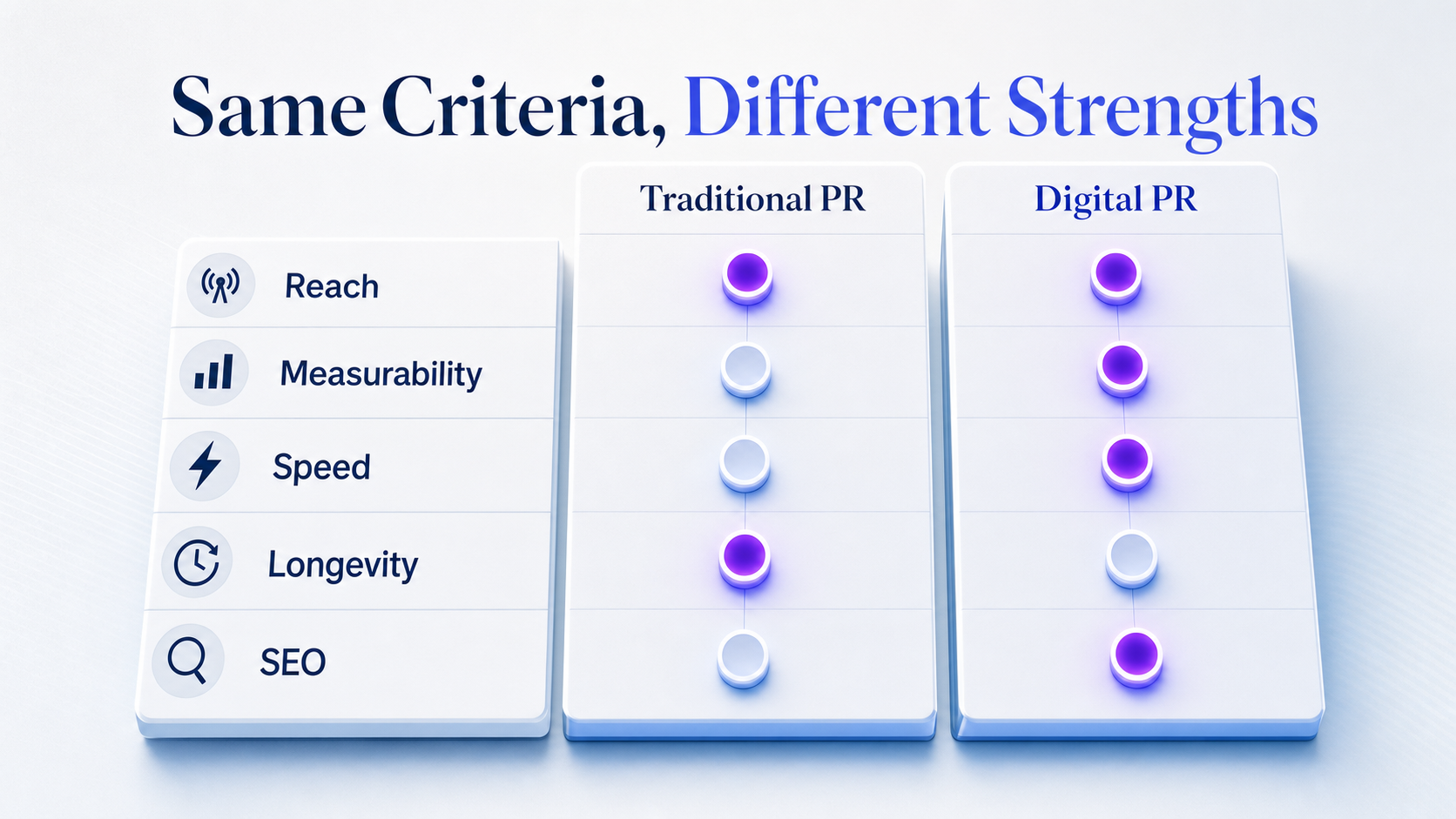
Before judging either model, set the lens. Weak PR plans fail because teams pick channels on preference or prestige instead of the KPI that actually matters. Here are the criteria this comparison uses, in the order they tend to drive the decision.
1. Audience Reach
Where your target audience actually consumes news and brand content, online or off.
2. Measurability
How directly you can tie the work to traffic, leads, links, or brand lift.
3. Speed to Launch
How long it takes to secure coverage or clear approvals.
4. Longevity of Coverage
Whether the result keeps working after publication day.
5. SEO Impact
Whether the coverage strengthens search visibility through links and citations.
6. Cost and Resource Efficiency
The budget, time, and team skills each model demands.
7. Campaign Fit
Suitability for crisis response, brand building, or product launches.
Judge each model against the same seven points and the decision stops being a matter of taste. It becomes a match between your goal and the model built to serve it.
Digital PR vs Traditional PR Side by Side
Here is the head-to-head so you can see the tradeoffs without inferring them. A single strong digital asset can generate many pickups and links across publishers, while a traditional placement often delivers prestige but fewer trackable downstream actions.
| Dimension | Traditional PR | Digital PR |
|---|---|---|
| Channel mix | Print, TV, radio, trade media, events | Online publishers, creators, social sharing, linkable content |
| Media relationships | Long-term editorial relationships with named journalists | Broad outreach to digital editors, publishers, and content partners |
| Audience interaction | Mostly one-way messaging | Clickable, shareable, comment-driven engagement |
| Message control | More editorial polish and gatekeeping | Faster iteration and repurposing across pitches |
| Ideal use case | Prestige and broad trust | Measurable growth and searchable coverage |
Neither column is the loser. Traditional PR concentrates authority into a smaller number of high-trust placements. Digital PR spreads a story across many surfaces and leaves a trail you can follow back to traffic and links.
Measurement, ROI, and SEO Impact
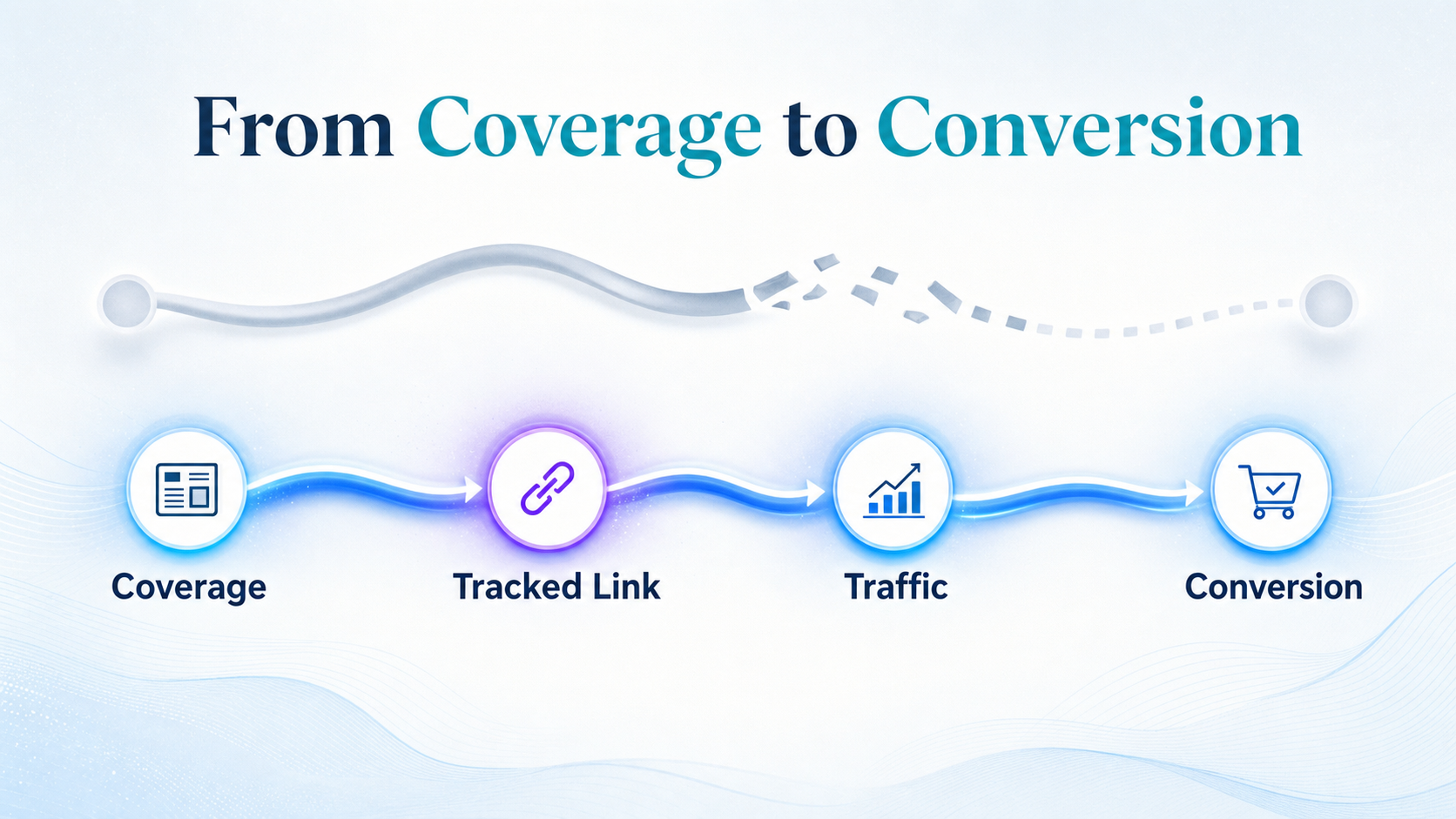
This is where digital PR opens its clearest lead. When coverage includes a live link, a tracked URL, or a measurable referral path, you can isolate what the work returned. Traditional PR usually leans on proxy metrics that estimate exposure rather than prove it.
| Metric type | Traditional PR | Digital PR |
|---|---|---|
| Reach signals | Circulation, impressions, estimated reach | Referral traffic, shares, mentions |
| Authority signals | Message recall, survey-based brand lift | Backlinks, referring domains, branded search lift |
| Business signals | Indirect, hard to isolate | Assisted conversions, ranking movement |
Traditional PR still influences outcomes. A broadcast hit can lift branded search and seed conversations that show up later. But the path to revenue or traffic stays indirect, and attribution is mostly inference.
Digital PR is not automatically measurable either. If you skip UTMs, dedicated landing pages, or basic tracking, you lose the advantage that made it measurable in the first place. The measurement only works when you build it in before the campaign ships.
On the SEO side, link-backed mentions outperform unlinked mentions for search and referral traffic, even when the media brand is smaller. A live editorial link passes authority and sends real visitors. An offline mention does neither directly. If you are weighing whether the coverage itself or the link carries the value, the distinction between brand mentions and backlinks sets the priorities. And for the question of whether earned coverage still moves rankings at all, the data on whether brand mentions move search rankings is the place to settle it.
Speed, Flexibility, Credibility, and Longevity
The two models behave differently once a campaign is live, and those operational realities matter as much as the headline benefits.
Traditional PR usually carries longer lead times. Print runs on publication calendars, broadcast bookings depend on producers, and editorial lag stretches the gap between pitch and coverage.
Digital PR moves faster. You can test angles in days, adjust a pitch when one frame is not landing, and reuse a single asset across many publishers without rebuilding it each time.
On credibility, traditional PR often wins with legacy audiences. A feature in a respected print outlet or a broadcast segment carries perceived authority with executives, trade readers, and older audiences that an online roundup may not match.
On longevity, digital PR pulls ahead. A published online story keeps earning traffic, links, and search visibility for months. Here is the pattern worth remembering:
- A digital story can keep attracting links and visitors long after publication, compounding quietly.
- A print or broadcast hit peaks fast, drives a spike of attention, then fades with the news cycle.
Speed is not always the advantage it looks like. Some traditional placements earn their trust precisely because they passed deeper editorial review. Faster iteration helps growth campaigns. It does not replace the weight of a vetted, named-journalist placement when credibility is the goal.
Cost and Resource Efficiency
The budget and team demands differ enough to change the decision for many companies, so weigh them before you commit.
Traditional PR can require heavy coordination. Relationship maintenance with journalists takes ongoing time, and events, media tours, or broadcast opportunities carry logistical spend that digital campaigns avoid.
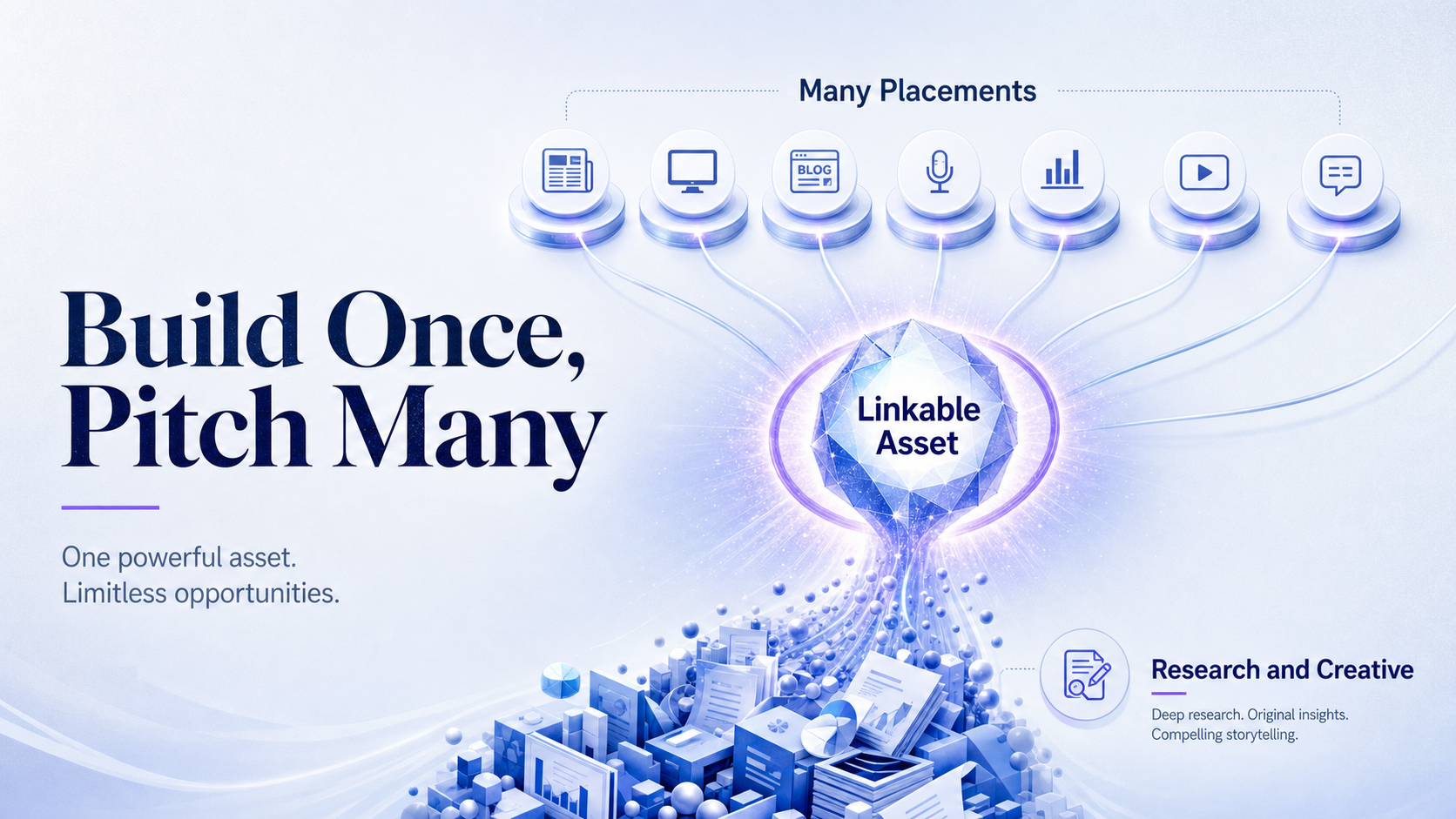
Digital PR shifts the cost upstream. It usually needs stronger content research, original data work, design, and outreach, especially when the campaign depends on a linkable asset that publishers actually want to cover.
The resource inputs each model leans on look like this:
- Traditional PR: journalist relationships, media lists, event logistics, spokesperson prep.
- Digital PR: data and research, content and design, outreach lists, tracking setup.
Digital PR scales well once the asset exists. You build one strong piece, then pitch it across many publishers and earn compounding links. Low-quality digital outreach, the kind that blasts generic pitches, does not produce durable results no matter how cheap it looks.
Traditional PR can be the more efficient option for a single high-value placement, local visibility, or reputation work tied to one specific audience. And cheap PR underperforms in either model, because both depend on credibility and execution quality that you cannot fake at the bottom of the market.
See where AI answers put your brand
Twenty minutes with a senior strategist: where the major engines point buyers in your category, who gets named instead of you, and a straight read on what a programme would change.
Book a strategy callVerdict by Use Case
The honest answer to “which is better” is “better for what.” Here is the call by goal and campaign type so you can match the model to the KPI instead of ending on a vague “it depends.”
| Goal or campaign | Stronger model | Why |
|---|---|---|
| Brand awareness and legacy trust | Traditional PR | Prestige media and broadcast reach carry weight with legacy audiences |
| SEO growth and backlinks | Digital PR | Directly supports search performance through editorial links |
| Startup visibility and B2B lead generation | Digital PR | Produces measurable reach and link equity efficiently |
| Product launches | Digital PR | Fast pickup, shareability, and trackable traffic |
| Crisis communications and local reputation | Traditional PR | The audience and channels are not purely digital |
| Enterprise thought leadership | Hybrid, digital-led | Digital leads when the business needs measurable outcomes |
For startups specifically, the case for leading with digital is strong, since the model produces the measurable reach early-stage teams need to prove momentum. The same logic on measuring brand awareness accurately applies whichever model you pick, because the metric you choose decides whether you can defend the spend.
The practical rule is short. If the KPI is search, traffic, or links, digital PR wins. If the KPI is offline trust or legacy reach, traditional PR still has a place.
How to Choose Without Overthinking It
Digital PR is usually the stronger choice for measurable online growth, SEO, and scalable visibility. Traditional PR still matters for credibility, offline audiences, crisis response, and high-trust placements where a vetted name carries weight.
The best choice depends on your audience, your channel behavior, and your business objective, in that order. A hybrid approach works, but only when each channel has a clear role and its own KPI, not when budget gets split out of habit.
Start with the question you are accountable for. If the answer is search, traffic, links, or pipeline, lead with digital PR. When you need a partner to run that side, study how to evaluate digital PR agencies built for growth before you sign, and use traditional PR where offline trust and legacy reach earn their place.
Frequently Asked Questions
Is digital PR better than traditional PR?
Digital PR is better for measurable online growth, SEO, and scalable visibility, while traditional PR is better for offline trust and legacy media reach. There is no universal winner. The stronger model depends on which KPI you are accountable for. If you need links and trackable traffic, choose digital. If you need prestige with audiences that legacy media reaches best, traditional still earns its place.
What is the main difference between digital PR and traditional PR?
The main difference is the distribution system each one runs on. Traditional PR works through print, broadcast, and events with direct journalist relationships, while digital PR works through online publishers, creators, and linkable content that supports search. Both build awareness and credibility, but digital PR leaves a measurable trail and traditional PR usually relies on proxy metrics like circulation and impressions.
Does digital PR help SEO and backlinks?
Yes, digital PR helps SEO because earned online coverage often includes editorial links that pass authority and send referral traffic. Link-backed mentions outperform unlinked mentions for search visibility, even when the publisher is smaller. The benefit only holds when the placements include real links rather than brand name-drops, so prioritize coverage that links back to your site.
Can traditional PR improve search rankings?
Traditional PR can improve rankings indirectly. A broadcast segment or print feature can lift branded search and prompt online coverage that does include links. But the effect is secondary and hard to isolate, because offline placements rarely pass direct link equity. If search performance is the primary goal, digital PR is the more reliable path.
Which is better for crisis communications, digital PR or traditional PR?
Traditional PR often leads in crisis communications because the audiences and channels involved are rarely purely digital. A coordinated response through trusted journalists and broadcast carries authority during a sensitive moment. That said, digital PR plays a fast supporting role for real-time correction and direct audience communication, so most serious crisis plans use both with clear roles.
The decision comes down to one question: what number are you responsible for at the end of the quarter. If it is search, traffic, links, or pipeline, build your plan around digital PR and let it carry the load. Reserve traditional PR for the moments when offline trust and legacy reach do the work nothing online can match. Pick the model that serves the KPI, then commit the budget where it can actually compound.