
AI citations are not controlled by one secret ranking signal. They are decided by a stack of cues that work together, and missing any one of them can keep a strong page out of the answer. The strongest supported drivers are crawlability, search visibility, query-answer match, freshness, entity trust, extractability, and platform-specific retrieval behavior. Most of the evidence behind these signals is correlational, so treat them as patterns worth acting on, not laws. This article explains what an AI citation actually is, how engines pick what to quote, and which factors hold up once you separate research from folklore.
What AI Citations Are and Why They Matter
An AI citation is a source, passage, brand, or page that an answer engine surfaces as evidence inside a generated response. When ChatGPT names a tool, when Perplexity links a study, or when Google AI Overviews quotes a definition, that is a citation in action.
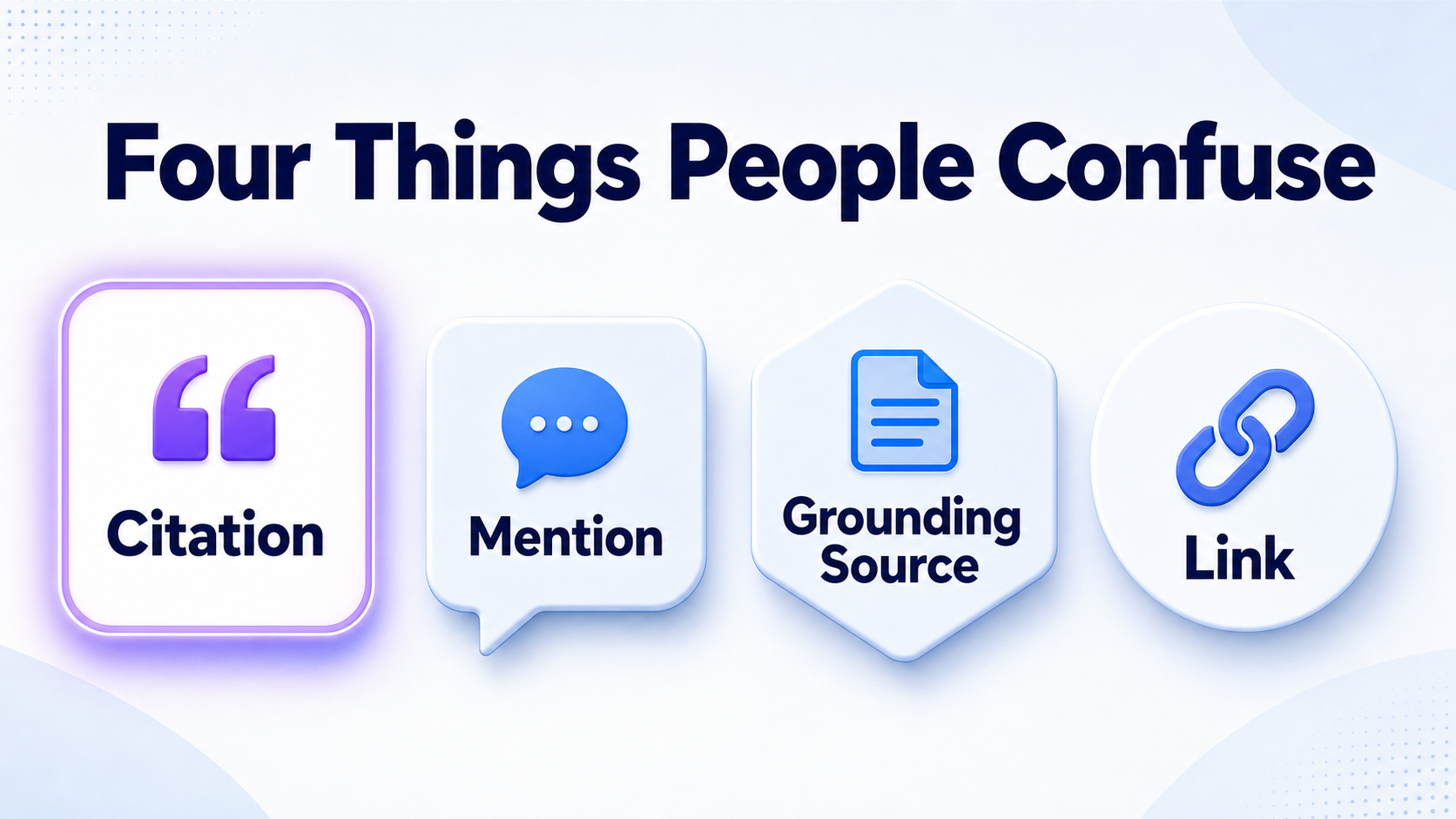
A citation is not the same as a mention, a grounding source, or an outbound link, and the difference matters. A mention names your brand without crediting a page. A grounding source is content the model retrieved to build its answer, whether or not the reader ever sees it. A citation is the part the user actually sees credited.
The visible form changes by engine. It can show up as a numbered link, a quoted passage, a source card beside the answer, or a small reference chip under a paragraph.
Citation visibility is now a real business signal. When your page is the cited source, you earn traffic back from an answer that would otherwise end the search. You also earn trust, since being named as evidence positions your brand as the authority on the question. And you build share of voice inside AI search, the surface where more buying research now starts.
Think of citations as a visibility layer, not a new technical checkbox. They sit on top of the discoverability work you already do, and they reward the brands that AI engines find easiest to trust and quote. If you want to understand how this connects to the metrics you already track, our breakdown of AI visibility versus SEO metrics draws the line clearly.
How AI Engines Decide What to Cite
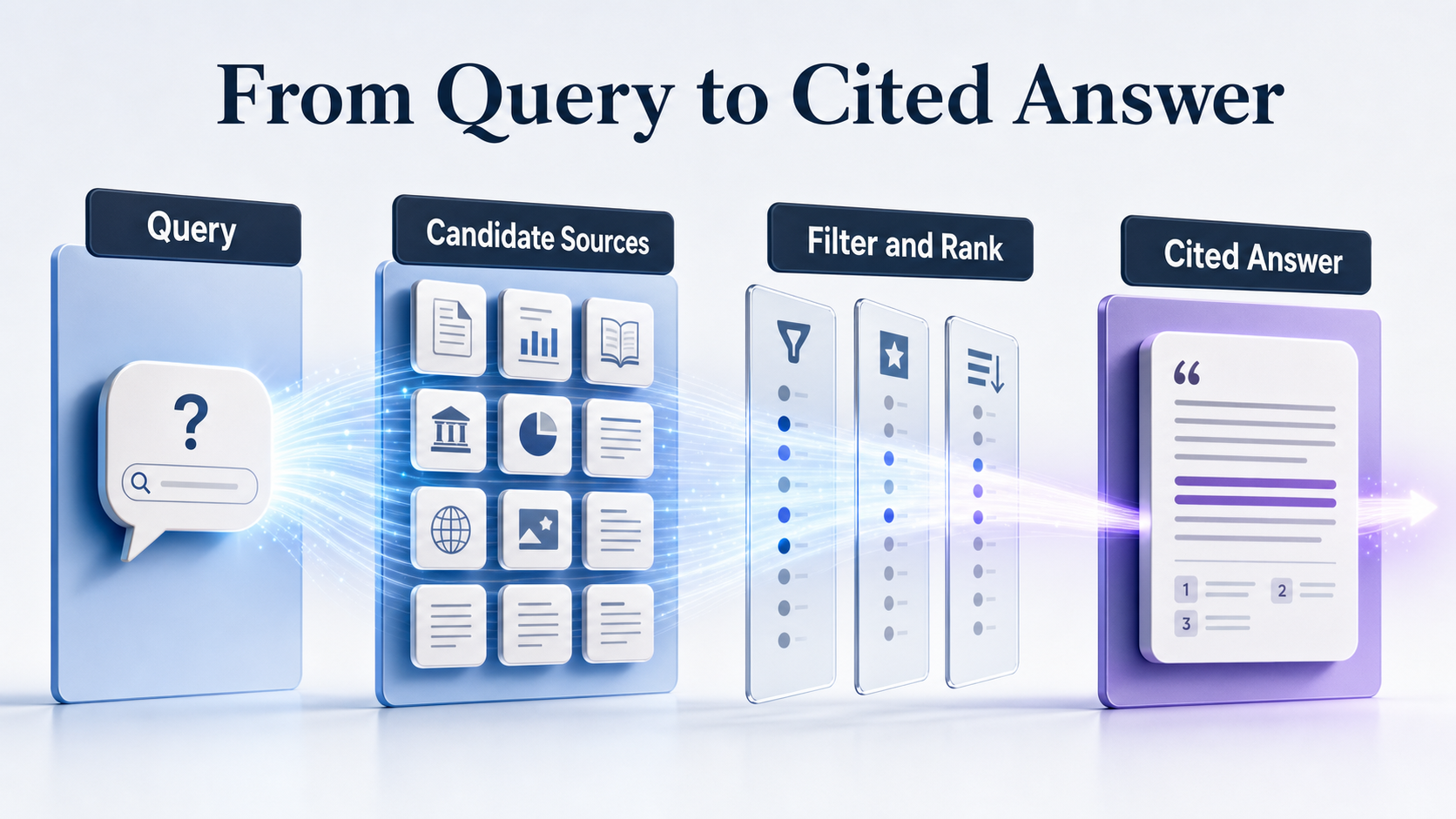
AI engines pick citations through a rough pipeline: they retrieve candidate sources, filter for relevance, check authority and freshness, score how easily a passage can be lifted, then display what survives. No single step decides the outcome. A page can pass four stages and still get dropped at the fifth.
The first stage is retrieval. The engine pulls a pool of possible sources from its index, from live search, or from a connected web layer. If your page cannot be fetched, it never enters the pool.
The second stage is selection. From that pool, the engine decides which sources are good enough to quote or reference. This is where relevance, trust signals, recency, and extractability get weighed against each other.
Query fan-out shapes the pool more than most people expect. Engines often expand your original question into several related queries, then gather sources across all of them. So a page that ranks for a near-neighbor question can get cited even when it does not rank for the exact prompt. You can see how this plays out in practice in our guide to how AI crawlers actually pick sources.
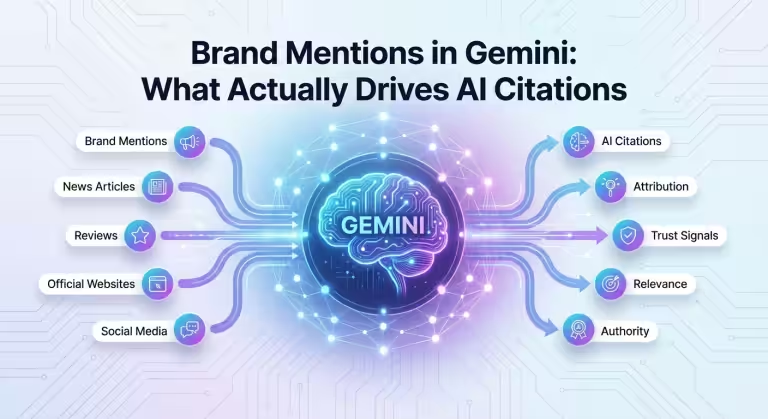
Engines weight these signals differently, which is why one page gets cited in Perplexity and ignored in Gemini. The retrieval logic is not identical across ChatGPT, Gemini, Perplexity, and Google AI Overviews. Run the same query across all four and you often get different cited sources, because each system pulls from a different pool and ranks it by its own rules.
The Main Factors That Influence AI Citations
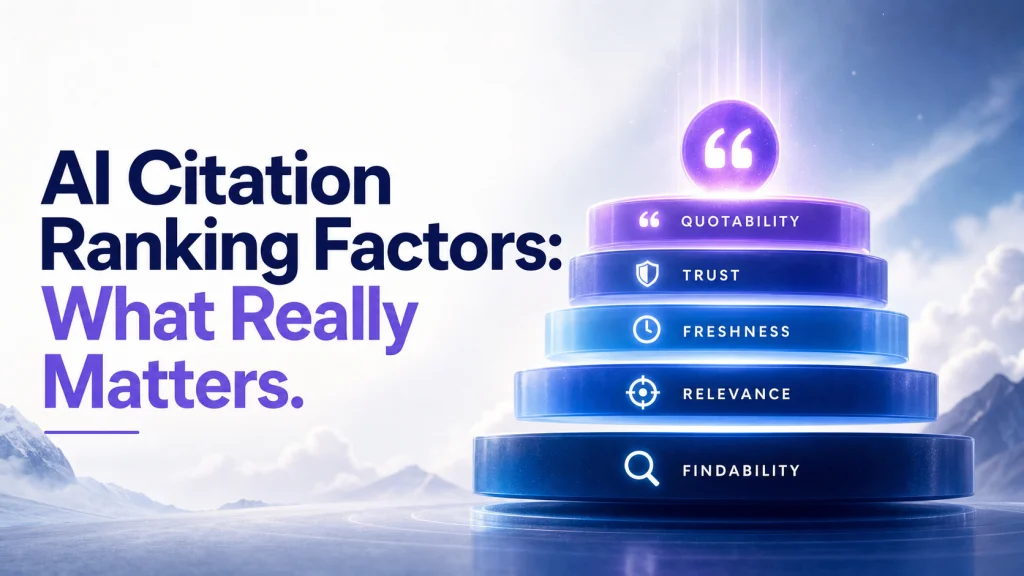
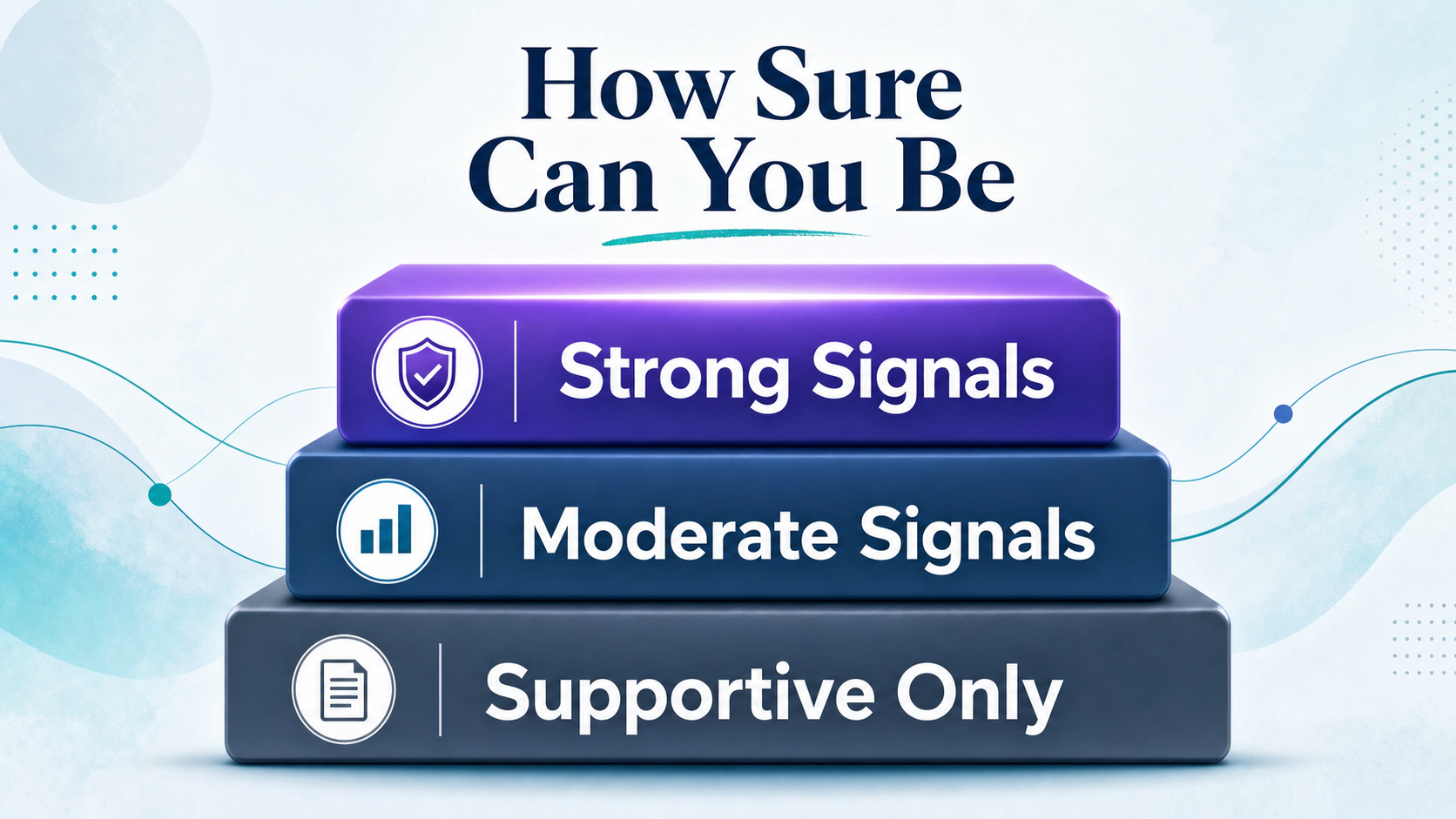
The strongest citation signals fall into a handful of buckets: discovery, search visibility, query-answer match, extractability, authority, freshness, structure, and off-site validation. Most of the evidence behind them is correlational, so the table below pairs each bucket with why it matters and how confident the research lets you be.
| Factor bucket | Why it matters | Evidence strength |
|---|---|---|
| Discovery and access | If the engine cannot crawl, index, or preview the page, it never becomes a candidate source. | High confidence |
| Search visibility | Pages that already rank or surface in related queries enter the candidate pool more often. | Moderate to high |
| Query-answer match | Content that fits the question’s intent and answer format is easier to select as evidence. | High confidence |
| Extractability | Concise, factual, self-contained passages are easier to lift and quote. | Moderate to high |
| Authority and entity trust | Consistent brand references and third-party validation raise the odds of selection. | Moderate |
| Freshness | Recently published or updated pages show stronger citation performance in several datasets. | Moderate |
| Machine-readable structure | Clean HTML, clear headings, and structured data support extraction. | Lower, supportive only |
| Off-site validation | Earned media and repeated web mentions correlate with citation likelihood. | Moderate |
Two patterns repeat across published studies worth holding onto. Cited pages overlap heavily with content that already performs in search, and brands with broad web mentions earn far more AI visibility than brands without them. Neither proves causation. Both are strong enough to act on.
One observation from the field: discovery is the cheapest factor to fix and the most often ignored. Teams pour effort into authority while a stray crawl block or a slow render quietly keeps the page out of the pool. Check fetchability before you optimize anything downstream.
What Citation-Worthy Content Looks Like
Citation-worthy content is a cluster of traits, not one formatting trick. The pages engines quote tend to answer fast, state facts plainly, and stay readable when a single passage is pulled out of context.
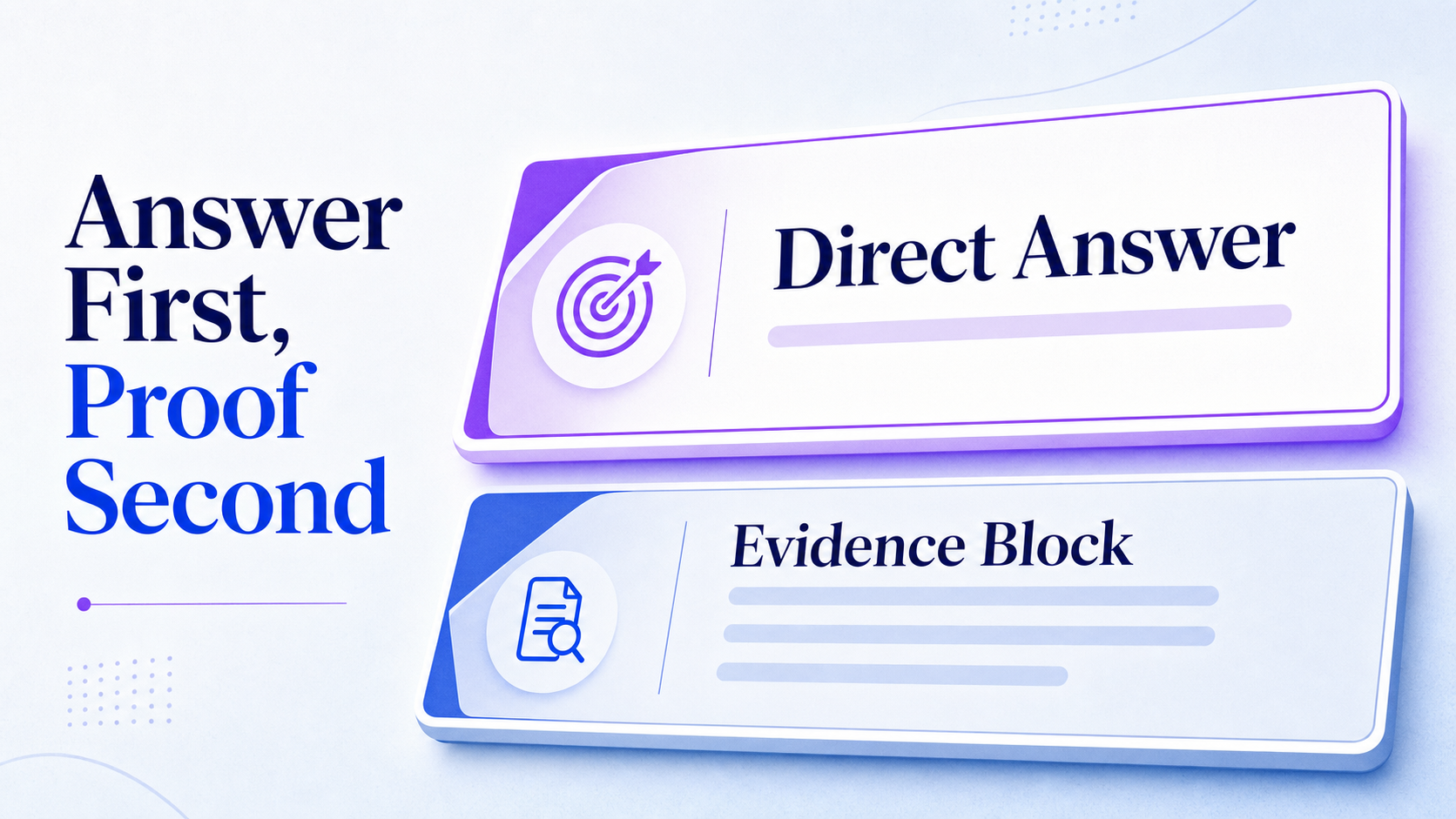
The pattern shows up again and again. A cited page usually opens a section with a direct answer paragraph, then follows it with a concise evidence block of numbers, dates, or named sources. Here is what holds those pages together:
- Put the answer near the top of each section, not after a long windup.
- Write short standalone passages that still make sense when quoted alone.
- State facts explicitly instead of hiding the point inside marketing language.
- Use clear subheads, lists, and tables so the engine can find the answer.
- Keep entity names, terms, and definitions consistent across the page.
- Include numbers, dates, or named sources, since specifics are easier to cite.
Consistency does quiet work here. When you call a concept by the same name throughout, you strengthen the entity signal that helps an engine connect your page to the right topic. If that idea is new to you, our explainer on building entity authority for search covers how those connections form.
Common Mistakes and Misconceptions
Most citation advice repeats four myths that fall apart under scrutiny. The table below pairs each one with what the evidence actually supports.
| The myth | The reality |
|---|---|
| Backlinks alone earn citations | Links help discovery, but a page with strong link metrics still fails if the answer is not extractable. |
| FAQ schema is a universal fix | Schema supports parsing, but it does not force a citation on its own and is not a substitute for a clear answer. |
| llms.txt is a citation switch | The file offers crawler guidance at best. There is little credible evidence it forces citation behavior. |
| SEO and AI citations are the same system | They overlap on crawlability and relevance, but selection logic, source pools, and answer formatting differ. |
| Ranking on Google means AI citation | Strong rankings raise the odds of entering the pool, but they do not guarantee the engine will quote you. |
The clearest field pattern: a page can carry every authority signal and still go uncited because the answer is buried. We see this with thought-leadership posts that bury the takeaway under three hundred words of context. The engine cannot lift a clean passage, so it cites a thinner page that answered faster. If you want to test whether llms.txt belongs in your plan at all, our guide on writing llms.txt for AI search sets realistic expectations.
What the Evidence Actually Suggests
The research points to a consistent picture: traditional SEO fundamentals still matter, but extractability, freshness, and off-site authority shape citation likelihood more than most teams expect. The evidence is strong enough to guide strategy and too mixed to claim one universal formula.
Crawlability and search visibility stay foundational, since a page that cannot be found cannot be cited. Freshness and extractability appear repeatedly across studies and field observation. Off-site signals, especially brand search demand and web mentions, correlate with citation rates in several datasets, sometimes as strongly as on-page polish.
Here is how the findings sort by confidence.
Most supported:
- Crawlable, indexable pages enter the candidate pool far more often.
- Answer-first, extractable passages get quoted more than buried ones.
- Fresh and recently updated content shows stronger citation performance.
- Broad web mentions correlate with higher AI visibility.
Least certain:
- Exact weight of structured data versus clean HTML on citation odds.
- How consistently any single factor transfers across ChatGPT, Gemini, and Perplexity.
- Whether freshness effects hold for evergreen and reference content.
Where the field is unsettled, treat conclusions as patterns, not laws. Platform behavior differs enough that a tactic that wins citations in one engine can do nothing in another. The line between correlation and cause is real, and honest strategy respects it.
See where AI answers put your brand
Twenty minutes with a senior strategist: where the major engines point buyers in your category, who gets named instead of you, and a straight read on what a programme would change.
Book a strategy callWhat Matters Most for Earning Citations
The highest-probability path to a citation is simple to state and hard to fake: be findable, be quotable, and be credible. Everything in the research collapses into those three demands plus recency.
- Fix discoverability first, since a page the engine cannot fetch cannot be cited at all.
- Match the answer to the question and put it near the top, so the passage can be lifted.
- Build entity trust through consistent references and earned web mentions.
- Keep content current, because freshness lifts citation odds across engines.
AI citations are a visibility layer, not a separate universe from search. The same discipline that makes a page rank well makes it easy to quote. The clearest, most trustworthy source for a query usually wins the citation, so build for clarity before you chase any single tactic. To see how citations feed broader brand presence in answers, our piece on how brand mentions drive AI search visibility connects the dots.
Related guides
Frequently Asked Questions
Do backlinks help AI citations?
Backlinks help indirectly, mostly by aiding discovery and signaling authority, but they do not earn citations on their own. In several datasets, web mentions correlate with AI visibility more strongly than raw link metrics. A page with strong backlinks still fails to get cited when its answer is buried or hard to extract, so treat links as one input, not the deciding one.
Do you need to rank on Google to get cited in AI Overviews?
No, ranking is not strictly required, though it helps. A large share of AI Overview citations come from pages that do not hold a top organic position, because query fan-out pulls sources across many related searches. Strong rankings raise your odds of entering the candidate pool, but the engine still chooses by relevance, freshness, and extractability.
Does FAQ schema improve AI citations?
FAQ schema supports parsing, but it is not a universal fix and does not force a citation by itself. The bigger lever is a clear, self-contained answer written in plain text near the top of the section. Schema can help an engine understand structure, yet a buried or vague answer stays uncited no matter how clean the markup is.
Does llms.txt help with AI citations?
There is little credible evidence that llms.txt drives citation behavior. At best, the file offers crawler guidance, similar in spirit to robots.txt. Treat it as a low-priority experiment rather than a switch that earns mentions, and spend your effort on discoverability, extractability, and trust instead.
Which AI engine cites sources most often?
It depends on the engine and the query, since each system uses different retrieval logic and source pools. Perplexity surfaces visible citations aggressively, while ChatGPT, Gemini, and Google AI Overviews vary by mode and prompt. Run your top buying question across all four and compare, because the same page can be cited in one and ignored in another.
Start with the part you can fix today. Pick your three most important buying questions, ask them in ChatGPT and Perplexity, and check whether your brand is cited at all. If it is not, audit discoverability, extractability, and trust in that order before reaching for any tactic. The brands that win AI citations are the ones an engine can find, quote, and believe.