
Brand authority score isn’t one official metric with a single formula. It’s shorthand for how recognizable, trustworthy, and cite-worthy your brand looks to an AI system.
A higher score signals a higher likelihood of being named in AI answers, but it never guarantees a citation, and different tools calculate it in different ways. That gap between “score” and “certainty” is where most marketers get confused.
This article explains what the term actually means in the context of AI citations, why it shapes your visibility in tools like ChatGPT and Perplexity, and which signals move it.
Key Takeaways
- A brand authority score is a proxy, not an official metric; every vendor weights inputs differently, so scores don’t transfer between tools.
- Being ranked and being cited are different outcomes, and a lower-ranked page can still be the one an AI answer names.
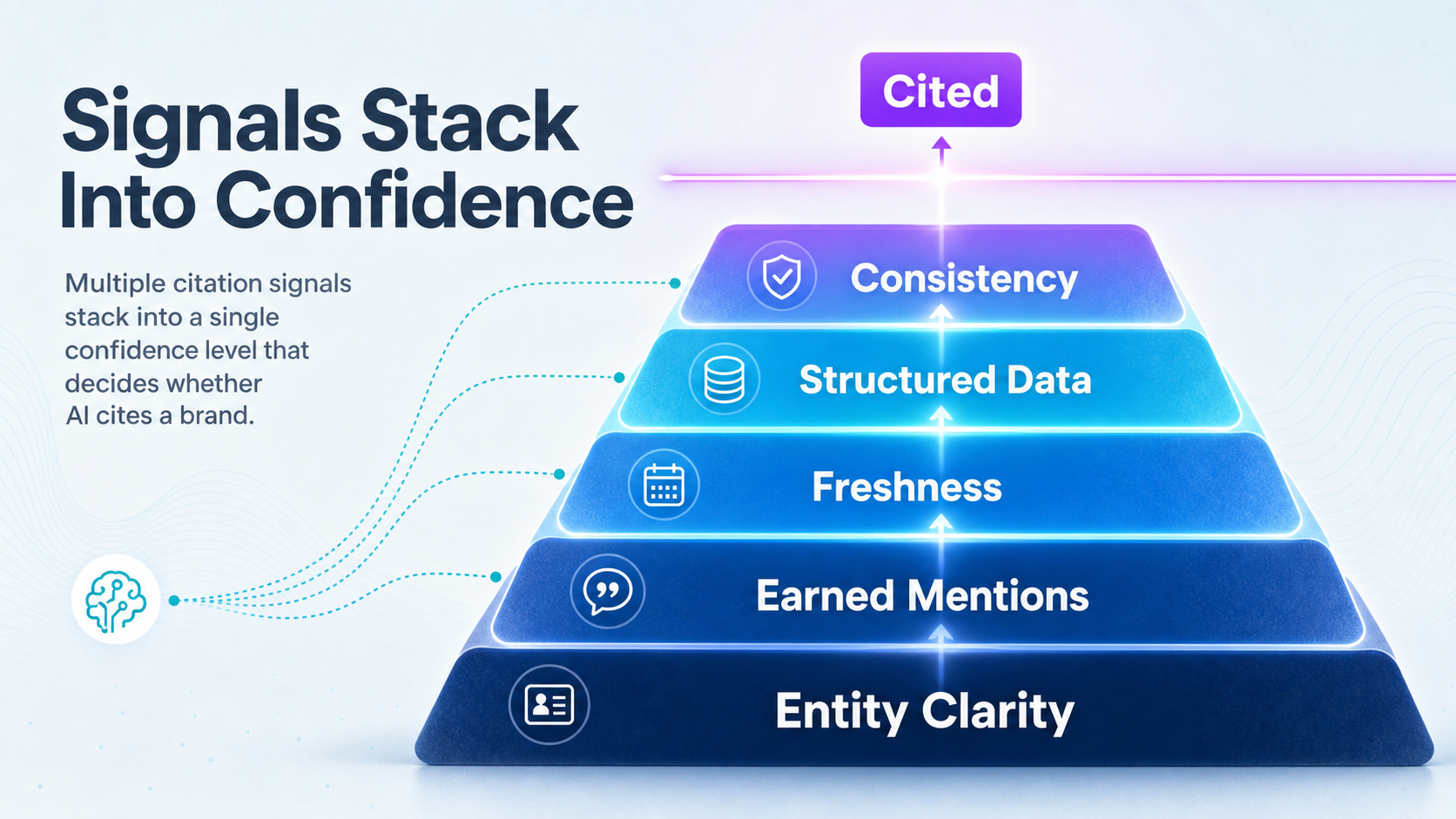
- Citation decisions stack five signals in order: entity clarity, earned mentions, freshness, structured data, and consistency.
- A small number of authoritative mentions moves citations more than a large pile of weak or repetitive ones.
- Read the score as relative, not absolute; compare it against a direct competitor for the same queries.
- Fragmented entity signals, not thin content, are the most common reason citation performance stays flat.
What Brand Authority Score Means in AI Citations
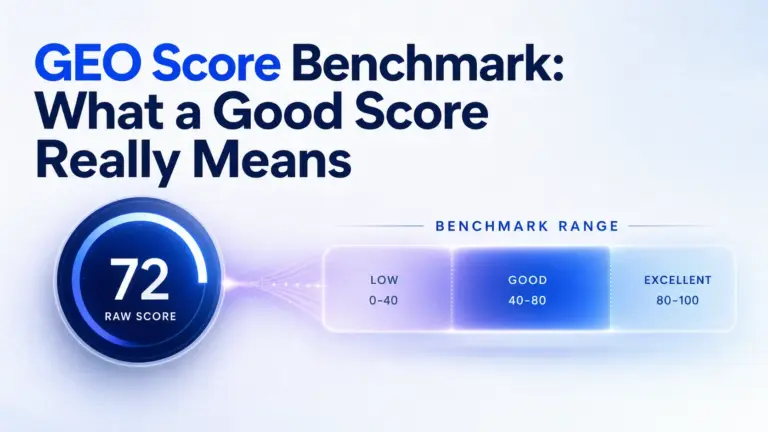
A brand authority score is a proxy measure for how likely an AI system is to recognize your brand, trust it, and cite it as a source. It estimates the strength of your brand’s footprint across the web, then expresses that as a number, usually on a 1 to 100 scale.
There’s no industry-wide formula behind it. Moz built one version, and QuestionDB built another.
Each vendor weights inputs like mentions, sentiment, and referring domains in its own way. Two tools can hand you two different numbers for the same brand on the same day.
That’s the first thing to get straight. The score is a lens, not a law.
It’s also not the same thing as the metrics you already track. The distinction matters because each one answers a different question.
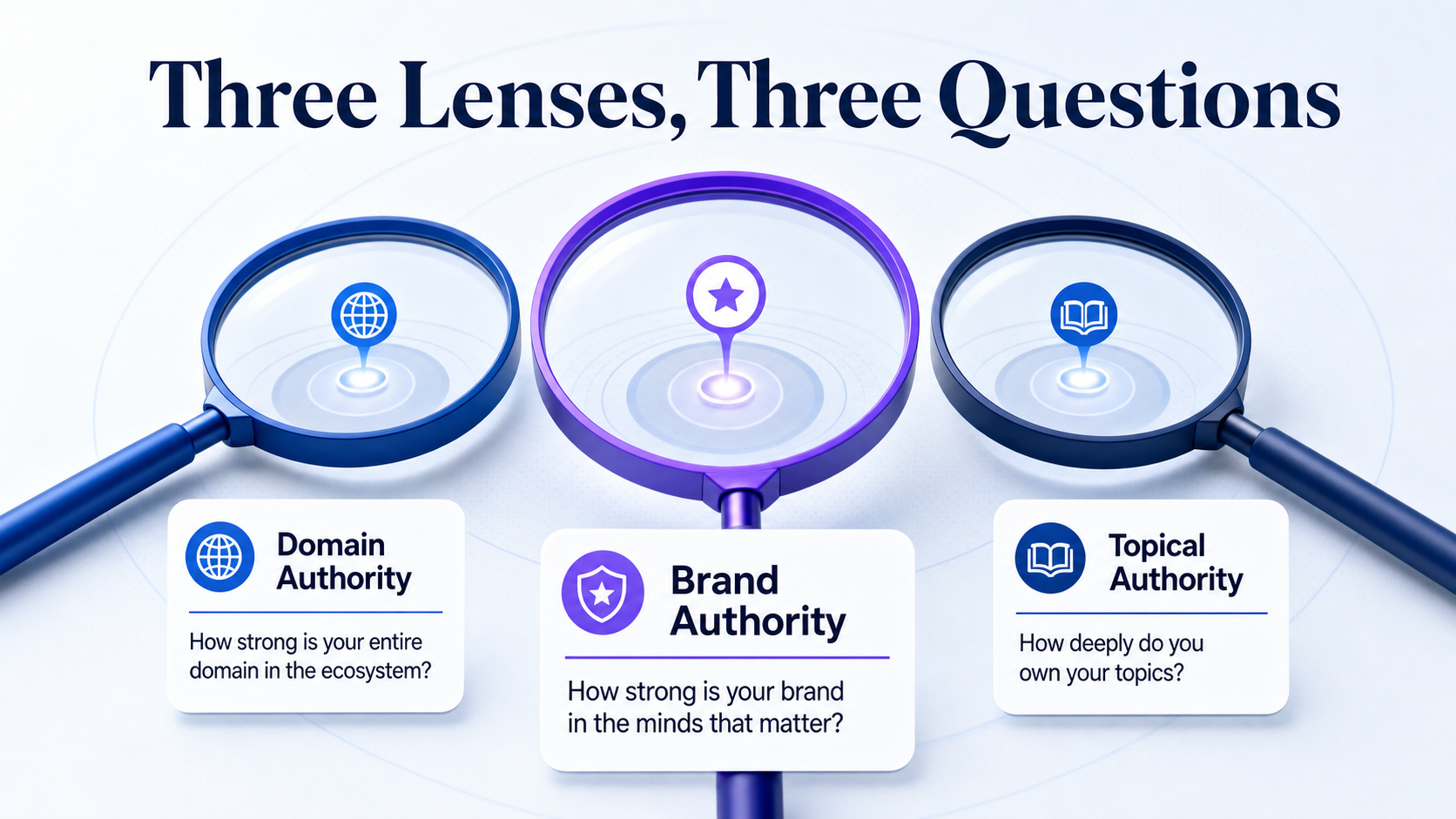
| Metric | What it measures | Primary use in AI citations |
|---|---|---|
| Brand authority score | How recognized and trusted your brand is across the web | Estimates citation likelihood in AI answers |
| Domain authority | Backlink-based strength of a single domain | Weak predictor of AI citations on its own |
| Topical authority | Depth of coverage on a subject | Helps relevance, but volume alone does not earn citations |
| Generic reputation metrics | Sentiment or review averages | Context for trust, not a standalone citation signal |
In practice, brands with only average domain numbers still earn AI citations regularly. The pattern we see again and again is that their entity footprint is cleaner: consistent naming, clear associations, and third-party mentions that all point to the same brand. The score is trying to capture that, even when the backlink profile looks ordinary.
Frame it specifically for AI search. When you ask about a brand authority score in this context, you’re really asking how confidently an AI engine can identify your brand.
That confidence decides whether it’s worth naming you in an AI Overview, an LLM answer, or a generative search response. For more on the underlying mechanics, see how AI crawlers select and prioritize sources.
Why Brand Authority Matters for AI Citations
AI systems cite brands they can identify and verify with confidence. When the model can’t resolve who you are or what you do, it skips you and names a competitor it can pin down. Brand authority is, in effect, a measure of that confidence.
Stronger authority raises your citation frequency. The more often credible third-party sources name your brand in topical context, the more an AI engine treats you as a default reference for that topic. That repetition compounds.
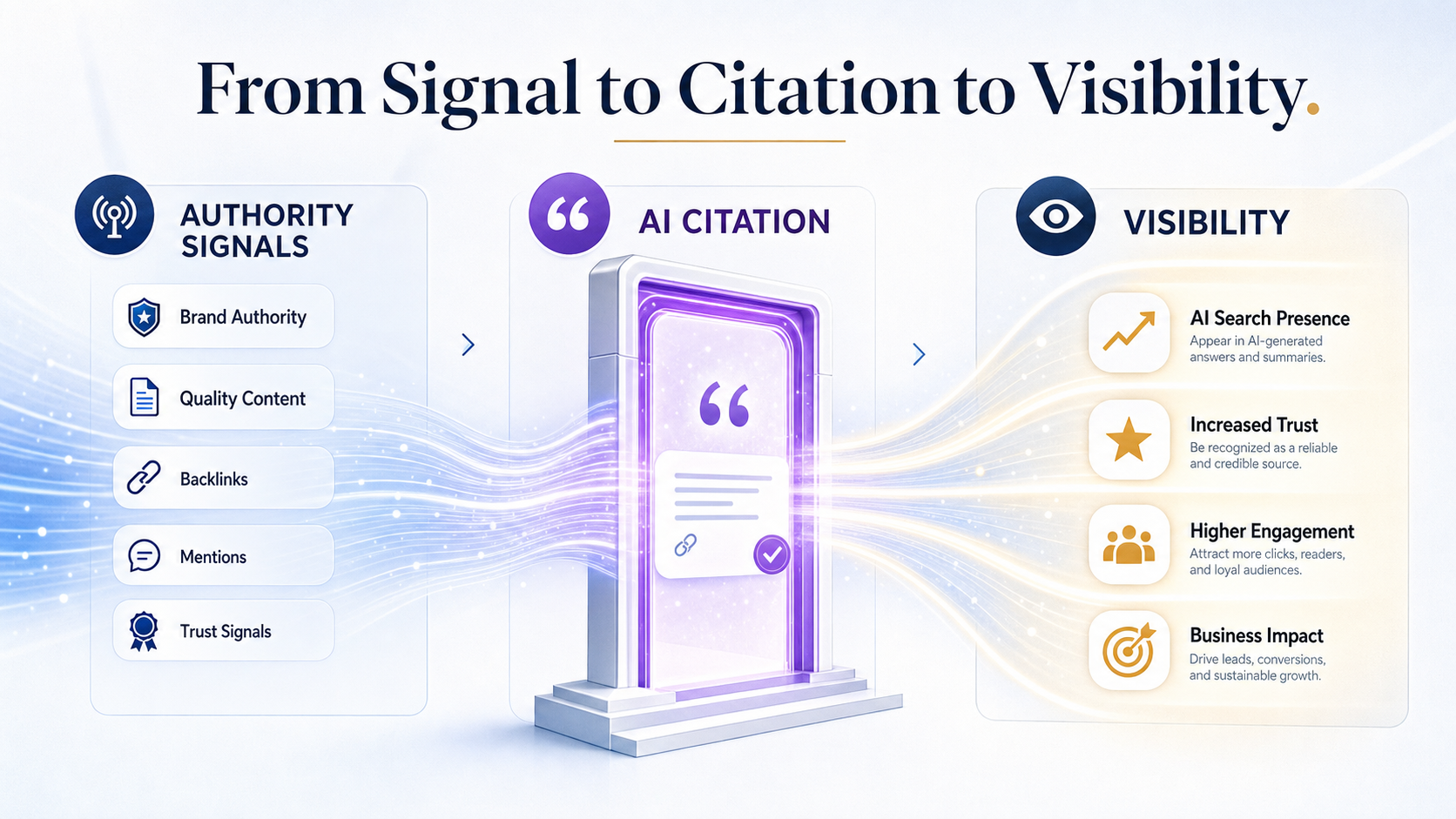
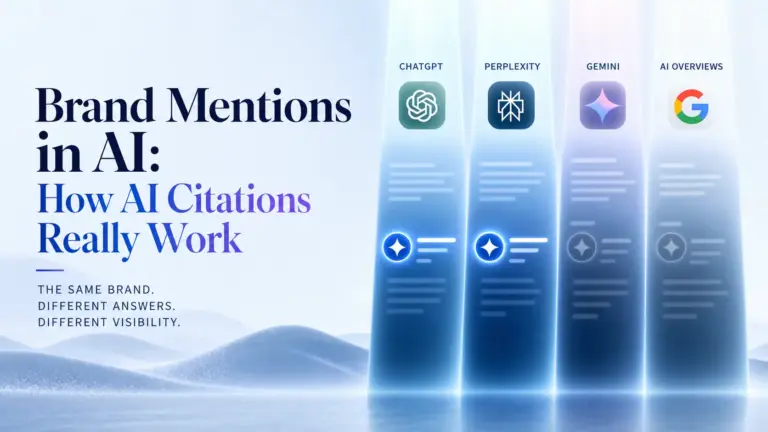
There’s a sharp distinction worth holding onto here: being ranked and being cited are not the same outcome. You can sit at position four in classic search and still be the brand an AI answer names first, because citation logic rewards trust signals rankings don’t capture.
The reverse happens too: we see brands that own the top organic spot yet go unnamed in AI answers because their external proof is thin.
This matters most in the environment AI search is creating. When a user gets a synthesized answer and never clicks, your blue-link ranking earns you nothing.
The citation is the visibility. If your brand is named in the answer, you exist in that conversation.
If it’s not, you’re invisible regardless of where you rank.
The business value lands in three places:
- Discoverability, because being named puts you in front of buyers at the research stage
- Trust, because an AI citation reads as a third-party endorsement
- Share of voice, because every answer that names you is one a competitor does not own
To track how these outcomes differ from classic search reporting, compare the relevant AI visibility metrics against traditional SEO metrics.
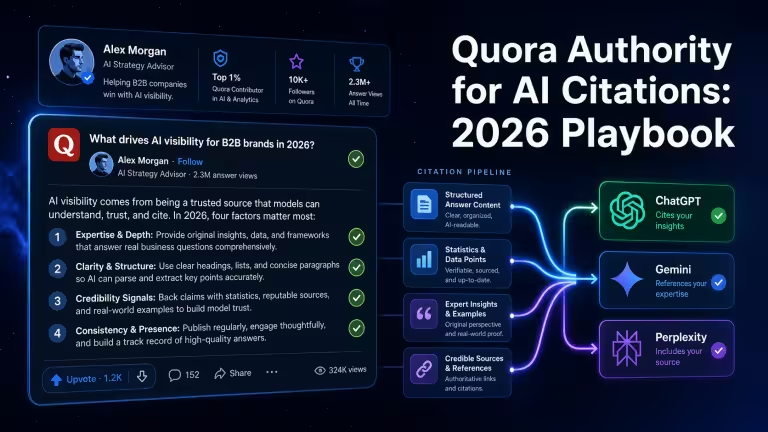
How AI Systems Decide What to Cite
Citation decisions aren’t random, and they aren’t driven by one factor. AI systems stack several signals and cite the source that clears the bar on most of them. Here is the order that bar tends to follow.
1. Entity Clarity Comes First
Before anything else, the system has to resolve who your brand is and separate it from similarly named entities. If it can’t disambiguate you confidently, no other signal saves you. This is why building a clear entity for search sits at the foundation of citation work.
2. Earned Mentions and Third-Party Validation
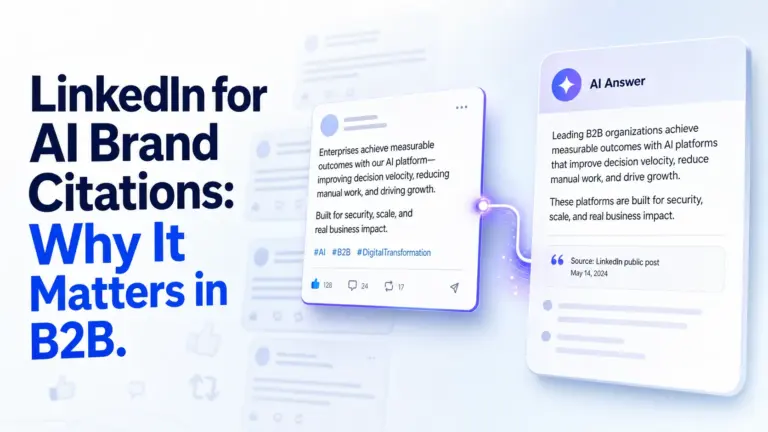
Once you’re identifiable, the model weighs how often credible outside sources name you in the right context. Mentions on trusted publications carry far more weight than self-published claims.
3. Freshness and Recent Updates
Content that has been updated recently reads as more reliable to the system, which raises citation confidence. Stale pages lose ground even when they’re accurate.
4. Structured Data and Citation-Ready Formatting
Schema markup and clean, extractable answers help the engine lift a claim and attribute it to you. Information buried in dense prose or images is harder to cite.
5. Consistency Across the Web
When your name, description, and associations match across your site, profiles, and third-party references, every signal reinforces the others.
One observation from doing this work: a weaker-authority page often beats a stronger one in AI answers. If it’s fresher, easier to extract, and clearly tied to a known entity, the model picks it over a high-authority page that’s older and harder to parse.
The bar isn’t raw authority. It’s the combination.
What Inputs Shape a Brand Authority Score
A brand authority score blends a handful of common inputs. The exact mix is proprietary to each vendor, but the categories repeat across tools. What changes is the weighting, which is why scores aren’t interchangeable.
| Input | What it captures | Citation relevance |
|---|---|---|
| Mention frequency and density | How often your brand name appears on third-party sites in topical context | High. Repetition in context builds recognition |
| Sentiment and context | Whether mentions are positive, neutral, and topically relevant | Medium to high. Context matters more than raw count |
| Backlink quality | The authority of domains linking to you | Medium. A supporting signal, not the driver |
| Source diversity | Mentions across news, blogs, communities, directories, and industry sites | High. Breadth reads as broad recognition |
| Branded search demand | How often people search your brand name directly | High. Demand is a clean trust signal |
Two of these are quantitative. Mention frequency and branded search demand are countable.
The others are qualitative judgments the tool tries to score: whether a mention is favorable, whether a source is credible, whether the context fits your category. That mix is why no two models agree on a number.
The input that gets overweighted by people new to this is raw mention volume. In what we see, a small number of authoritative third-party mentions moves citation performance more than a large pile of weak or repetitive ones.
Ten references from publications an AI engine trusts beat a thousand from sites it ignores. For the deeper logic on this, read how brand mentions function in AI search.
How to Measure or Estimate Brand Authority for AI Citations
Treat any score as a directional benchmark, not a verdict. The number tells you roughly where you stand.
The movement tells you what’s working. Use this checklist to read it well.
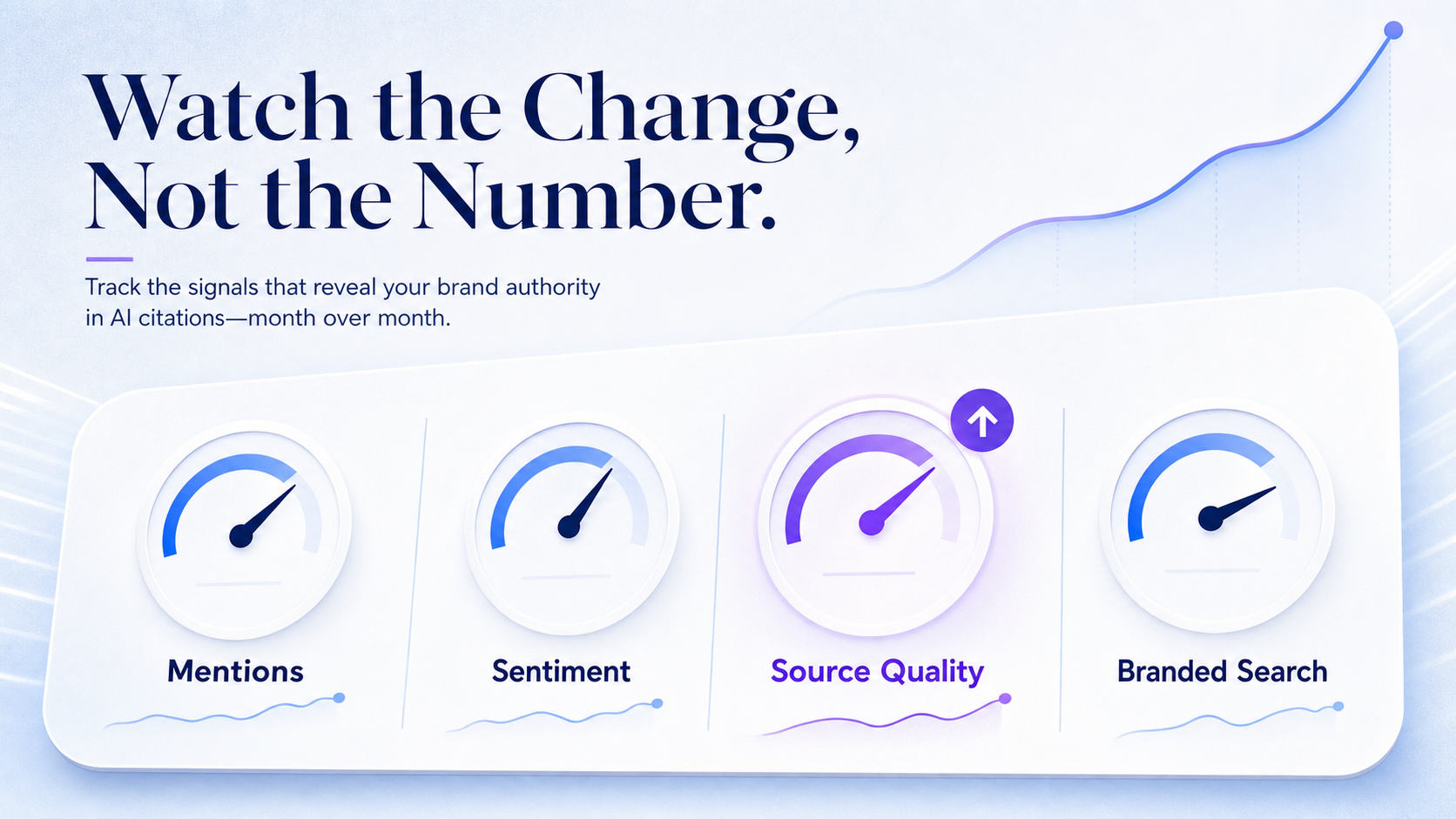
- Review brand mention volume across the web, not just on your own properties
- Check sentiment and topical context, since a neutral mention in the right category beats a vague positive one
- Weigh source quality over source count, because a few trusted publications outweigh many weak ones
- Track how often AI answers actually name your brand for your priority queries
- Watch branded search demand as a clean signal of recognition
The most useful read is relative, not absolute. A score of 52 means little on its own.
A score of 52 against a direct competitor’s 71 for the same set of queries tells you exactly where the gap is. Benchmark against rivals, not against an arbitrary threshold.
| Tracking cadence | What it tells you |
|---|---|
| Daily | Mostly noise. Scores fluctuate without meaning anything |
| Monthly | Useful trend direction and the effect of recent work |
| Quarterly | Clear signal of structural progress or decline |
The question that actually helps isn’t “what is my score.” It’s “which signal changed since last month, and why.”
A score that drops while your mention volume holds steady points you toward sentiment or source quality. A diagnostic mindset beats a vanity number every time, which is the whole point of a structured AI visibility diagnostic approach.
Common Mistakes That Distort the Score
Most misreadings of a brand authority score come from a handful of repeat assumptions. Each one leads to the wrong action. Here is the myth against the reality.
Myth: Domain Authority Alone Predicts AI Citations
Reality: a high domain score with a thin entity footprint still goes uncited. The model needs to know who you are, not just that your domain has links.
Myth: Every Mention Counts the Same
Reality: a mention’s source, context, and sentiment change its weight enormously. One trusted-publication reference can outrank a hundred forum drops.
Myth: More Content Automatically Builds More Authority
Reality: publishing volume without external validation rarely moves citations. Authority is what others say about you, not how much you say about yourself.
Myth: Entity Consistency Is a Nice-to-Have
Reality: when your name and description differ across your site, your profiles, and third-party references, you fragment the signal and the model loses confidence.
Myth: There’s One Official Score With One Accepted Formula
Reality: every vendor uses a proprietary model, so a number from one tool doesn’t transfer to another.
The audit pattern that exposes this is common. A brand ships more pages and earns more backlinks, yet its citation performance stays flat. The cause is almost always fragmented entity signals: the brand looks like three different companies across the web, so the model never builds confidence to name it.
The Practical Takeaway for Marketers
A brand authority score is a useful lens, not a final verdict. It points you at the signals AI systems use, and it tells you whether those signals are getting stronger or weaker over time.
That’s its job. Asking it to be more than that leads to chasing a number instead of building the thing the number measures.
AI citations come from reinforced signals, never one metric. The priorities that move them are clear: entity clarity so the model knows who you are, and third-party validation so it trusts you. Freshness keeps it confident, and structured information lets it extract and attribute your claims.
The brands that win citations share one trait. Their external proof, their on-site structure, and their entity consistency all point to the same brand identity. When those three line up, the score follows, and so do the citations.
- Read the score as a diagnostic for signals, not as a grade
- Prioritize clarity, validation, freshness, and structure over raw output
- Benchmark against competitors and watch what changes month to month
Backlink quality metrics like Trust Flow and Citation Flow are a useful proxy for the external validation piece, since they measure how close your link profile sits to genuinely trusted sources.
Frequently Asked Questions
What is a brand authority score?
A brand authority score is a proxy measure, usually on a 1 to 100 scale, for how recognized and trusted your brand appears across the web. It estimates how likely AI systems and search engines are to treat your brand as a credible, cite-worthy source. There’s no single industry formula, so the number depends on the tool that produced it.
Is brand authority the same as domain authority?
No. Domain authority is a backlink-based score for a single domain, while brand authority tries to capture your whole brand footprint, including mentions, sentiment, source diversity, and branded search demand. A brand can have an average domain score and still earn AI citations when its entity footprint is clean and its mentions are credible.
Can a brand authority score predict AI citations?
It indicates likelihood, not certainty. A higher score reflects stronger underlying signals that AI systems reward, so it correlates with more frequent citations. But the model still decides per query, weighing entity clarity, freshness, and extractability, so a high score raises your odds without guaranteeing you get named.
How do you increase brand authority for AI search?
Strengthen the signals behind it rather than the number itself. Earn mentions from credible third-party sources in your category, and keep your entity details consistent across your site and profiles. Update key pages so they stay fresh, and add structured data so engines can extract your claims. Volume of content without external validation rarely moves the needle.
What factors influence a brand authority score?
The common inputs are mention frequency, the sentiment and context of those mentions, backlink quality, source diversity across different site types, and branded search demand. Each tool weights these differently, which is why two scores for the same brand can disagree. Source quality and context tend to matter more than raw volume.
Brand authority score is worth using, as long as you read it for what it is: a window onto the signals that make AI systems confident enough to name you. Start by auditing those signals: ask your top buying question in ChatGPT or Perplexity and see whether your brand gets named. If it doesn’t, book a short strategy call and trace the gap back to clarity, validation, freshness, or structure.