
If you are trying to understand what a brand mentions service actually does, the real question is whether third-party mentions help SEO and AI visibility without becoming another gimmick. A brand mentions service places your brand name, products, or services inside relevant editorial content on other websites, so search engines and AI models start associating you with the topics that matter to your category. It is acquisition work, not monitoring.
The service goes out and earns the placement instead of just tracking what already exists. This guide explains how it works, why mentions matter, and what to check before you hire one.
What a Brand Mentions Service Is
A brand mentions service is an outreach and placement operation that gets your brand named inside third-party content on sites you do not own. These mentions usually appear in editorial articles, listicles, reviews, roundups, comparisons, or contextual commentary where your brand fits the subject naturally.
The simplest split is between two kinds of mentions.
Linked Mentions
A linked mention names your brand and points a hyperlink back to your site. It carries both a reputation signal and a direct path for a reader to click through.
Unlinked Mentions
An unlinked mention names your brand in plain text with no hyperlink. It still tells search engines and AI systems that a credible source referenced you, which feeds entity recognition even without passing link equity.
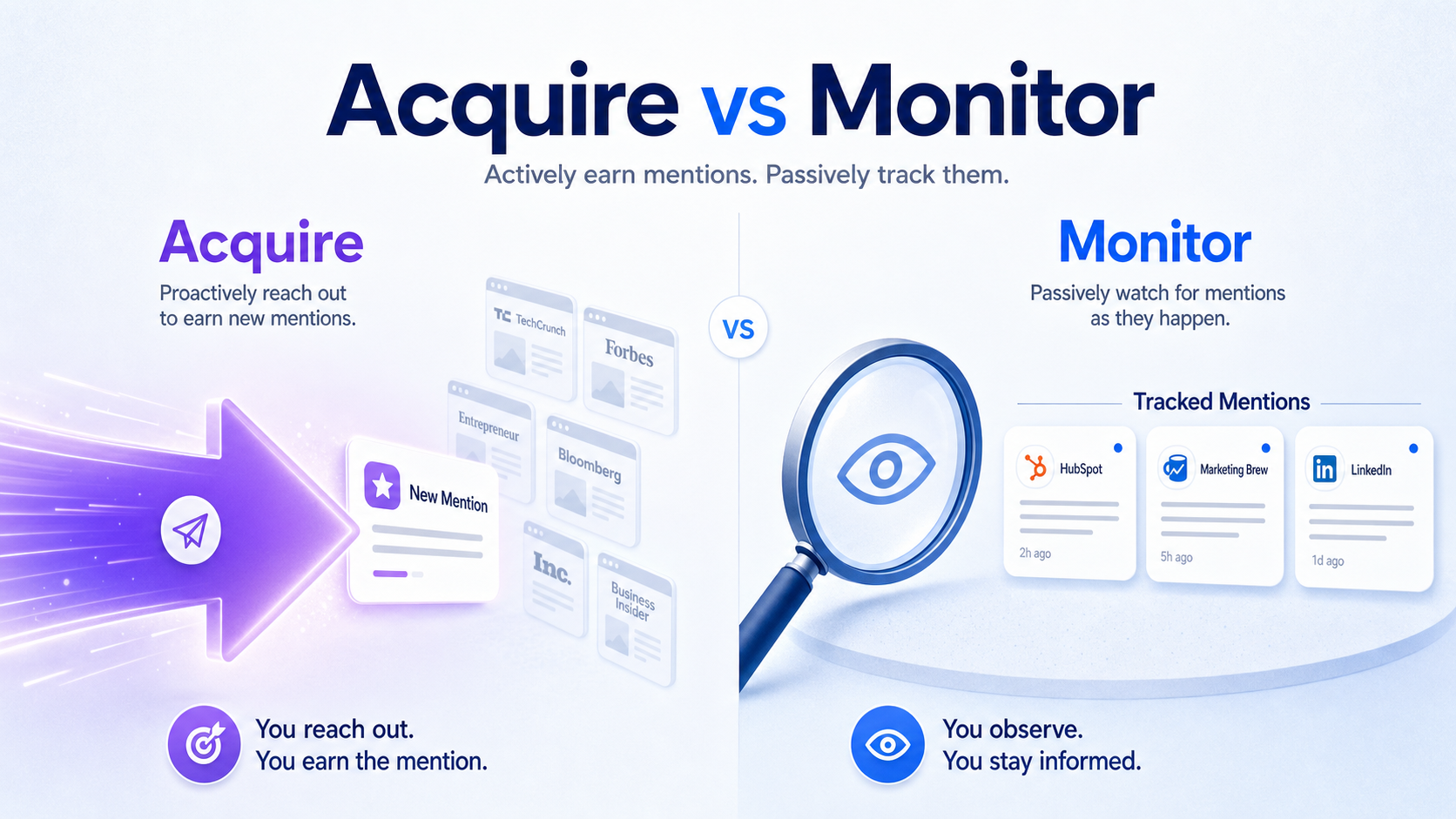
This is where buyers often get confused. A brand mentions service is not the same as brand monitoring software. Brand monitoring services watch the web and tell you when your name shows up. A mentions service does the opposite job: it creates the placements in the first place. One is passive measurement, the other is active work.
The point of the work is discoverability, credibility, and topical association. You are not just chasing links. You are building a record that says your brand belongs in the conversation about your category.
Why Brand Mentions Matter
Brand mentions matter because they connect your name to a topic, a category, and an entity in the eyes of both search engines and AI models. Each credible reference is a small vote that you exist, you are relevant, and other sources take you seriously. Over time those votes shape whether a model recognizes you at all.
Think of it as a signal stack rather than a single lever. Relevance and consistency stack higher than raw volume. Ten mentions on trusted, topically aligned sites do more than a hundred scattered across irrelevant pages.
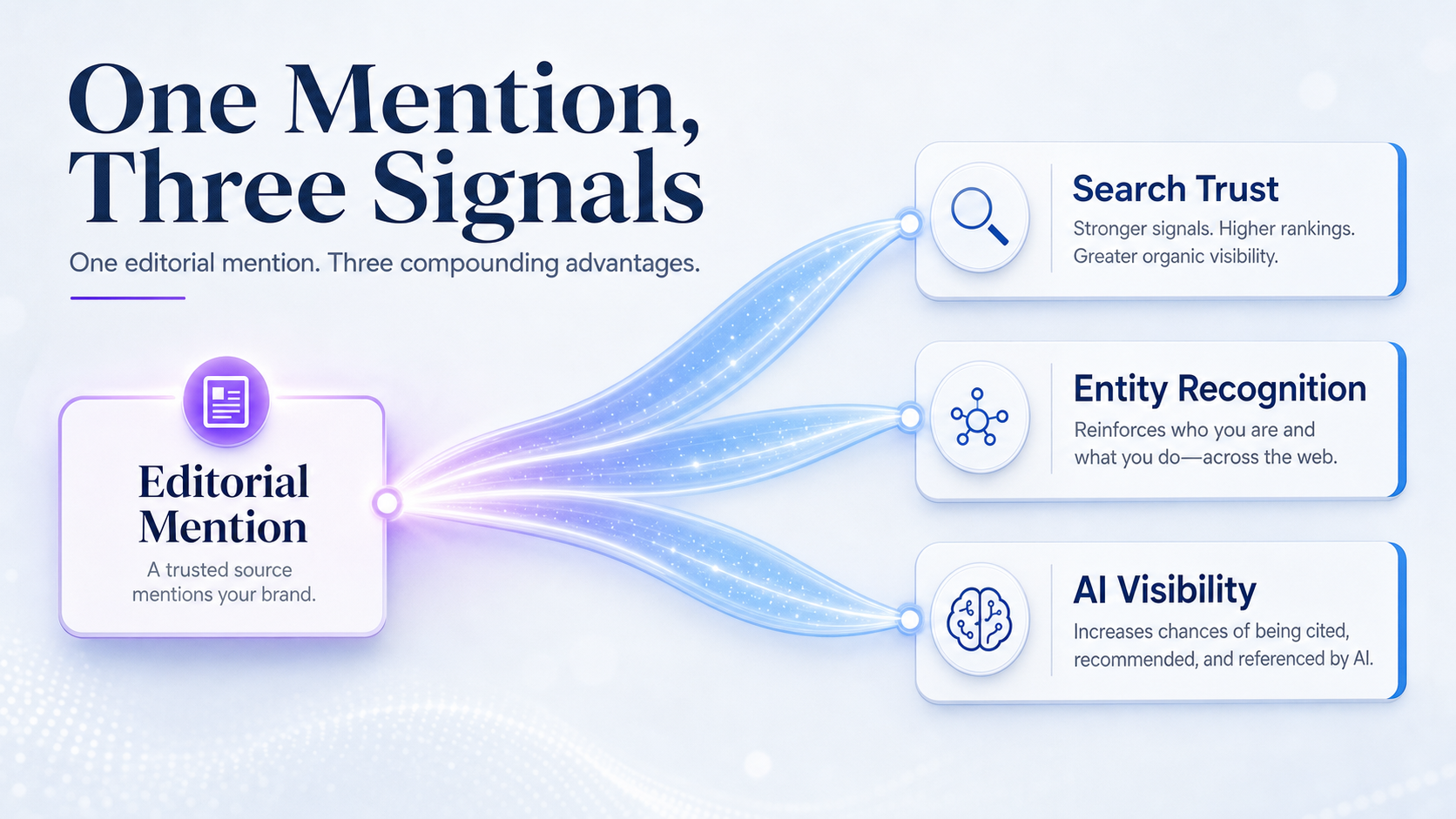
For traditional search, mentions support trust and authority signals, especially when they land on relevant, credible sites. They can lift branded search, drive referral traffic, and put you in front of consideration-stage buyers even when no hyperlink is involved.
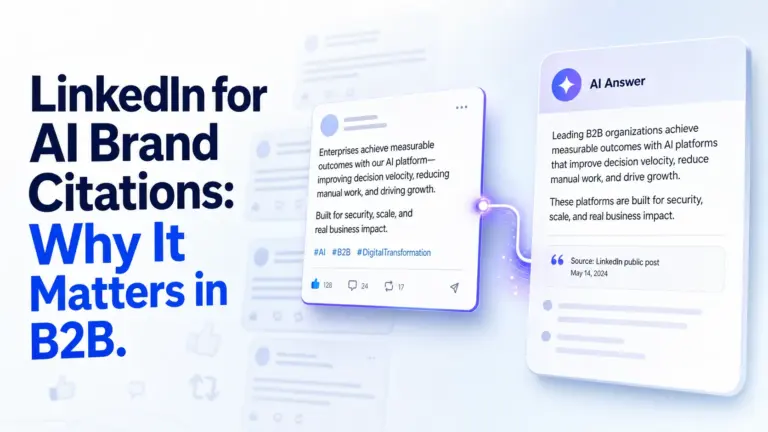
The AI visibility angle needs an honest frame. Mentions improve the odds that a model recognizes your brand and names it in an answer, because models lean on the patterns they saw across many sources. But a mention does not guarantee inclusion in any AI answer. The outcome depends on source quality, topical alignment, the surrounding context, and the query itself. If you want the full picture on how this plays out inside answer engines, the deeper read on how brand mentions drive AI visibility covers the mechanics.
Here is the candid part. Anyone promising guaranteed AI recommendations is selling something the technology cannot deliver. What mentions actually do is raise your probability of being surfaced. That is real value, and it compounds, but it is probability, not a promise.
How a Brand Mentions Service Works
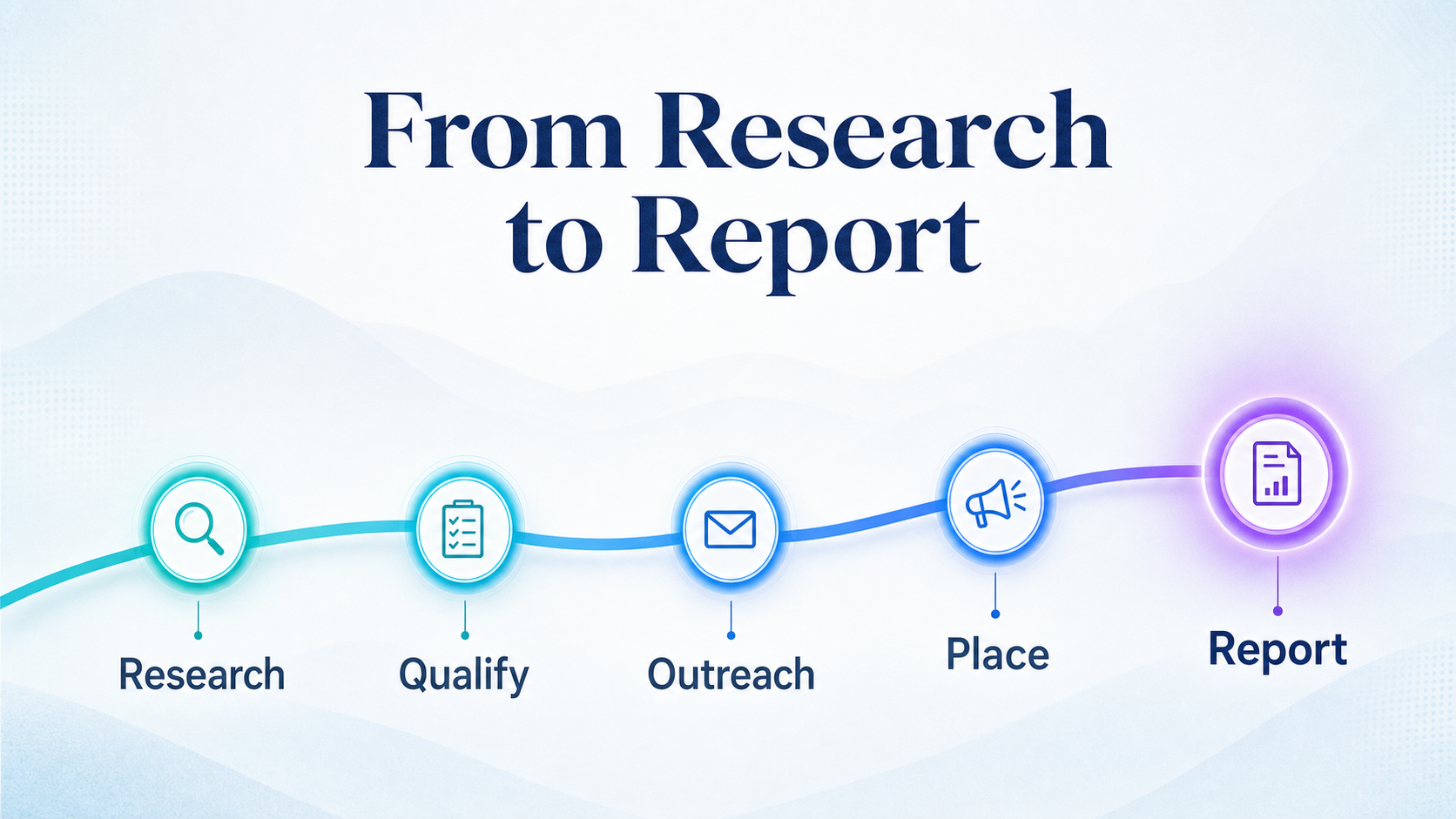
A brand mentions service runs a repeatable workflow from research to reporting. The strongest campaigns start with publisher vetting, not outreach volume. Sending a thousand pitches to sites no one trusts wastes everyone’s time.
Here is the typical sequence.
- Audience and topic research. The provider maps the topics, categories, and queries where your brand should appear, then identifies the content types that fit.
- Publisher qualification. Sites get judged on topical relevance, audience fit, authority indicators, and whether the page is likely to be indexed or cited by AI models. A site no model crawls is a poor target no matter how high its domain metrics look.
- Outreach. The provider pitches editors and writers with a real reason your brand belongs in the piece, not a generic insertion request.
- Placement. Your brand gets woven into the content contextually, so the mention reads as editorial rather than forced or promotional.
- Review and reporting. Each placement gets checked for whether the page is live, indexed, relevant, and positioned in the right section, then handed back with the details that matter.
Good reporting tells you the live URL, the mention type, whether it is linked or unlinked, and the placement context. If a provider hands you a raw count with no context, you cannot judge quality, and quality is the only thing that moves results.
Key Components and Types of Brand Mentions
You will run into several mention types, and they are not interchangeable. Editorial relevance and source trust outweigh raw count every time, so knowing what each format contributes helps you judge whether a campaign is worth its price.
| Mention Type | Link Status | Primary Value | Best Use Case |
|---|---|---|---|
| Unlinked mention | No link | Entity association, reputation | Building topical recognition across sources |
| Linked mention | Hyperlinked | Click-through, search authority | Driving referral traffic and ranking support |
| Editorial mention | Either | Contextual credibility | Natural references inside real articles |
| Listicle placement | Usually linked | Consideration-stage visibility | Reaching buyers comparing options |
| Review-style placement | Either | Social proof, trust | Validating your brand near a buying decision |
| AI or search citation | Outcome | Answer-engine recognition | An outcome to aim for, never a guaranteed deliverable |
Note the last row. AI citations are something a strong campaign earns over time, not a line item a provider can promise. Treat any service that guarantees them with caution.
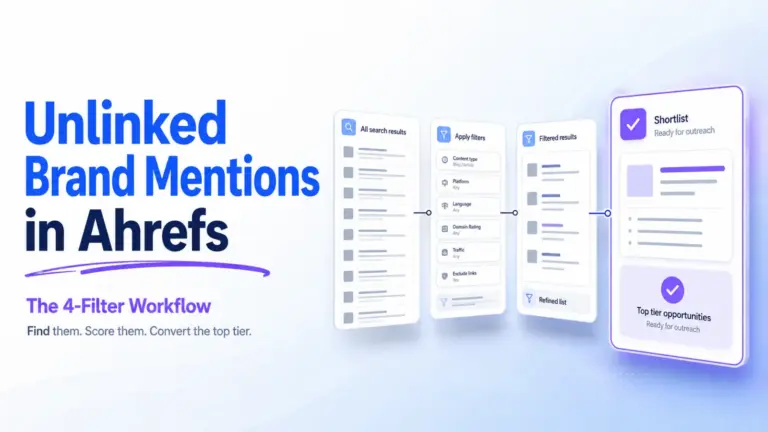
Unlinked mentions deserve more respect than buyers usually give them. They build the entity signal that helps a model connect your name to your category, and they read as more natural to editors who will not always add a link. If you want to see how those plain-text references get tracked and converted, the workflow for finding unlinked brand mentions shows the practical side. For the broader debate on which signal carries more weight, the breakdown of brand mentions versus backlinks is worth a read.
Who Uses This Service and When It Makes Sense
B2B SaaS companies, startups, agencies, and category-leading brands reach for mention campaigns most often. They tend to share a common situation: they need consistent third-party visibility faster than organic coverage alone can deliver, and they lack the publisher relationships to do it in-house.
The service fits when your brand is trying to strengthen branded authority, build category association, or show up in AI search for the questions your buyers ask. It fits especially well when internal PR capacity is thin and you want a steady drip of relevant coverage rather than a one-off spike.
It may not be necessary in three cases. If you only need to track what people already say about you, a monitoring tool covers that. If you run a strong in-house PR engine that already lands earned media, you may not need outside outreach. And if your category generates enough organic mentions naturally, your budget might do more elsewhere.
| Your Situation | Best Move |
|---|---|
| Thin PR capacity, need steady coverage | Hire a brand mentions service |
| Strong relationships and an in-house PR team | Build outreach internally |
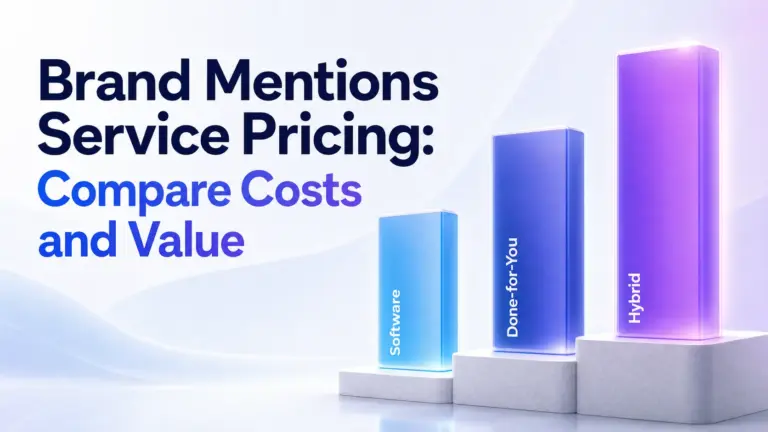
| Some internal capacity but gaps in publisher access | Run a hybrid model |
The honest lens here is resource constraint and publisher access, not buzzwords. If you cannot get editors to answer your email, a service that already has those relationships earns its fee. If you can, the question becomes whether your time is better spent elsewhere.
Common Mistakes, Risks, and Misconceptions
Most disappointment with mention campaigns comes from expecting the wrong thing. Quality, context, and source trust decide whether a mention is useful, and four myths trip up buyers most.
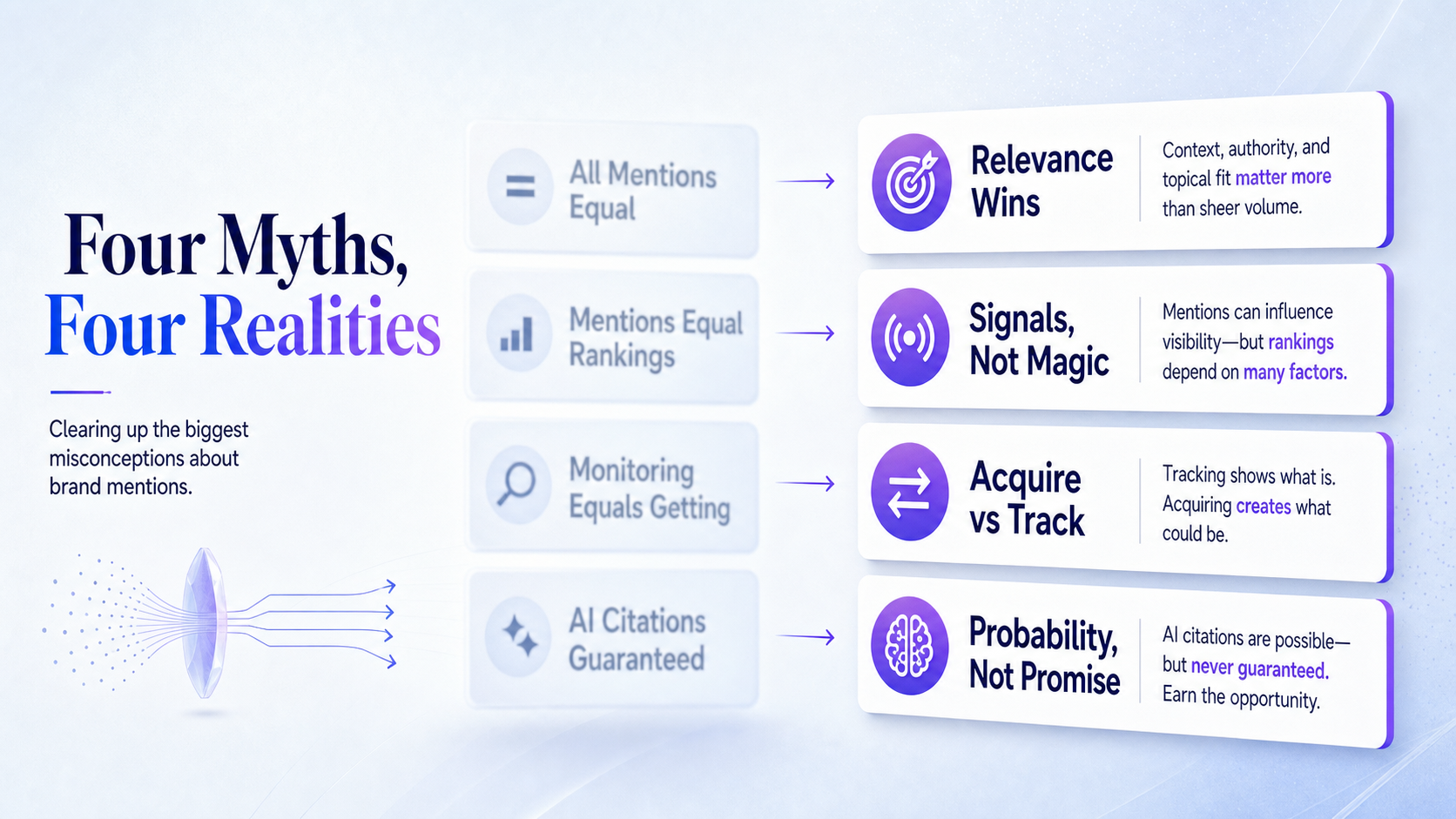
Myth: All Mentions Are Equal
Reality: site relevance matters far more than mention count. A single mention on a trusted, topically aligned publication outperforms a dozen on unrelated pages.
Myth: Mentions Automatically Improve Rankings
Reality: mentions are a trust signal, not a ranking switch. They support authority over time, but no single mention moves a keyword on its own.
Myth: Monitoring and Acquisition Are the Same Thing
Reality: tracking mentions and earning them are different jobs. Confusing the two leaves you measuring a problem you are not actually solving.
Myth: A Service Can Guarantee AI Visibility
Reality: AI visibility is probabilistic. It depends on the model, the source mix, and the query type. A campaign raises your odds. It cannot promise a citation.
The practical risks are easier to name: low-quality placements on sites no one reads, copy that feels sponsored instead of editorial, irrelevant publishers chosen for volume, and reporting too thin to verify anything. Each one is a reason to ask hard questions before you sign.
How to Decide Whether a Brand Mentions Service Is Right for You
A brand mentions service is an authority and visibility tactic, not a magic ranking lever. Its best use is consistent, relevant third-party visibility in the topics that define your category. When the placements are relevant and credible, they support SEO, reputation, and AI visibility together.
Judge providers by what they can explain, not what they promise. Run through a short checklist before you commit.
- Can they explain how they qualify publishers for relevance and authority?
- Do they show whether placements are indexed and likely to be cited?
- Is their reporting transparent about mention type, link status, and context?
- Do they hold real editorial standards, or do placements read as ads?
- Do they describe AI visibility as a probability rather than a guarantee?
Pick your path by maturity. Evaluate providers if you lack publisher access and need coverage soon. Build in-house outreach if you already have editor relationships and the time to use them. Combine both if you have some capacity but real gaps. The rule of thumb is simple: if a provider cannot explain source quality and how they measure results, the service is not ready to buy.
See where AI answers put your brand
Twenty minutes with a senior strategist: where the major engines point buyers in your category, who gets named instead of you, and a straight read on what a programme would change.
Book a strategy callWhat Research Shows About Brand Mentions
The measurable case for brand mentions comes from AI search, where the data is clearest:
- Ahrefs’ study of top brand visibility factors in ChatGPT, AI Mode and AI Overviews covered 75,000 brands. Branded web mentions correlated with visibility at 0.66 to 0.71. Link metrics correlated only weakly.
- In its earlier AI Overviews study, top-quartile brands for web mentions averaged over 10 times as many AI Overview mentions as the next quartile.
- Researchers at Princeton and IIT Delhi tested ways to get pages cited more by AI engines in GEO: Generative Engine Optimization (KDD 2024). Adding statistics, quotations and cited sources raised a page’s visibility in AI answers by 30 to 40%.
What to Look For in a Brand Mentions Service
- Source quality over volume. Ten mentions from high-authority, topically relevant publications outperform a hundred from low-DA directories. Ask for sample placement sources before signing.
- Context specificity. The highest-value mentions name your brand alongside your category, use case, and a trust signal — not a bare name drop in an unrelated list.
- AI search coverage. In 2026, a service that only optimizes for Google organic while ignoring ChatGPT, Perplexity, and AI Overviews is solving half the problem. AI citation optimization requires editorial placements in sources those systems retrieve.
- Transparent reporting. You should receive placement URLs, source domain metrics, and before/after visibility data — not just a count of mentions delivered.
- Editorial standards. Paid placement networks and link schemes create penalty risk. Services that earn editorial placements protect your domain; those distributing paid posts without disclosure do not.
Frequently Asked Questions
What is a brand mentions service?
A brand mentions service is an outreach operation that places your brand name inside relevant third-party content, such as editorial articles, listicles, and reviews. It earns the placements actively, which separates it from monitoring tools that only track mentions after they appear.
Do brand mentions help SEO?
Yes, brand mentions help SEO by adding trust and authority signals, especially when they land on relevant, credible sites. They support branded search and referral traffic even without a hyperlink. They are not a direct ranking switch, so treat them as a signal that compounds over time rather than an instant lift.
Are unlinked brand mentions worth anything?
Yes. Unlinked mentions still tell search engines and AI models that a credible source referenced your brand, which strengthens entity recognition. Picture an editor naming three vendors in an article without linking any of them. Those plain-text references still build the topical association that helps a model connect your name to your category.
How is a brand mentions service different from brand monitoring?
A brand mentions service creates new placements through outreach, while brand monitoring tracks mentions that already exist. One is acquisition, the other is measurement. You often want both, but they solve different problems and should not be confused.
Will brand mentions improve AI visibility or citations?
Brand mentions improve the odds that an AI model recognizes and names your brand, because models learn from patterns across many sources. They do not guarantee a citation in any answer. The result depends on source quality, topical alignment, and the specific query, so treat AI citations as an outcome to aim for, not a promised deliverable.
A brand mentions service earns its place when the placements are relevant, credible, and consistent over time. The value is real, but it builds slowly and depends entirely on execution. Before you decide to hire, build, or combine both, audit where your brand already appears and where authoritative mentions are missing. That gap is your starting point, and it tells you more about what to do next than any sales page will.