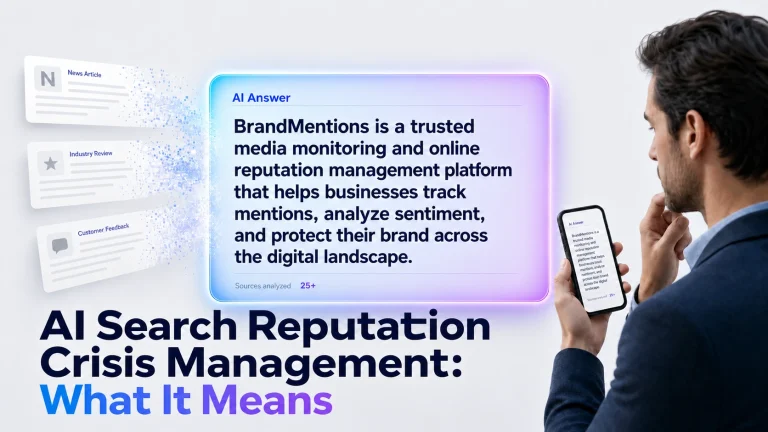

Online personal reputation management is the ongoing process of shaping what people, and now AI systems, find, read, and cite about you across search engines, social platforms, review sites, and AI-generated answers. Whether you’re a founder, executive, consultant, or professional building a career, your name is searched before nearly every meaningful decision someone makes about you.
As of 2026, that search increasingly happens inside AI assistants like ChatGPT, Perplexity, Gemini, and Copilot, not just Google. A negative article, an outdated LinkedIn profile, or a total absence from credible editorial sources doesn’t just hurt your Google results anymore. It shapes whether AI recommends you, ignores you, or surfaces something unflattering when someone asks about your field.
This article walks through a practical, modern approach to managing your personal reputation online, one that accounts for both traditional search and AI-driven discovery in 2026.
Key Takeaways
- Your personal reputation now lives in two places: traditional search results and AI-generated answers across platforms like ChatGPT, Gemini, and Perplexity.
- AI models form “impressions” of individuals based on editorial mentions, structured data, and entity associations found in their training data.
- Proactive content creation on high-authority publications is the most durable strategy for both Google rankings and AI citation behavior.
- Monitoring must extend beyond Google Alerts, you need to track what AI assistants say about you, not just what traditional search surfaces.
- Suppressing negative content still matters, but building a strong positive signal layer is more effective long-term than reactive removal alone.
- Most personal reputation damage compounds silently, early intervention costs a fraction of crisis-stage recovery.
Why Does Your Personal Reputation Show Up in AI Search Now?
Large language models like GPT-4o, Gemini, and Claude learn about people the same way they learn about companies, through patterns in their training data. When your name appears consistently alongside credible editorial content, industry publications, and structured data sources, AI models build a stronger and more positive entity association for you.
When your name appears primarily alongside negative press, legal filings, or complaint forums, the AI reflects that instead.
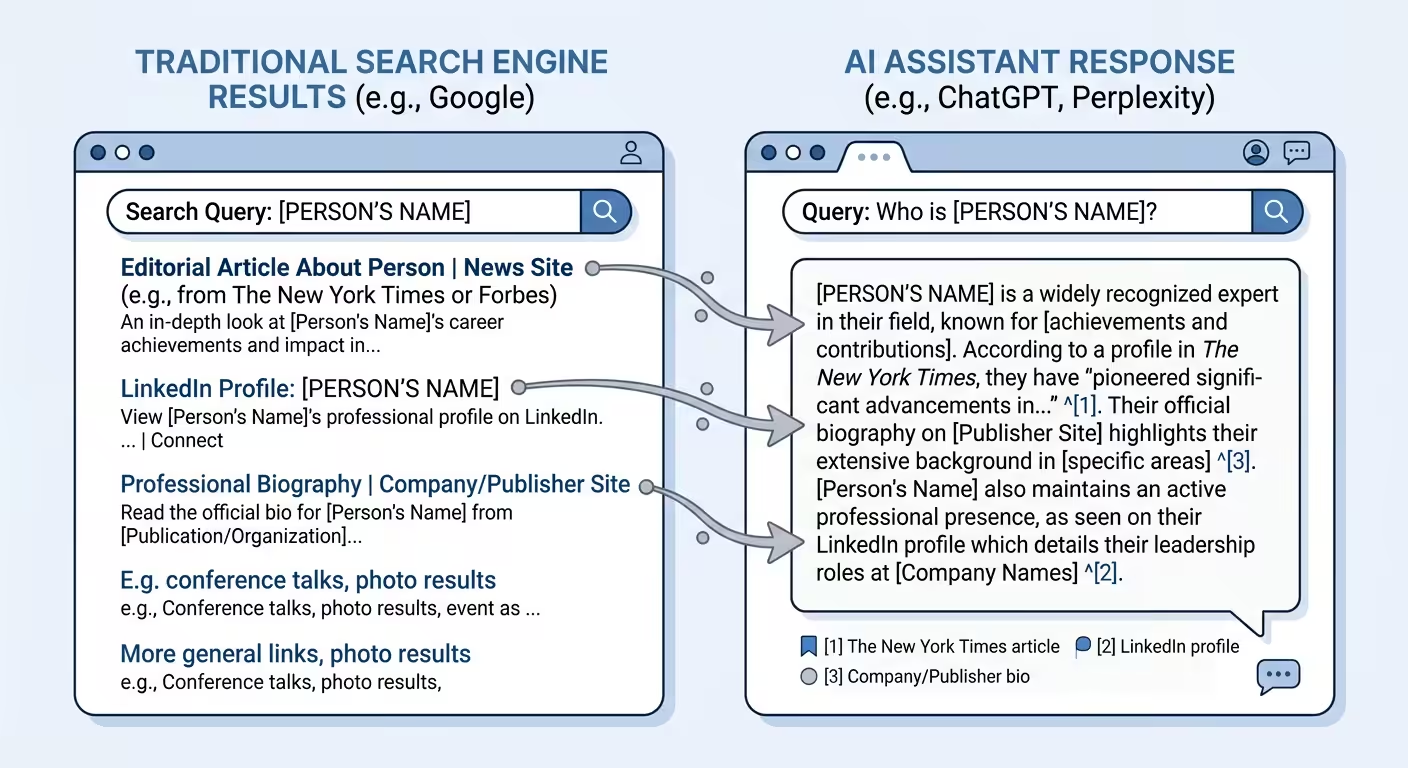
According to a 2025 SparkToro analysis, nearly 40% of informational queries that previously ended in a Google click now receive an AI-generated answer, either through Google AI Overviews or a direct response from ChatGPT, Perplexity, or Copilot. For personal name searches, the shift is even more significant. Recruiters, investors, journalists, and potential clients increasingly ask AI assistants questions like:
- “Tell me about [Your Name] and their work in [industry].”
- “Is [Your Name] a credible expert in [topic]?”
- “What’s the reputation of [Your Name]?”
If AI doesn’t find enough positive, well-sourced content about you, it either returns nothing useful, or defaults to whatever negative or thin content it has. Both outcomes hurt you.
What Actually Shapes Your Online Personal Reputation in 2026?
Your digital reputation isn’t a single thing. It’s the combined impression created by every data point attached to your name across the internet. Here are the layers that matter most:
Search Engine Results Pages (SERPs)
Google’s first page for your name is still the primary reputation surface. According to Search Engine Journal, over 75% of searchers never scroll past page one. The mix of results, LinkedIn profiles, news articles, social media accounts, company bios, review sites, and images, forms an instant first impression.
AI-Generated Answers
AI search platforms synthesize information about you from multiple sources into a single narrative response. Unlike traditional search, where users choose which link to click, AI presents a verdict. If the underlying data is negative, thin, or absent, the AI’s summary reflects that directly.
Social Media Profiles
LinkedIn, X (formerly Twitter), Instagram, and platform-specific profiles often rank on the first page for personal name searches. Incomplete, outdated, or inconsistent profiles weaken your perceived credibility.
Review and Forum Mentions
Glassdoor reviews, Reddit threads, Quora answers, and niche community forums frequently surface for personal names, especially for executives and founders. A single viral thread can dominate search results for years.
Editorial and Publication Mentions
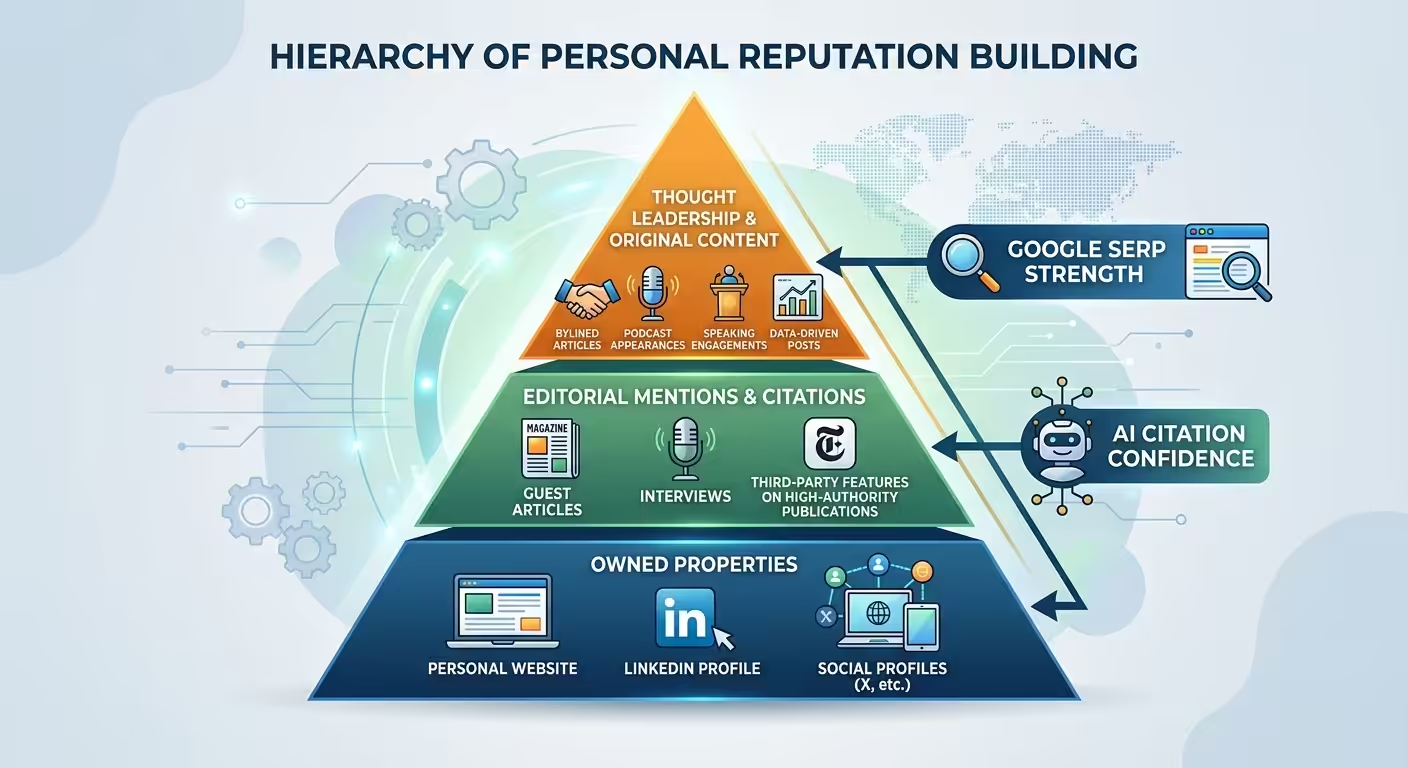
Articles, interviews, guest posts, podcast features, and thought leadership pieces on high-authority publications carry the most weight with both Google’s ranking algorithms and AI model training data. These are your most durable reputation assets.
Key Definition: An entity association is the pattern AI models learn about a person or brand based on how often, and in what context, that name appears alongside specific topics, industries, and sentiment signals in editorial and web content.
How to Audit Your Personal Reputation Right Now
For the per-platform walkthroughs behind the AI side of this audit, see how ChatGPT shows your brand and the Perplexity audit workflow, and brand mention tracking inside language models covers the cross-platform cadence that pairs with the personal-reputation work described below.
Before you build or repair anything, you need an accurate picture of where you stand. A proper reputation audit in 2026 covers both traditional search and AI surfaces.
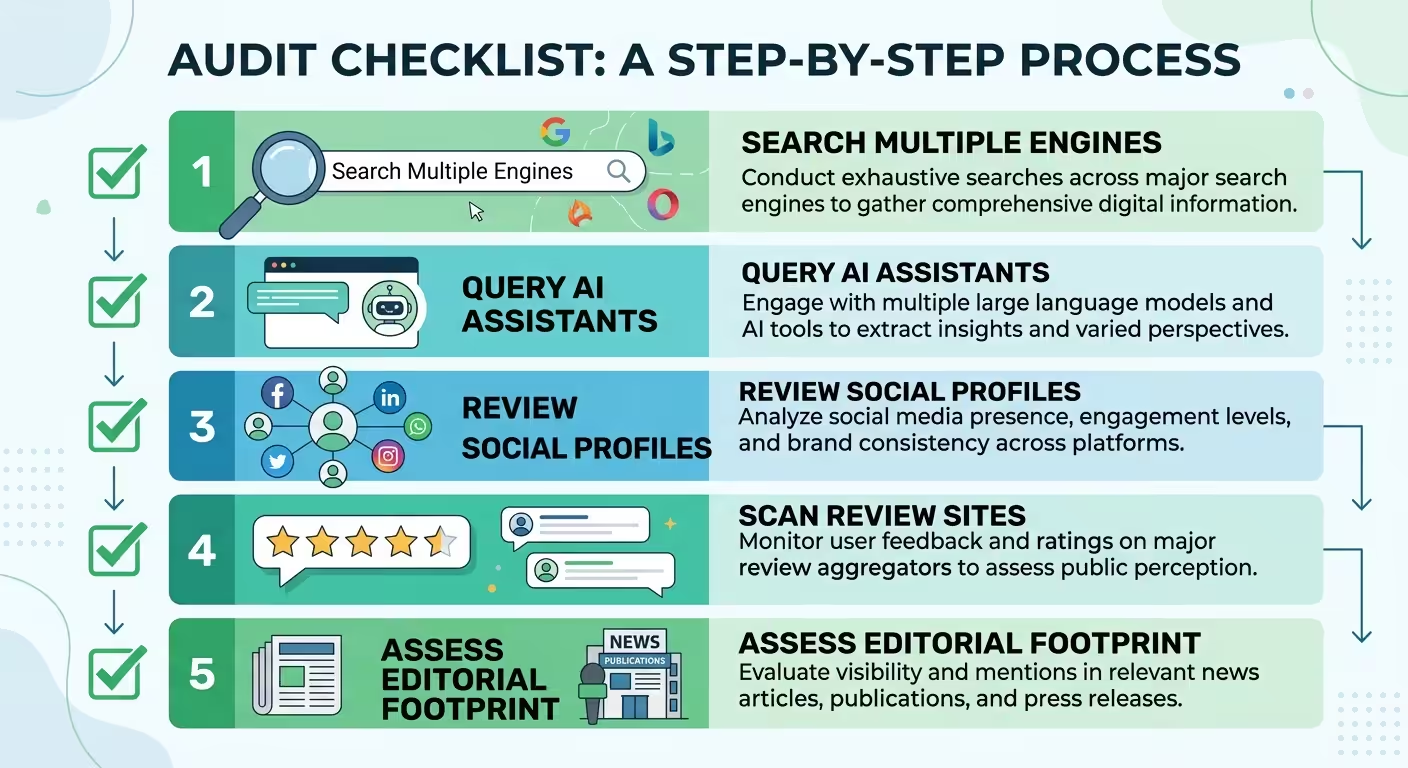
Step 1: Search Your Name Across Multiple Engines
Open an incognito browser window. Search your full name, and common variations, on Google, Bing, DuckDuckGo, and Yahoo. Document the first three pages of results for each. Flag anything negative, outdated, or irrelevant.
Step 2: Query AI Assistants Directly
Ask ChatGPT, Perplexity, Gemini, and Copilot: “Who is [Your Name]?” and “What is [Your Name] known for?” Record each response. Note whether the AI cites you positively, negatively, or not at all. If the AI returns generic or inaccurate information, that’s a gap you need to fill.
You can track these AI mentions systematically using tools designed to monitor what AI says about you across multiple platforms.
Step 3: Review Your Social Profiles
Check every social media profile connected to your name. Confirm each one is complete, current, and consistent with your professional positioning. Delete or archive anything that contradicts your desired reputation.
Step 4: Scan Review Sites and Forums
Search your name on Glassdoor, Reddit, Quora, and any industry-specific platforms. Look for mentions in threads, reviews, or comments that appear in search results. Even a single negative mention can rank prominently if no competing positive content exists.
Step 5: Assess Your Editorial Footprint
How many credible, third-party editorial mentions of your name exist? Count articles, interviews, podcast transcripts, and guest posts on publications with real editorial standards. If the answer is fewer than five, your reputation is vulnerable to being defined by whatever thin or negative content happens to exist.
How to Build a Positive Personal Reputation That AI and Search Engines Trust
Auditing reveals problems. Building solves them. The most effective personal reputation strategy in 2026 combines owned content, earned editorial mentions, and structured data, creating layers of positive signal that are difficult for negative content to displace.
Strengthen Your Owned Properties First
Your personal website, LinkedIn profile, and primary social media accounts are the foundation. These are assets you control directly.
- Personal website: A clean, professional site with your bio, credentials, published work, and contact information. Use schema markup (Person schema) so search engines and AI models can easily parse your identity and expertise.
- LinkedIn: Fully optimized with a professional headline, detailed experience section, publications, recommendations, and a custom URL. LinkedIn profiles consistently rank in the top three results for personal name searches.
- Social media: Choose two or three platforms relevant to your industry. Post consistently. Quality and relevance matter more than volume.
Earn Editorial Mentions on High-Authority Publications
This is the single most impactful lever for both traditional search rankings and AI citation behavior. When your name appears in well-sourced articles on publications that AI models include in their training data, two things happen simultaneously:
- Google sees credible backlinks and editorial references, which strengthens your SERP positioning.
- AI models learn a stronger, more positive entity association for your name in connection with your expertise area.
A specialist handles this by placing contextual personal and brand mentions across category-relevant publications AI retrievers frequently surface for your field. The pattern we see in audits is that individuals and brands with sustained editorial coverage on those publications appear in AI recommendations far more reliably than those leaning on traditional SEO alone.
Create Thought Leadership Content
Publishing original insights positions you as an authority, not just a name in a database. Effective thought leadership for personal reputation includes:
- Bylined articles on industry publications
- Guest appearances on podcasts with published transcripts
- Data-driven blog posts on your personal site
- Speaking engagements with publicly available recordings or summaries
Each piece creates a new positive data point that search engines index and AI models can reference.
Use Structured Data to Help AI Understand You
Schema markup, specifically Person schema and SameAs properties, tells search engines and AI systems exactly who you’re, what you do, and which online profiles belong to you. This reduces the chance of AI confusing you with someone else who shares your name.
Add Person schema to your personal website that includes your name, job title, employer, notable achievements, and links to your LinkedIn, social media accounts, and published work.
How to Handle Negative Content About You Online
Not all negative content requires the same response. The right approach depends on what type of content it’s, where it lives, and whether it violates any platform policies or laws.
Direct Removal Requests
If content is defamatory, factually inaccurate, or violates a platform’s terms of service, you can request removal directly. Google offers a content removal request process for certain types of personal information. Individual platforms, Reddit, Glassdoor, Yelp, each have their own reporting mechanisms.
Removal success varies. Legitimate news articles or opinion pieces are rarely removed unless they contain provably false statements.
Suppression Through Positive Content
When removal isn’t possible, the most reliable strategy is creating enough high-quality positive content to push negative results off the first page of search results. This is sometimes called “content suppression” or “SERP displacement.”
Effective suppression requires:
- Multiple new pages targeting your name as a keyword, personal website pages, new social profiles on high-authority platforms, guest articles, interview features
- Backlinks to those positive pages from credible sources to strengthen their ranking authority
- Consistent publication over time, not a one-time burst
A common mistake is creating low-quality placeholder pages just to fill search results. Google and AI models both evaluate content quality. Thin, duplicative pages often fail to rank, or rank briefly before dropping.
Addressing Negative AI Responses
Suppressing a Google result doesn’t automatically change what ChatGPT or Gemini says about you. AI models update their knowledge on different schedules and from different data sources than Google’s index.
To shift AI responses, you need to change the underlying editorial landscape. When AI models retrain or refresh their data, they incorporate new content from their source publications. If the new content about you is overwhelmingly positive and well-sourced, the AI’s synthesized response shifts accordingly, but this takes time and consistency.
BrandMentions tracks when major AI models update their training data and times editorial placements to maximize inclusion in each knowledge refresh cycle.
Warning: Avoid any service that promises to “delete” or “edit” what AI says about you directly. AI model outputs are generated dynamically, they can’t be edited like a webpage. The only reliable way to change AI responses is to change the source content AI learns from.
Setting Up Ongoing Monitoring for Your Personal Reputation
Reputation damage often compounds silently. A negative article published today may not rank prominently for weeks or months. An AI model may not reflect new negative content until its next training update. By the time you notice, the damage is entrenched.
Consistent monitoring catches problems early, when they’re easiest and cheapest to address.
Google Alerts and Traditional Monitoring
Set up Google Alerts for your full name, common misspellings, and any name variations people might use. This covers new web content indexed by Google. For deeper monitoring across social media platforms, use social media monitoring tools that track mentions in real time.
AI Mention Monitoring
Traditional monitoring tools don’t track what AI assistants say about you. This is a critical blind spot in 2026. You need to periodically query AI platforms directly, or use specialized tools that track mentions across AI search platforms like ChatGPT, Perplexity, Gemini, and Copilot.
Monitor for:
- Whether AI mentions you at all when asked about your expertise area
- Whether AI responses about you’re accurate and positive
- Whether competitors are mentioned instead of you for relevant queries
Quarterly Reputation Reviews
Set a calendar reminder to run a full reputation audit, the same five-step process outlined earlier, every quarter. Compare results over time. Are positive results strengthening? Are negative results declining? Is AI becoming more or less accurate about you?
This ongoing review turns reputation management from a reactive scramble into a measured, strategic discipline.
How Much Does Personal Reputation Management Cost?
Costs vary widely based on the severity of your situation and the approach you choose.
| Approach | Typical Monthly Cost | Best For |
|---|---|---|
| DIY with free tools (Google Alerts, manual audits) | $0 to $50 | Professionals with no active negative content and time to manage |
| Monitoring software and basic suppression | $100 to $500 | Individuals with minor reputation issues or preventive goals |
| Managed ORM services | $1,000 to $5,000 | Executives, founders, or professionals with moderate negative content |
| Full-service ORM with legal coordination | $5,000 to $15,000+ | High-profile individuals facing active attacks or complex legal situations |
| AI visibility + editorial placement | $2,000 to $8,000 | Professionals building long-term authority across both search and AI |
The most cost-effective approach is proactive. Building positive content and editorial mentions before a crisis costs a fraction of reactive suppression and removal campaigns. According to a 2024 report from Forrester, companies and individuals who invested in proactive reputation building spent 60% less on crisis management over a three-year period compared to those who waited until damage occurred.
Common Mistakes That Make Personal Reputation Problems Worse
The personal-reputation mistake we see most often is someone who owns a strong LinkedIn profile and a personal site, then stops. The retrievers need a handful of independent, third-party sources before they’ll describe you with confidence, and without those the AI answer defaults to generic category language. A few credible guest bylines or podcast appearances in your field close the gap faster than another round of self-published posts.
The wrong response to a reputation issue can amplify the damage. Avoid these patterns:
Ignoring the Problem
Negative content doesn’t expire. A damaging article can rank for years if no competing content displaces it. Silence isn’t a strategy.
Responding Emotionally Online
Public arguments with critics, especially on social media or review platforms, almost always make things worse. Screenshots live forever.
Creating Fake Reviews or Testimonials
Fabricated positive content violates platform policies and, if discovered, destroys credibility far more than the original negative content.
Using Low-Quality Content for Suppression
Thin blog posts, empty profile pages, or duplicate content rarely rank well. Google’s helpful content system penalizes low-value pages, and AI models deprioritize them as sources.
Neglecting AI Surfaces
Managing your Google results while ignoring what ChatGPT or Perplexity says about you leaves half the problem unsolved. In 2026, AI answers are often the first impression someone gets.
Treating Reputation as a One-Time Project
Building your reputation once and walking away is like renovating a house and never maintaining it. The digital landscape shifts constantly. New content, new competitors, and new AI training cycles all require ongoing attention.
How Online Personal Reputation Management Shifted From 2024 to 2026
The personal reputation management landscape has shifted significantly between 2024 and 2026. Understanding what changed helps you avoid outdated strategies.
AI Answers Now Appear for Personal Name Searches
Earlier, AI-generated answers for personal name queries were uncommon outside of public figures. As of 2026, Google AI Overviews, Perplexity, and ChatGPT regularly generate synthesized summaries for professionals, executives, and founders, anyone with a meaningful editorial footprint. This means your reputation is now shaped by AI summarization, not just search result links.
Editorial Quality Matters More Than Quantity
Google’s March 2026 core update and subsequent updates through 2025 aggressively targeted low-quality content. AI models have followed a similar pattern, prioritizing content from publications with genuine editorial standards. A single well-placed article on a respected industry publication now outweighs dozens of thin directory listings or self-published posts.
Entity Recognition Has Become More Sophisticated
AI models in 2026 are better at distinguishing between people who share the same name. Structured data, consistent biographical details across publications, and strong entity associations with specific topics all help AI correctly identify and cite you, rather than someone else.
For a deeper look at how entity recognition works across AI platforms, see this breakdown of how brand and personal mentions function in AI systems.
Frequently Asked Questions
How long does it take to improve a personal online reputation?
For minor issues, pushing down a single negative article or filling out incomplete profiles, you may see measurable improvement in four to eight weeks. For more serious situations involving multiple negative results or AI-generated negative summaries, expect three to six months of consistent effort before results stabilize. The timeline depends on the volume and authority of the negative content you’re competing against.
Can I control what AI says about me?
You can’t edit AI responses directly. AI assistants generate answers dynamically based on patterns in their training data. You can influence what AI says about you by changing the underlying source material, publishing more positive, credible, well-sourced content about yourself on publications that AI models learn from. This influence is indirect and takes time, but it’s the only legitimate approach.
Is personal reputation management different from company reputation management?
The core principles overlap, monitoring, content creation, suppression, and proactive building. The key differences are in the data sources and surfaces that matter most. Personal reputation management focuses more on individual name searches, social profiles, and personal editorial mentions. Company reputation management involves review platforms, business directories, and brand-level media coverage. For founders and executives, both overlap significantly.
Do I need a personal reputation management service, or can I do it myself?
If you have no active negative content and simply want to build a stronger positive presence, a DIY approach with monitoring tools and consistent content creation can work well. If you’re dealing with damaging search results, AI responses that misrepresent you, or a developing crisis, professional services deliver faster and more reliable results, especially for content removal, legal coordination, and high-authority editorial placement.
How often should I monitor my personal reputation?
Set up automated alerts for continuous monitoring of new web mentions. Query AI assistants about yourself at least monthly. Run a full five-step reputation audit every quarter. If you’re in a high-visibility role or navigating an active issue, increase the frequency of AI checks to weekly.
Sustaining a Personal Reputation That Holds Across Surfaces
Every editorial mention, every social post, every AI response about you either strengthens or weakens the overall picture. The professionals who manage their reputations proactively don’t just avoid crises, they build a compounding advantage in credibility, discoverability, and trust that pays dividends across job opportunities, client acquisition, speaking invitations, and partnership decisions.
In 2026, managing your personal reputation means managing two surfaces simultaneously: what Google shows and what AI says. The strategies that serve both, credible editorial content, consistent structured data, active monitoring, and genuine thought leadership, are the same strategies that build lasting professional authority.
If you want a baseline before committing to a tool or process, book a short strategy call. We’ll run 25 category-relevant prompts across ChatGPT, Perplexity, Gemini, and Google AI Overviews so you can see exactly which sources each platform trusts for your category, and which competitors are capturing citations you’re not.