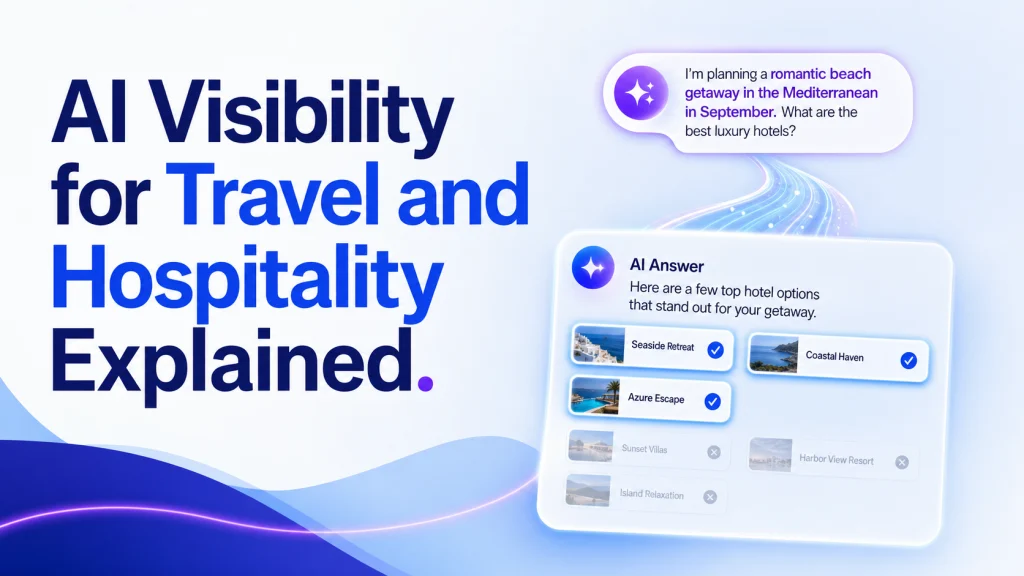

Travelers aren’t starting every trip with a search results page anymore. Many are asking AI which hotels, airlines, and destinations to consider first, and the answer they get back already names a handful of brands.
AI visibility for travel and hospitality is the likelihood that your hotel, airline, resort, OTA, or destination gets named inside an AI-generated answer, not just ranked in a list of blue links. That distinction changes the work.
A property can rank well in Google and still never appear when a traveler asks ChatGPT for the best boutique hotels in a city. This guide explains what that visibility means, how AI systems decide who to surface, and what shapes whether your brand makes the shortlist.
Key Takeaways
- AI visibility is presence, not position: whether a model names your brand at all, not where your page ranks.
- Consistency across your own site, OTA listings, and third-party coverage matters more than any single optimized page.
- Specific property descriptions beat generic positioning; a model needs something concrete to match against a traveler’s prompt.
- A strong Google ranking doesn’t guarantee an AI mention; the two systems judge brands differently.
- Independent hotels can out-compete chains in AI answers by being specific where chains stay generic.
- Fix foundations first: consistency, credibility, and clarity move the needle more than publishing new content.
What AI Visibility for Travel and Hospitality Means
AI visibility for travel and hospitality is how often, and how favorably, an AI system names your brand when a traveler asks it to plan, compare, or recommend. It covers shortlist-style answers (“the best family resorts in Orlando”), trip-planning outputs, destination suggestions, and the summaries that sit above traditional search results.
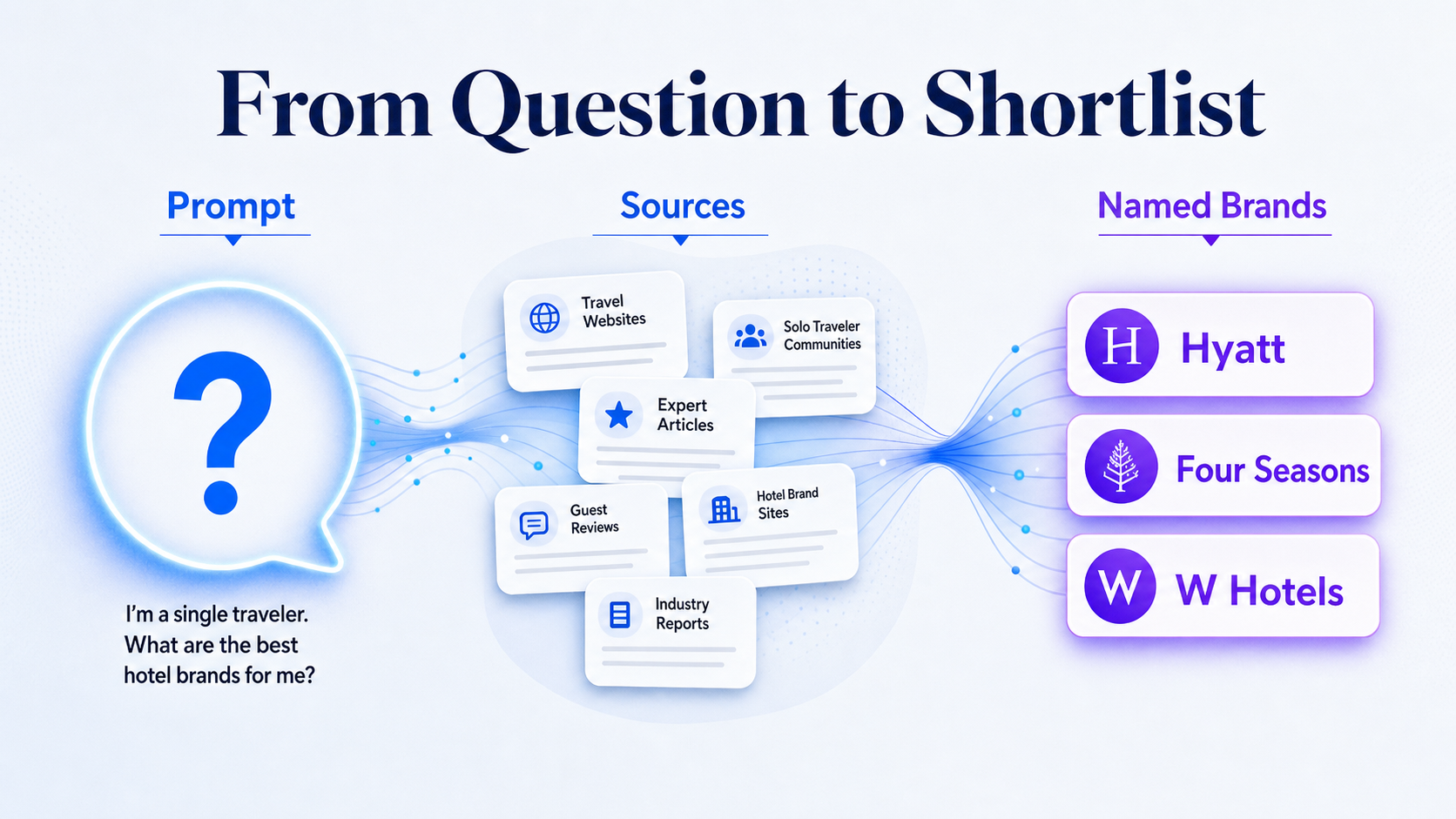
This isn’t the same thing as a search ranking. A ranking decides where your page sits on a results page that the traveler still has to read.
AI visibility decides whether your name even enters the conversation the traveler is having with the model. One is about position. The other is about presence.
It’s also not paid media. You can buy an ad slot, but you can’t buy a sentence inside an AI answer the way you buy a banner, because the model assembles its recommendation from what it already trusts across the web.
Visibility shifts with the prompt, too. Ask for “boutique hotels in Paris” and you get one set of brands.
Ask for “family-friendly resorts in Orlando” and the model leans on different signals, different reviews, and different editorial coverage. Traveler location, season, and trip intent all move the answer.
The pattern worth naming early: in travel audits, the most common surprise is a brand that assumes it is “ranking” but is simply absent from the AI answer. The page exists. The model just never reaches for it.
Why AI Visibility Matters for Travel Discovery and Bookings
AI visibility matters because it decides who enters the traveler’s shortlist before a single click happens. A broad search journey that once involved ten tabs and three review sites now collapses into one conversation, and the model hands back three or four options. If your brand isn’t in those few names, you aren’t in the consideration set.
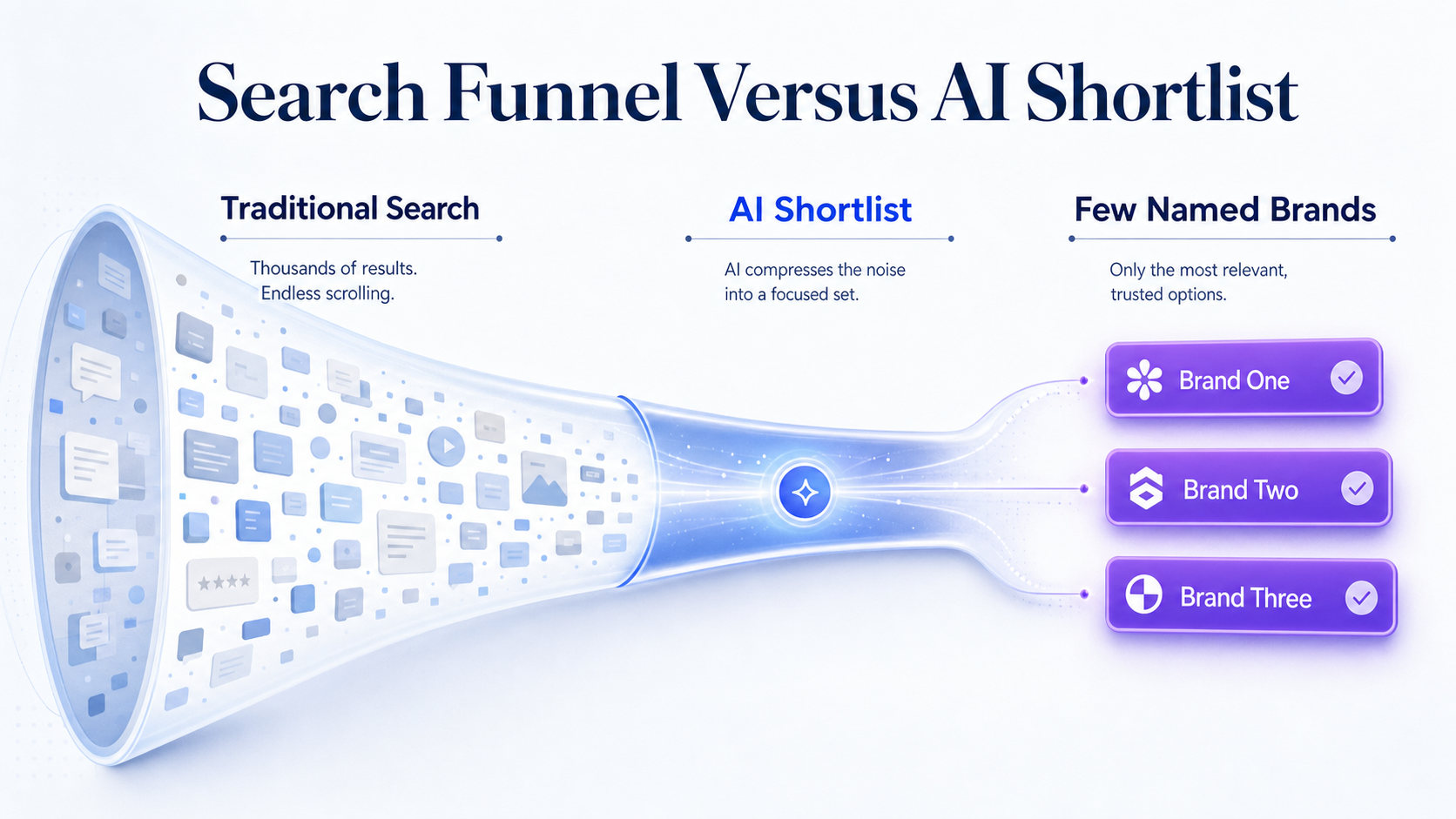
That’s the commercial weight here. Consideration moves upstream. The model shapes which hotels, flights, and destinations a traveler even weighs, and it does so before they reach your site, your booking engine, or your rate page.
The risk is quieter than a traffic crash. Demand can drift away from a brand that still performs well in classic search, because the AI answer simply names competitors instead. You keep your rankings and lose the shortlist.
There is a real tension underneath this between direct bookings, OTAs, and AI-led discovery. When a model recommends a property and points the traveler toward an OTA listing, the booking still happens, but the relationship and the margin can shift. AI visibility is partly a fight over who owns the moment of recommendation.
In hospitality teams, this problem usually shows up first as softening branded consideration, not a sudden drop in sessions. People stop arriving already knowing your name, and the cause sits in answers you never saw. If you want to understand how this differs from the metrics you already watch, our breakdown of AI visibility versus SEO metrics maps the two side by side.
How AI Systems Decide Which Travel Brands to Surface
AI systems build a travel recommendation from many source types at once, then favor the brands those sources agree on. There is no single ranking factor pulling the strings. The model reads your website content, structured property data, guest reviews, and third-party references, and it leans toward names that show up consistently and clearly across all of them.
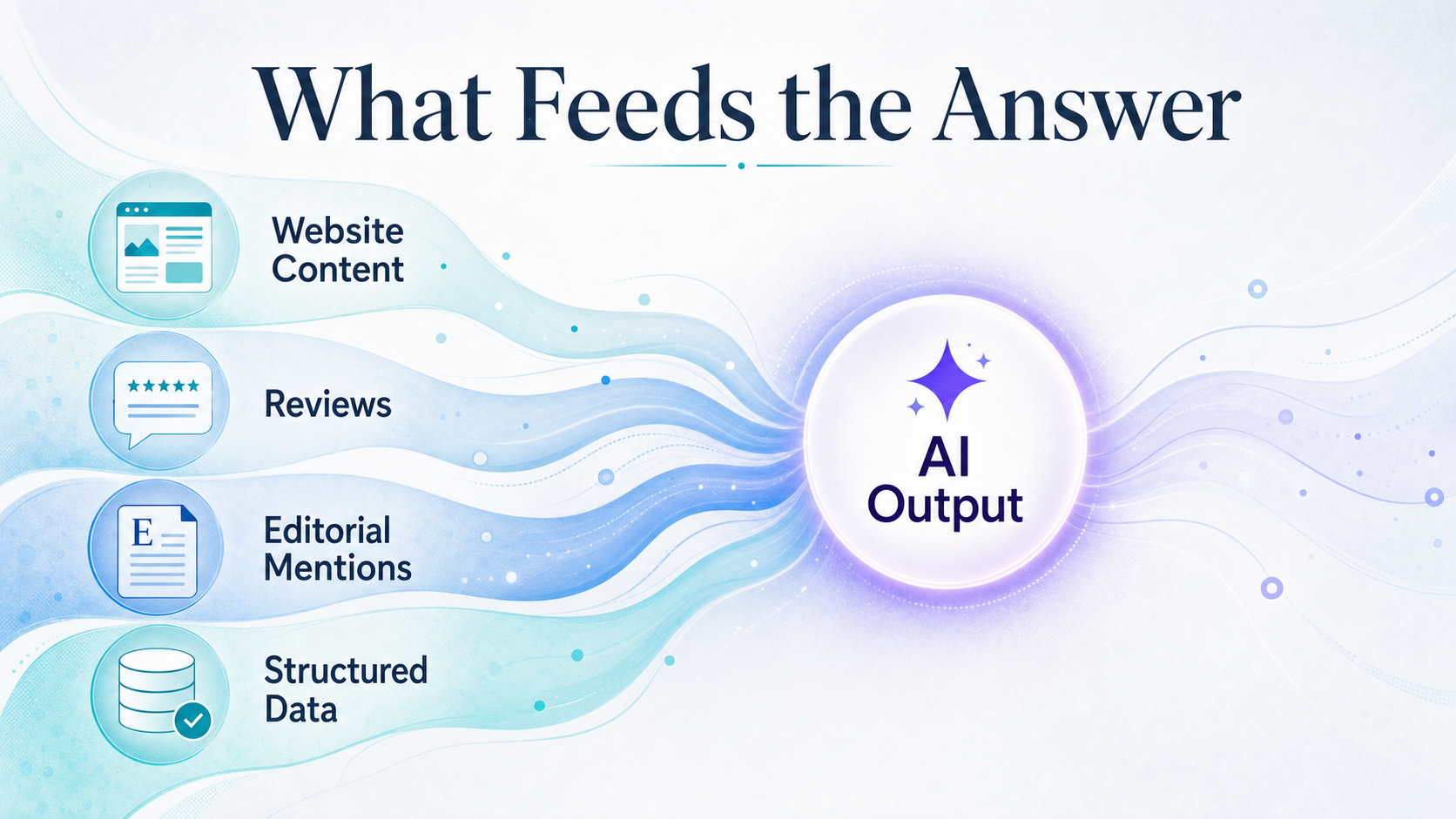
Consistency is the quiet winner. A brand whose name, location, and category match across its own site, its OTA listings, and the editorial coverage about it is easy for a model to recognize and reach for.
A brand whose signals contradict each other is easier to skip. Our explainer on how AI crawlers actually pick sources goes deeper on the selection step.
Different platforms weight those sources differently, which is why the same property can appear in one tool and vanish in another. The table below sketches the practical tendencies, kept high level because none of these systems publish their exact logic.
| Platform | Leans heavily on | Practical implication for travel brands |
|---|---|---|
| ChatGPT | Broad web content, editorial coverage, community discussion | Earned mentions and clear descriptions carry weight |
| Perplexity | Live citations and named sources | Being cited on trusted travel publications shows up fast |
| Gemini | Google’s index and structured data | Clean schema and consistent business data help recognition |
| Google AI Overviews | Top search sources and structured signals | Strong organic presence supports, but does not guarantee, inclusion |
One thing holds across all of them: models prefer content they can parse confidently and entity signals they can resolve without guessing. A property described the same way everywhere is a property the model can name with confidence.
Key Signals That Affect Travel AI Visibility
A handful of signals do most of the work in deciding whether a model names your brand. They are the things you can actually influence, and they compound when they line up.
1. Branded Entity Clarity
Your name, spelled and styled the same way across your site, your listings, and third-party profiles, so the model treats you as one recognizable brand rather than several fuzzy ones. If you have never thought about your brand as a recognizable entity, our guide to entity SEO and building authority covers the foundation.
2. Structured Property or Service Data
Location, amenities, categories, ratings, and clear descriptions in a machine-readable form, so the model can place you precisely instead of guessing.
3. Review Quality and Sentiment
Consistent guest language across reviews helps the model understand who you serve and what you are good at, which feeds directly into how it describes you.
4. Editorial Mentions and Earned Media
Coverage from credible travel publications, guides, and blogs gives the model trusted third-party confirmation that you exist and matter.
5. Destination Relevance and Content Specificity
Content tied to a real neighborhood, season, traveler type, or trip purpose beats generic positioning every time.
6. Source Credibility
The model trusts sources that already carry authority in travel, so where you are mentioned matters as much as that you are mentioned.
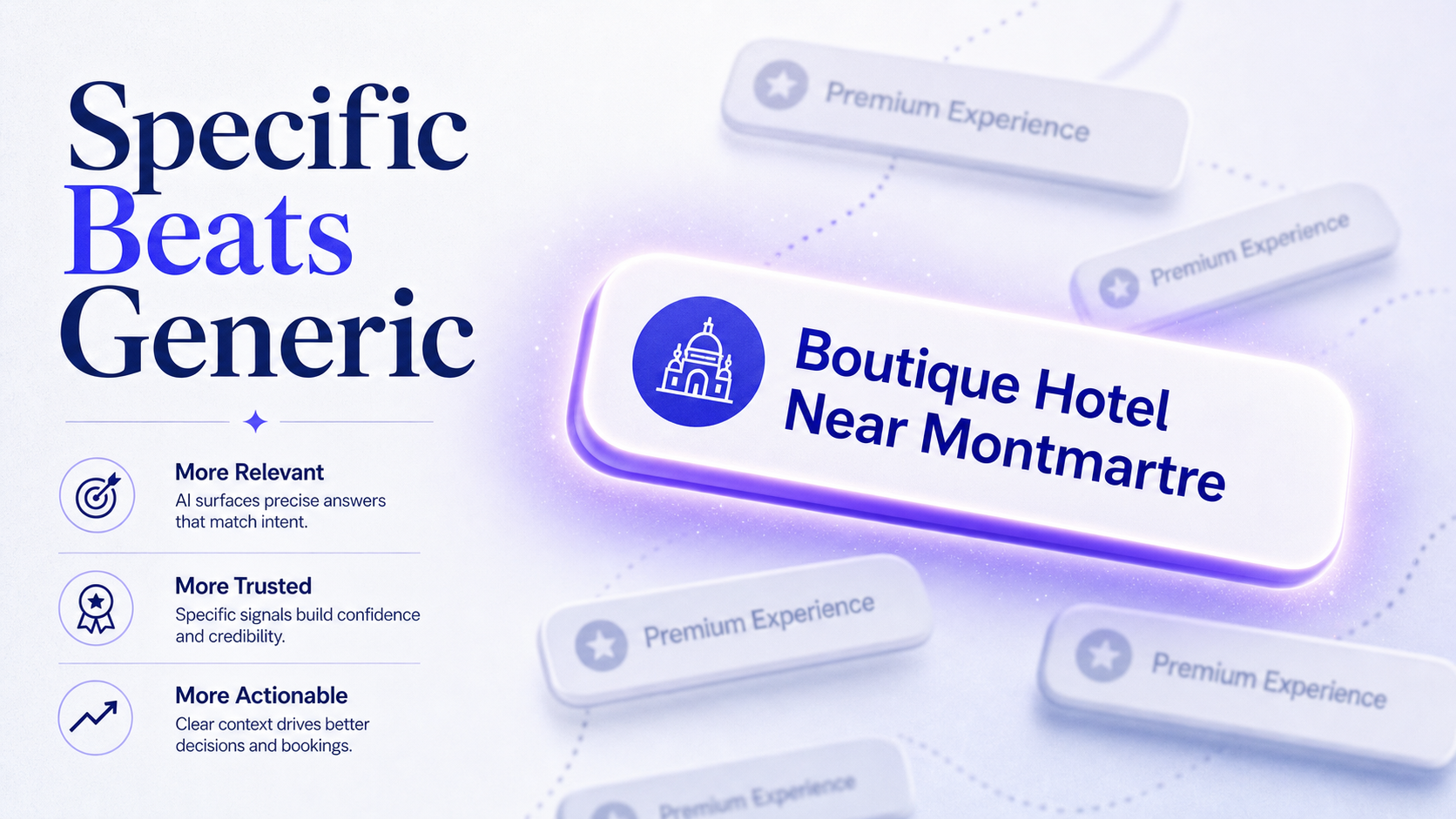
The recurring lesson from travel content: specificity wins. “Boutique hotel a short walk from Montmartre in Paris” gives a model something concrete to match against a prompt.
“Premium hospitality experience” gives it nothing. The brand that describes itself the way a traveler actually searches is the brand the model can confidently surface.
Common AI Visibility Gaps in Hotels and Travel Brands
Plenty of travel brands have decent websites and active listings and still go missing from AI answers. The reason is usually not one broken page. It’s an information ecosystem that doesn’t agree with itself.
These are the gaps that show up most often:
- Fragmented listings across OTAs, maps, review sites, and the brand’s own website, each describing the property a little differently.
- Thin or generic property descriptions that never answer the questions a real traveler asks.
- Inconsistent naming, location details, or category labels, so the model cannot confidently tell it is the same place.
- Weak third-party coverage, which hits independent hotels and smaller travel brands hardest.
- Content that looks polished to a human but is hard for an AI system to read, because the meaningful detail sits in images, scripts, or dynamic widgets.
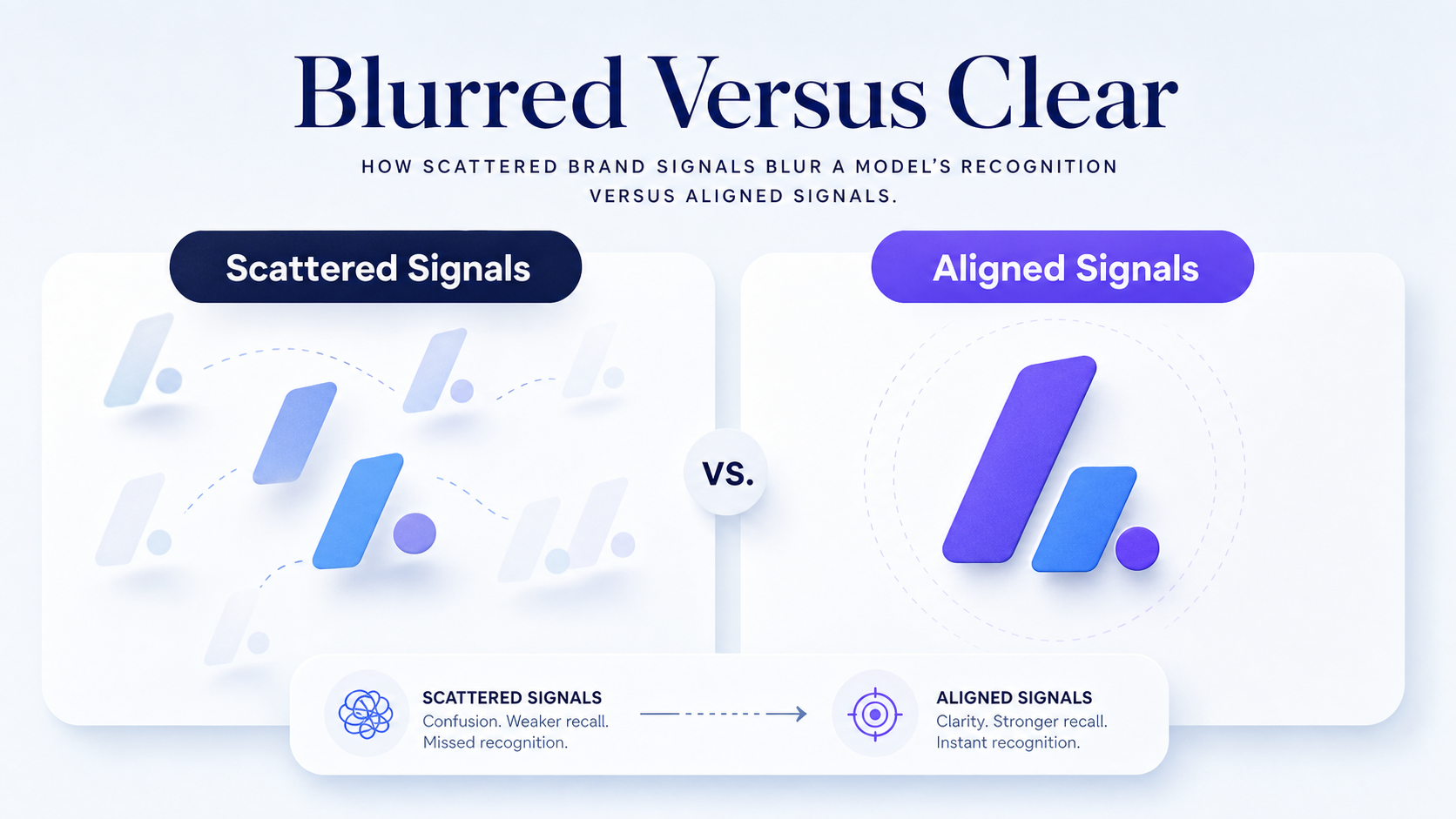
The common thread is alignment, not effort. A frequent audit finding is the same hotel appearing under slightly different names and descriptions across its own properties and its OTA pages.
To a person, those are obviously the same hotel. To a model trying to resolve an entity, the contradictions blur the picture, and a blurred brand is an easy one to leave out.
Common Mistakes and Misconceptions About AI Visibility
Several comfortable assumptions lead hospitality teams to spend in the wrong place. They feel true because they were true in classic search, and they quietly stop being true the moment a model is doing the recommending.
Myth: A Strong Ranking Guarantees an AI Mention
Reality: it doesn’t. The model assembles its answer from sources well beyond your top-ranking page, and a property can sit at the top of Google for a query while never appearing in the AI answer for the same question.
Myth: Paid Media Buys AI Visibility
Reality: it doesn’t, the way it buys ad placements. Spend can grow awareness and earn coverage that the model later reads, but you can’t purchase a slot inside the recommendation itself.
Myth: One Optimized Page Is Enough
Reality: it isn’t, if the rest of your ecosystem contradicts it. A model weighs the whole web picture, so a single clean page surrounded by inconsistent listings still reads as a fuzzy brand.
Myth: AI Visibility and SEO Are the Same Thing
Reality: they overlap but diverge. Both reward clear, trustworthy content, yet AI visibility depends on the broader information ecosystem and on entity clarity in a way classic ranking doesn’t.
More content isn’t the goal here. Clearer, more trustworthy content is.
What Travel Brands Should Prioritize First
If you’re starting from scratch, fix foundations before chasing new content ideas. The strongest early gains in travel come from making your existing signals agree with each other, not from publishing more.

- Start with consistency. Make your brand name, location data, descriptions, and core service details match across your site, your listings, and your third-party profiles.
- Strengthen clarity. State plainly who you serve, where you are, and why you fit a specific kind of traveler, so a model can place you without guessing.
- Build credibility. Grow genuine reviews, editorial mentions, and coverage on travel sources that already carry authority.
- Answer real questions. Make your destination and property content respond to what travelers actually ask, not what a brochure wants to say.
- Treat it as an information quality problem. AI visibility is a brand-wide alignment job, not a single-page SEO task.
Three priorities anchor the work: consistency, credibility, and clarity. Get those in order and the rest compounds. If you want a structured way to find where you stand before you start fixing, our visibility assessment process walks through the assessment.
Frequently Asked Questions
How do hotels get mentioned in ChatGPT or Perplexity?
Hotels get mentioned when AI systems find consistent, trustworthy signals about the property across the web. The model pulls from your website, structured data, guest reviews, and editorial coverage, then names brands those sources agree on. Perplexity in particular leans on live citations, so being referenced on a trusted travel publication tends to show up quickly, while ChatGPT draws on a broader blend of web content and discussion.
What sources do AI tools use for travel recommendations?
AI tools use a mix of your own website content, structured property data, review platforms, editorial articles, travel guides, and community discussion. No single source decides the answer. The model favors brands that appear consistently across several credible sources, which is why a property strong on its own site but thin on third-party coverage often gets left out of the recommendation.
Does SEO help with AI visibility for hotels and airlines?
SEO helps, but it does not cover the full job. Clean, crawlable content and accurate structured data support how a model reads your brand, so good SEO is a foundation. AI visibility goes further, depending on entity clarity, review sentiment, and earned mentions across the wider web. You can rank well and still be absent from AI answers, which is why the two need separate attention.
How can independent hotels compete with chains in AI search?
Independent hotels compete by being specific where chains are generic. A model can confidently name a property when it understands exactly who that property serves, where it sits, and what makes it distinct. Picture a boutique inn that publishes detailed neighborhood content, keeps its listings perfectly consistent, and earns mentions from regional travel writers. That specificity and alignment can outweigh a large chain’s scale in a niche prompt.
Why does my hotel show up in Google but not in AI answers?
Your hotel shows up in Google but not in AI answers because the two systems judge differently. A ranking rewards a single strong page. An AI answer rewards a brand whose signals agree across the entire web. If your listings, descriptions, and naming contradict each other beyond that one ranking page, the model struggles to resolve your brand and quietly leaves it out.
Being the Source AI Trusts
AI visibility in travel comes down to one thing: being the brand a model trusts enough to name, not just a page that happens to rank. The traveler asks, the model answers, and your presence in that answer is decided long before the question is typed, by how clearly and consistently the web describes you.
That’s the work worth doing now, while travel planning keeps moving toward AI. Start by asking ChatGPT or Perplexity your top booking question and seeing whether your brand is named.
Book a strategy call to see which sources the answer trusts, then fix the gaps from there.