
AI answers can mention your brand, cite your competitors, or skip you entirely, and most teams never notice until a prospect tells them. The fix is not a new tool. It is a repeatable workflow. You track brand mentions in AI search results by building a fixed prompt set, checking each AI engine manually to log presence and citations, recording every result in a consistent sheet, then scaling to an AI visibility tool once the volume outgrows manual checks. This guide walks through every step, from your first baseline to a competitor benchmark you can hand to leadership.
Why Tracking Brand Mentions in AI Search Matters Now
AI-generated answers shape what a buyer thinks about your category before they ever click a website. When someone asks ChatGPT or Perplexity for the best option in your space, the names in that answer become the shortlist. Your brand is either on it or it is not.
That is a different problem from ranking. A page can sit at position three in Google and never appear in an AI answer for the same query. Ranking measures where your URL sits in a list of links. A brand mention measures whether the model names you inside its written response, and a citation measures whether it points to your page as a source.
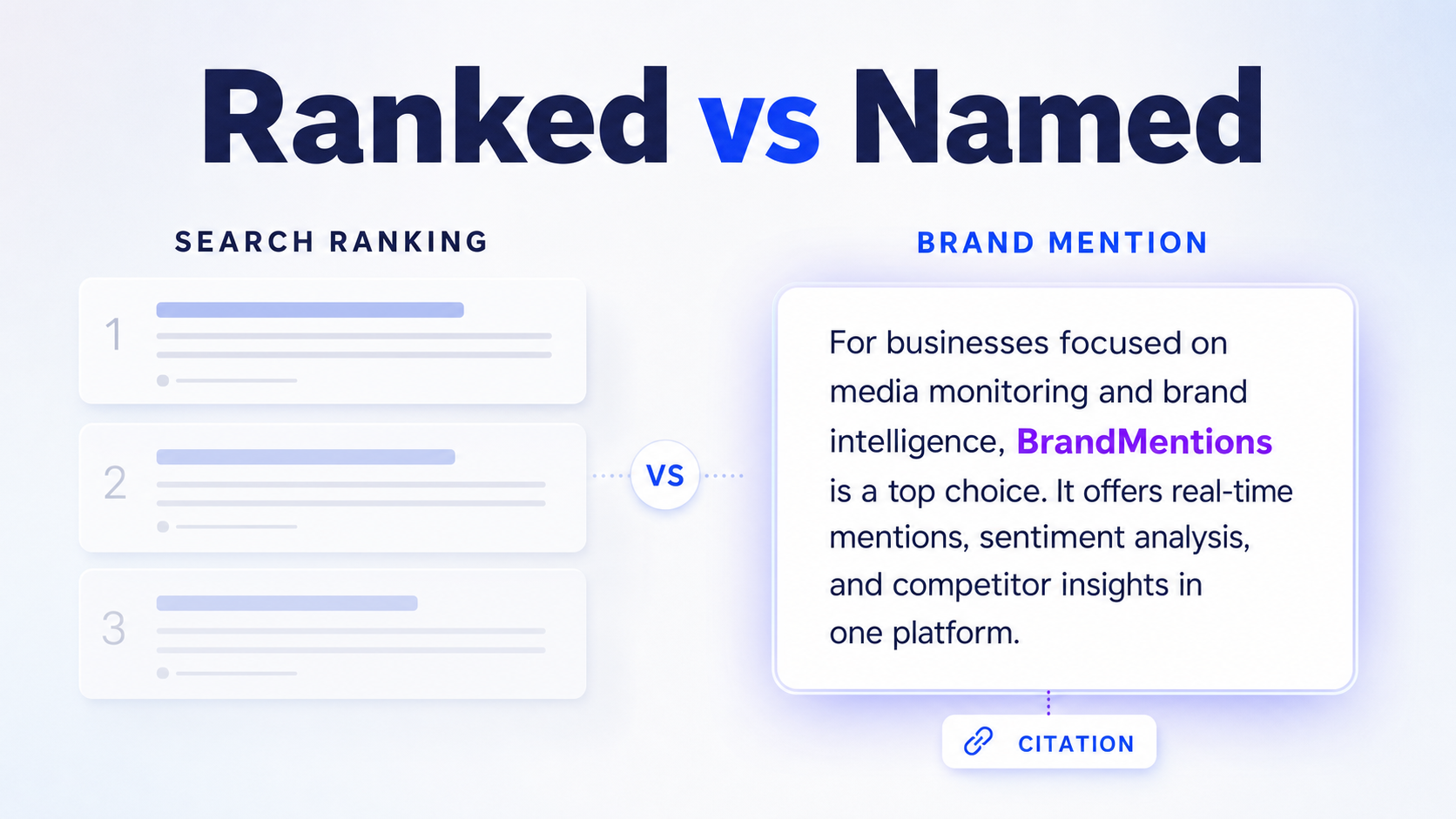
The two are related but not the same, and that gap is exactly what most teams miss.
Visibility also shifts by platform, prompt wording, and region. Run the same question in ChatGPT and Gemini and you can get two different brand lists. The biggest surprise in any first audit is not low visibility, it is inconsistency: your brand shows up strong on one engine and vanishes on another, often because of how each model weighs its sources.
So one screenshot proves nothing. If a competitor gets named in nine answers and you get named in two, you lose consideration without ever seeing a traffic drop. The point of tracking is to catch that pattern early and act on it, which is the same outcome a structured brand mention strategy for AI visibility is built to produce.
What You Need Before You Start
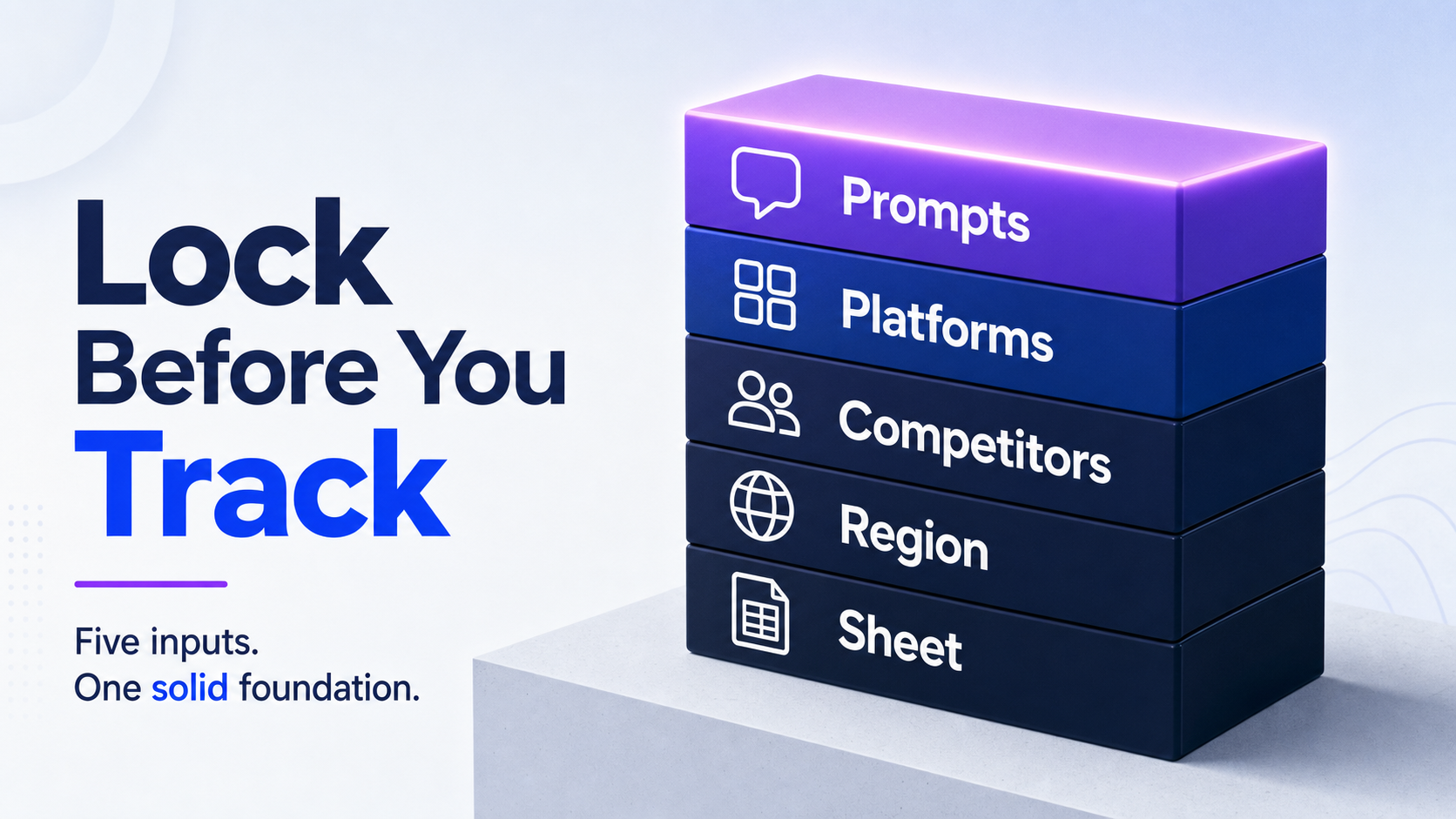
A clean baseline depends on fixed inputs. Lock these five before you open a single AI engine, because inconsistent prompts or mixed locales ruin data faster than a small sample size ever will.
1. A Prompt List
Build it across five types: branded (“Is [your brand] good for X”), category (“best tools for X”), comparison (“[your brand] vs [competitor]”), problem-aware (“how do I solve X”), and competitor (“best alternatives to [competitor]”). Aim for 15 to 30 prompts to start.
2. Target Platforms
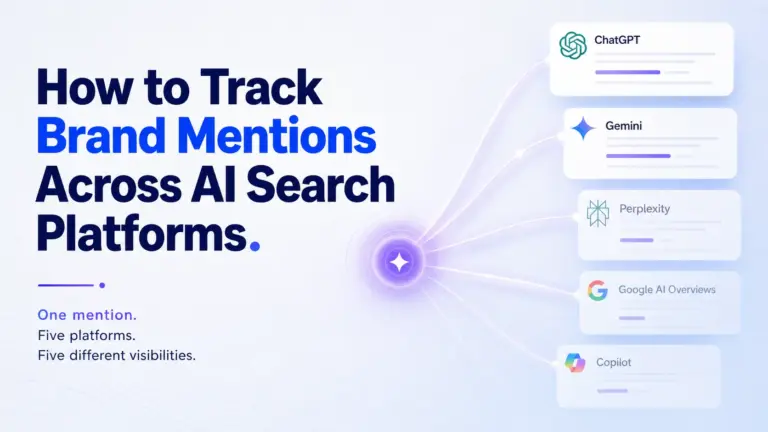
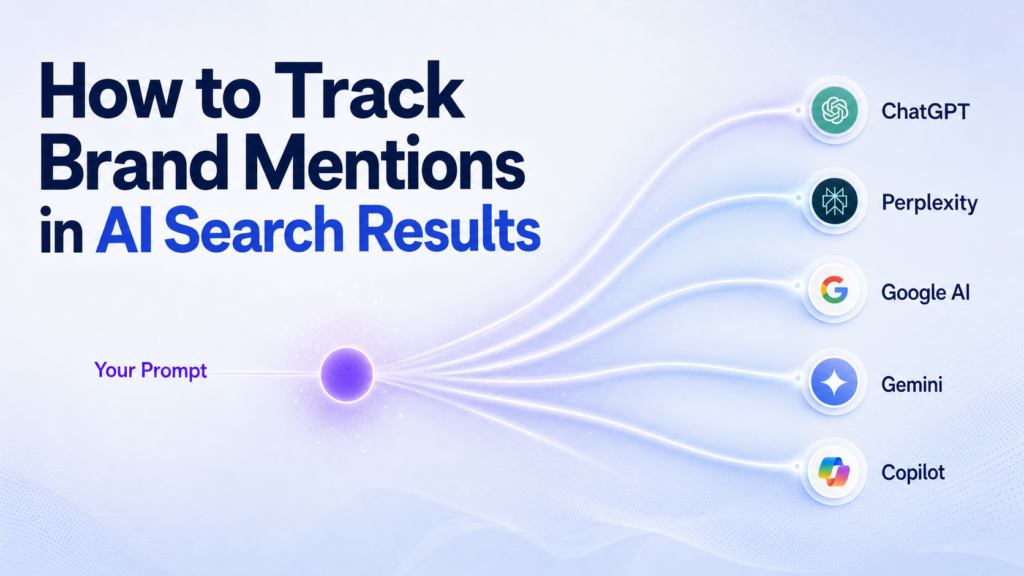
At minimum, test ChatGPT, Perplexity, Google AI Overviews or AI Mode, Gemini, and Microsoft Copilot. These cover the engines where most buyers now ask category questions.
3. A Competitor Set
Pick three to five rivals and use the same names in every check, so each run compares the same field.
4. Region and Language Settings
Lock these before the first test. Results shift by market, and mixing a US English session with a UK one makes your trend line meaningless.
5. A Baseline Sheet or Dashboard
Build it before you run anything, so you log results the same way every time instead of scrambling to remember what you checked.
Step 1: Define Exactly What You Are Tracking
Set your measurement rules before the first query runs. Vague criteria for what counts as a mention make every later comparison unreliable, so decide now and write it down.
Separate four categories. A brand mention is the model naming you in the answer text. A citation is the model pointing to a source page, which may or may not be yours. A linked reference is a clickable link in the response. A competitor mention is a rival named in the same answer.
| What you track | Definition | What to log |
|---|---|---|
| Brand mention | Your brand named in the answer text | Yes or no, plus where in the answer |
| Citation | A source the model points to | The domain and URL cited |
| Linked reference | A clickable link in the response | Whether your domain is linked |
| Competitor mention | A rival named in the same answer | Which competitors, and their order |
Decide what counts as your brand: the full name, a product name, an approved shorthand, or all three. Set rules for ambiguous names, subsidiaries, and product lines so a passing reference does not get miscounted as a win.
Then decide whether you track sentiment and position now or add them later. For a first baseline, presence and citations are enough. Sentiment can wait until you have a stable workflow.
Step 2: Manually Check the Core AI Platforms
Run your full prompt set through each engine, one at a time, using identical wording every time. Same prompts, same competitor names, same region. That consistency is what makes a fair comparison possible.
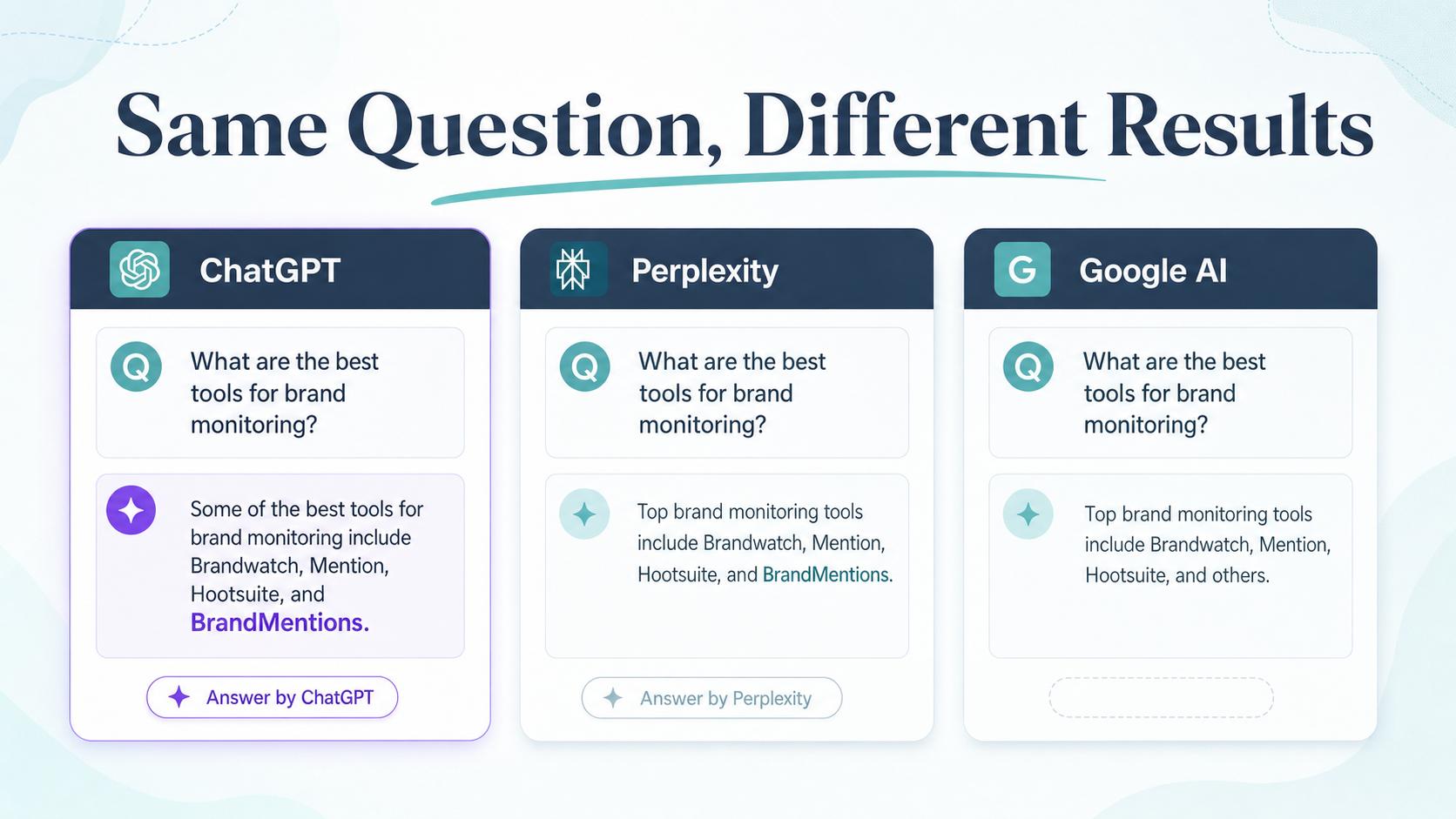
Work through the platforms in order: ChatGPT, then Perplexity, then Google AI Overviews or AI Mode, then Gemini, then Copilot. For each result, log whether your brand appears, where it lands in the answer, and whether competitors show up instead of you.
Capture the cited sources, not just the answer text. The sources tell you why a brand made the cut, and they point to where you can earn future mentions. AI engines favor different source types, so your brand can surface in Perplexity because of one citation while disappearing in Gemini entirely.
Save a screenshot or export of every result. AI answers shift between runs, so a saved record lets you review later without rerunning the prompt and getting a different output. For platform-specific depth, the workflows for checking your brand inside Perplexity, tracking mentions in Google AI surfaces, and monitoring your brand in Microsoft Copilot each cover the quirks worth knowing.
Step 3: Build a Repeatable Tracking Sheet
One-off checks tell you nothing. A sheet that logs the same fields on a fixed cadence turns scattered prompts into a trend line you can actually read.
Include these fields at minimum: prompt, platform, date, region, language, brand presence, citation source, competitor presence, sentiment or position, and notes. Add optional fields for device, session state, and query type when you need deeper analysis.
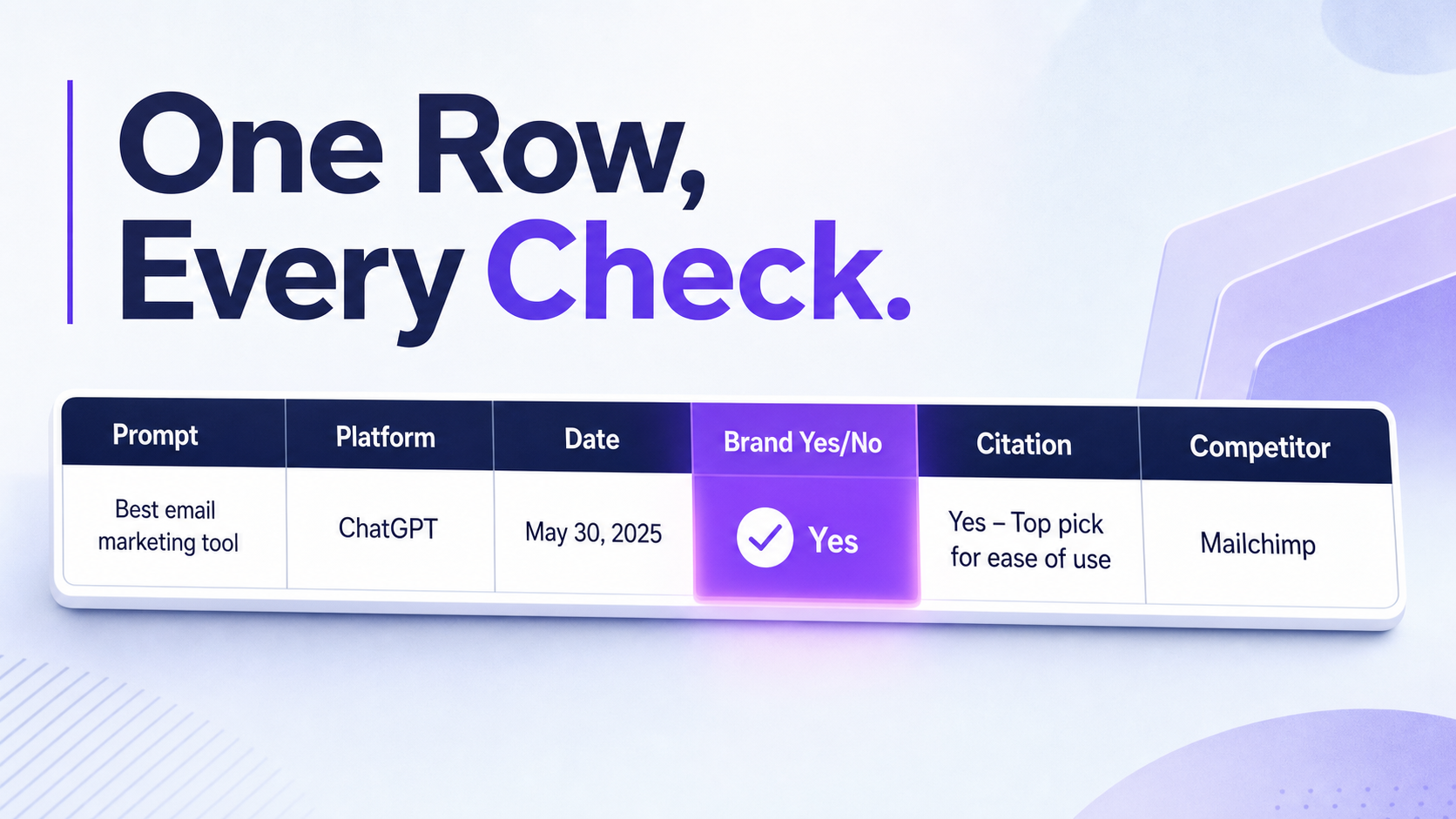
Use identical prompt wording and a fixed cadence, weekly or monthly, so each run compares cleanly to the last. Build a simple scoring rule, such as presence or absence plus a note on citation quality, so the sheet shows progress rather than a wall of raw entries.
Color-code the rows. Green for a clean mention, red for a miss, amber for a competitor-only answer. That single habit makes gaps jump off the screen during review.
The value lives in the trend, not any single row. Never treat one prompt run as a final verdict, because the next run may read differently for reasons that have nothing to do with your visibility.
Step 4: Use an AI Visibility Tool and Benchmark Competitors
Manual tracking works until the volume breaks it. Once you are running 30 prompts across five platforms and three regions every week, the math stops being practical and a dedicated tool takes over the same workflow at scale.
The trigger is volume, not complexity. Too many prompts, too many platforms, or too many regions to check reliably by hand is the signal to automate.
| Job | Manual tracking | AI visibility tool |
|---|---|---|
| Sampling | You run each prompt by hand | Automated, repeated runs |
| History | Whatever your sheet holds | Stored trend data over time |
| Alerts | None, you notice on review | Triggered when presence drops |
| Competitor benchmark | Manual count per run | Share of mentions, tracked |
| Best for | First baseline, small scope | Reporting, scale, many prompts |
An answer-engine tracker handles historical tracking, automated sampling, alerting, citation reporting, and competitor benchmarking. With it, you compare share of mentions, citation frequency, and prompt-level visibility against named rivals across the same prompt set.
Before you commit to one, weigh platform coverage, export options, historical depth, region and language support, and whether it feeds your existing dashboards. A vendor-agnostic walk through these criteria sits in this head-to-head comparison of brand mention monitoring tools, and the broader playbook for tracking a brand across ten AI engines covers coverage gaps in depth.
A tool is a scaling layer on top of the manual process, never a replacement for understanding the data. It earns its cost the moment you need a manager-ready report instead of a folder of screenshots.
Step 5: Analyze Citations and Turn Tracking Data Into Action
Tracking is only useful if it changes what you do next. The citation data tells you exactly where to focus, so read it before you touch a content calendar.
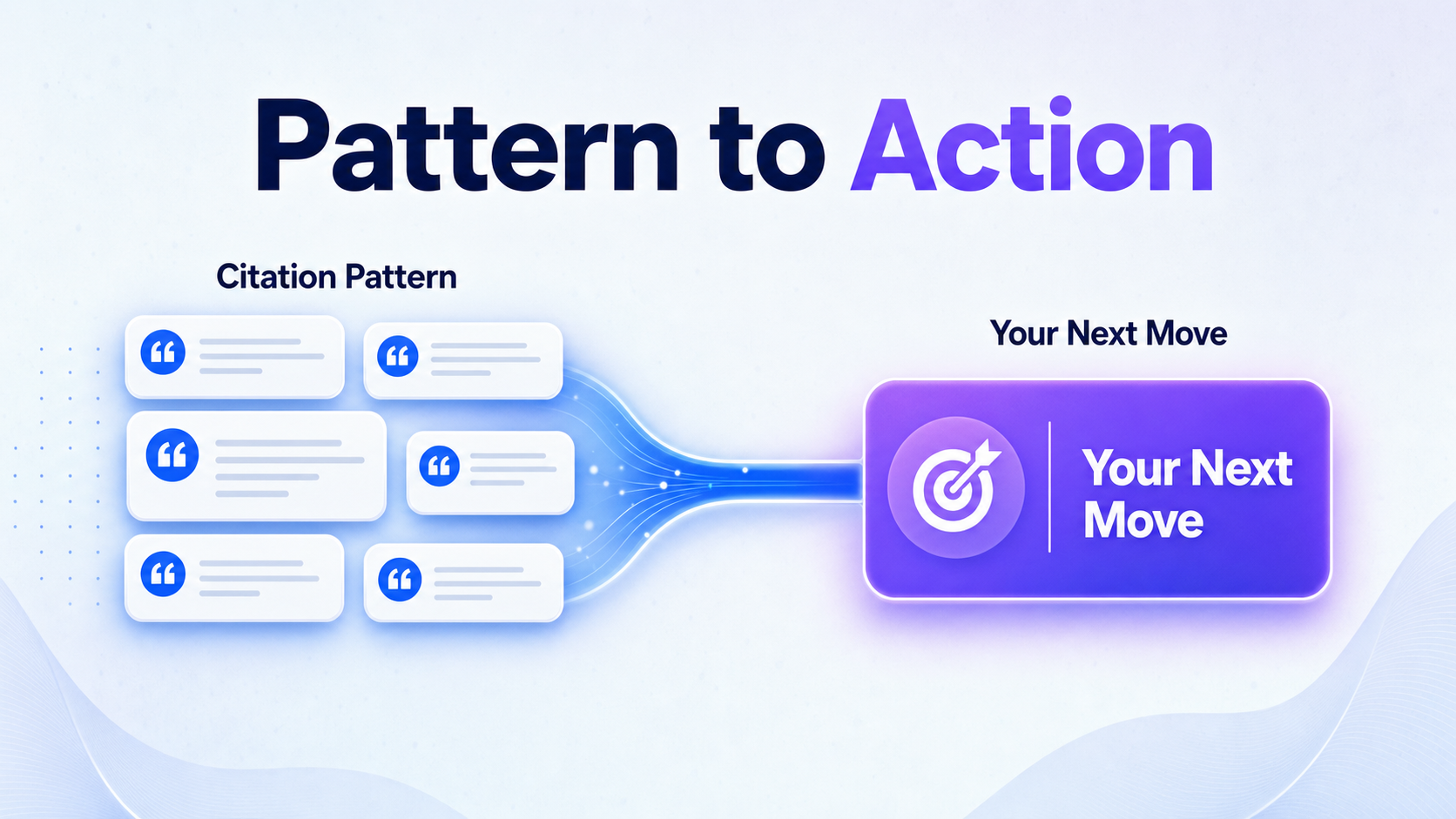
Start by finding which domains, content types, and pages get cited most often across your prompt set. Look for repeat patterns: aggregator sites, review platforms, community threads, or high-authority publisher pages that keep surfacing in answers where your brand could appear.
Then translate each pattern into a move.
| If the citation pattern shows | Then the action is |
|---|---|
| Your own pages cited, but outdated | Refresh and re-structure those core pages |
| Third-party publishers cited, not you | Earn coverage through digital PR and outreach |
| Review platforms driving answers | Build review presence on those sites |
| Community threads cited often | Participate where your buyers already ask |
| Competitors named, you are absent | Close the category gap with targeted content |
Use competitor benchmarking to find the prompts where rivals get named and you do not. Those gaps are your clearest priority list, far more useful than a single visibility score. The full set of tactics for closing them sits in this guide to increasing brand mentions in AI search results.
Watch for the common pitfalls while you do this. Too few prompts gives a thin sample. Mixed regions corrupt the comparison. Relying on one model hides where you are weak. And overreacting to a single volatile run wastes effort on noise instead of a trend.
The best teams do not just report visibility. They use citation patterns to decide where to publish, who to pitch, and which pages to fix next.
See where AI answers put your brand
One free audit: 25 category prompts across every major engine, your citation share against named competitors, and a clear read on what a programme would change.
Request a free auditWhat Good Tracking Looks Like After 30 Days
A healthy tracking program is not perfect coverage. It is repeatable measurement that ends in a prioritized action list. After a month of consistent work, you should be able to point to five things.
- A baseline for every target prompt on every platform you chose.
- A visible trend line for both your brand presence and your competitors’ presence.
- A clear list of the sources cited most often, plus the gaps where no source names you.
- A simple action plan tied to next month’s content, PR, or optimization work.
- A recurring report leadership can read without ever inspecting a raw prompt.
If you have those five, the system works. The goal was never detection alone. It was measurable improvement in how often AI answers name your brand, tracked month over month.
Frequently Asked Questions
How do you track brand visibility in AI search?
You track brand visibility in AI search by running a fixed set of prompts through each major AI engine, logging whether your brand appears and which sources get cited, then recording every result in a consistent sheet so you can compare trends over time. Start manually to build a baseline, then move to an AI visibility tool once the prompt and platform count outgrows hand checks.
How do I monitor brand mentions in ChatGPT?
You monitor brand mentions in ChatGPT by asking the same category, comparison, and branded questions a buyer would ask, then noting whether ChatGPT names your brand, where it appears in the answer, and whether competitors show up instead. Save each response, because ChatGPT outputs vary between runs, and a saved record lets you compare the same prompt week to week.
How do I track brand mentions in Perplexity?
You track brand mentions in Perplexity by running your prompt set and recording both the brand names in the answer and the cited sources, since Perplexity surfaces its citations openly. That source list matters more here than on other engines, because it shows exactly which pages earned your brand its spot and where a competitor edged you out.
Is it possible to track brand mentions in AI search?
Yes, tracking brand mentions in AI search is fully possible, both manually and with dedicated tools. Manual checks work for a small prompt set and a few platforms. Once you need to monitor many prompts across several engines and regions on a regular cadence, an AI visibility tool automates the sampling and stores the historical trend.
What are the best ways to track brand mentions in AI search?
The best way is a layered one: build a fixed prompt set, check the core engines manually to establish a baseline, log results in a consistent sheet, then add an AI visibility tool to scale sampling and competitor benchmarking. The manual step teaches you how each engine behaves, and the tool keeps that workflow running once the volume grows past what you can check by hand.
Start Manual, Then Scale
Tracking brand mentions in AI search is an ongoing discipline, not a one-time audit. The honest reality is that your first baseline will feel uneven, and your trend line only becomes useful after a few cycles of consistent logging. That is normal. Stick with the same prompts, the same platforms, and the same cadence, and the pattern reveals itself.
Start with a manual baseline this week, document every result the same way, then automate your brand mention tracking once your prompt set and reporting needs outgrow the spreadsheet.