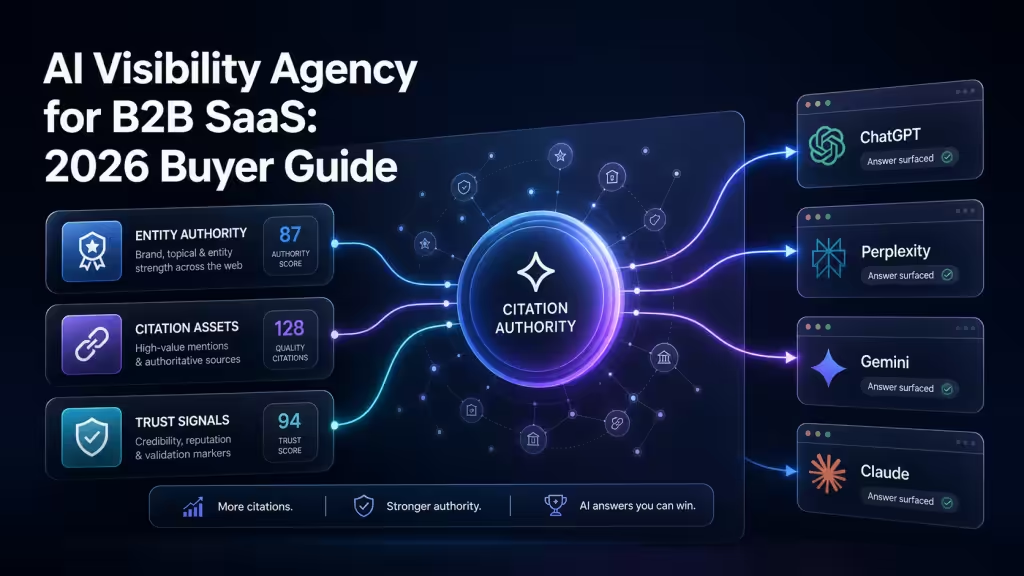

An AI visibility agency for B2B SaaS engineers your brand into the answers ChatGPT, Perplexity, Gemini, and Claude give buyers researching your category. The work sits next to SEO, but the deliverable is different.
You’re earning citations inside generative answers, not blue links on page one. This guide breaks down what these agencies do, how to vet one, what to pay, and the metrics that prove pipeline impact in 2026.
Key Takeaways
- AI visibility agencies build entity authority, citation assets, and trust signals in parallel, not just content volume.
- A real agency can explain its measurement methodology in detail; vague answers mean a vague program.
- Pricing for B2B SaaS engagements runs roughly $8K to $60K+ monthly depending on stage and category competitiveness.
- Track citation share of voice, citation quality, AI-referred conversions, and self-reported attribution, not traffic graphs.
- Guaranteed citation positions and unnamed placements are the two clearest red flags in an agency pitch.
- Most $5M to $50M ARR companies do best with a hybrid model: agency-led for the first year, then in-house with a smaller retainer.
What an AI Visibility Agency for B2B SaaS Actually Does
An AI visibility agency builds the conditions that make large language models cite your product when a buyer asks a category question. That work has three layers: entity authority, citation assets, and trust signals.
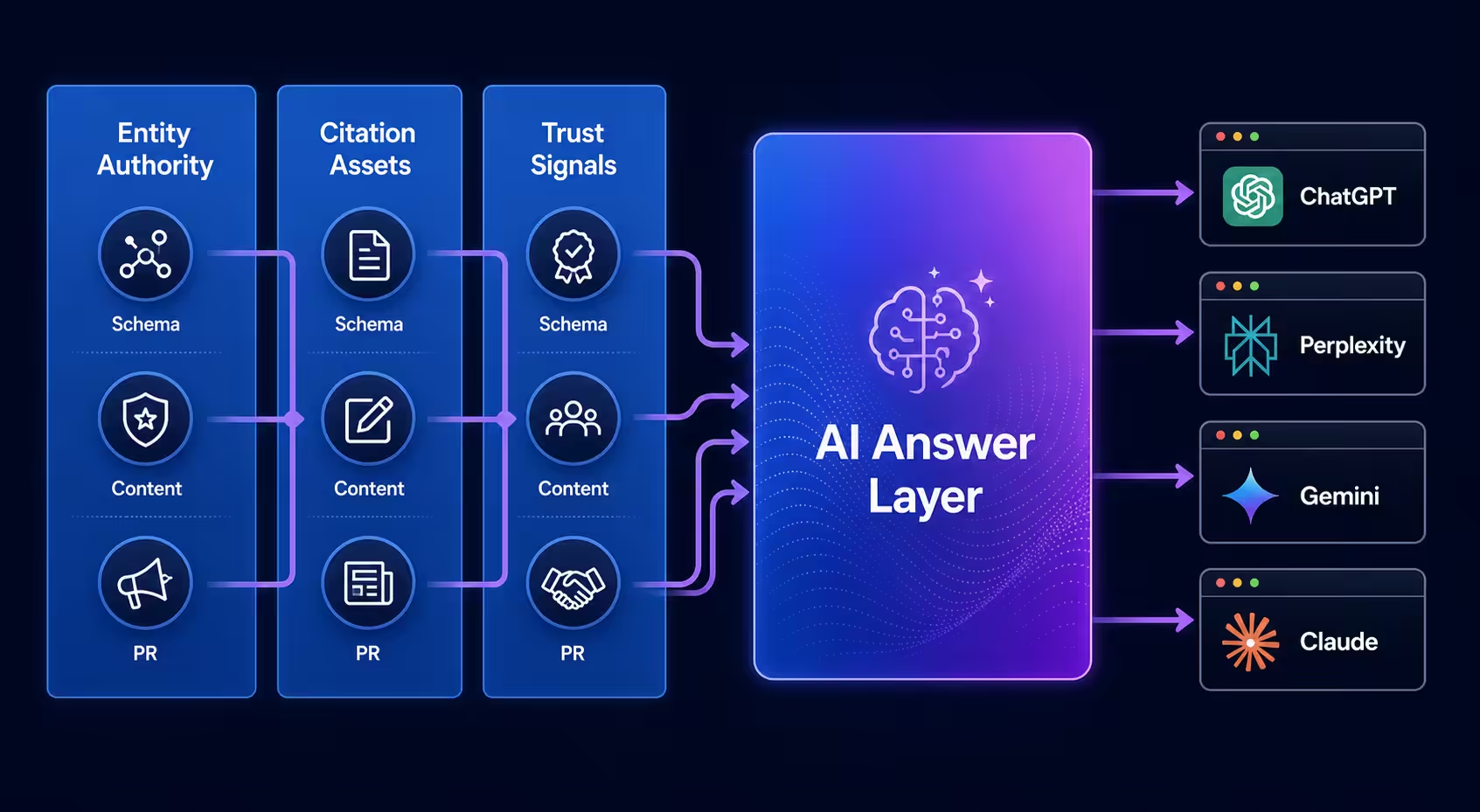
Entity authority is how clearly an LLM understands what your product is, who it serves, and how it differs from alternatives. Citation assets are the pages, comparisons, integrations, and data resources that AI systems pull from. Trust signals are the third-party mentions, reviews, and editorial coverage that confirm you exist as a legitimate option in the category.
The agency runs all three in parallel. A specialist firm will audit your current citation share across the major models, map the prompts your buyers actually use, find where competitors are getting cited and you are not, then build content and earn placements to close those gaps.
How This Differs From a Traditional SEO Agency
SEO agencies optimize for rankings against a search index. AI visibility agencies optimize for retrieval and synthesis inside language models. The mechanics overlap, but the deliverables don’t.
A traditional SEO program might celebrate a top-three ranking for “best CRM for startups.” An AI visibility program asks a different question: when a founder types that prompt into ChatGPT, does your name appear in the response, and is the description accurate? For a deeper breakdown of the metric differences, see our work on AI visibility vs SEO metrics.
The Core Deliverables You Should Expect
A real engagement produces six things, every month:
- Citation share baseline and trend across ChatGPT, Perplexity, Gemini, and Claude
- Prompt set tied to your category, competitors, and buying stages
- Content built or refactored for citation, not just ranking
- Third-party placements on publications that LLMs index heavily
- Schema, entity, and llms.txt work on your domain
- A monthly readout connecting citation movement to pipeline signals
If a pitch deck mentions “AI-powered SEO” but cannot define citation share, you’re looking at an SEO agency with a new homepage, not an AI visibility specialist.
Why B2B SaaS Needs This Now
B2B software buyers research differently than they did two years ago. A serious portion of the shortlist forms before a prospect ever lands on your homepage. That shortlist gets built inside an AI assistant.
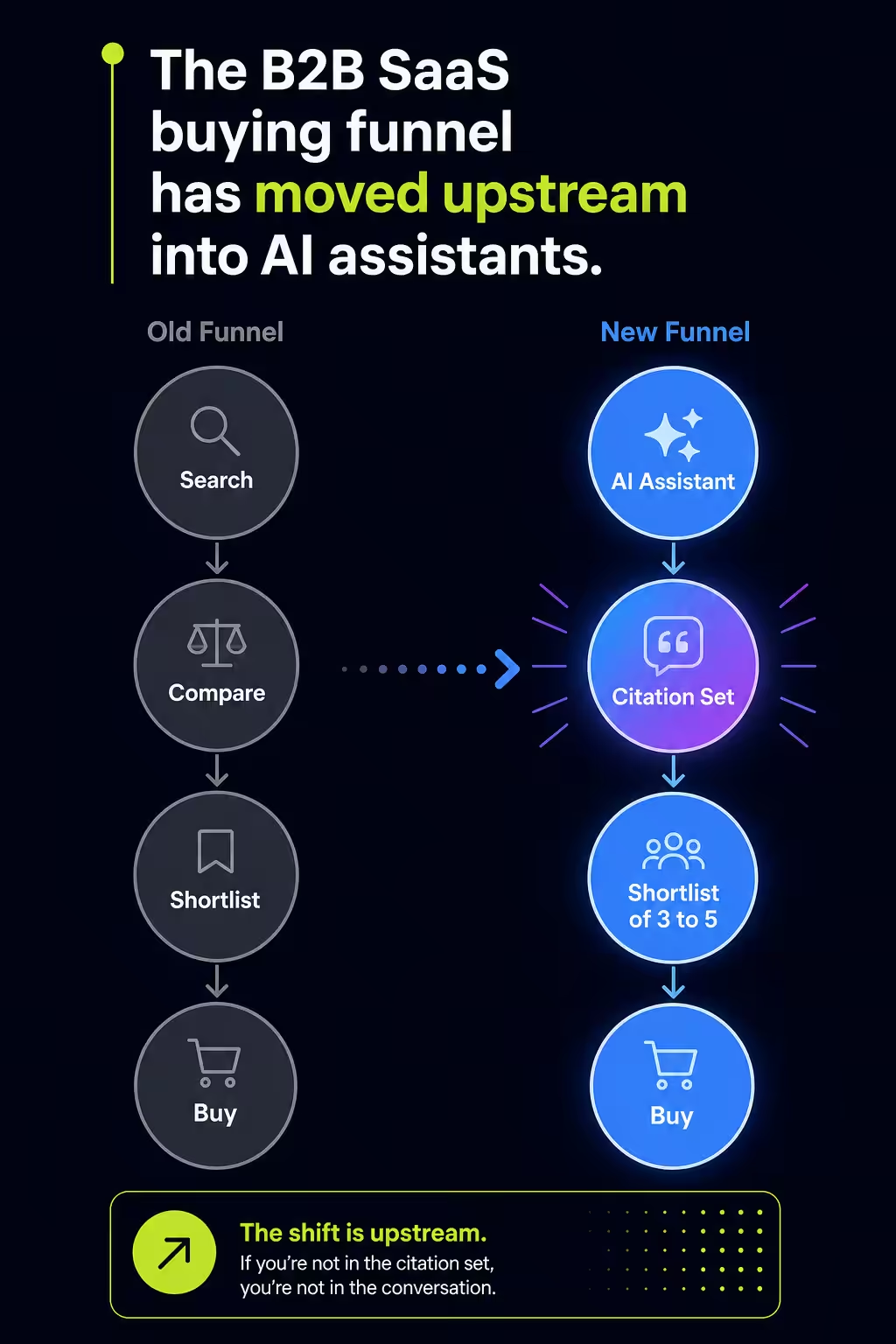
The competitive dynamic matters more than the channel. AI answers typically surface three to five vendors.
If you’re not in that set, you don’t get evaluated. You don’t even get the chance to lose the deal, because the deal never enters your pipeline.
This is where the early-mover dynamic gets real. Models build associations over time. The brands that earn citation density in 2026 are the ones LLMs default to in 2027, the same way early SEO winners compounded authority for a decade.
The Citation Density Compound Effect
Citation density behaves like backlink equity used to behave, but faster. Once a model associates your brand with a category, that association reinforces every time you appear in new training data and every time the model retrieves you in a live answer.
The compounding goes the other way too. Competitors who invest first widen the gap on every refresh cycle. You can read more on this pattern in our B2B SaaS AI visibility playbook.
How to Vet an AI Visibility Agency
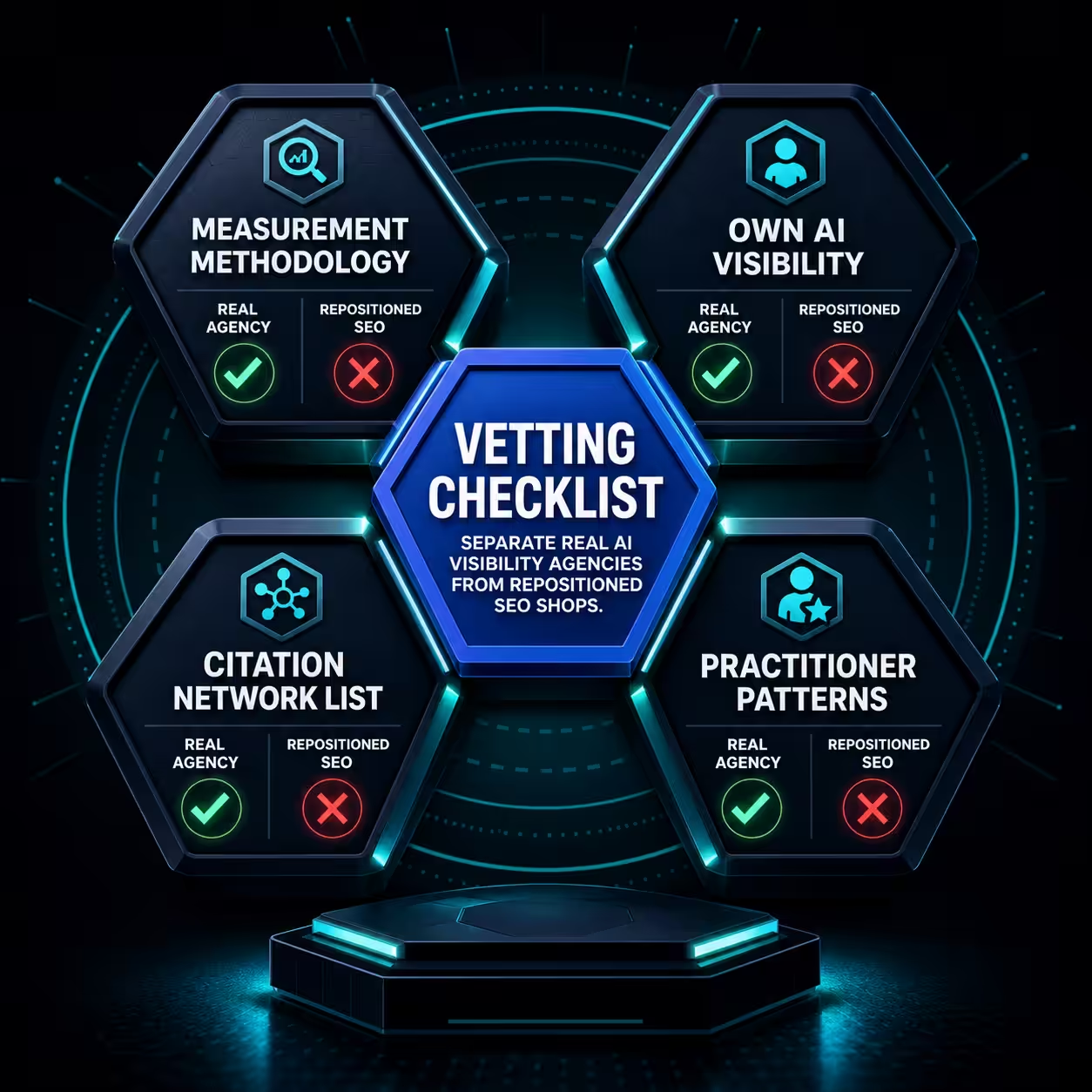
Use these filters to separate signal from positioning. The category is full of repositioned SEO shops.
Ask for Their Measurement Methodology
A real agency can walk you through exactly how they track citations across models, how often they sample, how they handle prompt variability, and how they normalize results. If the answer is vague, the program will be vague.
Specific questions to ask:
- What prompt set do you run, and how do you build it for my category?
- How often do you sample each model, and how do you handle model updates?
- How do you separate brand mentions from competitor mentions in long responses?
- How do you tie citation movement to pipeline signals?
Look at Their Own AI Visibility
An agency selling AI visibility should be cited when you ask AI assistants about AI visibility agencies. Run the test before the first call. If they cannot get themselves cited in their own category, they cannot do it for you.
Check Their Citation Network
The publications a firm can place you on determine the ceiling of your citation share. Ask for the named list of outlets they’ve earned placements on in the last six months, not a logo wall. A useful benchmark is our framework for the way we tier outlets.
Demand Practitioner Patterns, Not Frameworks
Frameworks are easy to draw. Patterns are earned.
A strong agency will tell you what they’ve seen go wrong: which content formats underperform in Perplexity, which schema changes moved the needle for a client, where Claude diverges from ChatGPT on the same prompt. If the team can only speak in frameworks, they haven’t done the reps.
Pricing Benchmarks for 2026
Pricing in this category ranges wide because the work ranges wide. Here’s what the market looks like for B2B SaaS engagements.
| Engagement Type | Monthly Range | Best Fit |
|---|---|---|
| Audit and strategy only | $8K to $20K one-time | Seed to Series A testing the channel |
| Managed program, mid-market | $10K to $25K | $2M to $20M ARR SaaS |
| Managed program, growth stage | $25K to $60K | $20M to $100M ARR, competitive category |
| Enterprise program | $60K+ | Public companies or category leaders |
If you’re paying under $8K monthly for a managed program, you’re getting either a productized SEO retainer or a citation monitoring tool with a slide deck. Real campaigns require content production, outreach, technical work, and ongoing measurement.
What Skews the Number
Three variables move pricing more than anything else: category competitiveness, content velocity, and citation network access. A founder in a low-competition vertical with strong existing content can run a smaller program. A challenger brand fighting category leaders needs more aggressive volume.
The Metrics That Prove Pipeline Impact
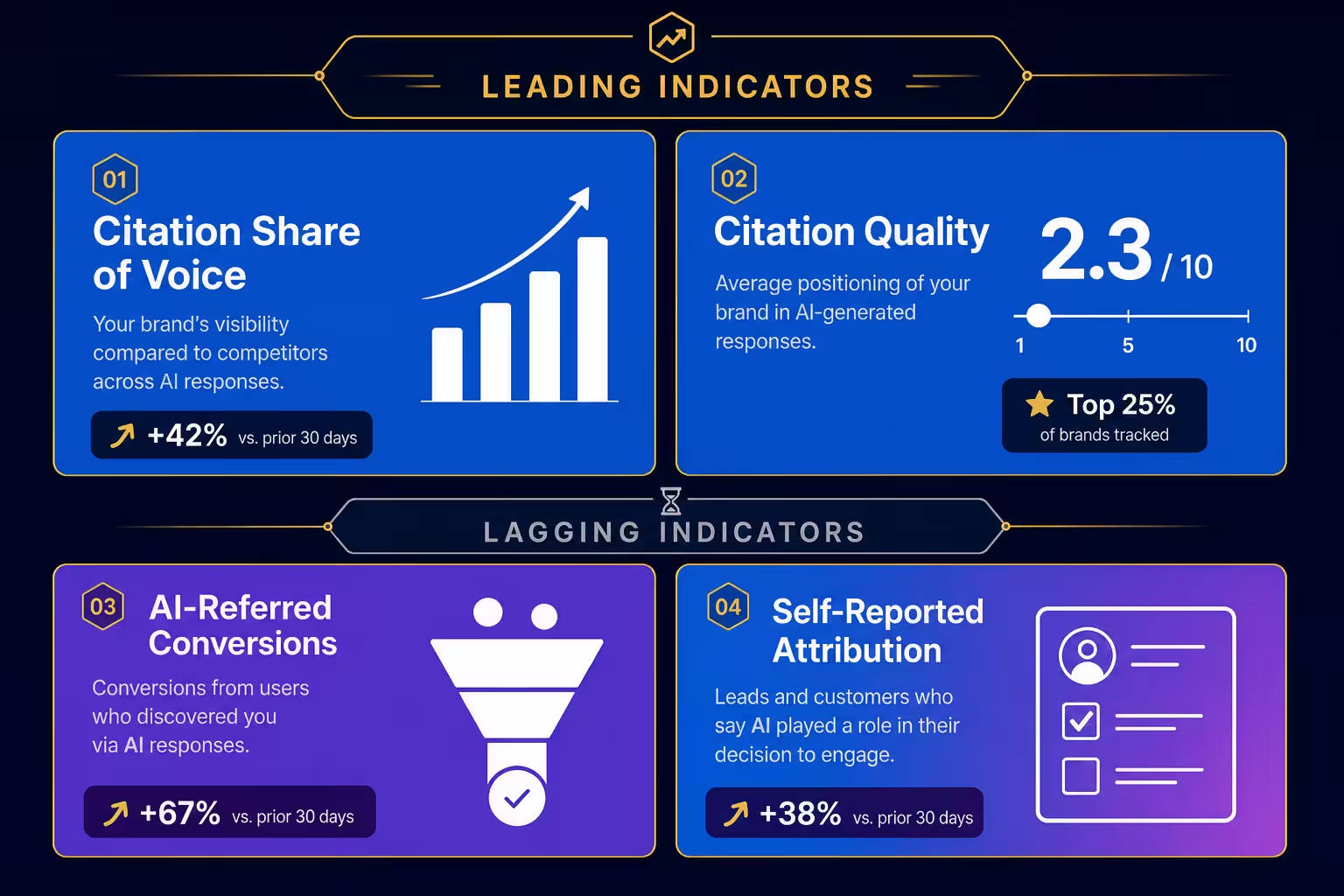
Stop asking for traffic reports. Citation work doesn’t always produce traffic graphs that look like SEO graphs. The right scorecard tracks four metrics.
Citation Share of Voice
How often your brand appears versus the named competitor set across a defined prompt library. This is the leading indicator. Track it weekly across at least three models.
Citation Quality
Not all citations are equal. A citation that positions you as a category leader differs from one that lists you as an “also consider.” Quality scoring assesses position, sentiment, and accuracy of the description.
AI-Referred Traffic and Conversions
Track the sessions arriving from AI assistant referrers and the conversion behavior of that segment. AI-referred users typically convert at higher rates than organic search, because they’ve already pre-qualified through the assistant.
Self-Reported Attribution
Add “How did you hear about us?” to your demo form with an AI assistant option. Self-reported attribution is the cleanest signal you’ll get for AI-influenced pipeline, and it gets reported far more often than most teams expect.
When to Hire and When to Build In-House
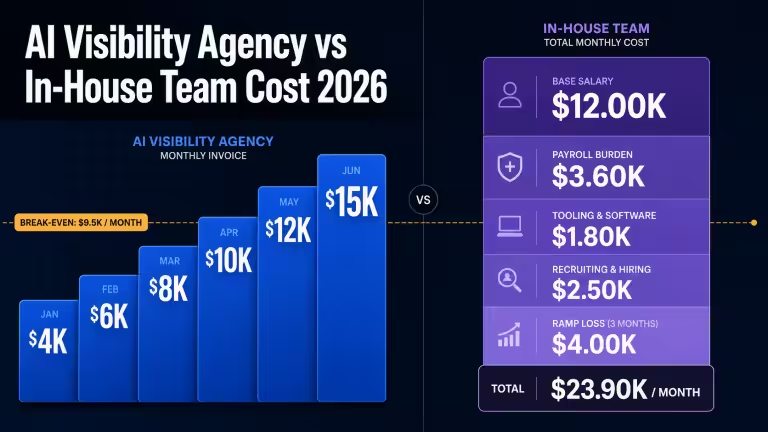
Hire an agency when you need speed, citation network access, or specialized measurement infrastructure you don’t have. Build in-house when AI visibility is a permanent strategic function and you have the budget for a senior hire plus a content engine.
Most B2B SaaS companies in the $5M to $50M ARR band benefit from a hybrid model. The agency runs the program for the first nine to twelve months while an internal content lead absorbs the methodology. After that, you can move execution in-house and keep the agency on a smaller retainer for measurement and network access.
Red Flags in Agency Pitches
Walk away when you hear any of these:
- Guaranteed citation positions in any model
- “AI-powered” content production with no human strategist
- Refusal to name the publications they place clients on
- One single proprietary score with no underlying methodology
- Pricing that depends on locking in a 12-month minimum
The best agencies will tell you what they cannot do. The worst will promise things no one can deliver.
Frequently Asked Questions
How long until an AI visibility agency moves the needle?
Most B2B SaaS programs see early citation lift in 8 to 12 weeks and meaningful share-of-voice movement by month four. Pipeline signal usually follows by month six. Faster results come when the brand already has strong existing content; slower when the citation foundation has to be built from scratch.
Can we just use AI tools instead of hiring an agency?
Tools tell you where you stand. Agencies move the number. If you have a strong content team and a clear strategy, a monitoring tool plus internal execution can work. Most growth-stage SaaS teams find that the citation network access and production capacity an agency provides moves faster than tool-plus-internal.
Does AI visibility work cannibalize SEO traffic?
No. The two compound. Most of the technical foundation that makes content citation-ready also strengthens traditional rankings. The work creates downside risk only if you let it crowd out demand-gen content that still drives bottom-of-funnel conversions.
What size SaaS company is this worth for?
The math gets attractive around $2M to $3M ARR for most B2B categories, earlier in highly competitive verticals where shortlisting decisions are already happening in AI assistants. Below that, founders can often do meaningful work themselves with a tight prompt set and a focused content sprint.
Pick a Partner Who Can Prove the Work
AI visibility is not a separate channel anymore. It’s the new first impression for B2B software. The agencies worth hiring treat it that way: as the front edge of your demand engine, measured against pipeline, not against vanity metrics.
The brands that build citation density in 2026 will compound that advantage for years. The ones that wait will spend the next budget cycle paying more to catch up. Pick a partner that can prove the work, not one that can sell the deck. Our ranking of SaaS GEO agencies names ten to start with, and our own SaaS programme is one of them.
See where your brand stands in AI search. Book a strategy call and find out exactly which competitors AI assistants are recommending in your category.