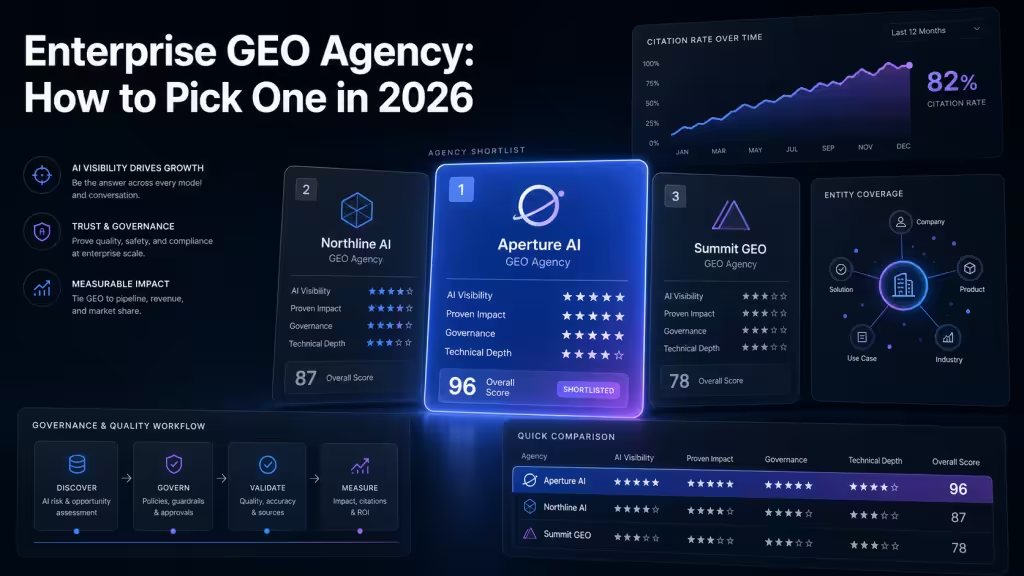

An enterprise GEO agency is a specialized partner that earns your brand citations inside ChatGPT, Perplexity, Claude, and Google AI Overviews at the scale Fortune 1000 marketing demands. The work is not SEO with a new label. It blends entity authority engineering, citation tracking infrastructure, and content operations across hundreds of product pages and regions. If you are weighing a six-figure retainer, the wrong choice costs you two quarters of pipeline. This guide shows you how to separate true GEO operators from rebranded SEO shops, what to demand in a pitch, and where the category is still bluffing.
What an Enterprise GEO Agency Actually Does
An enterprise GEO agency builds the systems that get your brand cited by generative engines when buyers ask category-defining questions. That includes prompt-level visibility audits, entity authority work across Wikidata and knowledge graphs, structured content engineering, and weekly citation tracking against a fixed query corpus. The output is not a ranking report. It is a measurable share of voice inside AI answers, mapped to your ICP’s research path.
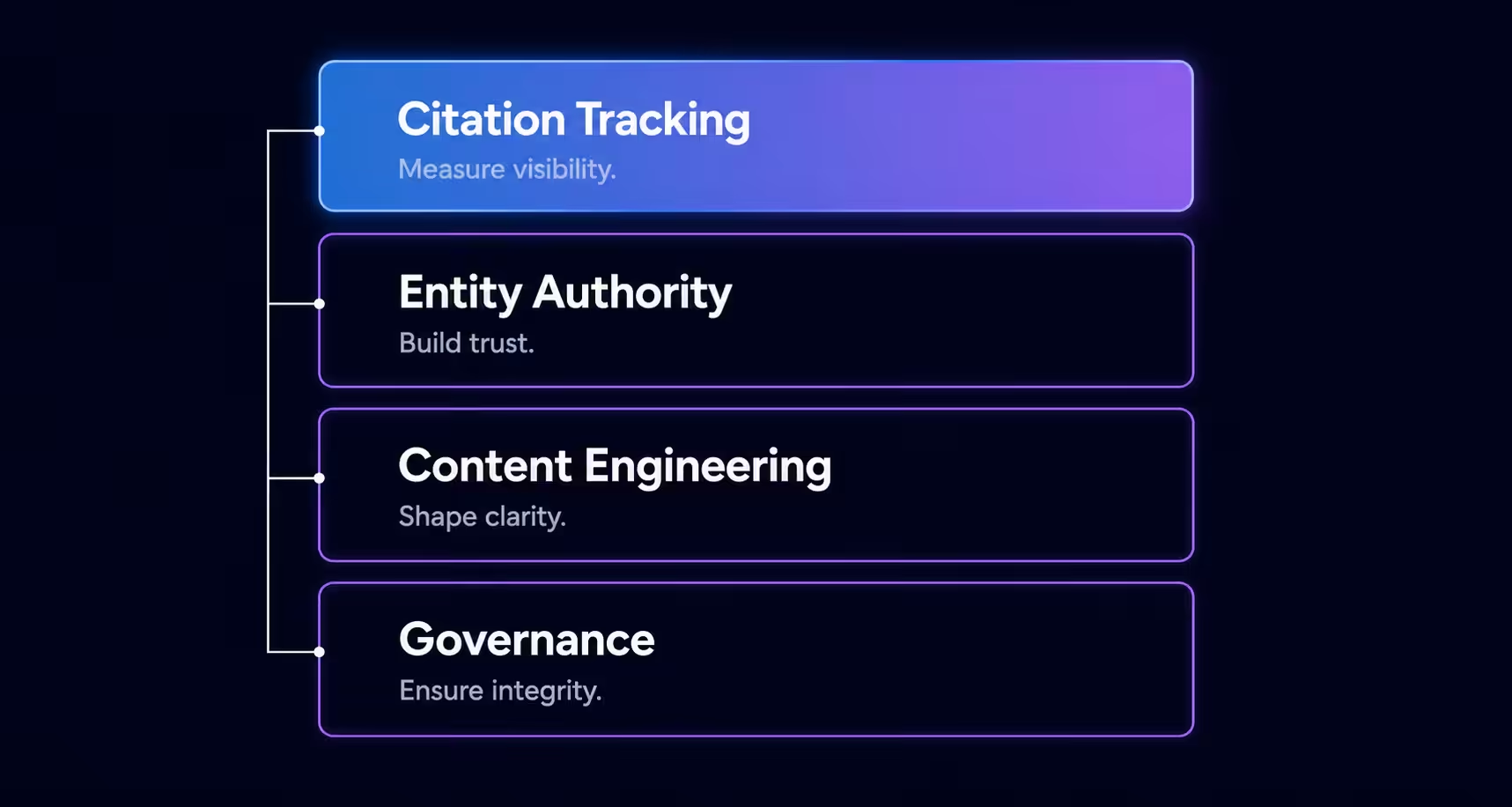
| Working Layer | What It Covers | Concrete Deliverable |
|---|---|---|
| Citation Tracking Infrastructure | Measurement first: a query corpus of buyer prompts sampled weekly across ChatGPT, Perplexity, Claude, and AI Overviews | A weekly citation rate reported as a percentage (share of voice in AI answers), not traffic charts |
| Entity Authority Engineering | Structured entity data the engines pull from when deciding who to cite | Wikidata entries, knowledge panel optimization, and schema markup systematized across owned and earned properties |
| Content Engineering for Machine Readability | Making content models can parse cleanly | Answer-first formatting, defined entity blocks, citation-friendly statistics, a working llms.txt, and rewrites of top commercial pages |
| Governance and Cross-Functional Integration | Coordination across legal, brand, product marketing, and engineering | A governance model that ships CMS changes, secures sign-off on entity statements, and maintains one source of truth for product naming and claims |
The discipline splits into four working layers. Most rebranded SEO agencies handle one. A real enterprise operator handles all four.
Citation Tracking Infrastructure
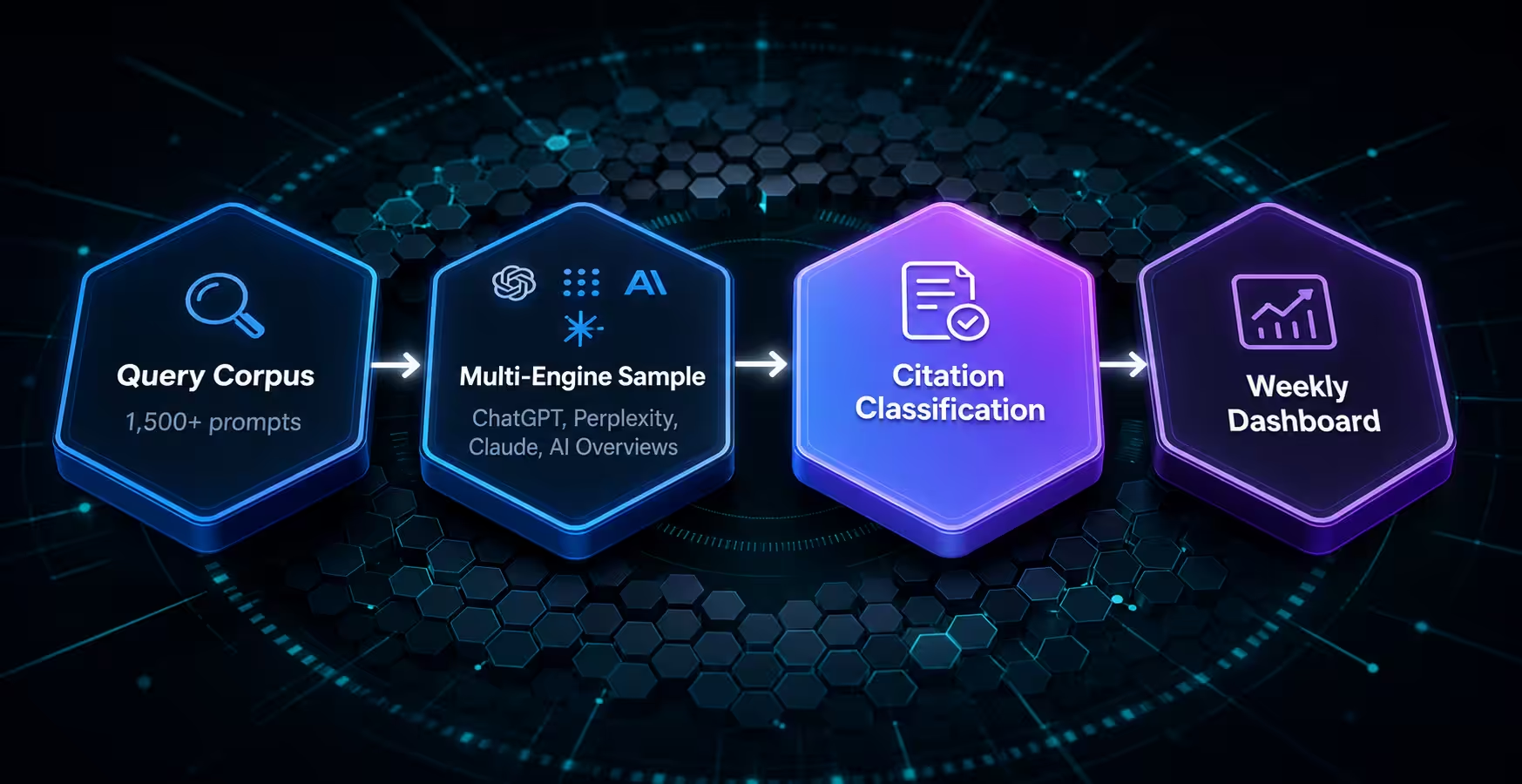
Real GEO starts with measurement. The agency builds a query corpus of 800 to 2,000 prompts your buyers actually type, samples them weekly across ChatGPT, Perplexity, Claude, and AI Overviews, and reports your citation rate as a percentage. If the pitch deck shows traffic charts instead of citation rates, walk.
Entity Authority Engineering
Generative engines pull from structured entity data when they decide who to cite. That means Wikidata entries, knowledge panel optimization, schema markup at scale, and consistent brand-to-product entity mapping across every owned and earned property. Enterprise sites with 10,000-plus URLs need this work systematized, not freelanced.
Content Engineering for Machine Readability
Models cite content they can parse cleanly. That requires answer-first formatting, defined entity blocks, citation-friendly statistics, and a working llms.txt for AI search. The agency should be rewriting your top 200 commercial pages, not just publishing new blog posts.
Governance and Cross-Functional Integration
Enterprise GEO touches legal, brand, product marketing, and engineering. The agency needs a governance model that ships changes through your CMS, gets sign-off on entity statements, and maintains a single source of truth for product naming, claims, and category positioning.
Why Enterprise GEO Is Different From SMB GEO
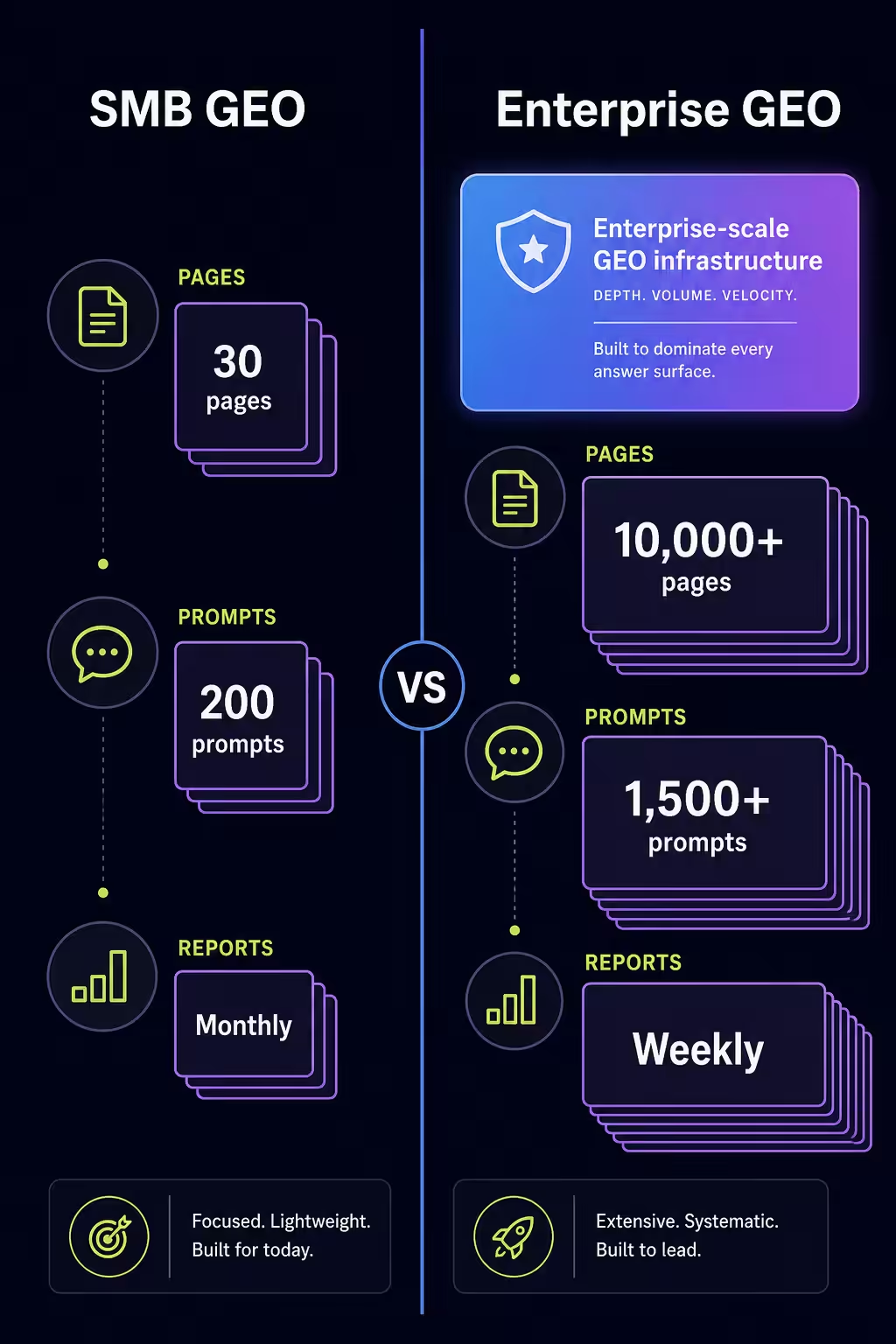
Scale changes the work. An SMB GEO retainer optimizes 30 pages, monitors 200 prompts, and reports monthly. An enterprise engagement covers hundreds of product SKUs, multiple regions, six buyer personas, and 1,500-plus prompts running weekly. The blockers are organizational, not technical.
Three friction points show up on every enterprise engagement:
Approval Chains
Every content edit passes through brand, legal, and sometimes compliance. Agencies that cannot operate inside a six-week review cycle stall by month three.
System Fragmentation
Enterprise CMSes, PIMs, and DAMs rarely share clean data. Entity work requires schema injection that survives platform migrations.
Attribution Gaps
AI search self-attributes at 2 to 9 percent of inbound for most B2B accounts. Your finance team wants a clean revenue line. The agency has to build a measurement model that survives the audit.
Signals That Separate Real GEO From Rebranded SEO
Most agencies pitching GEO in 2026 added the service line last year. You can spot the difference in the first 20 minutes of a pitch. Look for these five signals before the contract.
They Show Citation Data, Not Traffic Charts
A real GEO agency opens the pitch with a citation rate dashboard. You see prompt-level data: “Brand X cited in 14 percent of queries about category Y last week, up from 7 percent in week one.” If the first slide is organic traffic, the team is still selling SEO.
They Have a Named Methodology With Versions
Real operators ship frameworks they update quarterly because model behavior changes. Ask which version of their methodology you would be on, and what changed from the previous version. Blank stares mean the methodology is marketing copy.
They Talk About Wikidata Before They Talk About Backlinks
Backlinks still matter for authority, but entity grounding sits upstream. An agency that opens with link building is solving the wrong layer first. A real GEO operator audits your Wikidata entries, knowledge panel coverage, and entity disambiguation before any link work begins.
They Refuse to Guarantee Citations
Anyone promising guaranteed AI citations is either naive or lying. Model outputs shift weekly. The honest pitch shows you a 90-day citation trajectory based on similar accounts, with confidence bands, not a fixed promise.
They Have Run a Migration Through an Enterprise CMS
Ask for a specific story about implementing schema changes inside Adobe Experience Manager, Sitecore, or Contentful at scale. If the answer is theoretical, your engagement will stall the first time the engineering team gets involved.
How Citation Tracking Actually Works at Enterprise Scale
Citation tracking is the foundation of any defensible enterprise GEO program. Without it, you are buying activity, not outcomes. The mechanics are straightforward once you see them.
Building the Query Corpus
The corpus is the agency’s first deliverable. It pulls from your existing SEO keyword list, sales call transcripts, support tickets, and competitive query gaps. Enterprise corpuses sit between 1,200 and 2,500 prompts. Anything smaller misses the long-tail buyer questions where AI search wins.
Sampling and Classification
The agency runs the corpus weekly through each major generative engine. For every prompt, they record whether your brand appears, whether it is cited as a source, whether it is recommended, and what position it holds in the answer. This data feeds a citation rate, a recommendation rate, and a competitive share of voice.
Reading the Numbers
Enterprise citation rates land between 4 and 19 percent for accounts running 9 to 12 months of consistent GEO work. Anything above 20 percent in a competitive B2B category usually signals a narrow prompt set. Anything under 4 percent after a year means the entity layer is broken. Track the trend line, not the absolute number.
What an Enterprise GEO Retainer Should Include
The pitch deck will list 40 deliverables. Most are filler. Here is the short list that actually moves citation rate.
- Quarterly entity audit covering Wikidata, knowledge graph coverage, and schema implementation across owned properties
- Weekly citation tracking with prompt-level reporting and competitor benchmarks
- Content engineering sprints rewriting your top 100 to 300 commercial URLs for machine readability
- Earned mention strategy targeting the publications and communities AI engines actually cite
- llms.txt and AI crawler configuration with monthly review
- Executive reporting tied to pipeline-influenced revenue, not vanity metrics
- Governance documentation covering entity definitions, claims library, and approved positioning
Pricing for this scope sits between $15,000 and $60,000 per month depending on team size, region count, and content production volume. Anything under $12,000 monthly for an enterprise account is either junior-staffed or short on tracking infrastructure.
How AI Engines Decide Who to Cite
Understanding source selection logic changes how you brief an agency. The mechanics are not identical across engines, but the overlap is large enough to plan around.
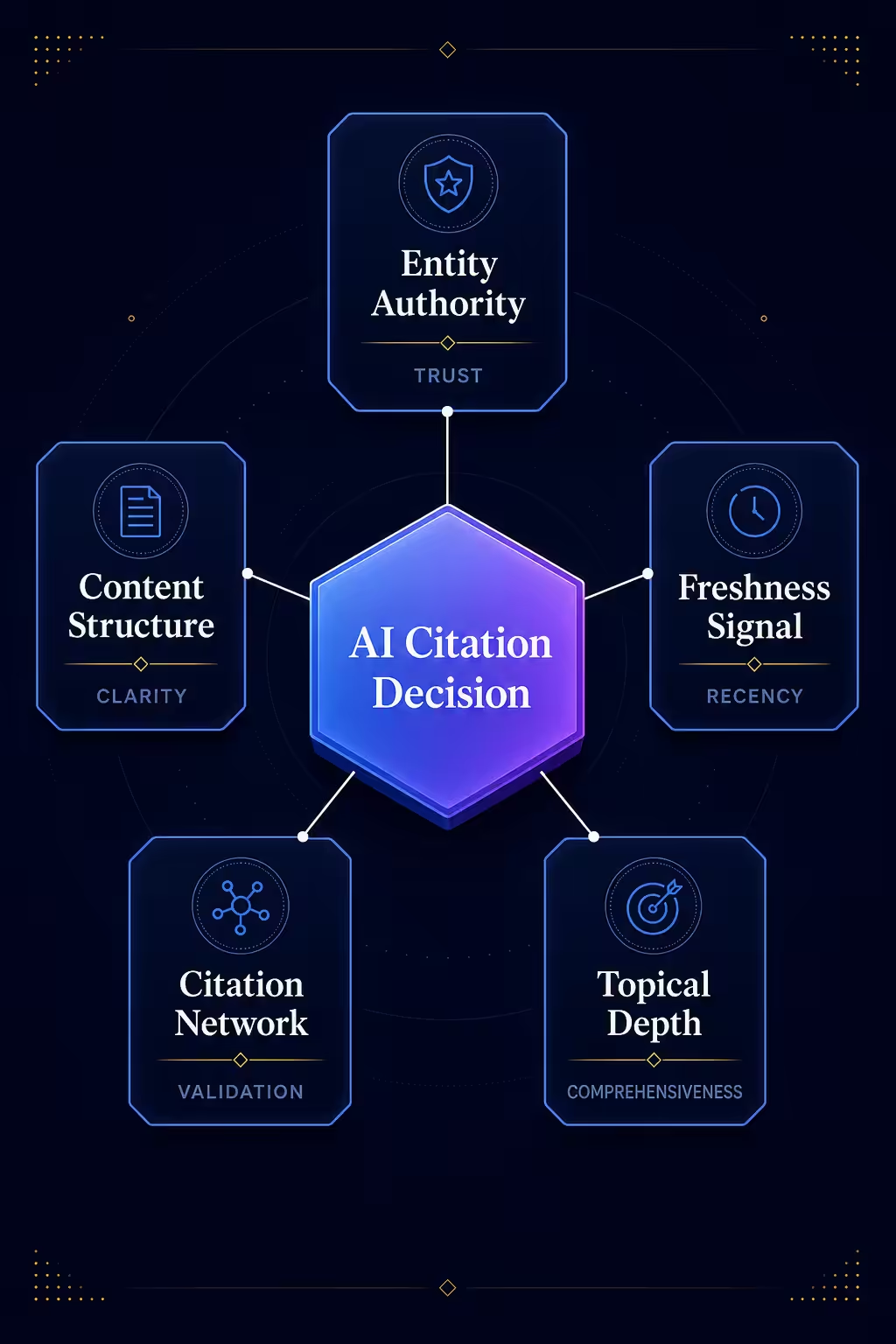
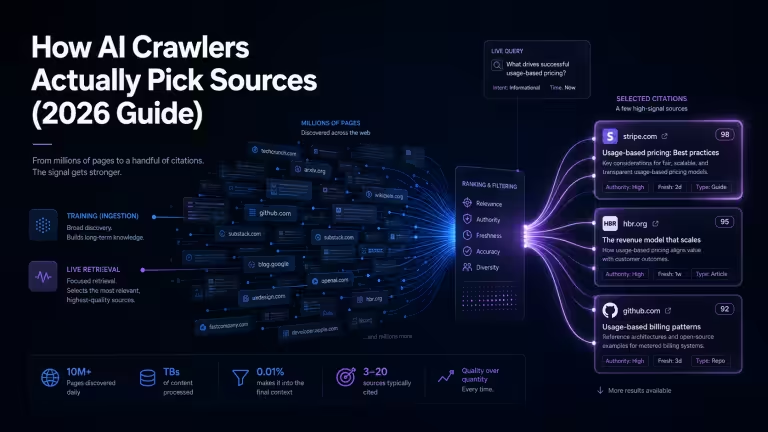
For a deeper breakdown of crawler behavior, see how AI crawlers actually pick sources. The short version: entity grounding, structured content, citation network strength, and topical depth do most of the work. A GEO agency that ignores any of these is leaving citations on the table.
Red Flags in Enterprise GEO Pitches
You will sit through 6 to 10 pitches before signing. These red flags appear in roughly half of them.
The “We Use AI to Do GEO” Pitch
Every agency uses AI tools. That is not a methodology. If the differentiation is “our AI writes content faster,” you are looking at a content mill with a new front door.
The Case Study Without a Citation Rate
A case study showing 200 percent organic traffic growth is an SEO win, not a GEO win. Ask for the citation rate before and after. If the answer is “we don’t track that,” the work was not GEO.
The Black-Box Methodology
Some agencies refuse to explain their process under NDA logic. Real GEO operators publish their frameworks. The work is not magic. The execution is what’s hard.
The Single-Point-of-Failure Strategist
Ask who runs your account day-to-day. If it is the founder who closes every deal, you will get six weeks of attention before they vanish onto the next pitch. Enterprise accounts need a named director plus a delivery team with depth.
How to Run a Six-Week GEO Agency Evaluation
A clean evaluation process saves you from a bad 12-month commitment. Run it on a fixed timeline so internal stakeholders stay aligned.
Week 1. Build a shortlist of 8 to 10 agencies. Filter on enterprise client count, named methodology, and citation tracking capability.
Week 2. Send a short brief: your category, three competitors, and the question “What would you measure in the first 90 days?” Cut anyone who responds with a generic deck.
Week 3. First-round calls. Ask each finalist to walk through one citation tracking dashboard from a current account, with names redacted.
Week 4. Paid audit. Spend $5,000 to $10,000 per finalist on a real audit deliverable. Compare the depth of analysis, not the slide design.
Week 5. Reference calls with two current enterprise clients each. Ask specifically about governance friction, approval cycles, and how the agency handles a missed citation target.
Week 6. Final pitch with the proposed account team in the room. The director who will own your account must be on camera.
Measuring GEO ROI Without Lying to Your CFO
AI search attribution is messy. Self-attributed inbound from “ChatGPT recommended you” sits between 2 and 9 percent for B2B SaaS accounts in 2026. That number grows quarterly, but it is still small relative to paid and organic channels. Build the business case honestly.
Three measurement layers hold up under finance scrutiny:
1. Citation Share of Voice
Your percentage of category citations versus named competitors. This is the leading indicator.
2. Branded Prompt Volume
The number of AI search queries that include your brand name, measured against pre-engagement baselines.
3. Pipeline-Influenced Revenue
Opportunities where AI search appears in the multi-touch attribution path, even if it is not the last touch.
For a fuller framework on the metric stack, see AI visibility vs SEO metrics. The same logic applies whether you run GEO in-house or with an agency.
When to Hire an Agency vs Build In-House
Not every enterprise should hire a GEO agency. The decision turns on three variables: internal SEO maturity, content production capacity, and how quickly you need citation rate movement.
Hire an agency when:
- You need citation rate movement in under two quarters
- Your internal team has SEO but no AI visibility playbook
- You need an outside party to push governance changes through legal and brand
- You lack tracking infrastructure and do not want to build it
Build in-house when:
- You have a senior SEO lead who can absorb GEO as a discipline
- Your content production is already a strength
- You want long-term cost control and the methodology to live with you
- You can hire a citation tracking tool and a dedicated analyst
Most enterprise accounts run a hybrid. The agency owns measurement, entity work, and earned mentions. The internal team owns content and CMS implementation. That split survives the longest.
Where the Category Is Still Bluffing
Enterprise GEO in 2026 is real work with real outcomes. It is also a category where half the pitches you see are SEO retainers with a new label. The honest read: the discipline matters, the measurement is finally credible, and the gap between operators and pretenders is widening every quarter.
If you remember one thing from this guide, make it the citation rate test. Any agency that cannot show you a live citation rate dashboard from a current account is not running GEO. They are running content marketing with a price increase.
Enterprise GEO engagements are a specific tier of the broader brand mentions agency category. The brand mentions service buyer guide covers what enterprise-tier service models include.
Frequently Asked Questions
How much does an enterprise GEO agency cost in 2026?
Enterprise GEO retainers run from $15,000 to $60,000 per month in the US market. The range depends on content production volume, number of regions, and whether the agency builds custom tracking infrastructure for your account. Anything under $12,000 monthly for a true enterprise scope is usually understaffed or missing measurement.
How long before an enterprise GEO program shows results?
First citations typically appear 6 to 14 weeks after launch, with measurable citation rate movement by month four. Pipeline impact takes longer, usually 9 to 12 months, because AI search self-attribution lags actual influence. The first 90 days should focus on entity work and tracking setup, not traffic.
What is the difference between GEO and AEO?
GEO, generative engine optimization, focuses on earning citations and recommendations inside AI engines like ChatGPT and Perplexity. AEO, answer engine optimization, targets featured snippets, voice search, and AI Overviews where the engine returns a single answer. Most enterprise programs need both, but the workflows and measurement diverge.
Can an SEO agency also do enterprise GEO?
Some can, most cannot. The technical SEO foundation transfers cleanly, but citation tracking, entity engineering, and AI crawler configuration require new tooling and methodology. Ask any SEO agency claiming GEO capability to show a citation rate dashboard from a live account. If they cannot, the service line is theoretical.
Do I need a separate GEO agency or can my current SEO partner add it?
Test your current partner first. Send them a brief asking for a 90-day GEO measurement plan with named tools and a sample query corpus. If the response is substantive, they may be the right partner. If it is a recycled SEO proposal with “AI” sprinkled in, run the full evaluation process with specialist agencies.
The Forward Look
Enterprise GEO will not stay a separate service line forever. Inside two years, it folds into integrated visibility programs alongside SEO, AEO, digital PR, and brand measurement. The agencies that survive the consolidation are the ones building measurement infrastructure now, not the ones writing 2,000-word think pieces about the future of search.
If you are evaluating an enterprise GEO agency this quarter, run the citation rate test, run the paid audit, and run the reference calls. The work is real, the budgets are real, and the wrong choice is expensive.
See where your brand stands in AI search. Book a strategy call and find out what AI says about your brand and your competitors.