
You’re probably staring at a spreadsheet right now with six or seven brand monitoring tools on it, half of them claiming AI-powered everything, and you still can’t figure out which one actually does what you need. That’s not a knowledge problem, it’s a category problem.
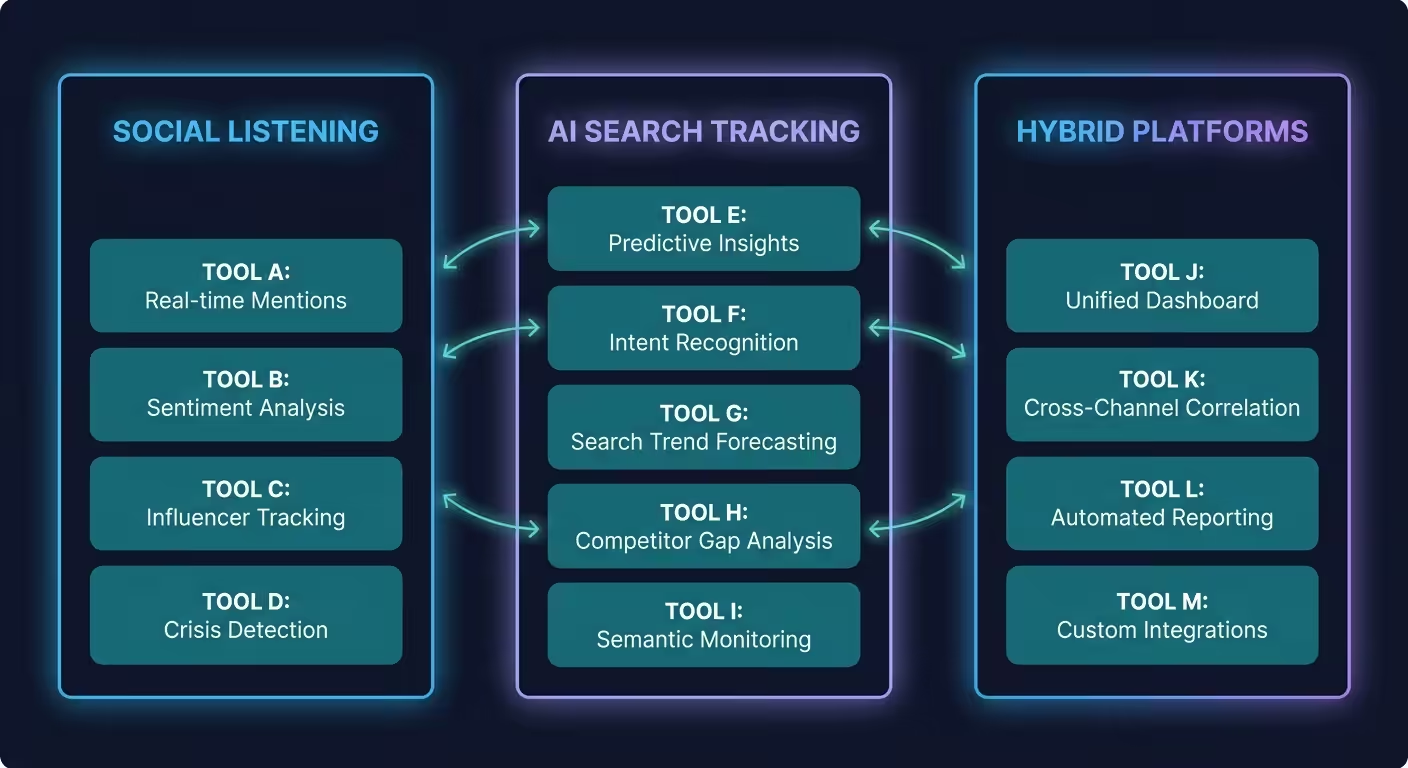
Brand mention monitoring fractured into three distinct markets in the past 18 months, and most comparison guides still treat it like one.
The three markets: traditional social listening platforms, AI search visibility trackers, and hybrid tools that attempt both. Pick from the wrong category and you’ll pay enterprise prices for capabilities you don’t need, or worse, miss an entire channel where your brand is either being recommended or ignored.
This comparison breaks down the tools that matter in 2026 across all three categories, with honest assessments of where each one excels, where it falls short, and which type of team it’s actually built for.
What You’ll Learn
- The three categories of monitoring tools in 2026 and why picking the wrong one wastes budget
- Side-by-side feature and pricing comparison of 14 platforms, from free tiers to enterprise contracts
- Which tools actually track brand mentions inside ChatGPT, Perplexity, and Google AI Overviews (most don’t)
- A decision framework based on team size, budget, and primary monitoring goal
- Where the biggest gaps still exist, and what no single tool solves yet
Why the Category Split Matters More Than Features
Two years ago, “brand mention monitoring” meant one thing: tracking where your company name appeared on social media, news sites, forums, and blogs. Brandwatch, Mention, Brand24, and their competitors all competed on the same turf, who could crawl more sources, score sentiment more accurately, and send alerts faster.
That market still exists. But a second one emerged alongside it: tracking whether AI systems mention your brand when users ask for recommendations.
A VP of Marketing searching “best project management tools” in ChatGPT gets a curated answer. If your brand isn’t in it, you’ve lost a touchpoint that traditional monitoring tools don’t even see.
The tools built for social listening don’t track AI-generated answers. The tools built for AI visibility don’t monitor Reddit threads or news coverage. And the handful of hybrid platforms that try both tend to do neither well enough to justify their pricing.
So before comparing features, you need to answer one question: what are you actually trying to monitor?
- Social + web mentions, someone wrote about your brand on a blog, tweeted about you, or mentioned you in a forum. You want to know about it, respond if needed, and measure sentiment over time.
- AI search citations: ChatGPT, Perplexity, Gemini, or Google AI Overviews mention (or don’t mention) your brand when users ask questions in your category. You want to track frequency, position, and competitor share.
- Both, you need visibility across traditional and AI surfaces, ideally in one dashboard.
Each goal maps to a different set of tools. Mixing them up is how teams end up paying $500/month for social listening they don’t use because they actually needed AI citation tracking, or vice versa.
Social Listening Platforms: The Established Players
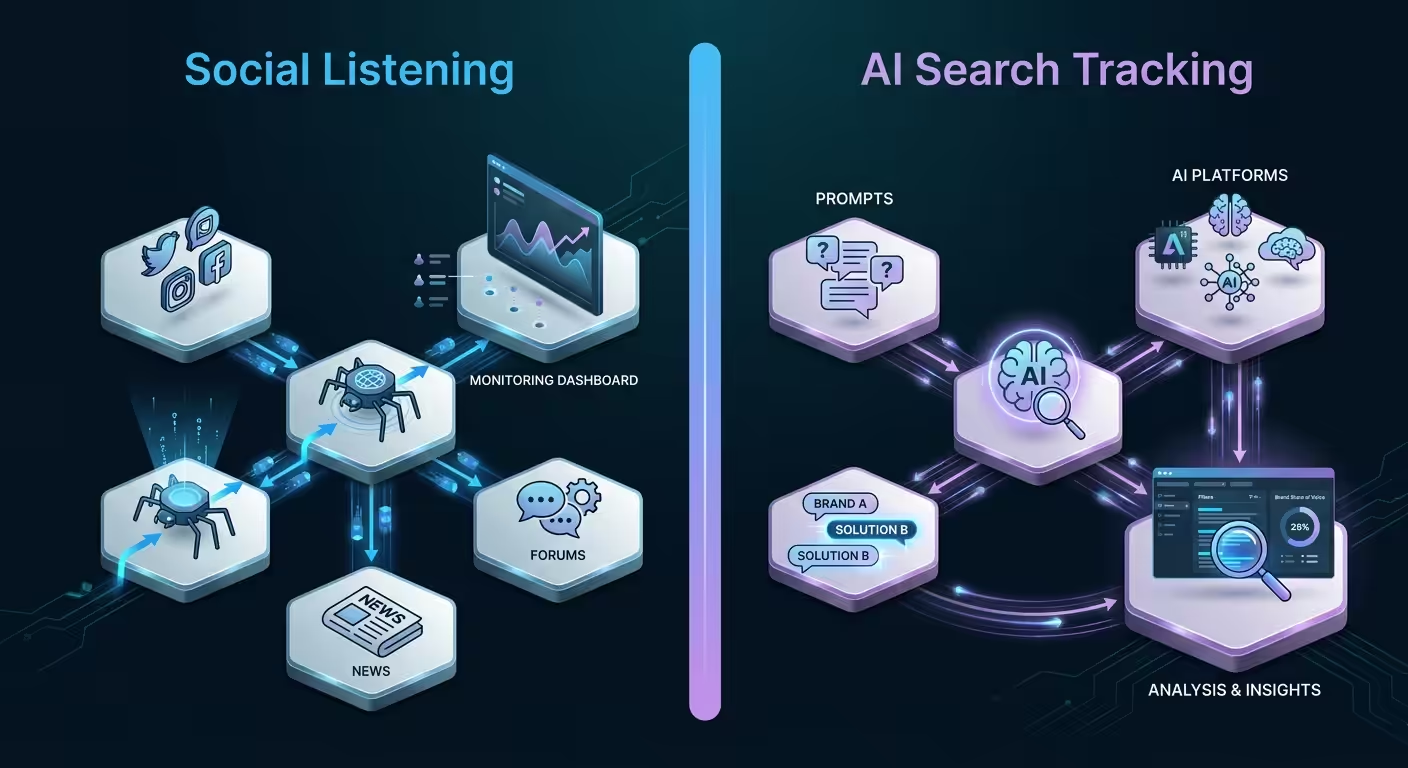
These tools do what brand monitoring has always done, crawl social networks, news outlets, forums, blogs, podcasts, and review sites, then surface mentions with sentiment scores, volume trends, and competitive benchmarks. They’re mature, well-documented, and range from affordable to eye-watering.
Brand24
Brand24 is the mid-market workhorse. It tracks mentions across social media, news, blogs, forums, podcasts, and video platforms with real-time alerts and AI-powered sentiment analysis. The dashboard is clean enough for a solo marketer but deep enough for agency teams managing multiple clients.
Where it stands out: pricing transparency. Plans start at $49/month and scale to $399/month for enterprise features, and those prices are published, not hidden behind a “contact sales” wall.
The tool also added an “AI Share of Voice” metric that tracks how often your brand appears relative to competitors in monitored sources. That’s a useful directional signal, though it doesn’t extend to AI-generated search answers.
Best for: Marketing teams at mid-market companies ($5M, $100M revenue) who need reliable social and web monitoring without enterprise pricing. Weak on AI search visibility, this is a traditional listening tool.
Brandwatch
Brandwatch is the enterprise benchmark. It claims coverage of over 100 million online sources with historical data going back to 2010, and its consumer intelligence platform combines social listening with audience research, trend analysis, and crisis detection. After being acquired by Cision and then repositioned, it’s now firmly planted as a full-stack brand intelligence suite.
The depth is real, image recognition, demographic inference, influencer identification, and custom dashboard building are all strong. But the pricing reflects it. Expect custom quotes starting north of $800/month for meaningful access, with most enterprise contracts landing in the $2,000 to $5,000/month range.
Best for: Enterprise marketing and communications teams (Fortune 500, large agencies) who need global coverage, historical analysis, and advanced analytics. Overkill for startups. No AI search citation tracking.
Mention
Mention targets small-to-mid teams who want real-time alerts without the complexity of enterprise platforms. The interface is straightforward, set up keywords, get email or Slack notifications, review sentiment and source breakdowns in a clean dashboard.
The limitation that catches people: the base plan caps at 5,000 mentions per month with only 2 alert keywords. For brands with any meaningful online presence, that ceiling arrives fast.
Reddit, Quora, and podcast monitoring are gated behind higher tiers. And like Brand24, there’s no AI search tracking, you won’t know whether ChatGPT or Perplexity mention your brand.
Best for: Small marketing teams or solo founders who need basic, affordable monitoring with simple alerting. Budget-friendly entry point, but you’ll outgrow it.
Meltwater
Meltwater has been in media monitoring for over 20 years and covers 190+ countries with what the company claims is access to 200 billion conversations. It combines media monitoring, social listening, and PR analytics into a unified platform aimed at communications teams.
The strength is breadth, print media, broadcast, online news, and social in a single view. The weakness is complexity and cost.
Pricing isn’t published, contracts tend to be annual, and onboarding takes weeks rather than hours. Several G2 reviewers flag the learning curve and the difficulty of extracting clean data from the platform.
Best for: PR and communications teams at large organizations that need earned media tracking across global markets. Not a fit for marketing teams focused on social engagement or AI visibility.
Sprout Social
Sprout Social is primarily a social media management platform, scheduling, publishing, engagement, but its listening add-on is strong enough to compete with dedicated monitoring tools. The listening module covers major social networks and review sites with sentiment analysis, trend identification, and competitive benchmarking.
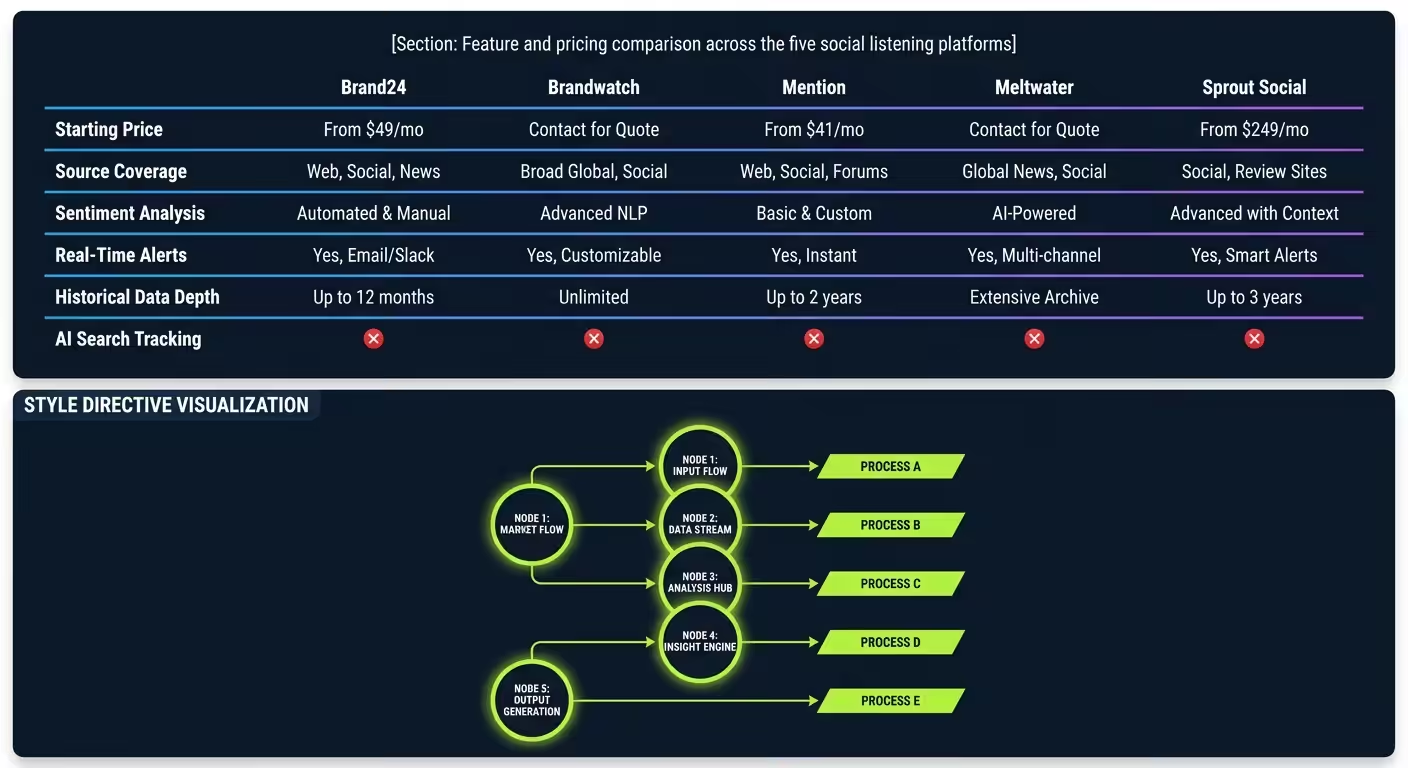
Pricing is the sticking point. Plans start at $199/user/month, and listening is an add-on to the higher tiers.
For a five-person team, you’re looking at $1,000 to $2,000/month before the listening module is even factored in. That makes it expensive as a monitoring-first tool, but reasonable if your team already uses Sprout for publishing and engagement.
Best for: Teams already on Sprout Social for social media management who want to add listening without a second platform. Expensive if monitoring is the primary need.
AI Search Visibility Trackers: The New Category
For the per-platform walkthroughs behind the AI side of the comparison, see how ChatGPT shows your brand and monitoring Perplexity for citations, and monitoring how LLMs reference your brand covers the cross-platform cadence these trackers should support on day one.
This is the category that didn’t exist two years ago. These tools answer a different question entirely: is your brand being mentioned when someone asks ChatGPT, Perplexity, Gemini, or Google AI Overviews a question in your category?
The mechanics are different from social listening. There’s no “crawling” in the traditional sense. These platforms query AI systems with prompts relevant to your industry, capture the responses, and analyze whether your brand appears, in what position, with what sentiment, and against which competitors.
Peec AI
Peec AI focuses specifically on monitoring brand visibility inside AI-generated answers across multiple platforms, ChatGPT, Perplexity, Google AI Overviews, and Gemini. The platform runs category-relevant prompts at regular intervals and tracks your brand’s citation frequency, ranking position within AI responses, and competitor share of voice in those same responses.
What makes it useful: the prompt library is customizable, so you can track the exact questions your buyers are asking AI. If your competitors show up in “best CRM for mid-market SaaS” queries and you don’t, Peec AI will flag that gap and track it over time.
The limitation is scope. Peec AI doesn’t monitor social media, news, or forums. It’s purpose-built for AI search, which means you need a second tool for traditional brand monitoring.
Best for: Marketing and SEO teams that specifically need AI search visibility data, especially those in competitive categories where AI recommendations influence buying decisions.
Siftly
Siftly positions itself as a Generative Engine Optimization (GEO) platform, combining AI mention monitoring with recommendations for improving your visibility in AI-generated answers. It tracks mentions across ChatGPT, Gemini, Perplexity, and AI Overviews, then provides optimization guidance.
The company claims some aggressive results, “1500% average increases in AI mentions within 2 weeks” per their marketing materials. Take that with appropriate skepticism.
The monitoring functionality appears solid based on available reviews, but the optimization claims haven’t been independently validated, and AI citation behavior is influenced by far more variables than any single tool controls.
Pricing starts at $249/month, which puts it above most social listening tools but below enterprise platforms.
Best for: Growth-focused teams willing to invest in AI visibility as a dedicated workstream. Stronger on the monitoring side than the optimization side, based on available evidence.
LLMrefs
LLMrefs takes a narrower approach, it’s built specifically to track how brands appear in LLM outputs and measure AI share of voice against competitors. The platform monitors citation patterns across major AI systems and presents the data in competitive dashboards that track changes over time.
The differentiation claim is deep analysis of citation positioning, not just whether you’re mentioned, but where in the response, in what context, and with what competitors. That granularity is genuinely useful for teams running active AI visibility campaigns who need to measure progress against specific benchmarks.
Pricing uses a flat-rate model rather than per-seat, which works better for larger teams. Published plans aren’t always available, so expect to request a demo.
Best for: SEO teams and agencies running deliberate AI visibility strategies who need granular citation tracking and competitive benchmarking inside AI responses.
SE Ranking (AI Visibility Module)
SE Ranking is primarily an SEO platform, but its newer AI visibility module tracks brand appearances in AI-generated search results. This makes it an interesting option for teams that already use SE Ranking for traditional SEO and want to add AI monitoring without a separate subscription.
The AI module is less mature than dedicated platforms like Peec AI or LLMrefs, it covers fewer AI systems and offers less granular citation analysis. But at $119/month for the broader SEO suite with AI features included, the value proposition is hard to ignore for teams that need both.
Best for: Teams already on SE Ranking (or evaluating it) who want AI visibility tracking as a complement to traditional rank tracking rather than as a standalone investment.
Hybrid and Multi-Purpose Platforms
A few tools are trying to bridge both categories, traditional web and social monitoring plus AI search tracking. None of them do both perfectly yet, but they’re worth evaluating if you want to consolidate.
Talkwalker (Now Part of Hootsuite)
Talkwalker was acquired by Hootsuite in 2026 and rebranded as Hootsuite’s enterprise listening engine. It monitors 150+ million sources across 187 languages, includes image and video recognition, and offers up to 5 years of historical data. The platform is one of the most comprehensive social listening tools available.
On AI search tracking, Talkwalker has made early moves but doesn’t offer the same depth as dedicated AI visibility tools. It can surface some AI-related brand mentions from indexed sources, but it doesn’t systematically query LLMs and track citation patterns the way Peec AI or LLMrefs does.
Pricing is enterprise-only and opaque. Expect annual contracts in the five-figure range. The Hootsuite acquisition has created some integration uncertainty, several customers have flagged changes to the standalone Talkwalker experience during the transition.
Best for: Enterprise teams that need deep social listening with global coverage and are willing to pay premium prices. The AI search component is a bonus, not a primary capability.
Awario
Awario is the budget option that punches above its weight. The company claims it crawls over 13 billion web pages daily, and pricing starts at $49/month, the same as Brand24 but with less restrictive alert limits on the lower tiers. Sentiment analysis, influencer identification, and competitor benchmarking are all included.
Awario added limited AI mention tracking in late 2025, making it one of the few affordable tools that touches both traditional and AI monitoring. The AI features are basic, more directional than analytical, but for teams on tight budgets, having any AI visibility data is better than none.
Best for: Startups and small marketing teams that need broad monitoring coverage without enterprise pricing. The AI features are a directional bonus, not a replacement for dedicated AI tracking.
BrandMentions (the Tool, Not Us)
Quick clarification: BrandMentions.com is a monitoring tool, separate from BrandMentions.link, which is our agency. The tool offers social listening, competitor tracking, and SEO-oriented features like unlinked mention discovery and backlink monitoring.
It’s one of the few platforms that explicitly ties brand monitoring to SEO outcomes, which makes it useful for teams that care about both reputation awareness and link-building opportunities. It doesn’t offer AI search citation tracking, but the competitor intelligence features are solid for the price point.
Best for: SEO-focused marketing teams that want to combine brand monitoring with backlink discovery and competitive intelligence in one tool.
The Full Comparison: 14 Tools Side by Side
Here’s the comparison most guides don’t give you, organized by what actually matters when you’re making a purchasing decision. I’ve separated the tools by category because comparing a $49/month social listening tool to an enterprise media intelligence suite on the same grid creates false equivalencies.
| Tool | Category | Starting Price | AI Search Tracking | Social/Web Monitoring | Best For |
|---|---|---|---|---|---|
| Brand24 | Social Listening | $49/mo | No | Strong | Mid-market teams, agencies |
| Mention | Social Listening | $41/mo | No | Basic-Moderate | Small teams, solo founders |
| Awario | Social Listening + Basic AI | $49/mo | Basic | Strong | Budget-conscious teams |
| Brandwatch | Enterprise Social Listening | ~$800/mo+ | No | Enterprise-grade | Fortune 500, large agencies |
| Meltwater | Enterprise Media Intelligence | Custom (annual) | No | Enterprise-grade | PR/comms teams, global brands |
| Sprout Social | Social Management + Listening | $199/user/mo | No | Strong (add-on) | Teams already using Sprout |
| Talkwalker/Hootsuite | Enterprise Hybrid | Custom (annual) | Limited | Enterprise-grade | Enterprise teams, global coverage |
| BrandMentions.com | SEO-Oriented Monitoring | $79/mo | No | Moderate-Strong | SEO teams, link builders |
| Peec AI | AI Search Tracking | ~$200/mo | Strong | No | SEO/marketing teams focused on AI |
| Siftly | AI Search Tracking + GEO | $249/mo | Strong | No | Growth teams, GEO practitioners |
| LLMrefs | AI Search Tracking | Custom | Strong | No | Agencies, AI visibility campaigns |
| SE Ranking | SEO Suite + AI Module | $119/mo | Basic-Moderate | Basic | Teams already on SE Ranking |
| Google Alerts | Free Basic Monitoring | Free | No | Minimal | Zero-budget starting point |
| Hootsuite (Standalone) | Social Management + Monitoring | $99/mo | No | Moderate | SMBs using Hootsuite for scheduling |
A few things jump out from this grid. First, no tool under $200/month offers strong AI search tracking and strong social monitoring in the same subscription.
You’re choosing a primary capability, not getting both. Second, enterprise platforms (Brandwatch, Meltwater, Talkwalker) still don’t prioritize AI citation tracking, their roadmaps are focused on broader media intelligence, not LLM-specific visibility.
Third, the AI search tracking category is young enough that pricing and feature sets are shifting quarterly.
What the Tools Actually Miss
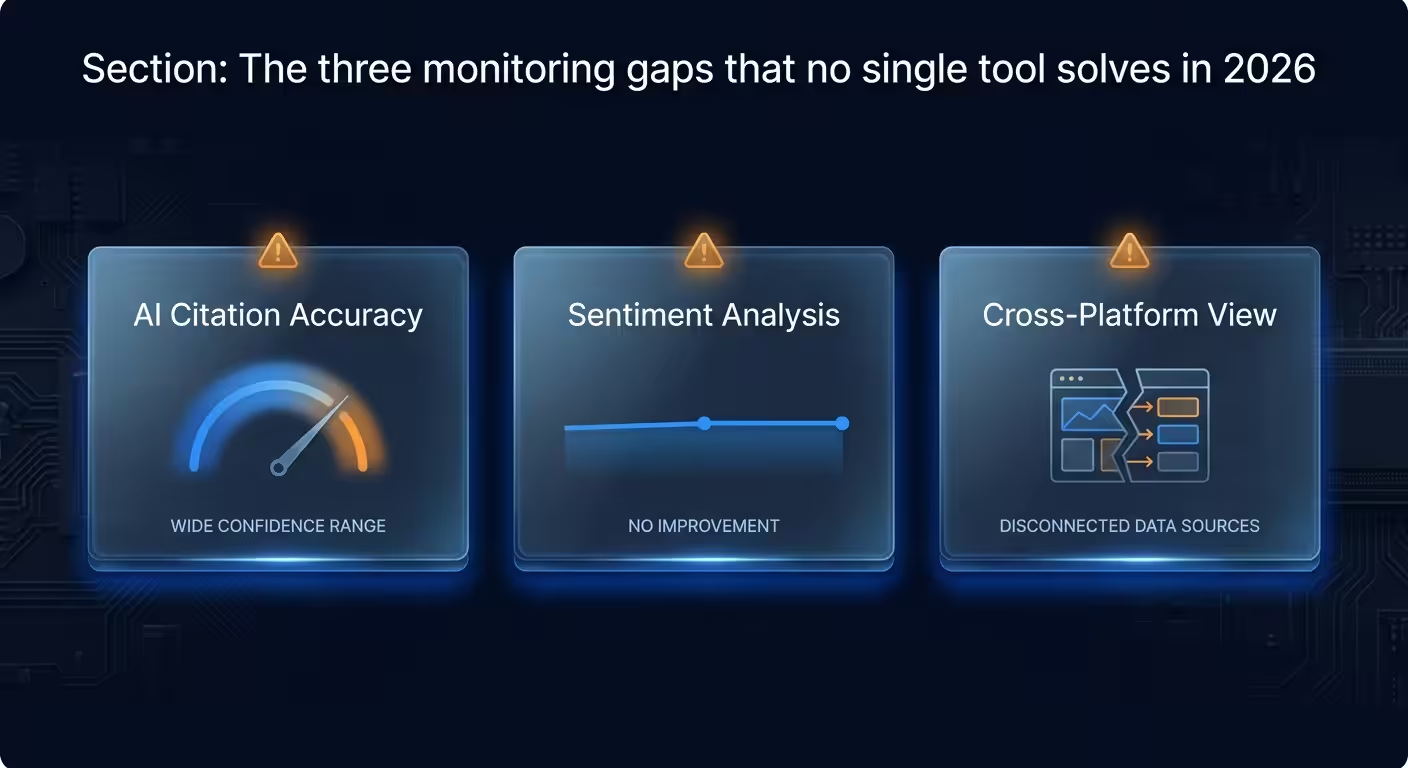
Every comparison guide positions one tool as the winner. That’s dishonest. The real story in 2026 is that significant gaps exist across the entire category, and no single platform has closed them.
Gap 1: AI Citation Accuracy Is Still Imperfect
AI search tracking tools query LLMs with prompts and analyze the responses. But LLM outputs are non-deterministic, ask the same question twice, get different answers.
Citation tracking platforms run prompts multiple times to build confidence scores, but the underlying variability means the data is directional, not precise. If a tool tells you your brand appeared in 34% of relevant ChatGPT queries last month, the real number might be 28% or 41%.
Treat AI citation metrics as trend indicators, not accounting figures.
Gap 2: Social Listening Sentiment Accuracy Plateaued
Most social listening platforms report sentiment accuracy around 80-85%. That number hasn’t meaningfully improved in three years despite “AI-powered” upgrades being marketed by every vendor.
For nuanced content, sarcasm, context-dependent statements, industry jargon, accuracy drops further. If sentiment scoring is a primary purchase driver, test every platform against a sample of real mentions from your industry before committing.
Gap 3: Cross-Platform Consolidation Doesn’t Exist Yet
You can’t get one dashboard that shows your traditional mention volume alongside your AI citation frequency alongside your earned media coverage with unified metrics and a single source of truth. Teams running comprehensive brand monitoring in 2026 are stitching together 2-3 tools, exporting data, and building their own views.
That’s reality. Any vendor claiming a unified solution for everything is either defining the scope narrowly or overselling.
We’ve seen this firsthand in our work building brand mention monitoring strategies. The teams getting the clearest picture of their brand visibility are the ones that accept the multi-tool reality and build a stack deliberately rather than searching for one platform that does everything.
See where AI answers put your brand
Twenty minutes with a senior strategist: where the major engines point buyers in your category, who gets named instead of you, and a straight read on what a programme would change.
Book a strategy callMatching the Right Tool to Your Situation
Abstract feature lists don’t help you buy. Specific scenarios do. Here’s how to map your situation to a tool stack.
You’re a Startup With Under $200/Month to Spend
Start with Brand24 or Awario ($49/month) for social and web monitoring. Add Google Alerts (free) as a backup for news mentions.
If AI visibility matters for your category, manually query ChatGPT and Perplexity monthly with your top 10 buyer questions and track whether your brand appears. That costs nothing and gives you a baseline before you invest in dedicated AI tracking tools.
Don’t buy Mention at the base tier, the 5,000-mention cap and 2-alert limit will frustrate you within a month if your brand has any meaningful online presence.
You’re a Mid-Market Team Focused on Competitive Intelligence
Brand24 (mid-tier plan at $99 to $179/month) handles social and web monitoring with competitive benchmarking. Layer in Peec AI or SE Ranking for AI search citation tracking. Total spend: $250 to $400/month for a stack that covers both traditional and AI surfaces.
If your team already uses a tool like an SEO competitor analysis platform, check whether its monitoring features are good enough before adding a separate subscription. Redundant tools drain budget and create dashboard fatigue.
You’re an Enterprise Team Managing Global Brand Reputation
Brandwatch or Meltwater for comprehensive social, news, and media monitoring across markets and languages. Add a dedicated AI tracking tool (LLMrefs or Siftly) as a separate workstream managed by your SEO or growth team. Enterprise social platforms aren’t prioritizing AI citation tracking, so don’t wait for them to build it, run it in parallel.
Budget expectation: $3,000 to $8,000/month for the combined stack. Yes, that’s significant. The alternative, blind spots in either traditional or AI-generated brand mentions, costs more in missed opportunities.
You Care Primarily About AI Search Visibility
Skip social listening tools entirely. Go directly to Peec AI, Siftly, or LLMrefs based on your budget and depth requirements. Complement with manual AI search tracking for prompts and categories your tool doesn’t cover.
This is the scenario where the tool choice matters least and the strategy behind the tool matters most. Tracking AI mentions without a plan to influence them is just watching competitors win in slow motion.
The Evaluation Mistakes That Waste the Most Time
The comparison-guide mistake we see most often in vendor audits is a team using the tool’s sample dashboard, fed by the vendor’s cherry-picked brands, as the evaluation surface. The charts look polished, the data tells a clean story, and the actual shape of the buyer’s category never gets tested.
Before any shortlist call, write down the three decisions the data must inform, then insist on a trial against the buyer’s own brand and two named competitors, not the vendor’s demo set.
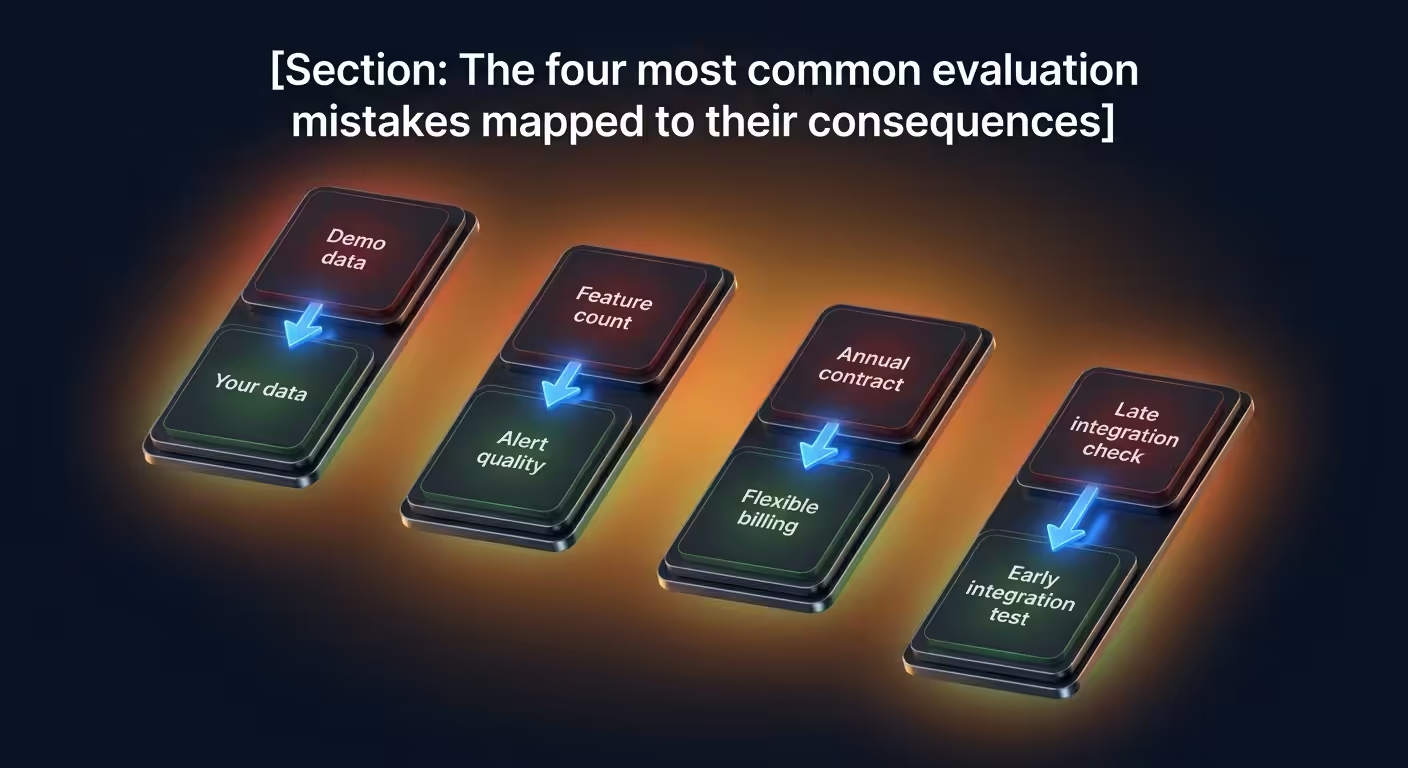
After watching dozens of teams evaluate monitoring tools, the same mistakes recur. These aren’t feature oversights, they’re process failures in how teams buy.
Evaluating on demo data instead of your own brand. Every tool looks impressive when the sales team demos it with a Fortune 500 brands that generates thousands of mentions daily. Your brand might generate 50 mentions per week.
Request a trial with your actual brand name, your actual competitors, and your actual category queries. The tool’s value shows up, or doesn’t, only with your real data.
Overweighting feature count, underweighting alert quality. A tool that monitors 150 million sources is useless if 90% of the alerts it surfaces are irrelevant noise. During trials, track your false-positive rate, the percentage of alerts that aren’t actually meaningful brand mentions.
A tool with 10 million sources and a 5% false-positive rate will save your team more time than one with 150 million sources and a 40% false-positive rate.
Buying annual contracts during a category shift. The AI search tracking category is evolving fast. New entrants are appearing quarterly, pricing is unstable, and feature sets change with each product cycle.
If possible, negotiate monthly or quarterly billing, even if it costs slightly more per month. The flexibility to switch tools in 90 days is worth the premium right now.
This applies less to established social listening tools where the category is mature and predictable.
Ignoring the integration question until after purchase. Your monitoring tool is only as useful as its connection to your workflow. Does it integrate with Slack for real-time alerts?
Does it push data to your BI tool? Can it trigger workflows in your project management system?
Check integrations during the trial, not after the contract is signed.
Pricing and Consolidation Trends Over the Next 12-18 Months
The split between social listening and AI search tracking won’t last. Within 12-18 months, the strongest platforms in each category will either build or acquire their way into the other.
Brandwatch and Meltwater are already making early moves toward AI visibility. AI-focused tools like Peec AI and LLMrefs will inevitably add traditional monitoring capabilities as they mature.
The teams that benefit most from the current fragmentation are the ones building institutional knowledge about AI citation patterns now, before the tools consolidate and everyone has access to the same data. In our experience at BrandMentions, the brands that start tracking their AI citation footprint early are building a compounding advantage.
By the time competitors realize AI search visibility matters, the early movers have months of data, established citation patterns, and a presence that’s harder to displace.
The other trend worth watching: pricing compression. AI search tracking is expensive right now because it’s new and specialized. As the market matures, expect pricing to drop and free tiers to appear, similar to how social listening tools evolved from enterprise-only pricing to $49/month plans over the past decade.
Frequently Asked Questions
Which brand mention monitoring tool is best overall in 2026?
There’s no single best tool because the category has split into three distinct markets. For social and web monitoring, Brand24 offers the strongest balance of features and pricing for mid-market teams.
For AI search visibility tracking, Peec AI leads on depth and coverage. For enterprise social listening, Brandwatch remains the benchmark.
Most teams need two tools, one from each category that matches their priority.
Can social listening tools track brand mentions in ChatGPT or Perplexity?
No. As of mid-2026, the major social listening platforms, Brand24, Brandwatch, Mention, Meltwater, Sprout Social, don’t systematically track brand mentions inside AI-generated answers.
They monitor web pages, social feeds, and news articles about AI, but they don’t query AI systems directly and analyze whether your brand appears in responses. That requires a dedicated AI search tracking tool like Peec AI, Siftly, or LLMrefs.
How much should I budget for brand mention monitoring tools?
Budget depends on scope. For basic social and web monitoring only, $49 to $179/month covers most mid-market needs (Brand24 or Awario).
For AI search tracking only, expect $200 to $300/month. For a combined stack covering both, plan for $300 to $500/month at mid-market or $3,000 to $8,000/month at enterprise scale.
Avoid annual contracts for AI-focused tools, the category is changing too fast to lock in for 12 months.
Is Google Alerts still useful for brand monitoring?
As a primary monitoring tool, no. Google Alerts misses social media mentions entirely, has inconsistent coverage of forums and blogs, and provides no sentiment analysis, competitive benchmarking, or AI search tracking.
As a free supplement to a paid tool, catching occasional news mentions that slip through your primary platform, it’s still worth setting up. You can create a Google Alert in about two minutes.
Just don’t rely on it as your only monitoring layer.
Do I need separate tools for social listening and AI search tracking?
In 2026, yes. No tool does both well at the same price point.
Awario and Talkwalker have made early moves toward AI-aware monitoring, but their AI tracking capabilities are basic compared to dedicated platforms. If AI visibility is a strategic priority, run a dedicated AI tracking tool alongside your social monitoring platform.
The combined cost is lower than the blind spot you’d have otherwise.
How often should I review brand mention monitoring data?
Set real-time alerts for crisis-relevant mentions (negative sentiment spikes, competitor comparisons, brand safety issues) and review comprehensive dashboards weekly. For AI search tracking, a bi-weekly review cadence works, AI citation patterns shift more slowly than social conversation volume, so daily monitoring creates noise without signal.
Monthly, run a competitive benchmark across both traditional and AI channels using your brand mentions report framework.
The smartest move you can make this week isn’t buying a tool. It’s building a 15-minute test: query ChatGPT, Perplexity, and Gemini with your top five buyer questions.
Note which brands appear. Note which don’t.
That free exercise tells you more about your monitoring priorities than any vendor demo will.