
Not every social media monitoring service is built for the same job, and the wrong one will miss mentions, waste your team’s time, or bury everyone in noise. This guide ranks 10 social media monitoring services worth shortlisting in 2026, explains who each one fits best, and shows how to compare them fast.
Some are built for real-time brand protection, some for enterprise listening, and a few are management suites that fold monitoring in. The trick is matching the tool to the problem you actually need to solve, not the longest feature page.
Read on for the ranked picks, a comparison table, and a short decision path to take you from ten options down to two or three.
Criteria for Selecting Social Media Monitoring Services
The best social media monitoring service is the one that surfaces relevant mentions fastest with the least false noise, not the one with the longest feature list. Every pick below was judged on the factors that decide whether a tool earns its keep in daily use.
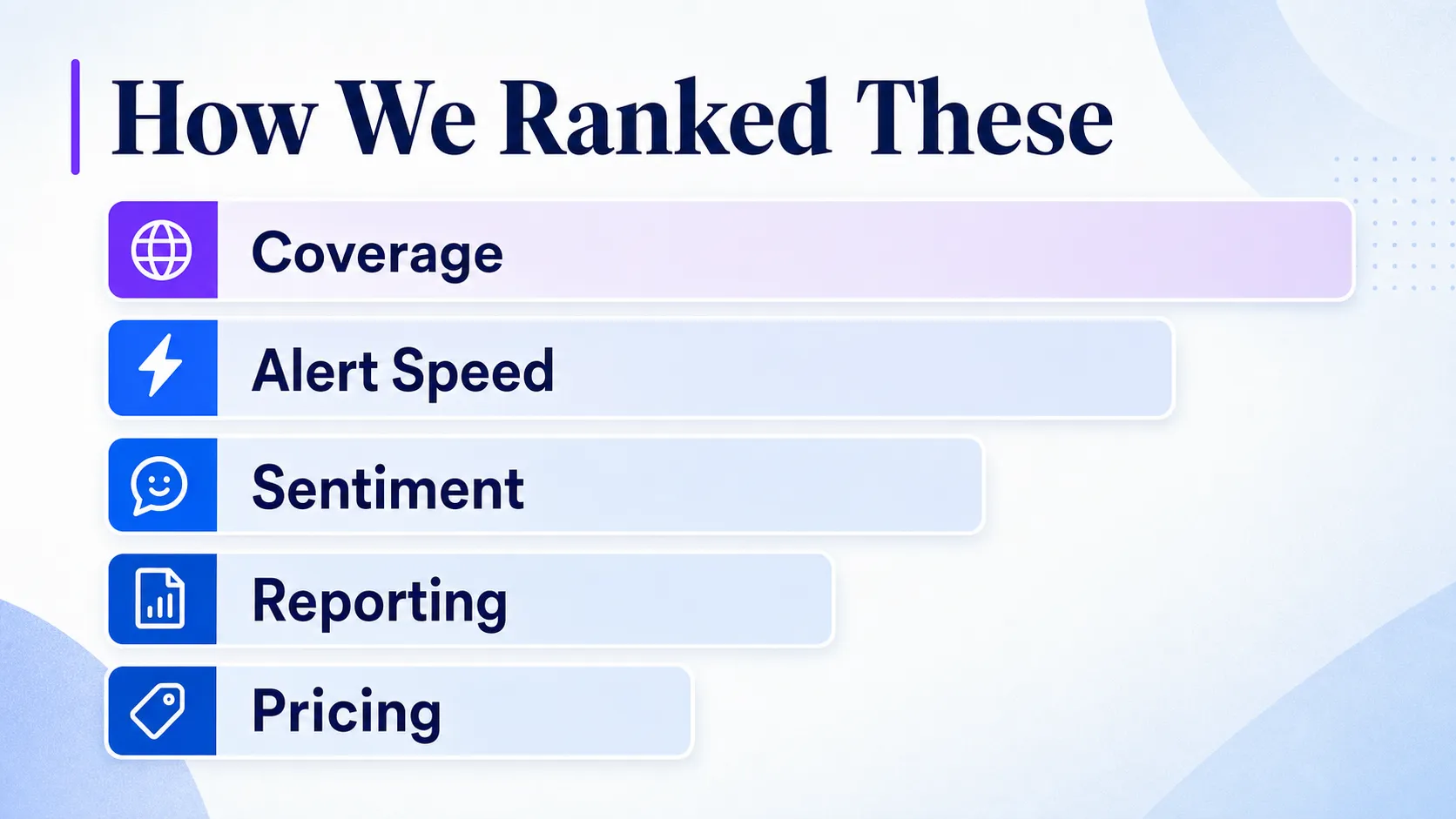
Monitoring coverage came first. A service that only watches Twitter or Instagram leaves blind spots across Reddit, forums, review sites, news, and video, which is where buying conversations often start.
Alert speed mattered next, because a mention you see two days late is a crisis you already lost. Sentiment analysis had to be useful in practice, not a vanity score, and reporting had to produce something a stakeholder or client could actually read.
Integrations and ease of use rounded out the practical side. A tool that nobody on the team logs into is wasted budget, no matter how powerful. Pricing transparency was the last filter, since quote-only enterprise packaging makes fast comparison hard for smaller buyers.
One distinction shapes the whole list. True monitoring and social listening platforms exist to track conversations, while broader social media management suites are built to schedule and publish, with listening bolted on.
Both can belong in a roundup, but only when the difference is clear, so each pick names which category it really sits in. Tools were prioritized for the buyer outcome they deliver, not the number of boxes they tick.
10 Best Social Media Monitoring Services Ranked
Here are the ten services worth your shortlist, ranked by how well they balance coverage, alert quality, and fit for a specific job. Each entry names what it’s, why it earns its place, and who it suits best.
1. BrandMentions: Best for Real-Time Brand Monitoring
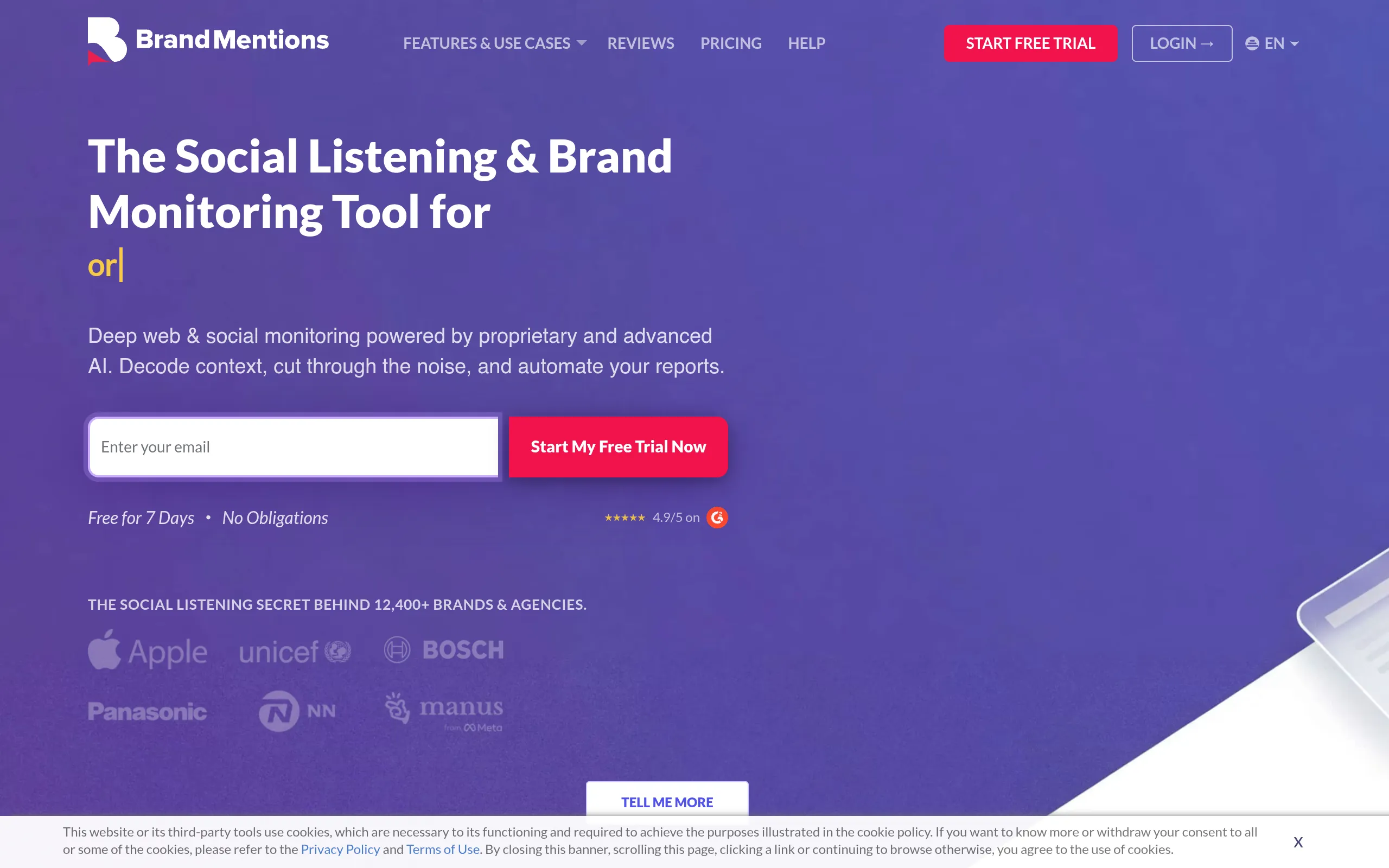
BrandMentions is a real-time monitoring tool that tracks your brand across social media, news, blogs, and video, built for buyers who need broad coverage and fast alerts in one place.
It catches mentions as they happen, with customizable alerts and consumer sentiment tracking, so you respond to praise or a brewing complaint while it still matters. The strength here’s reach plus speed: you aren’t stitching together three narrow tools to cover the web.
For a brand that lives or dies on early warning, that combination is the whole point.
- Best for: Real-time brand monitoring across the open web
- Starting price: From $99/month
- Free tier or trial: Yes
- Standout feature: Real-time alerts with consumer sentiment monitoring
- Rating with source: 5/5 (thecmo.com review)
2. Mention: Best for Fast Keyword Alerts
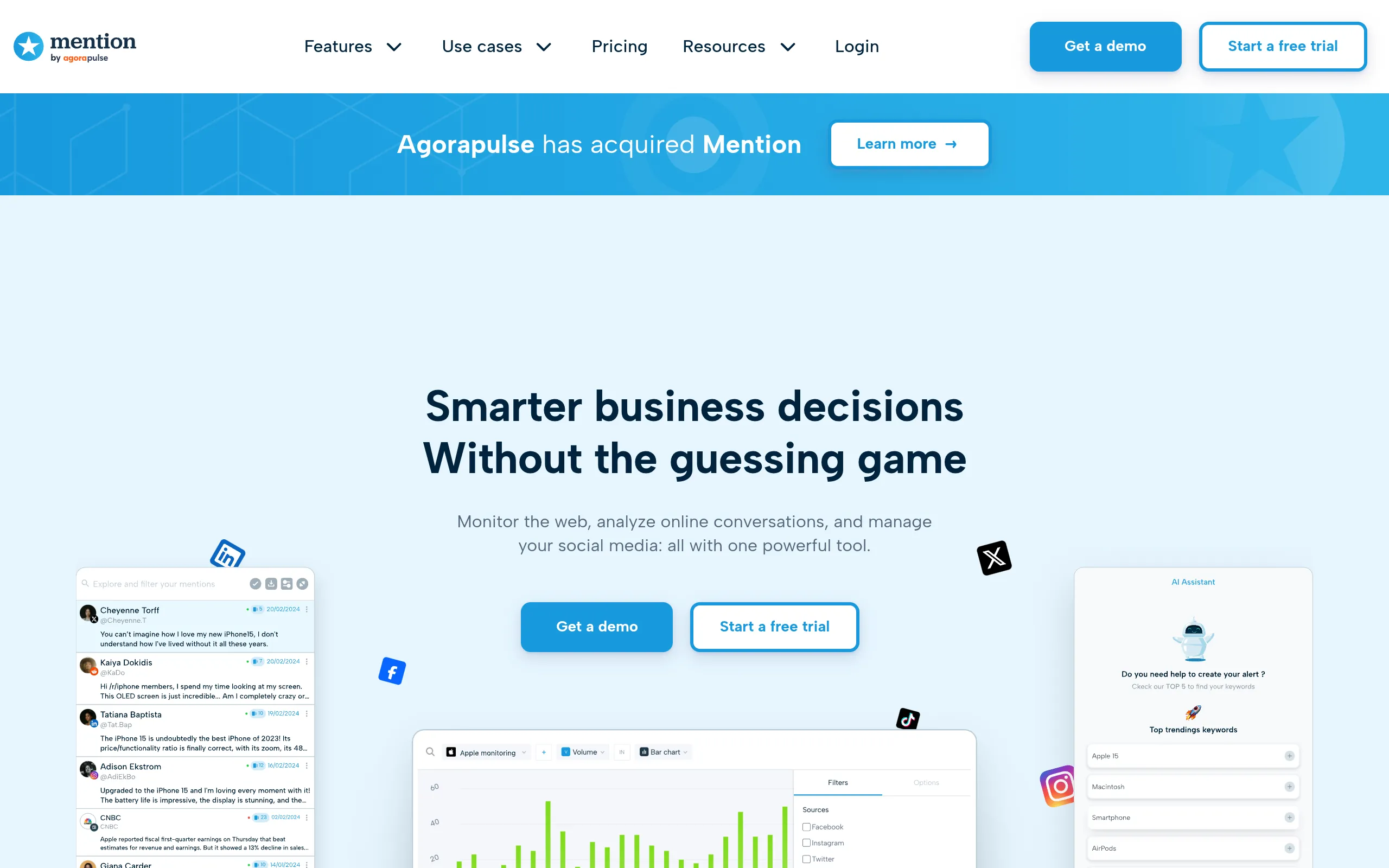
Mention is built around speed, monitoring conversations across more than a billion sources with sophisticated Boolean search and influencer identification. It fits teams whose top priority is catching a mention quickly, especially for crisis response.
The real-time keyword alerts and filtered searches let you cut through volume and watch only what you defined, which is exactly what you want when an issue is moving fast. The pricing jumps sharply at higher mention volumes, so map your expected mention count before you commit to a tier.
- Best for: Fast keyword alerts and crisis monitoring
- Starting price: Solo from $41/month (billed annually)
- Free tier or trial: Yes, 14 days
- Standout feature: Real-time keyword alerts with Boolean search
- Rating with source: 4.5/5 (thecmo.com review)
3. YouScan: Best for Visual Analysis
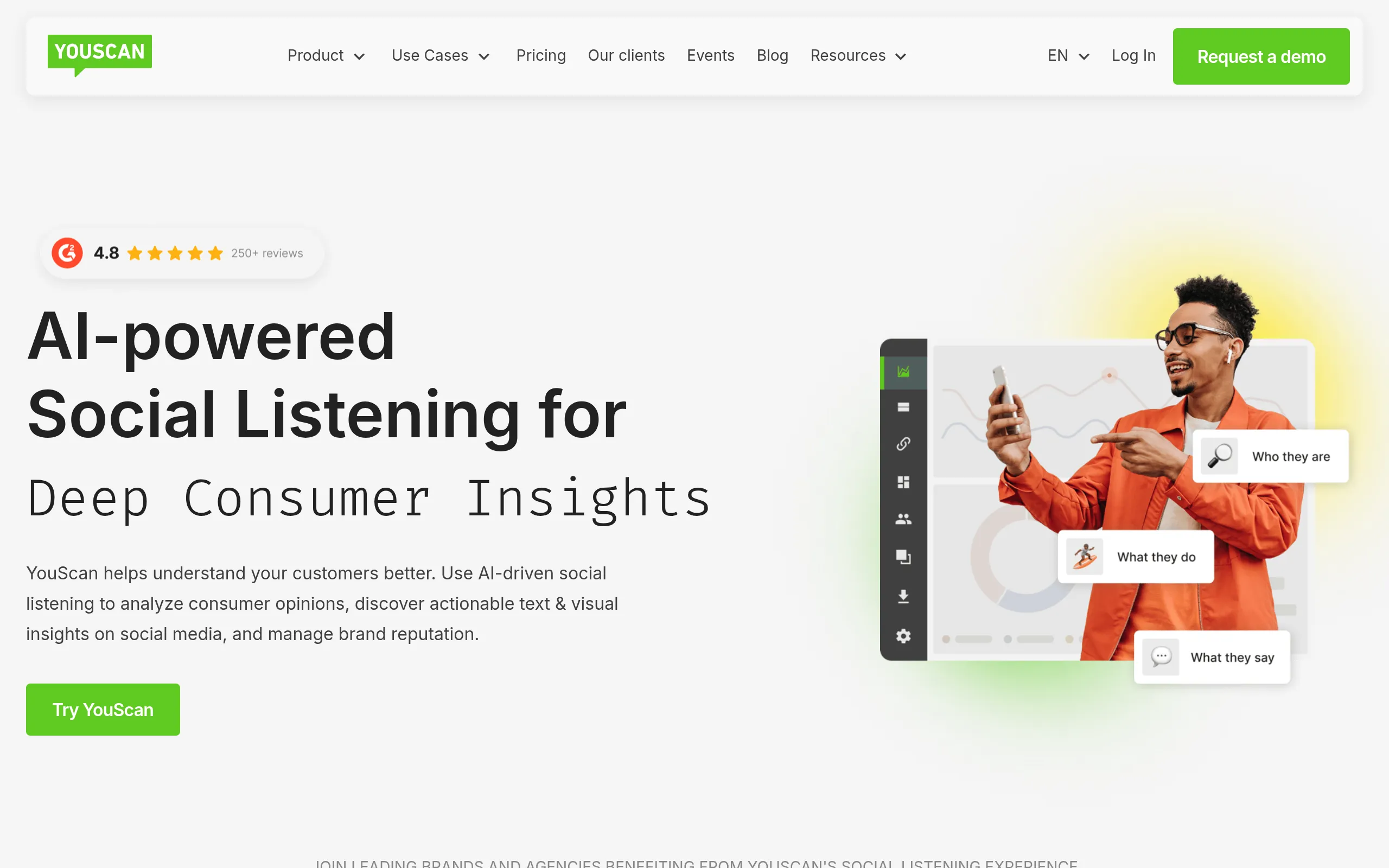
YouScan is monitoring software that adds visual recognition on top of conversation tracking, spotting your logo, objects, and scenes in images people share. It suits brands that are image-heavy, where a product shows up in a photo without any text mention at all.
Its aspect-based sentiment analysis goes deeper than a simple positive-or-negative tag, breaking opinion down by what people actually liked or disliked. If your brand only lives in text searches, you’re paying for a strength you won’t use, so the visual angle is the reason to pick it.
- Best for: Visual recognition and image-heavy brands
- Starting price: From $499/month (billed annually)
- Free tier or trial: Yes
- Standout feature: Logo and object recognition with aspect-based sentiment
- Rating with source: 4.8/5 (thecmo.com review)
4. Talkwalker: Best for Global, Multilingual Monitoring
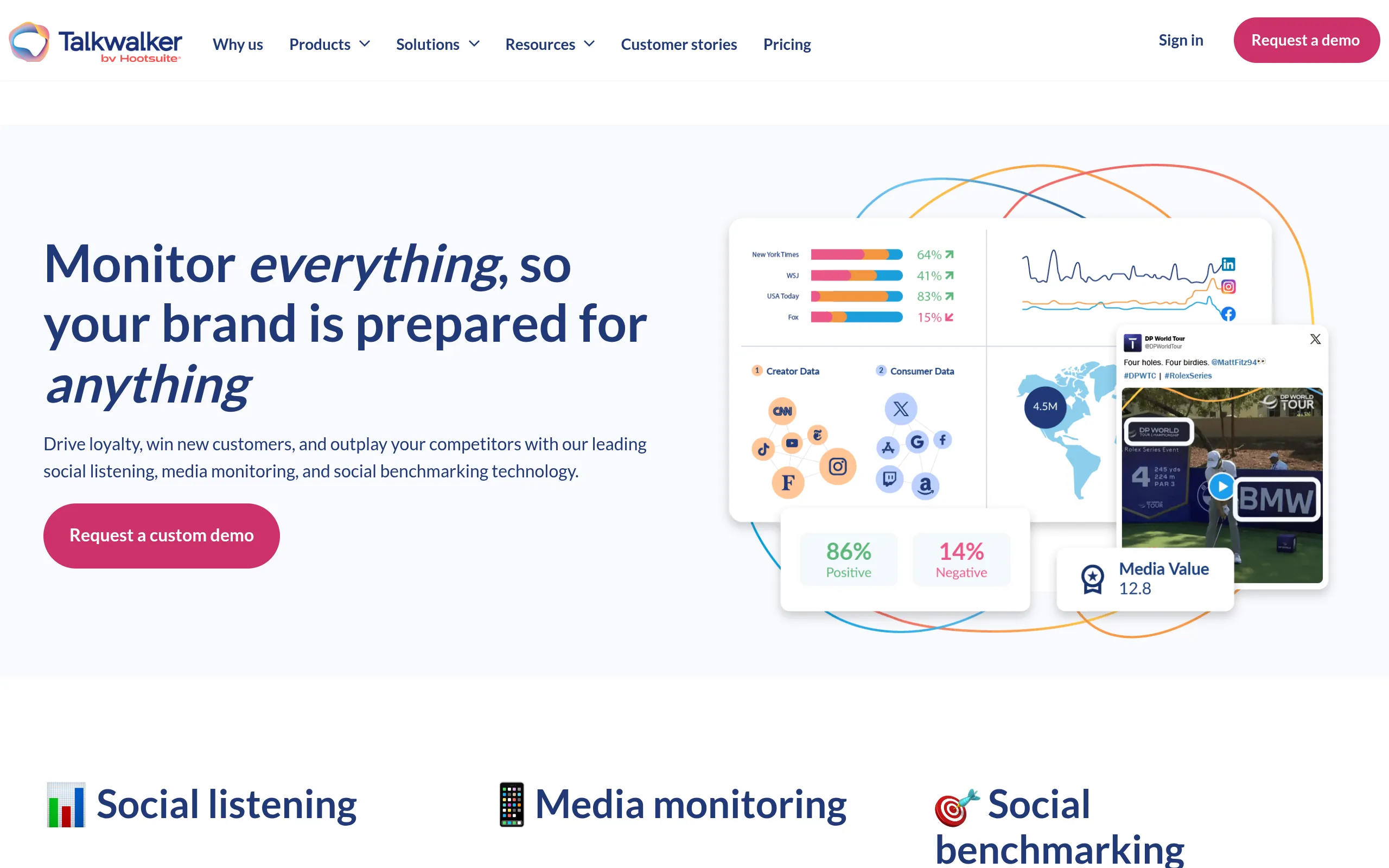
Talkwalker tracks conversations and media presence across digital channels worldwide, with multilingual coverage plus image and video recognition. It earns its spot for any brand whose audience spans languages and regions, where a single-market tool would miss most of the picture.
The platform pairs that global reach with more than two years of historical data and AI-driven detection, so you can study trends rather than just react to today. Pricing is quote-based, which slows down a quick budget comparison, but the coverage is the trade.
- Best for: Global and multilingual monitoring
- Starting price: Custom quote
- Free tier or trial: Yes
- Standout feature: Multilingual coverage with image and video recognition
- Rating with source: 4.3/5 (thecmo.com review)
5. Brandwatch: Best for Enterprise Consumer Intelligence

Brandwatch is research-grade monitoring built for enterprise teams that need deep consumer intelligence, not just alerts. It fits brands doing serious market and audience insight work, where the goal is understanding why people feel a certain way, not only that they posted.
The deep sentiment analysis and audience insights give comms and strategy teams material to brief decisions, not just dashboards to glance at. This is overkill for a small brand that just wants to know when someone tags them, so reach for it when research is the actual job.
Explore alternatives in our roundup of Brandwatch alternatives for social listening.
- Best for: Enterprise consumer intelligence and research
- Starting price: Custom quote, typically from $800/month
- Free tier or trial: Yes, demo
- Standout feature: Deep sentiment analysis and audience insights
6. Meltwater: Best for Media Monitoring and PR Reports
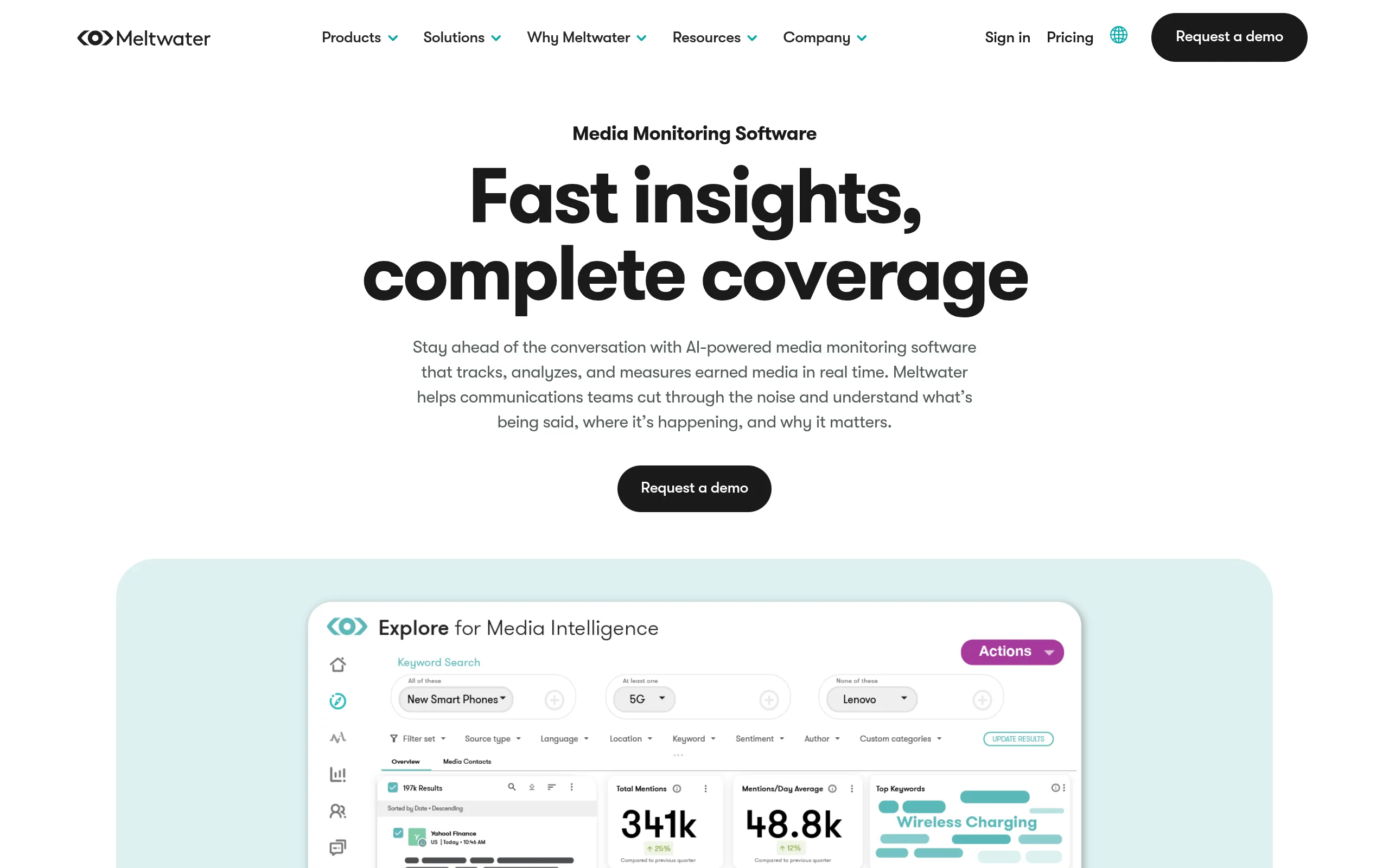
Meltwater is media monitoring built for communications teams that need stakeholder-ready reporting. It earns its place when the deliverable is a clean media report a leadership team or board will read, not a raw mention feed.
The reporting depth is the draw, turning scattered coverage into a narrative executives can act on. If your need is purely social and fast alerts, a lighter tool fits better, so choose Meltwater when PR reporting is the recurring task.
For more options in this space, see our list of Meltwater alternatives for PR teams.
- Best for: Media monitoring and PR reporting
- Starting price: Custom quote
- Free tier or trial: Yes, demo
- Standout feature: Stakeholder-ready media reports
7. Sprout Social: Best for All-in-One Management Plus Listening
Sprout Social is a full social media management suite with listening layered in as an add-on, suited to teams that want publishing, an inbox, and monitoring in one place. It fits when scheduling and engagement matter as much as listening, so you aren’t paying for a standalone monitor on top of a separate publishing tool.
The Smart Inbox and analytics dashboards are the everyday draw, with listening as the extra layer. Treat the monitoring as a complement here, not the core engine, since a dedicated monitor will out-cover it on pure listening.
- Best for: Teams that need publishing, inbox, and listening together
- Starting price: From $199/seat/month (billed annually)
- Free tier or trial: Yes, 30 days
- Standout feature: Smart Inbox with customizable analytics dashboards
- Rating with source: 4.3/5 (thecmo.com review)
8. Agorapulse: Best for Small Team Collaboration
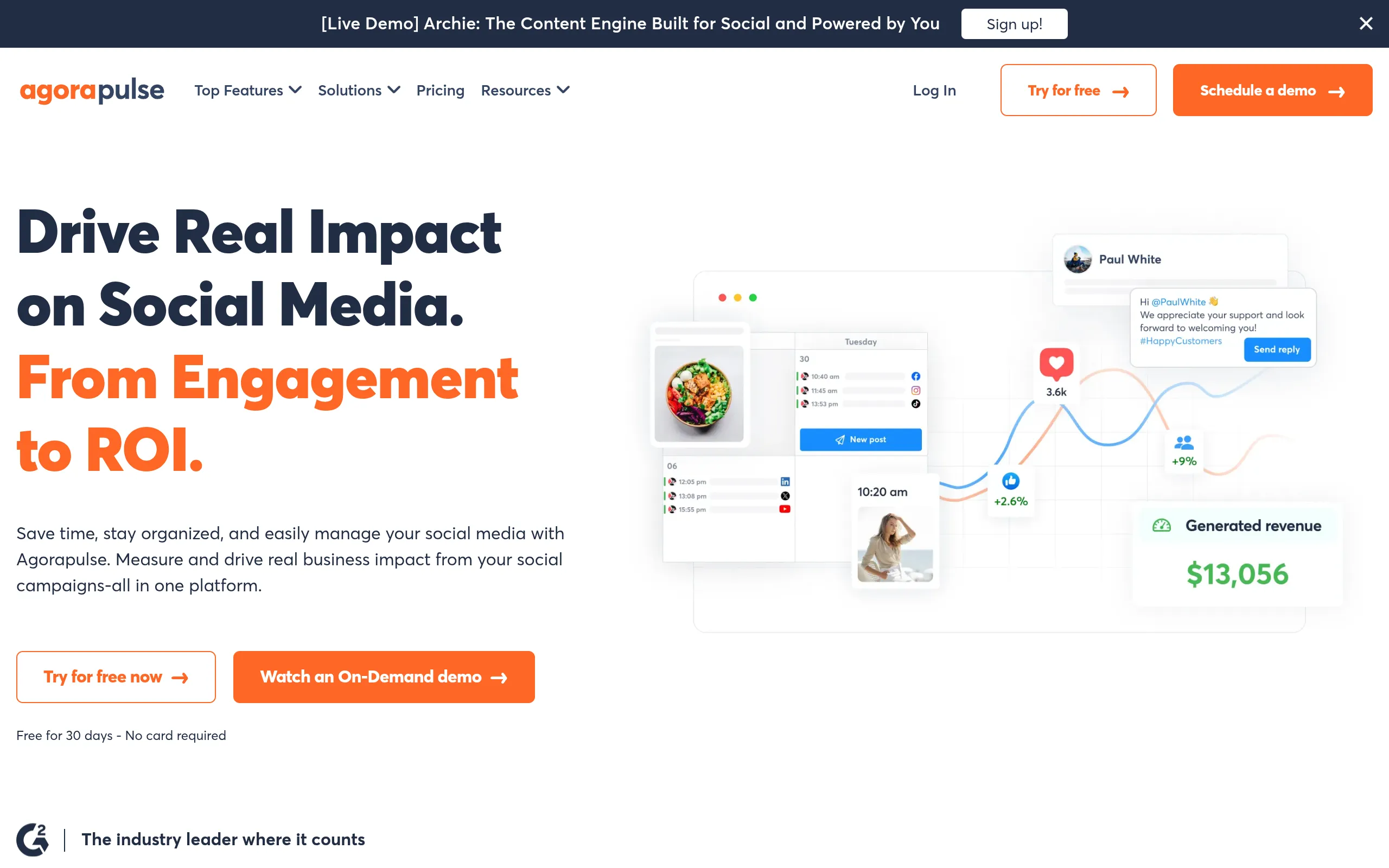
Agorapulse is a management tool with a strong social inbox and collaboration workflows, built for smaller teams that want practical monitoring inside daily operations. It fits when a handful of people share the work and need assignment tools and a shared calendar to avoid stepping on each other.
The standout is how monitoring sits naturally inside the team’s everyday inbox rather than a separate dashboard nobody opens. For deep enterprise listening it falls short, so it’s the right call for lean teams who value workflow over research depth.
- Best for: Small team collaboration and daily operations
- Starting price: From $79/user/month (billed annually)
- Free tier or trial: Yes
- Standout feature: Shared content calendar and social inbox management
- Rating with source: 4.5/5 (thecmo.com review)
9. Awario: Best for Budget-Conscious Monitoring
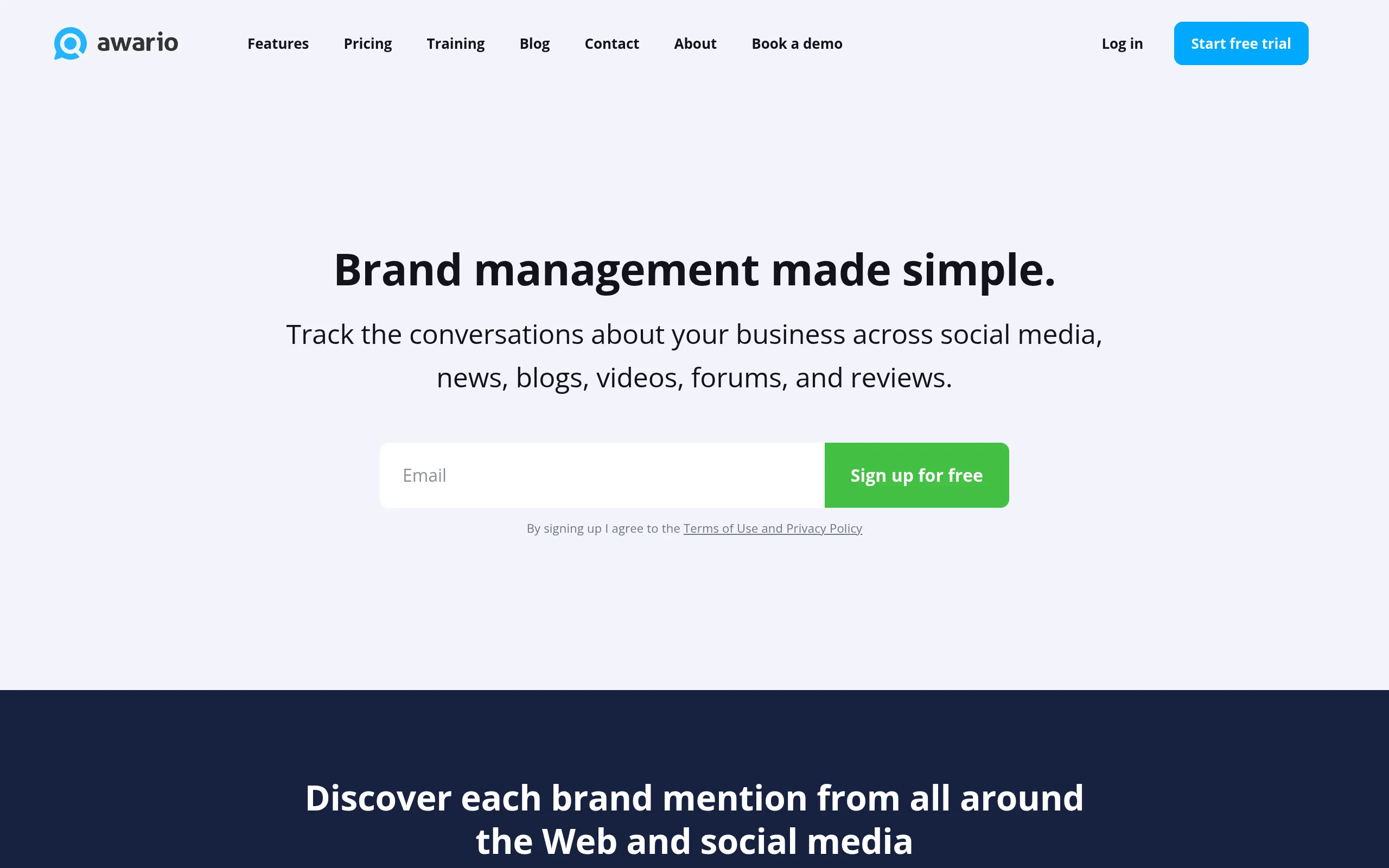
Awario is budget-friendly monitoring with high mention limits and social selling signal detection, built for lean teams that have outgrown free tools but can’t justify enterprise spend. It earns its place by offering real coverage at a price small teams can absorb, plus the bonus of surfacing sales opportunities in conversations.
The mention volume for the cost is the practical draw. Some advanced fields are thin compared to enterprise platforms, so treat it as the step up from free rather than a research-grade tool.
- Best for: Lean teams needing more than free tools offer
- Starting price: Starter from €29/month
- Standout feature: High mention volume with social selling detection
10. Brand24: Best for Agency White-Label Reporting
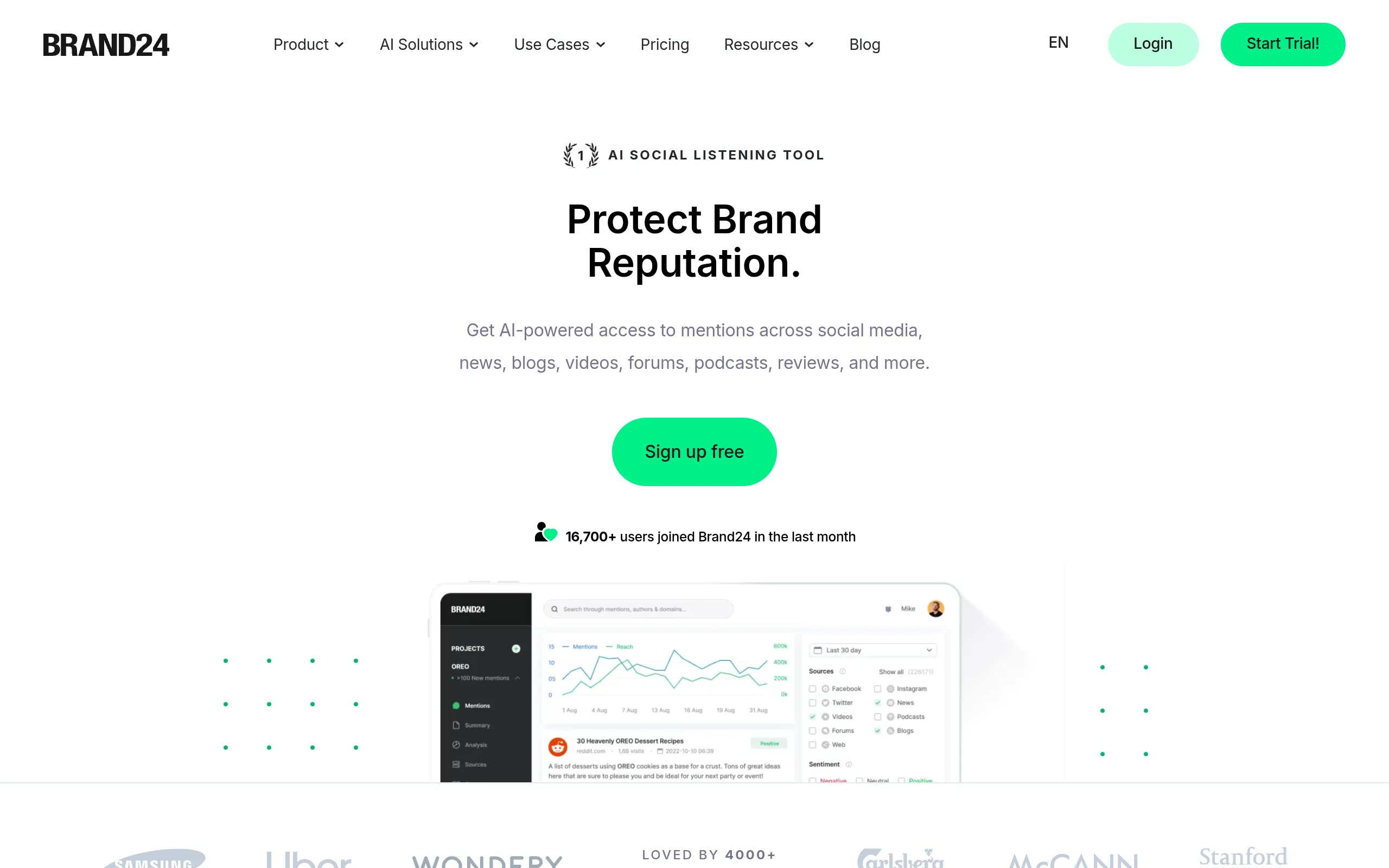
Brand24 is monitoring with strong value and white-label reporting, built for agencies and marketers who need client-friendly outputs. It tracks conversations across social, news, blogs, podcasts, and reviews, and the branded reports let an agency hand clients a polished deliverable without extra design work.
The white-label angle plus its AI Brand Assistant are the reasons it lands here. Pricing tiers climb as you add clients, so size your plan to the number of brands you actually manage.
- Best for: Agencies needing white-label client reports
- Starting price: Individual from $149/month
- Free tier or trial: Yes, 14 days
- Standout feature: White-label reports with AI Brand Assistant
Social Media Monitoring Services Comparison Table
This table cuts ten services down to a shortlist at a glance. Scan the best-for column first to find your job, then check the starting price to see what fits the budget.
| Service | Best for | Starting price |
|---|---|---|
| BrandMentions | Real-time brand monitoring | From $99/month |
| Mention | Fast keyword alerts and crisis | From $41/month |
| YouScan | Visual analysis, image-heavy brands | From $499/month |
| Talkwalker | Global, multilingual monitoring | Custom quote |
| Brandwatch | Enterprise consumer intelligence | From $800/month |
| Meltwater | Media monitoring and PR reports | Custom quote |
| Sprout Social | Management plus listening | From $199/seat/month |
| Agorapulse | Small team collaboration | From $79/user/month |
| Awario | Budget-conscious monitoring | From €29/month |
| Brand24 | Agency white-label reporting | From $149/month |
These ten were picked on coverage breadth, alert speed, sentiment usefulness, reporting quality, and clear fit for a specific buyer job, drawing on the standout features and pricing reported across published 2026 reviews.
The list mixes dedicated monitors, enterprise listening platforms, and management suites with listening built in, with each pick’s true category named so the comparison stays honest.
See where AI answers put your brand
Twenty minutes with a senior strategist: where the major engines point buyers in your category, who gets named instead of you, and a straight read on what a programme would change.
Book a strategy callHow to Choose the Right Service for Your Team
Work the decision in order: use case first, then budget, then team size. Most teams overbuy dashboards and underbuy alert quality, which is why the first filter should always be the problem you’re solving, not the feature count.
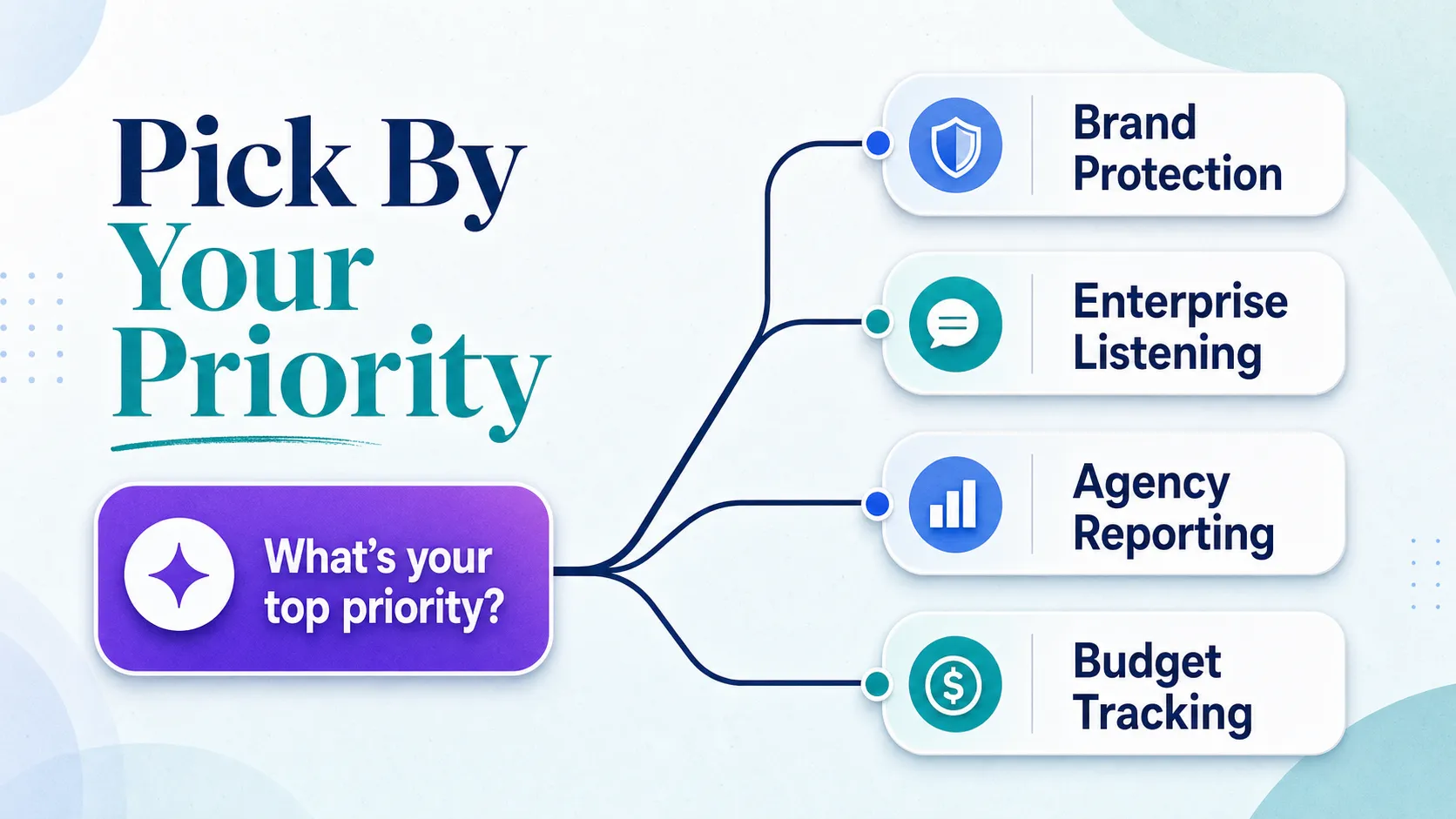
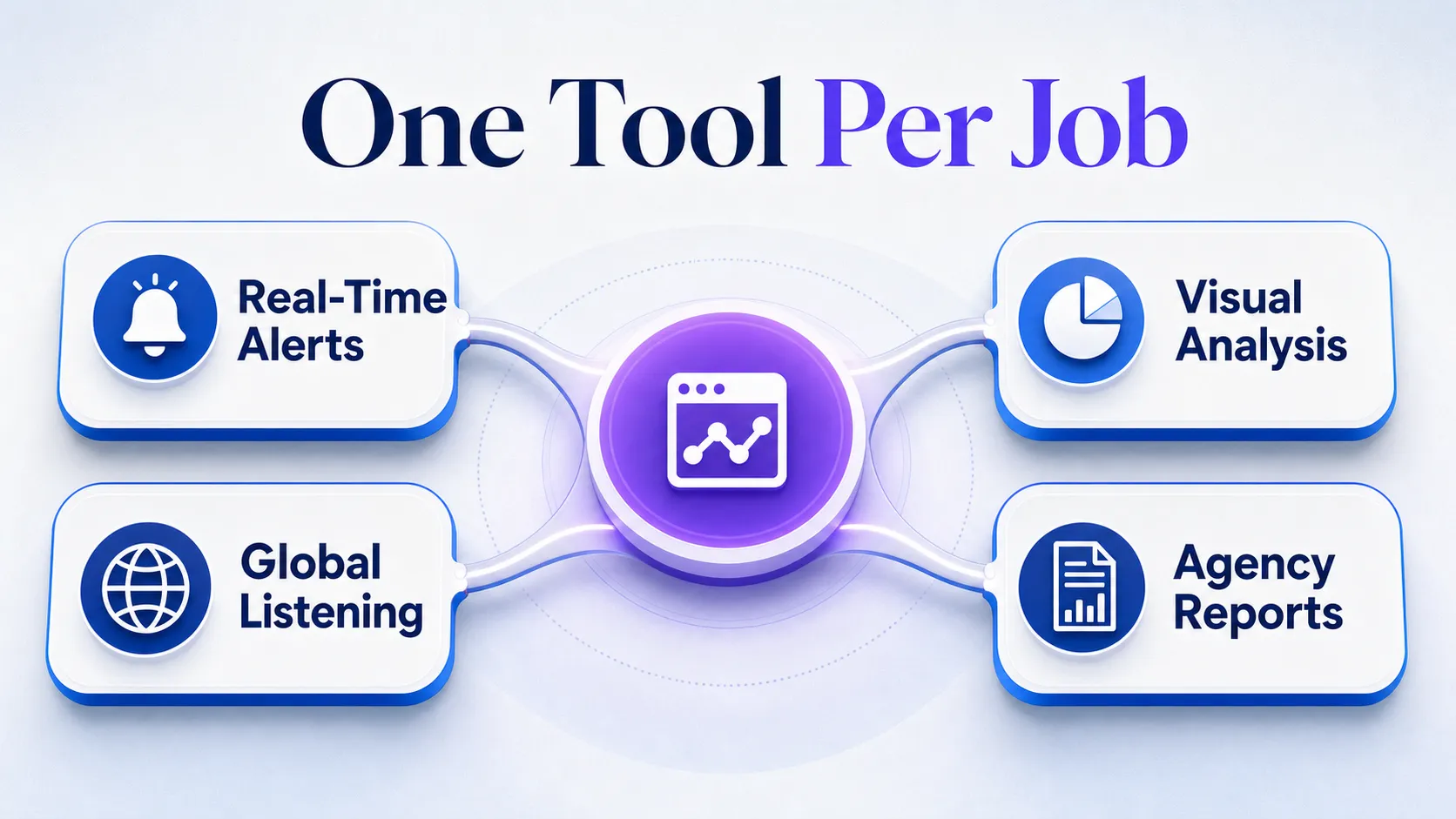
If Real-Time Brand Protection Is the Priority
Choose a tool built for fast alerts and broad mention coverage across the open web. The job is early warning, so coverage depth and alert speed beat analytics polish.
BrandMentions and Mention sit here, since both surface mentions quickly across social, news, and blogs. A management suite is the wrong call when crisis response is the real need.
If Enterprise Listening Is the Priority
Choose a platform with multilingual support, historical data, and deep analytics. The job is understanding patterns and audience opinion at scale, not just catching today’s mentions.
Brandwatch and Talkwalker fit, with research-grade sentiment and years of historical conversation to study. The price reflects the depth, so commit only when research is a recurring deliverable.
If Agency Reporting Is the Priority
Choose a service with white-label outputs and client-friendly dashboards. The job is handing clients something polished without extra design work every month.
Brand24 leads here on white-label reporting, with Meltwater fitting when the report is media-coverage heavy. Judge these on how readable the export looks to a client, not on raw feature count.
If Budget Tracking Is the Priority
Choose a leaner monitoring tool before upgrading to enterprise software. The job is real coverage without enterprise spend, so you want the most mentions per dollar.
Awario fits, offering high mention volume at a low entry price. Start lean, prove the value, then upgrade once monitoring is part of how the team works.
If All-in-One Workflow Is the Priority
Choose a management suite only when publishing, inbox, and monitoring all matter equally. The job is running social end to end, where listening is one layer among several.
Sprout Social and Agorapulse fit, folding monitoring into daily operations. Skip this category if monitoring is the actual core need, because a dedicated monitor will out-cover the listening add-on.
AI Search Monitoring: The 2026 Evaluation Criterion Most Brands Miss
Social media monitoring has expanded to cover a channel that barely existed three years ago: AI-generated answers. When someone asks ChatGPT, Perplexity, Google AI Overviews, or Gemini about your category, those systems describe brands based on their training data and retrieved content, not based on what you publish on your own channels.
In 2026, 62% of marketers use some form of social media monitoring, but far fewer track what AI engines say about their brand when no one at the company is watching. The monitoring services that include AI answer tracking alongside traditional social and review monitoring provide more complete brand intelligence.
When evaluating any platform above, ask directly: does this service monitor AI outputs, or only traditional social and review channels?
The brands that will maintain the strongest positions in both search and AI answers are the ones building systems that close this gap now, before competitors do.
When a Managed Social Media Monitoring Service Makes More Sense Than Software
Self-service monitoring tools work well when your team has the bandwidth to review daily alerts, interpret sentiment trends, triage incoming mentions, and turn data into action on a consistent basis. For teams that are already at capacity, raw alert feeds tend to pile up unreviewed, and monitoring that nobody acts on provides no protection.
Managed social media monitoring services handle the monitoring, triage, escalation, and reporting for you. Instead of receiving raw data, you receive interpreted summaries with recommended responses and strategic observations.
The question to answer before choosing isn’t “which software should we buy?” but “do we’ve the internal capacity to run a monitoring program end-to-end, or do we need someone to run it for us?”
If the answer is the latter, done-for-you brand mention monitoring handles the full stack: real-time tracking, sentiment triage, AI citation auditing, and response protocols, without requiring your team to manage another tool.
FAQ: Social Media Monitoring Services
What’s the difference between social media monitoring and social listening?
Monitoring tracks and reacts to individual mentions in real time, while listening analyzes those mentions in aggregate to understand themes, sentiment, and trends. Monitoring answers “who said something about us right now,” so you can respond fast.
Listening answers “what do people feel about us overall,” so you can shape strategy. Most strong platforms do both, but a tool usually leans toward one.
Pick based on whether your job is rapid response or pattern analysis.
Which social media monitoring service is best for small businesses?
For a small business, a budget-friendly tool with broad coverage usually wins over an enterprise platform. Awario fits lean budgets with high mention volume, and BrandMentions covers social, news, and blogs from a low entry price.
Imagine a five-person team that just needs to know when customers mention them anywhere: a focused monitor at under $100 a month beats a research suite they’ll never fully use. Start with the cheapest tool that covers your channels, then upgrade only when you outgrow it.
Can social media monitoring help with customer service?
Yes, monitoring surfaces support issues and complaints the moment they post, often before the customer contacts you directly. Real-time alerts let your team reach out while the problem is fresh, which turns a public complaint into a recovered relationship.
Tools with a social inbox, like Agorapulse, make this even smoother by routing mentions straight into a shared workflow.
Is there a good free social media monitoring option?
Free options exist but are limited, since platforms have tightened their APIs and most vendors paywall their best features. Google Alerts covers web mentions at no cost, though not native social conversations, and several paid tools offer free trials or light free plans.
For anything beyond a single brand with light use, a paid entry tier delivers far more reliable coverage. Our guide to free social listening tools compares the realistic options.
Which tools are best for competitor tracking and sentiment analysis?
For competitor tracking, Brand24 and Awario surface rival mentions and share-of-voice signals at accessible prices, while Brandwatch offers the deepest research-grade comparison. For sentiment analysis, YouScan stands out with aspect-based sentiment that breaks opinion down by topic, and Brandwatch delivers the most rigorous read for enterprise teams.
Match the depth to the stakes: light competitive checks need a lean tool, while strategic research justifies a heavier platform.
Choosing the Service Your Team Will Actually Use
The best fit comes down to the job, not the brand name. Pick a fast, broad monitor for real-time brand protection, a research-grade platform for enterprise listening, a white-label tool for agency reporting, and a lean monitor for budget tracking.
Coverage, alert quality, and workflow fit matter far more than how impressive the feature page looks.
Shortlist two or three services, then compare their alerts, reporting, and coverage in a live trial with a real keyword set before you buy, because the right service should cut noise, speed up response, and make reporting easier from day one.