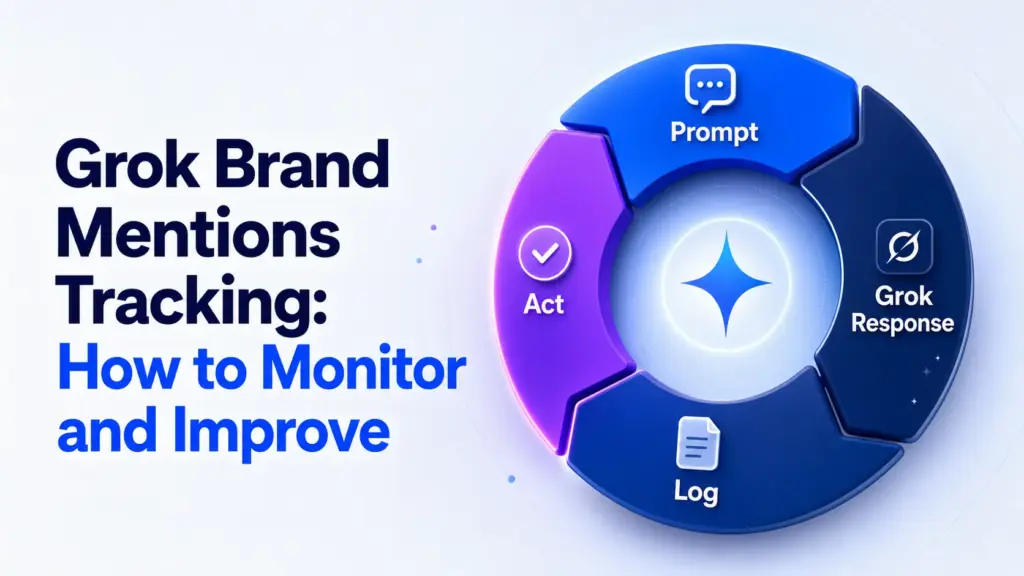

If Grok is naming your brand today and ignoring it tomorrow, you need a repeatable way to track the shift. Grok brand mentions tracking is the practice of monitoring when xAI’s Grok references, recommends, compares, or omits your brand across its AI-generated answers, then logging those results on a schedule so you can spot changes and act on them. This guide walks the full workflow: what to track, how to build a prompt library, how to run a baseline, which metrics matter, how to compare Grok against other engines, and how to turn findings into fixes. You will finish with a monitoring rhythm, not a one-off screenshot.
Grok behaves differently from ChatGPT or Gemini because it pulls from real-time activity on X, so its answers can move faster than the rest of the web. That volatility is exactly why a loose, occasional check fails you. You need consistency in what you ask and how you record it, or every apparent shift becomes noise you cannot trust.
What Grok Brand Mentions Tracking Is and Why It Matters
Grok brand mentions tracking means watching four distinct signals in Grok’s answers, then recording how each one changes over time. The job is not to prove your brand is popular. It is to understand the quality of your visibility inside a model that shapes buying research for millions of X users.
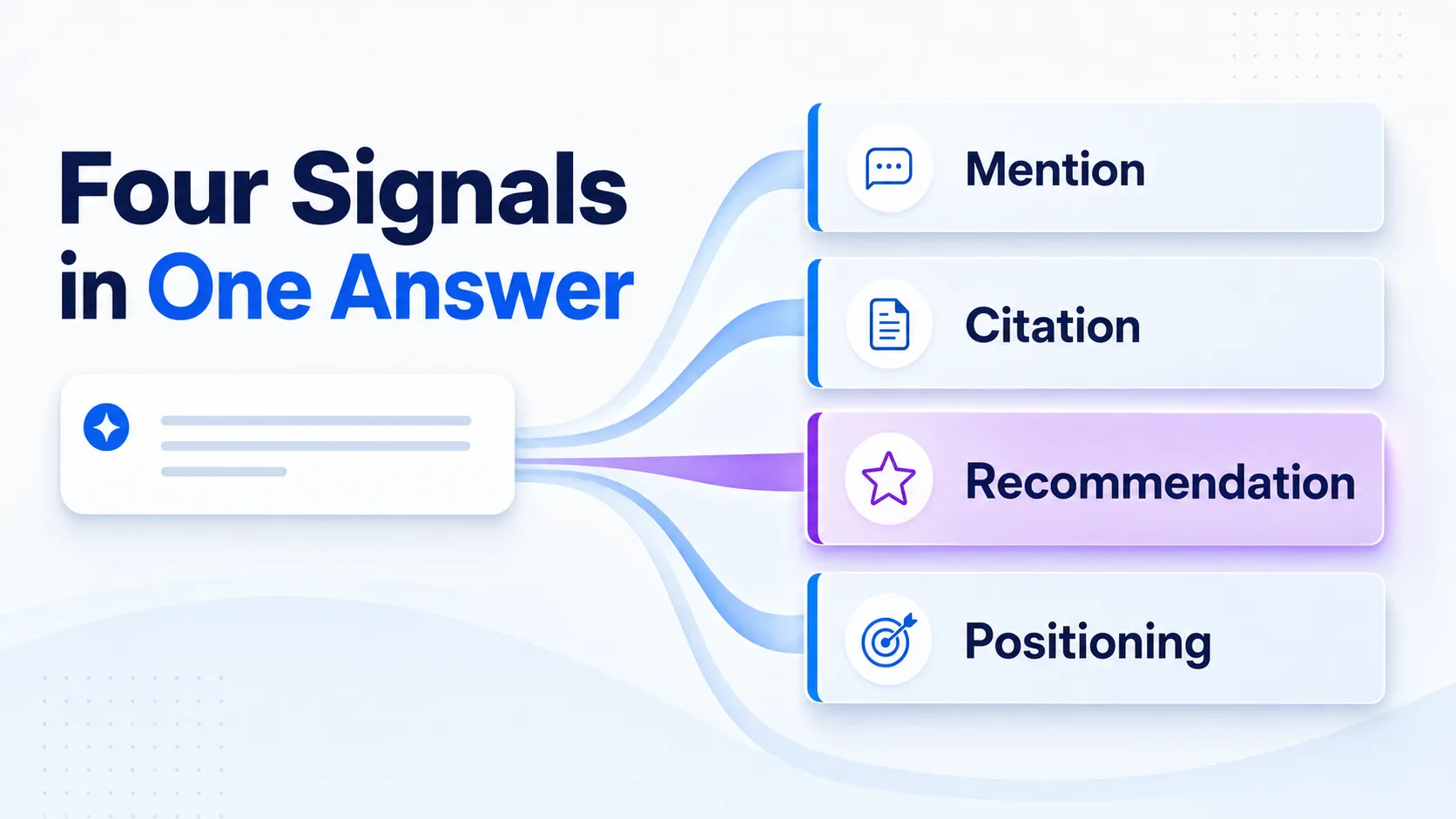
The four signals break down like this:
- Mention: Grok names your brand at all in a relevant answer.
- Citation: Grok backs the mention with a reason or a source.
- Recommendation: Grok actively suggests you, not just references you.
- Positioning: how Grok frames you against competitors.
Raw mention count is the weakest of these on its own. A brand that gets named ten times with dismissive framing is losing to a competitor named three times as the clear recommendation. That is why this guide keeps returning to framing and share, not just volume.
Grok’s tie to X is the practical reason all of this moves quickly. When a launch, a complaint thread, or a comparison post gains momentum on X, Grok’s answers often reflect it before broader web signals catch up. If you have ever watched your brand’s framing swing after a reputation event, that is the mechanism. The rest of this guide is about catching those swings on purpose rather than by accident. For the broader picture across every model, our guide to tracking brand mentions in large language models sets the wider context.
What You Need Before You Start
Before you run a single prompt, lock your scope. Teams that skip this step get noisy, unusable results, because they cannot tell a real change from a prompt they worded differently last week. Here is the minimum setup.
- Access to Grok, which requires an X Premium account for full capability.
- Your exact brand name, plus common abbreviations and misspellings.
- A competitor list of 3 to 6 rivals you expect Grok to name.
- Your priority category and market, so answers stay comparable.
- A tracking sheet or dashboard with fixed fields: prompt, date, model version, response, and interpretation.
- A decision on manual versus automated checks.
Decide upfront whether you are tracking one brand, a product line, or multiple entities that share a name with something else. Name collisions matter here. If your brand shares a word with a city, a band, or a common product, Grok may blend them, and your log needs a rule for that from day one.
Manual checks are fine for the baseline. For ongoing monitoring, aim for at least semi-automation, because the discipline of running identical prompts on schedule is exactly what humans skip when a week gets busy.
Step 1: Define Exactly What Counts as a Grok Mention
Set your measurement rules first, so every future scan is comparable. A mention is any time Grok names your brand in a relevant answer. A citation is when Grok attaches a reason or source. A recommendation is when Grok actively suggests you. Write these definitions down and do not change them mid-campaign.
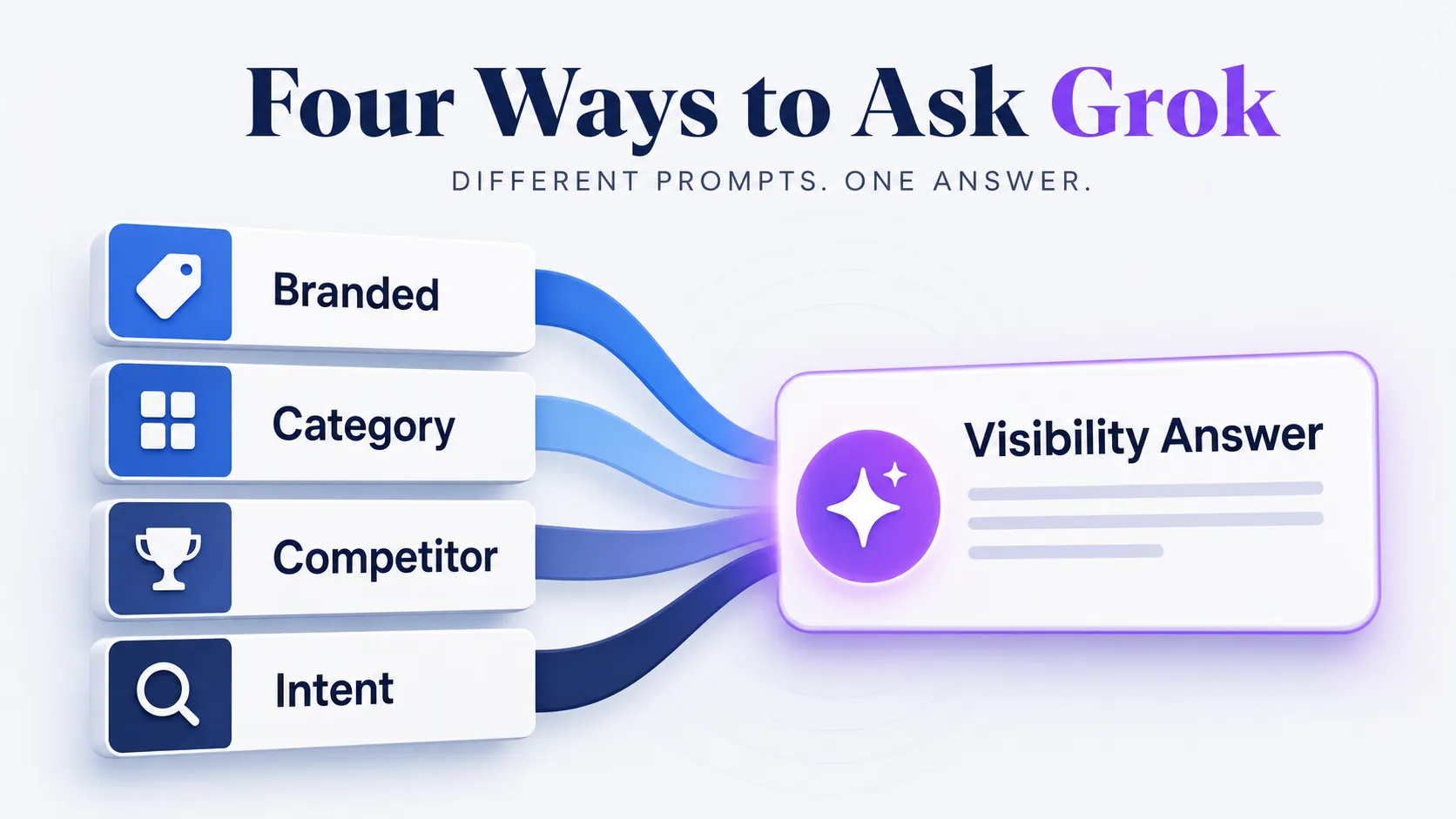
Split your prompts into four buckets, because each one tells you something different about visibility.
Branded Prompts
These ask Grok directly about you: “What does [brand] do?” or “Is [brand] any good?” They test accuracy and tone. If Grok gets your basic facts wrong here, that is a correction priority before anything else.
Category-Level Prompts
These ask about your space without naming you: “What are the best tools for [job]?” This is where you learn whether Grok names you unprompted, which is the strongest visibility signal you can earn.
Competitor Prompts
These name a rival: “How does [competitor] compare to alternatives?” They show whether you appear in your competitor’s shadow, and how Grok frames the matchup.
Problem or Intent Prompts
These describe a need in the buyer’s words: “I need to reduce [pain point], what should I use?” These map to real research behavior and often reveal gaps where you should be named and are not.
Now set your tone scale. Log every mention as positive, neutral, negative, uncertain, or dismissive. And define omission clearly: when Grok answers a category question fully and never names you, that is a tracked event, not a blank cell. Omission on a category prompt is often more useful than a lukewarm mention on a branded one.
Finally, write a matching rule for synonyms, abbreviations, and partial matches, so the same entity is tracked the same way every cycle. Inconsistent definitions create false month-over-month jumps even when Grok’s behavior has not really changed. That is the single most common reason a tracking log becomes untrustworthy.
Step 2: Build a Prompt Library and Run a Baseline Scan
Build a prompt library of 20 to 40 queries if your brand spans multiple categories, markets, or competitors. Keep a smaller core set unchanged over time, because trend comparison only works when the wording stays identical. Repeatable wording matters more than raw volume. A tight, consistent library beats a sprawling messy one every time.
Your library should mix all four prompt classes from Step 1. Include direct brand questions, category “best X for Y” prompts, competitor comparisons, and problem-solving prompts phrased the way a real buyer would type them.
To run the baseline, work through the library once and record every result. Grok answers are non-deterministic, so when a response looks unstable, run that prompt three times and log the most common pattern rather than a single lucky or unlucky hit.
Capture these fields on every prompt during the baseline:
- Brand presence: named or absent.
- Competitor presence: who else showed up.
- Tone: your five-point scale from Step 1.
- Accuracy: did Grok get your facts right.
- Unprompted appearance: named without you cueing it.
- Rationale pattern: any repeated reason Grok gives.
This baseline is your reference point for everything that follows. Without it, later scans have nothing to compare against, and you are back to guessing. Our walkthrough on tracking brand mentions in AI search results covers the recording discipline in more depth if you want a broader template.
Step 3: Set Cadence and Track the Right Metrics
Match your monitoring cadence to business activity, not a fixed calendar. The right frequency depends on how much is moving in your category and around your brand.
| Cadence | When to use it |
|---|---|
| Daily | Product launches, PR issues, funding news, or active competitor announcements |
| Weekly | Active, competitive categories with ongoing content and coverage |
| Monthly | Stable categories with little movement or news |
The metrics matter more than the schedule. Tracking mention volume alone misses framing problems, especially when Grok names the wrong competitor as the leader or gives you a weak rationale. Here is what to measure and what each one tells you.
| Metric | What it tells you |
|---|---|
| Mention volume | Baseline visibility across your prompt set |
| Share of mentions vs competitors | Your competitive position, not just your presence |
| Tone | Whether the framing helps or hurts you |
| Recommendation rate | How often Grok actively suggests you |
| Omission rate | How often you are missing from relevant answers |
| Consistency over time | Whether a change is a trend or a one-off |
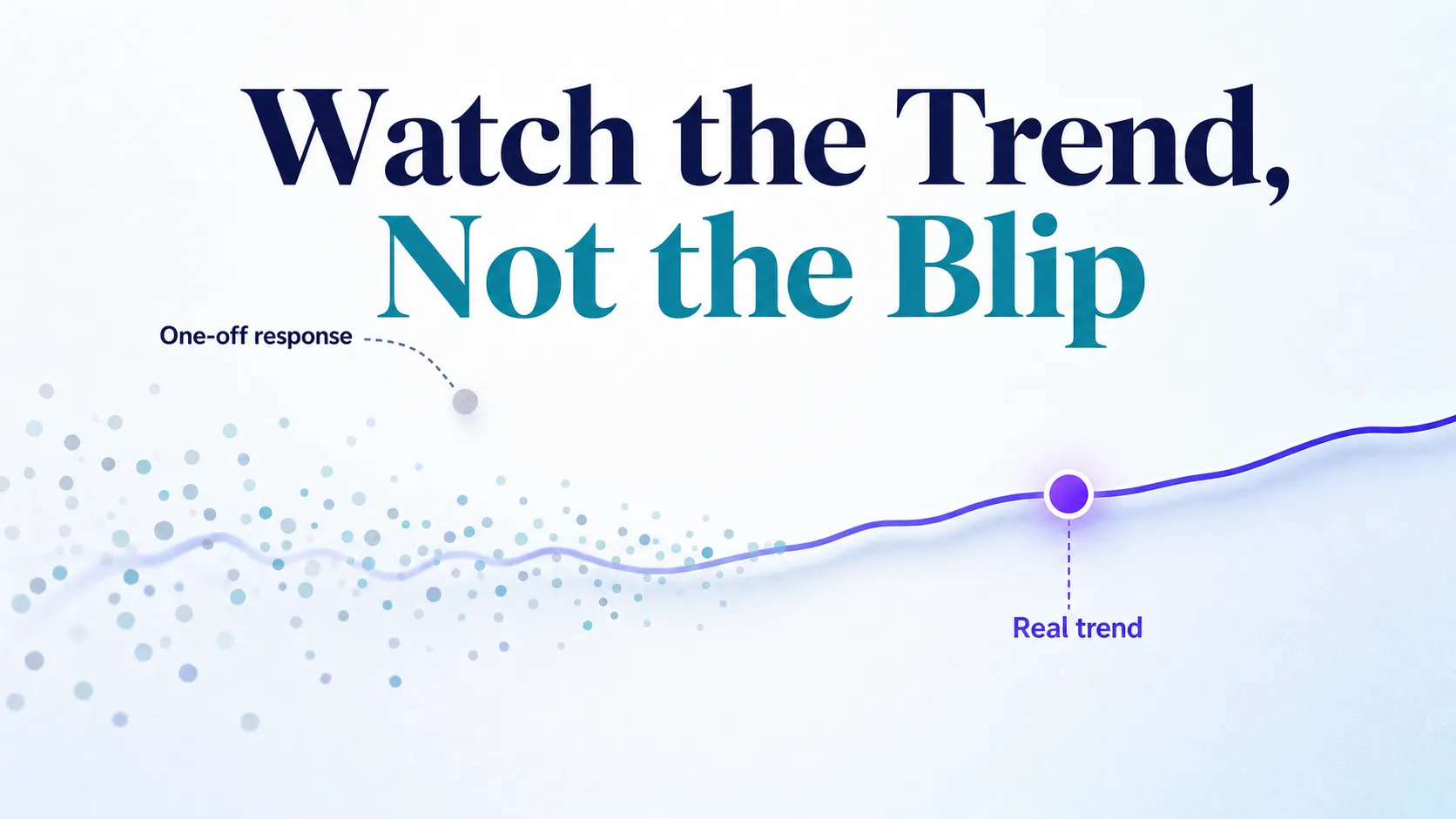
Set alert thresholds against baseline deviation, not arbitrary absolute counts. A jump from two mentions to four means nothing in isolation. A move that breaks your established range across several cycles is the signal worth acting on. Because Grok is non-deterministic, always read trends across cycles instead of reacting to a single answer that surprised you.
Step 4: Compare Grok Outputs With Other AI Engines and Social Signals
When your Grok numbers move, your first question is whether the change is Grok-specific or part of a broader visibility problem. You answer that by running the same core prompts through other engines.
| Engine | What comparing it tells you |
|---|---|
| Grok | Your baseline, sensitive to real-time X activity |
| ChatGPT | Whether the change reflects broader training and web signals |
| Perplexity | Whether cited sources back your presence, since it links heavily |
| Gemini | Whether Google-ecosystem signals differ from Grok’s view |
If competitors outrank you across every engine, that points to entity weakness you need to fix broadly. If the gap shows up only in Grok, that points to Grok volatility, often driven by recent X momentum rather than a durable problem.
Run this quick diagnostic when Grok shifts:
- Did the same prompt change in ChatGPT, Perplexity, or Gemini too?
- Is a competitor being cited everywhere, or only inside Grok?
- Was there a recent X spike, a review site change, or new coverage?
- Did a comparison post or news story about your category gain traction?
X momentum often shows up in Grok before it appears anywhere else, so social context belongs in every diagnosis. But hold the line on causation. A spike in X chatter that lines up with a Grok shift is a plausible driver, not proof. The goal is to identify likely causes you can act on, not to claim certainty from one data point. Our guide to tracking brand mentions across AI search platforms lays out the cross-engine workflow if you want to formalize it.
Step 5: Improve Visibility, Set Alerts, and Report Results
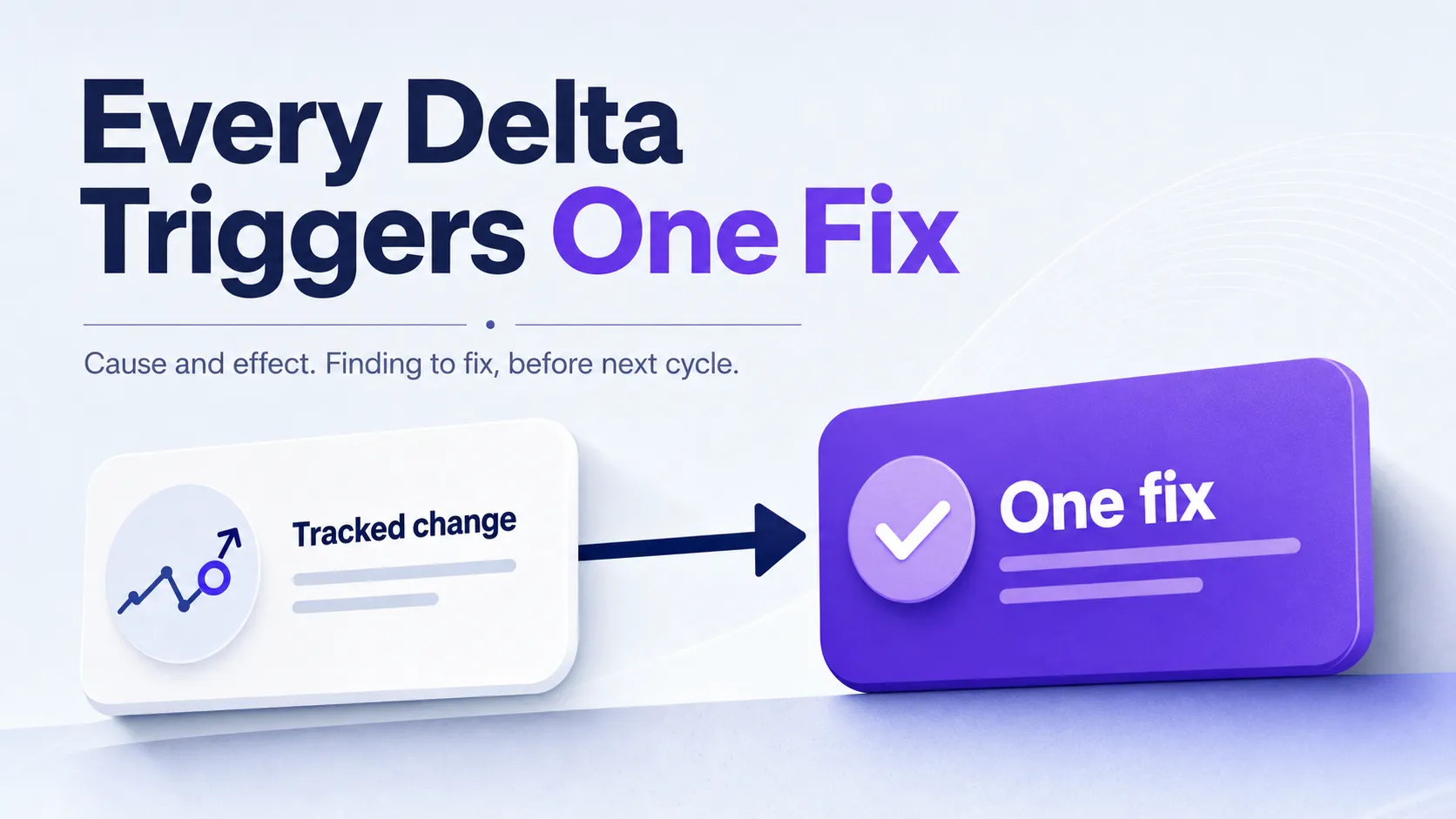
Tracking earns its keep only when findings become actions. Every meaningful delta should trigger one concrete change before your next monitoring cycle. This section covers the fix work, the alerting, and the reporting that keeps the system alive.
Strengthen Your Entity Signals
When Grok omits you from category answers, the root cause is usually weak entity presence. Build clearer brand pages that state what you do and who you serve, tighten your category relevance, and earn more corroborating mentions on trusted third-party sources. Grok draws on the wider web and X, so the more consistently your brand is described across places it reads, the more reliably it names you.
Publish Answer-First Content
Write content that directly answers the prompts you are testing. If your problem prompts reveal you are missing from “how do I reduce [pain point]” answers, publish a clear, direct response to that exact question. Content that answers the buyer’s real query in plain terms is what models pull from. Our guide on increasing brand mentions in AI search covers this content work in detail.
Fix Weak or Inaccurate Framing
When Grok names you with a dismissive tone or wrong facts, address the framing directly. Update your comparison pages, strengthen your author and entity signals, and earn supporting mentions that reinforce the accurate story. Framing problems rarely fix themselves, because they usually trace back to what the web says about you, not a Grok quirk.
Set Alerts That Match Your Risks
Configure alerts for the events that actually matter: a mention spike, a competitor surge, a tone drop, or a new omission pattern on a core prompt. Tie each alert to baseline deviation so you are notified about real movement, not routine variance in a non-deterministic model.
Report to Stakeholders in Five Lines
Keep the cycle report short enough that people read it. Cover what changed, why it matters, what competitors did, what you will fix next, and what to watch in the coming cycle. That structure links tracking to content, PR, and reputation work without drowning anyone in raw data.
The end state you are building toward is simple: a stable baseline, a repeatable cadence, clear trend visibility, and an action loop that turns every meaningful shift into one concrete move. The most common mistakes to avoid are inconsistent prompts, overreacting to a single response, tracking only volume, ignoring competitor mentions, and treating correlation as proof. Get those five right and your system holds up.
Frequently Asked Questions
How often should I monitor Grok mentions?
Check daily during launches, PR issues, or active competitor news, weekly for competitive categories, and monthly for stable ones. Grok’s tie to real-time X activity means fast-moving situations can shift your framing within hours, so raise your cadence whenever something material is happening around your brand or category. The rest of the time, weekly is enough to catch trends without burning your team out.
Can I track Grok brand mentions without a paid tool?
Yes, you can run manual checks with a Grok account and a structured tracking sheet. This works well for a baseline and for small prompt libraries. The catch is discipline: manual tracking depends on running identical prompts on schedule, and that is exactly what slips when a week gets busy. Once your library grows past 20 to 30 prompts or you need consistent alerting, semi-automation saves you from missing the shifts that matter most.
Does X activity directly affect what Grok says about my brand?
X activity strongly influences Grok’s answers, because Grok draws on real-time posts alongside training data and web search. A high-engagement thread praising or criticizing your brand can shift how Grok frames you faster than any other signal. That said, treat it as a strong driver rather than a guaranteed cause. When you see a Grok shift line up with an X spike, note it as a likely explanation and verify against your other engines before acting on it.
How is Grok tracking different from traditional brand monitoring?
Traditional monitoring counts where your brand is mentioned across social, news, and forums. Grok tracking measures how an AI model describes, recommends, or omits you when someone asks a question. The difference is that Grok synthesizes an answer rather than listing sources, so you are tracking framing and recommendation, not just mention count. That shift is why tone, positioning, and omission rate carry more weight here than raw volume.
How does Grok decide which brands to mention?
Grok pulls from training data, live web search, and real-time X content, then names the brands most strongly and consistently associated with the query. Clear entity signals, corroborating mentions across trusted sources, and active positive presence on X all raise your odds. Brands with thin or inconsistent web presence get omitted, even in categories where they belong, because the model has weaker evidence to name them confidently.
Grok tracking is not a scan you run once and file away. Choose your prompt set today, run a clean baseline, and build a weekly rhythm before your next launch, crisis, or competitor move, because visibility inside Grok compounds when you catch shifts early and act on them. One scan tells you where you stand. A steady loop tells you where you are heading, and gives you time to change it. Want to see how your brand shows up across AI answers right now? Book a strategy call and start from a real baseline.