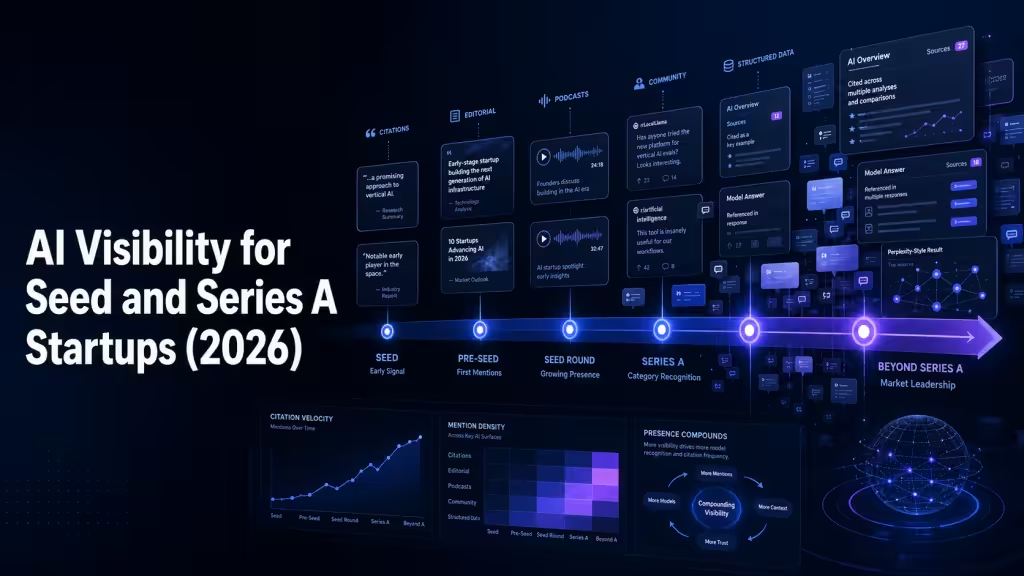

Your seed round closed six months ago. You hired two engineers, a head of growth, and shipped a product that actually works. Then a prospect tells you they asked ChatGPT for a recommendation in your category, and got three competitors. None were you. That’s the problem this article solves. AI visibility for seed and Series A startups isn’t a Series B marketing line item. It’s a foundational distribution channel you build during your first 18 months, or you spend the next three years buying your way out of invisibility.
Most early-stage founders treat AI search like a future problem. It isn’t. By the time you raise your A, the citation slots in your category are being filled, by whoever published useful content, earned editorial mentions, and showed up consistently on the sources LLMs train against. If that’s not you now, it won’t be you later. Here’s how to fix it before it costs you a round.
The Short Version
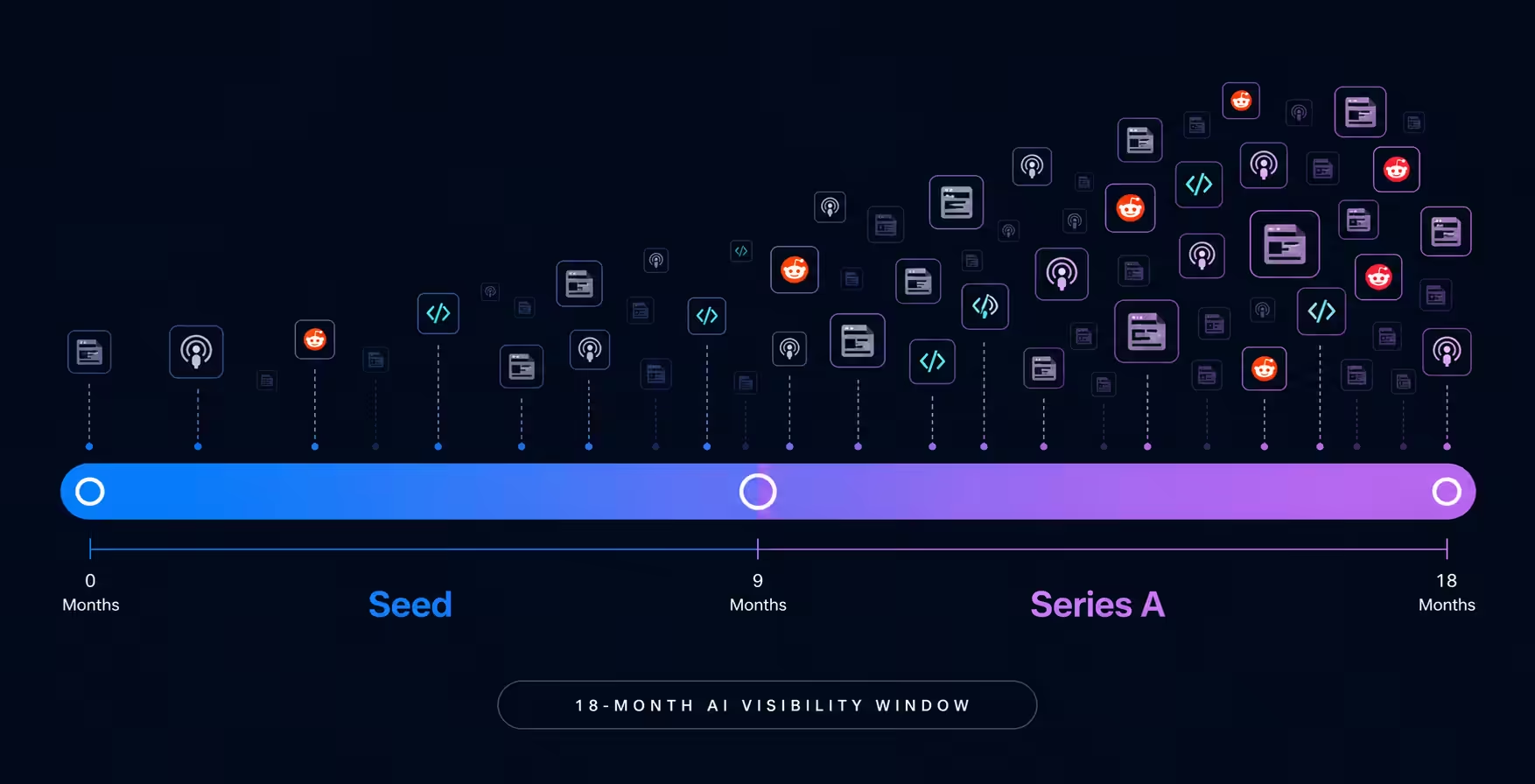
- Seed and Series A startups have a 12-18 month window to build AI citation presence before incumbents and well-funded competitors crowd them out.
- AI models cite brands they’ve seen mentioned across editorial sources, structured content, and high-trust community discussions, not brands with the biggest ad budgets.
- Your AI visibility budget should sit between your SEO and PR line items, typically $3K, $15K/month at seed, scaling at Series A.
- Three tactics drive 80% of early citations: founder-led thought leadership, category-defining content on your own domain, and editorial mentions on publications AI models actively index.
- Track citations in ChatGPT, Perplexity, Gemini, and Claude monthly. If your brand isn’t appearing in your category’s top 20 buyer queries within six months, your inputs are wrong.
Why Early-Stage Startups Can’t Wait on This
The argument against AI visibility work at seed stage usually sounds reasonable: “We have nine months of runway, no revenue model proof, and four people on the team. AI search is a Series B problem.” That logic was correct two years ago. It’s wrong now.
AI assistants now sit at the start of the B2B buying journey. Buyers ask ChatGPT to scope vendors before they ever hit a Google search or a G2 page. According to a 2024 Gartner forecast, search engine volume is projected to drop 25% by 2026 as AI chatbots absorb top-of-funnel discovery. Whatever percentage of your future pipeline runs through AI assistants by the time you’re raising your B, the brands that get recommended will have been building citation presence for two or three years.
Here’s the part most founders miss: AI models build category associations during training and update slowly. ChatGPT didn’t decide last week which fintech infra startups to mention. It synthesized from millions of editorial mentions, technical blog posts, podcast transcripts, and Reddit threads accumulated over years. Your brand either showed up in that stream or didn’t. If you start contributing to it now, you’re feeding the next training cycle. If you start at Series B, you’re three cycles behind.
The companies skipping this aren’t being lazy. They’re being short-sighted. Compound visibility starts the moment you have a product and a point of view. Not a moment later.
The Cost of Waiting
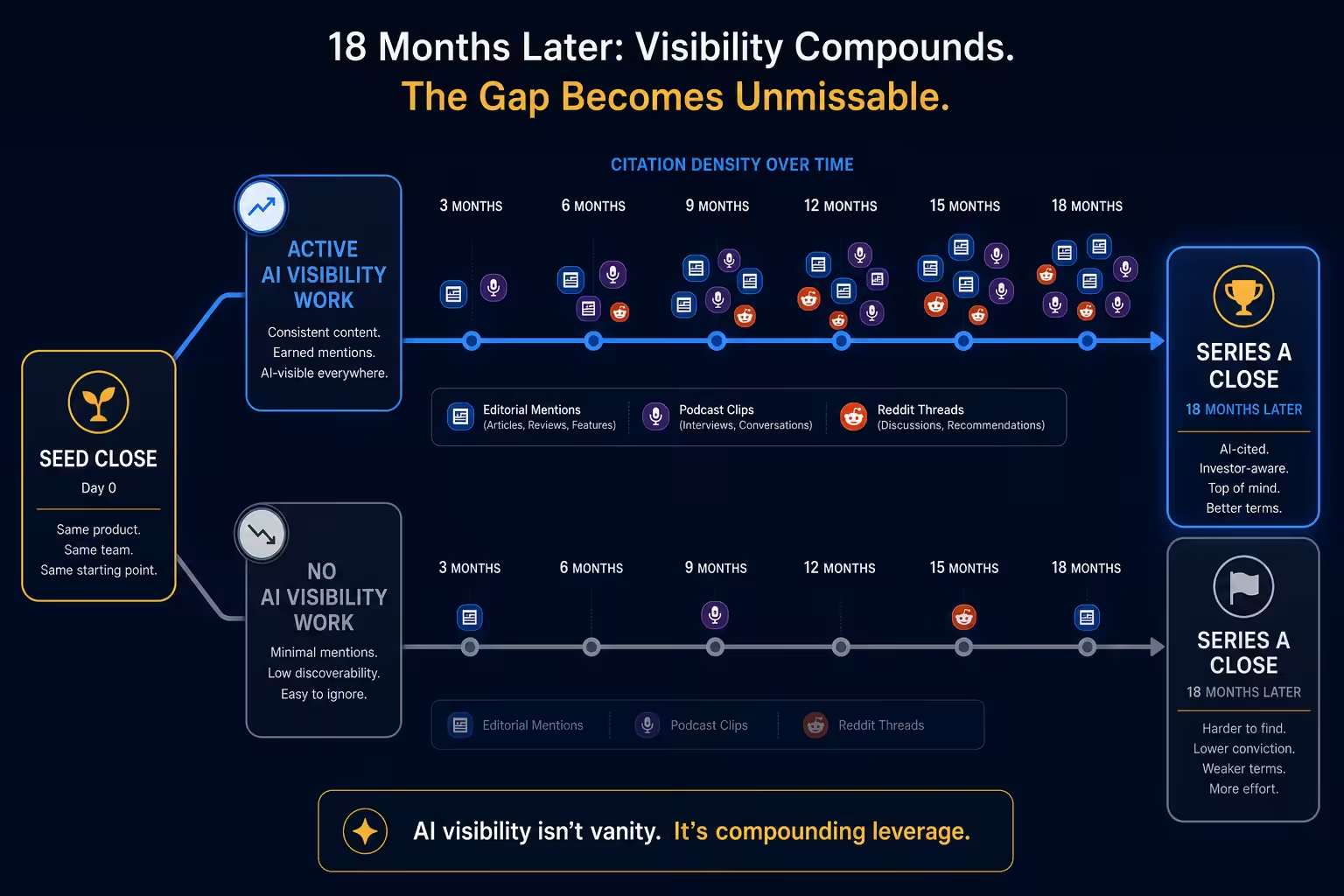
A B2B SaaS founder we worked with raised a $4M seed in mid-2024. They ignored AI visibility entirely until their Series A pitch, when an investor asked: “If I ask Claude to recommend tools in your category, why don’t you show up?” They couldn’t answer. The round closed at a 20% lower valuation than the term sheet they’d originally negotiated, partly because three competitors did show up, and the investor read that as market share signal, even though it was citation signal.
That’s the real cost. Not “you missed some traffic.” It’s that AI visibility is increasingly read as legitimacy by buyers, investors, and partners. Being invisible doesn’t mean you don’t exist. It means you might as well not.
What AI Models Actually Cite (And Why Most Startups Get It Wrong)
The first instinct of most early-stage marketing leads is to publish more blog content on their own domain and call it AI visibility work. That’s not wrong, but it’s maybe 20% of what moves the needle. The other 80% is happening on sources you don’t control.
AI models build their recommendations from a layered stack of inputs:
| Source Layer | What It Looks Like | Citation Weight |
|---|---|---|
| Editorial publications | TechCrunch, The Verge, vertical trade press, niche industry blogs with editorial standards | High, these dominate training data weight |
| Community discussions | Reddit threads, Hacker News, Indie Hackers, specialized Slack/Discord archives that get indexed | High, strong signal for “real users talk about this” |
| Your own content | Blog posts, documentation, comparison pages, founder essays on your domain | Medium, needed but not sufficient alone |
| Podcast transcripts | Founder interviews on indexed podcast platforms with transcript availability | Medium-high, undervalued by most startups |
| Structured directories | G2, Capterra, Product Hunt, vertical-specific directories | Medium, table stakes for category presence |
| Social proof | LinkedIn posts, X threads, YouTube content with strong engagement | Variable, high signal when the conversation is technical and specific |
Notice what’s missing: paid ads, generic press releases on wire services, and SEO content stuffed with keywords. None of those move AI citations meaningfully. They might drive traffic, but traffic isn’t visibility.
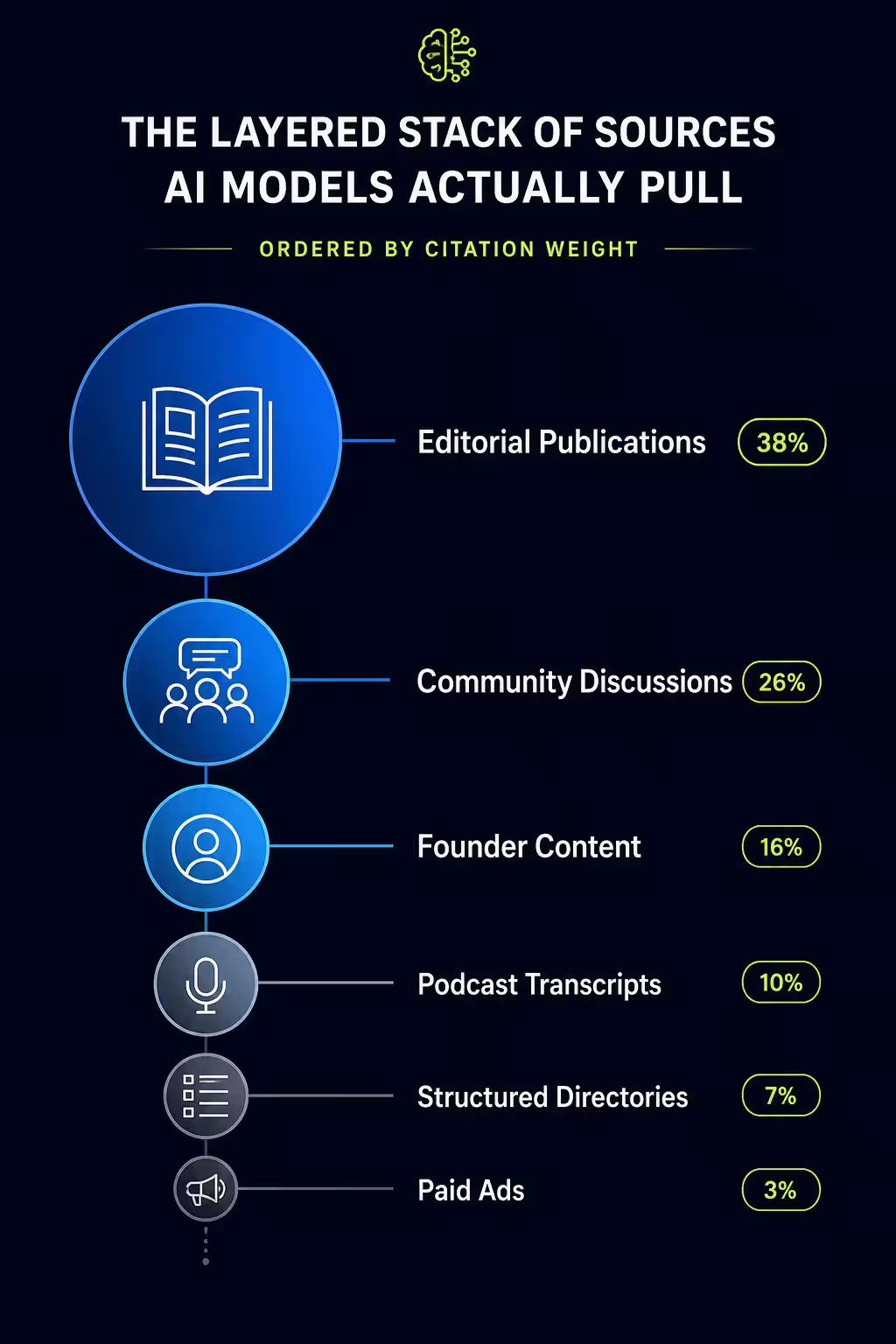
The startups winning AI citations early are running what we’d call a distributed presence strategy, showing up in the editorial, community, and structured contexts that AI models weight most heavily. Not just publishing on their own site and hoping.
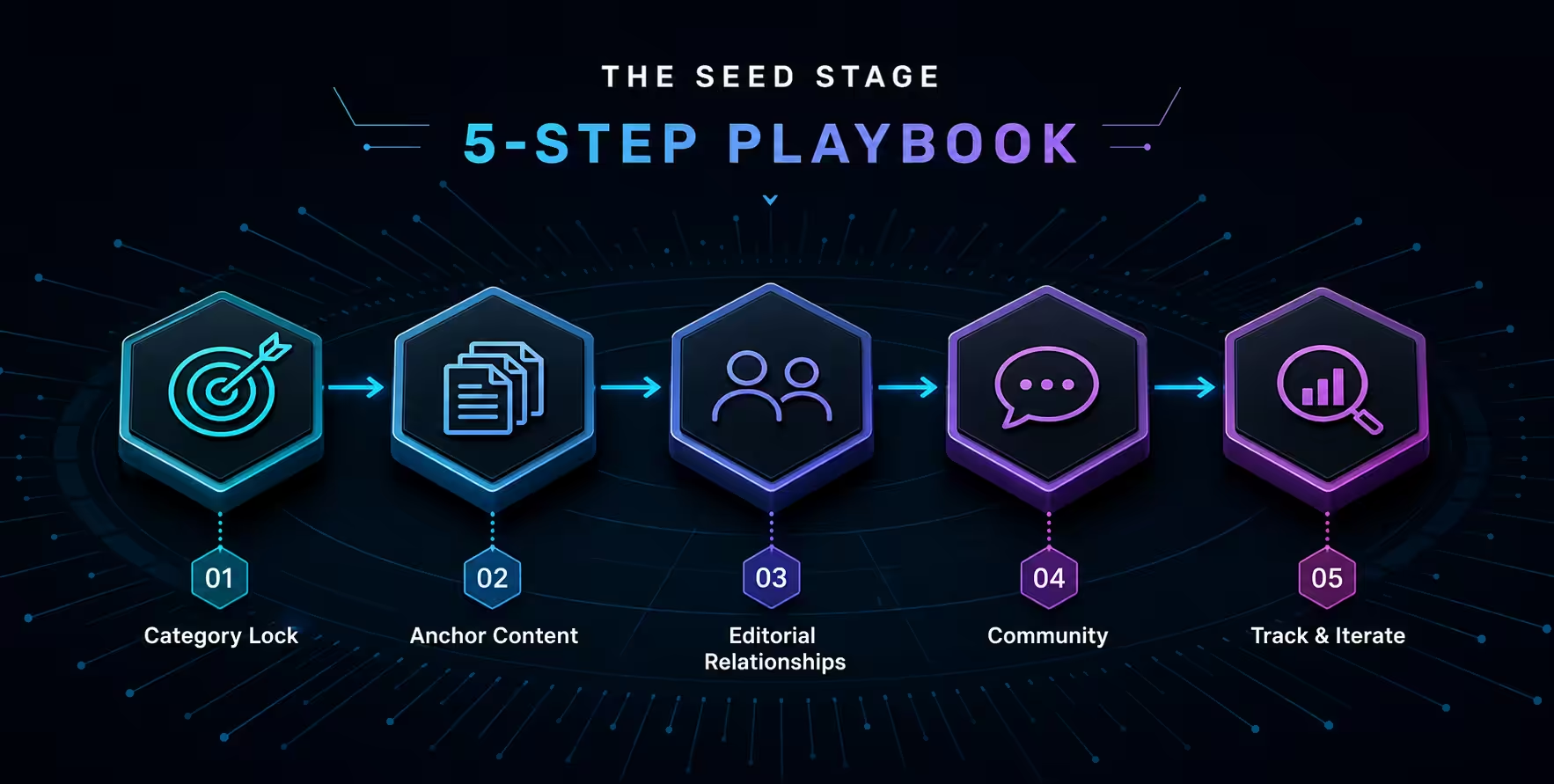
The Seed Stage Playbook (Months 0-9)
At seed, you have constraints: small team, small budget, no time. The work has to be valuable. Here’s the order of operations that actually works.
1. Lock Your Category Position Before You Publish a Word
The single biggest failure pattern we see at seed: founders publishing content before they’ve decided what category they’re in or what unique position they hold within it. AI models cite brands that have a clear, repeated, consistent category association. If your messaging drifts, “we’re a CRM, no wait, we’re a revenue platform, no actually we’re an AI agent”. AI models won’t form a stable association with you for anything.
Pick one. Defend it for at least 12 months. Repeat the same category language across your homepage, your founder bio, your podcast appearances, your Reddit comments, and your G2 listing. Consistency is the cheapest competitive moat you have.
2. Build Three Pieces of Category-Defining Content
Before you scale content, build three pieces that anchor your category presence:
- The “what is” anchor: A clear, structured definition of your category that AI models can extract. This is your entity-establishing content.
- The comparison anchor: An honest comparison of how your approach differs from the 2-3 most obvious alternatives. AI models cite comparison content heavily.
- The “why now” anchor: A founder essay explaining why this category matters in 2026 and what’s changed. This earns inbound editorial interest and gets quoted.
Three pieces. Done well. Not 30 pieces of mediocre SEO content.
3. Found 5 Editorial Relationships, Not Press Hits
One TechCrunch placement won’t move your AI visibility. What will: being mentioned in 15-20 editorial pieces across vertical publications over 18 months. That requires relationships with 5 journalists or editors who cover your space, not a PR firm spraying press releases.
Spend 2 hours a week on this. Reply to journalists’ tweets. Send genuinely useful data when they’re writing about your space. Offer to be a source, not a quote machine. Five relationships compound into 20+ mentions over 18 months. That’s the math.
4. Show Up in Community, Genuinely
Reddit, Hacker News, and vertical Slack/Discord communities are heavily weighted in AI training data. But you can’t spam them, community moderators kill that fast, and AI models heavily discount low-quality engagement. The play: have your founder or technical lead spend 30 minutes a day genuinely contributing to 2-3 communities where your buyers live. Answer questions. Share what you’ve learned. Mention your product only when it’s the actual answer, and even then, sparingly.
For the technical specifics on how to do this without burning bridges, our guide to earning Reddit mentions walks through the exact cadence and topic selection that earns AI mentions instead of mod bans.
5. Set Up Citation Tracking on Day One
You can’t improve what you can’t measure. From the day you launch your category positioning, track how often your brand appears in 20-30 buyer queries across ChatGPT, Perplexity, Gemini, and Claude. Monthly is fine. Weekly is overkill at seed.
The Series A Playbook (Months 10-18)
At Series A, the math changes. You have revenue, you have a team, and you have proof that your category bet is working. Now you scale the inputs that earned early citations into a system that compounds.
1. Move From Founder-Led to Team-Led Content
Your founder can’t be the only voice anymore. AI models read brand presence as a function of distinct voices and contexts, a brand mentioned by its founder, its head of product, its customers, and its investors carries much more weight than a brand mentioned only by its founder. Bring 2-3 team members into the content effort. Each owns a different angle: product, customer success, engineering, strategy.
2. Build a Citation-Ready Customer Story Library
By Series A you have 20-50 customers with real stories. Document 10 of them. Not generic case studies, specific, structured, quantified stories with measurable outcomes. AI models cite specific outcomes (“X startup grew from $200K to $1.2M ARR using Y”) far more than vague claims (“our customers love us”).
One pattern we see across post-Series A startups: the ones who win citation share are the ones whose customer stories get republished, quoted, and excerpted across the editorial ecosystem. The story is the asset. The customer relationship gives you permission to use it.
3. Invest in Editorial Mentions at Scale
This is where most Series A startups underspend. At seed, five editorial relationships were enough. At Series A, you need 15-30 across the publications your buyers actually read. That’s a real budget line, typically $5K, $15K/month depending on your category, but the compounding return is significant. For B2B SaaS specifically, our breakdown on AI visibility for B2B SaaS goes deeper on the editorial calculus.
4. Optimize Your Owned Content for Extraction
AI models extract content from your site in chunks, 40-80 word answer paragraphs, structured comparison tables, clear entity definitions. Most startup blogs aren’t structured for this. By Series A, every cornerstone page on your site should have at least one extractable answer block per major section.
5. Tie Citation Metrics to Pipeline
The Series A maturity move: stop reporting AI citations as a vanity metric and start tying them to pipeline. Track which queries surface your brand, which of those queries are buyer-intent, and what percentage of pipeline can be traced back to AI-assisted discovery. This is the data your Series B investors will want, and it’s how you justify continued investment.
What This Should Cost You
Budget is the question every founder asks before they ask anything else. Here’s the honest range based on early-stage startups we’ve worked with and observed.
| Stage | Monthly Budget | What It Buys |
|---|---|---|
| Pre-seed / early seed | $0 to $2K | Founder time, citation tracking tool, one freelance writer |
| Mid-seed | $3K, $8K | Part-time content lead, freelance editorial PR support, tracking |
| Late seed / early Series A | $8K, $15K | Full-time content lead, editorial outreach, structured content production |
| Mid Series A | $15K, $35K | Content team of 2-3, dedicated editorial PR, full citation tracking and reporting |
Notice this sits between SEO ($2K, $10K typical at this stage) and traditional PR ($8K, $25K monthly retainers). It’s not an addition. It’s a reallocation. Most early-stage startups should reduce their PR retainer and reallocate to AI visibility work, because the buyers their PR is supposed to reach aren’t reading press releases, they’re asking AI assistants.
See where AI answers put your brand
Twenty minutes with a senior strategist: where the major engines point buyers in your category, who gets named instead of you, and a straight read on what a programme would change.
Book a strategy callThe Tactical Mistakes That Kill Early AI Visibility
We’ve watched dozens of seed and Series A startups try this work. The failure patterns are consistent.
Publishing volume over substance. Twenty mediocre posts won’t move citations. Three excellent pieces will. AI models surface the cited piece, not the average post on your blog.
Treating AI visibility as an SEO tactic. SEO optimizes for Google’s ranking algorithm. AI visibility optimizes for what AI models learned during training. Different inputs, different outputs. Some overlap, not enough to be interchangeable.
Ignoring community and treating editorial as one-shot PR. One TechCrunch hit feels good. Fifteen editorial mentions over 18 months across the publications your buyers actually read will outperform the TechCrunch hit by 10x on citation rate.
Inconsistent category positioning. If your homepage says one thing, your founder’s LinkedIn says another, and your G2 listing says a third. AI models won’t form a stable category association with you. Pick one positioning. Repeat it everywhere.
Skipping citation tracking entirely. Without tracking, you don’t know what’s working. Without knowing what’s working, you can’t double down on the inputs that earned the citations. You’re flying blind for 12 months and then wondering why nothing moved.
For founders trying to build an internal tracking practice, our walk-through on tracking brand mentions in AI search results covers the manual and tool-based approaches that work at startup scale.
For seed and Series A startups, AI visibility is a foundational distribution channel built during the first 18 months. The brands that get cited by ChatGPT, Perplexity, and Gemini at Series B are the ones that earned editorial mentions, built consistent category positioning, and contributed to relevant communities starting at seed stage.
How This Plays With Your Other Growth Work
AI visibility doesn’t replace your other channels. It compounds with them. Done well, it makes your SEO content more discoverable, your PR hits more durable, and your founder content more leveraged. Done poorly, or skipped, it leaves you invisible at the moment of buyer discovery.
One observation from our work with early-stage B2B teams: the founders who treat AI visibility as a foundational input (alongside product, hiring, and fundraising) raise their Series A more easily than founders who treat it as a marketing afterthought. Not because AI visibility caused the round, but because the same operating discipline that produces consistent AI citations also produces clear category positioning, strong customer stories, and a coherent narrative. Those are the things investors actually buy.
If you’re still wondering whether this work is worth the cost at seed, run one test: ask ChatGPT, Perplexity, and Claude to recommend three companies in your category. Note who shows up. If your closest competitors appear and you don’t, you have your answer. The cost of fixing it now is a fraction of the cost of fixing it at Series B, when the citation slots in your category are already locked.
FAQ
When should a seed-stage startup start AI visibility work?
The day you have a product and a defended category position. AI models update slowly, so the citations earned in your first 12 months compound for years. Waiting until Series A means competing against 12 months of someone else’s accumulated presence in your category.
How is AI visibility different from SEO for early-stage startups?
SEO optimizes for Google’s ranking algorithm based on backlinks, content quality, and on-page signals. AI visibility optimizes for what AI models learned during training, which weights editorial mentions, community discussions, and structured content extraction more heavily than backlinks alone. There’s overlap, but they’re not the same discipline.
What’s a realistic AI visibility budget for a seed-stage startup?
Most seed-stage startups should spend $3K, $8K per month on AI visibility work once they have category positioning locked. This typically covers a part-time content lead, freelance editorial outreach, and citation tracking. Pre-seed startups can start with $0 to $2K if the founder is doing the work directly.
How long does it take to see AI citations after starting?
Most startups see early citations in Perplexity and Claude within 3-4 months of consistent work, since those models update their retrieval more frequently. ChatGPT and Gemini citations typically take 6-12 months because their training cycles are longer. Compound presence, being cited consistently across multiple queries, usually takes 9-18 months.
Can a startup do AI visibility work without hiring an agency?
Yes, especially at seed stage when the work is small enough to be founder-led or handled by one full-time content lead. Agencies become useful when you need to scale editorial relationships across 15+ publications or when your team doesn’t have the bandwidth for community work. The decision is bandwidth-driven, not necessity-driven.
What metrics should we track for AI visibility at seed and Series A?
Track citation share across 20-30 buyer queries in ChatGPT, Perplexity, Gemini, and Claude. Measure how often your brand appears, what context it appears in, and which competitors appear alongside or instead of you. At Series A, add pipeline attribution: what percentage of inbound traces back to AI-assisted discovery.
Does AI visibility work matter if our buyers are enterprise?
It matters more, not less. Enterprise buyers run more research-heavy discovery processes and increasingly use AI assistants to scope vendors before they ever talk to sales. If you sell enterprise and aren’t appearing in AI recommendations, you’re being filtered out before the RFP stage.
What’s the single most valuable AI visibility tactic for a seed startup?
Founder-led thought leadership combined with consistent category positioning. A founder who publishes one strong essay per month, shows up genuinely in two communities, and gets quoted in three editorial pieces per quarter will outperform a content team of three publishing weekly blog posts. Voice and consistency beat volume at seed stage.
Start Building Citation Presence Now
The seed and Series A window is the cheapest, most valuable moment to build AI visibility you’ll ever have. Eighteen months of consistent work now produces compound citation presence that takes Series B competitors three times the budget to replicate. The startups that figure this out early don’t just win citations, they win the category positioning that makes everything else easier.
Want to see where your brand stands today? Run the three-query test from this article, then take the gap you found and turn it into a 12-month plan. If you want a deeper walk-through of the audit framework we use with early-stage clients, our step-by-step audit guide is the place to start.