
Hiring a link building consultant sounds simple until you start interviewing them. Half quote $5,000 a month for “white-hat outreach.” The other half quote $500 and promise the same thing. Both can’t be right, and usually neither is. The gap between a consultant who moves your rankings and one who burns six months of budget comes down to three things: how they qualify prospects, how they handle anchor text, and whether they show you the actual placements before they happen.
A link building consultant is an independent specialist who plans, executes, and reports on backlink acquisition for a single client or a small portfolio, typically working solo or with a tight contractor team rather than as part of a large agency. The good ones earn their fee by saving you from the 80% of link tactics that don’t work anymore. The bad ones resell the same Fiverr placements you could buy yourself for a tenth of the price.
This guide covers what consultants actually do day-to-day, how to vet them before you sign, realistic 2026 pricing, the questions that separate operators from resellers, and when an in-house hire or agency makes more sense.
What You’ll Learn
- The exact deliverables a competent link building consultant owns (and the ones they shouldn’t)
- How consultant pricing breaks down in 2026, retainer, per-link, project, and hybrid models
- 14 vetting questions that expose resellers in under 30 minutes
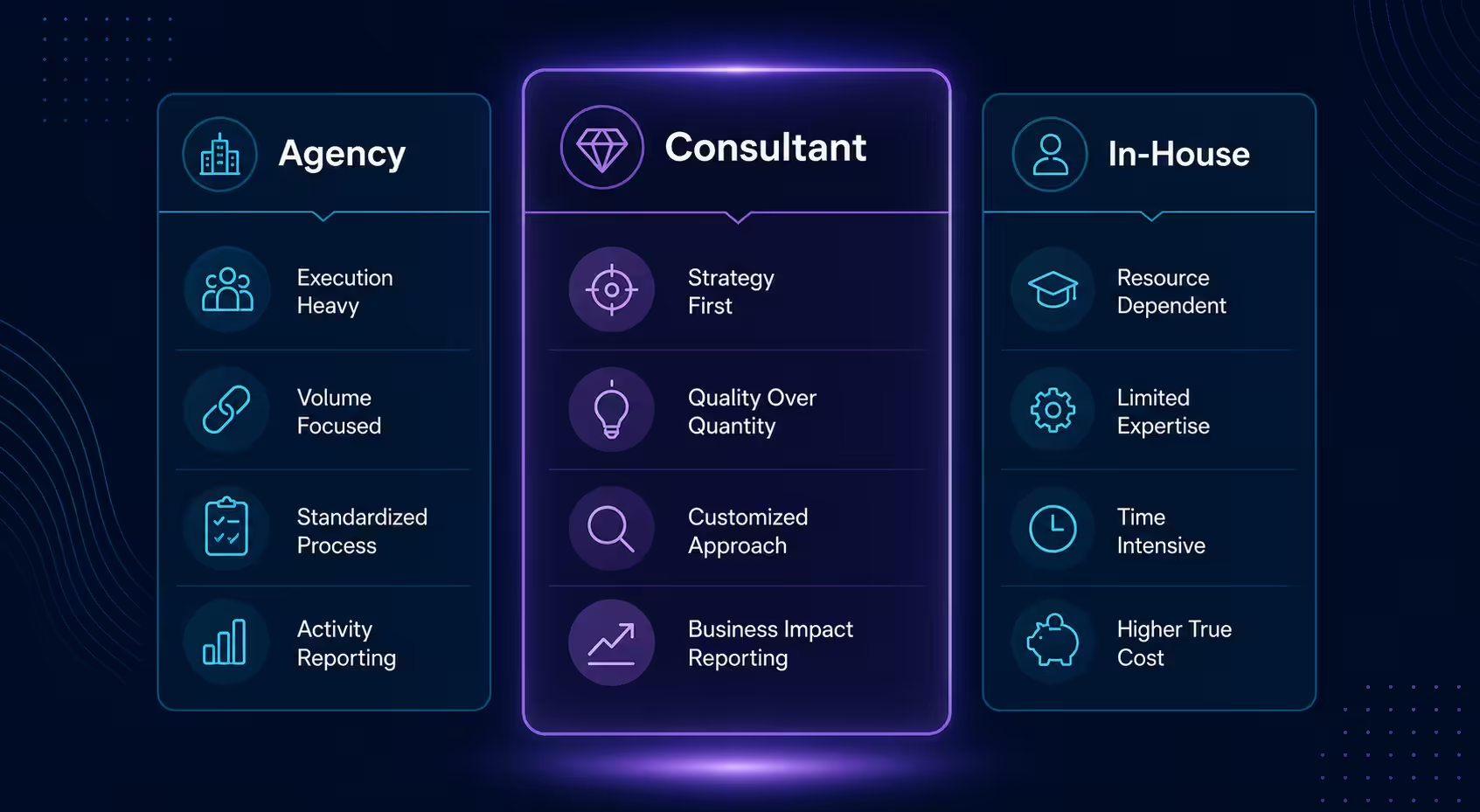
- When to hire a consultant vs. an agency vs. building in-house
- The four red flags that mean walk away, even if the price looks good
What a Link Building Consultant Actually Does
Most job titles in SEO are vague. This one shouldn’t be. A consultant owns the strategy, the prospect list, the outreach quality, and the reporting. They don’t own content production at scale (that’s an agency model) and they don’t own technical SEO fixes (that’s your developer or in-house SEO).
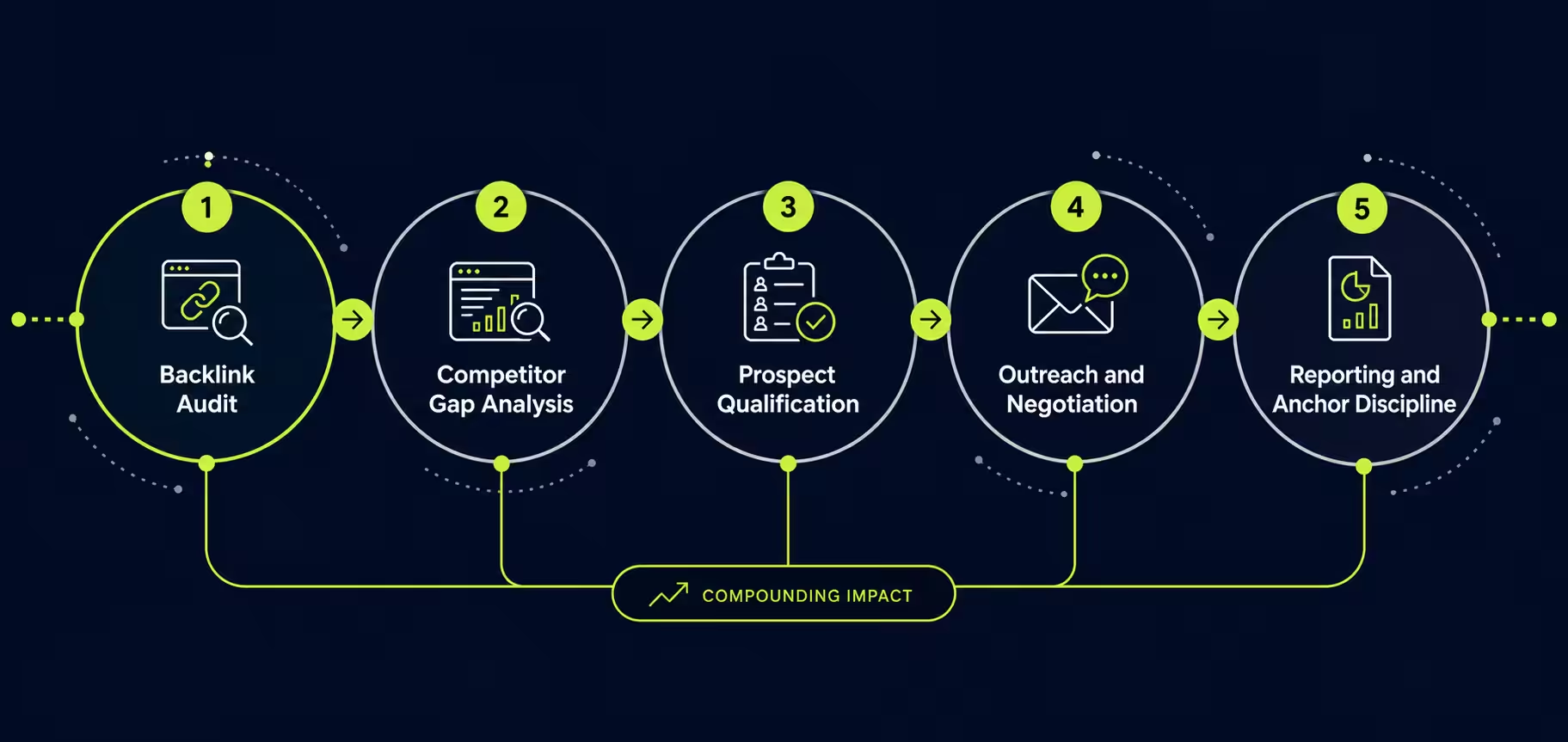
The day-to-day work splits into five things:
1. Backlink Profile Audit
Before they pitch anything, a competent consultant pulls your existing link profile through Ahrefs, Semrush, or Majestic. They flag toxic links, identify anchor text imbalances, and map which pages have authority and which are starving. If a consultant skips this step and goes straight to outreach, that’s a reseller, not a strategist.
2. Competitor Gap Analysis
They identify the domains linking to your top three competitors but not to you. This isn’t just running a “link intersect” report, that’s the starting point. The real work is judging which of those domains are worth pursuing, which are paid placements dressed up as editorial, and which have already churned out so many guest posts the relevance is gone.
3. Prospect Qualification
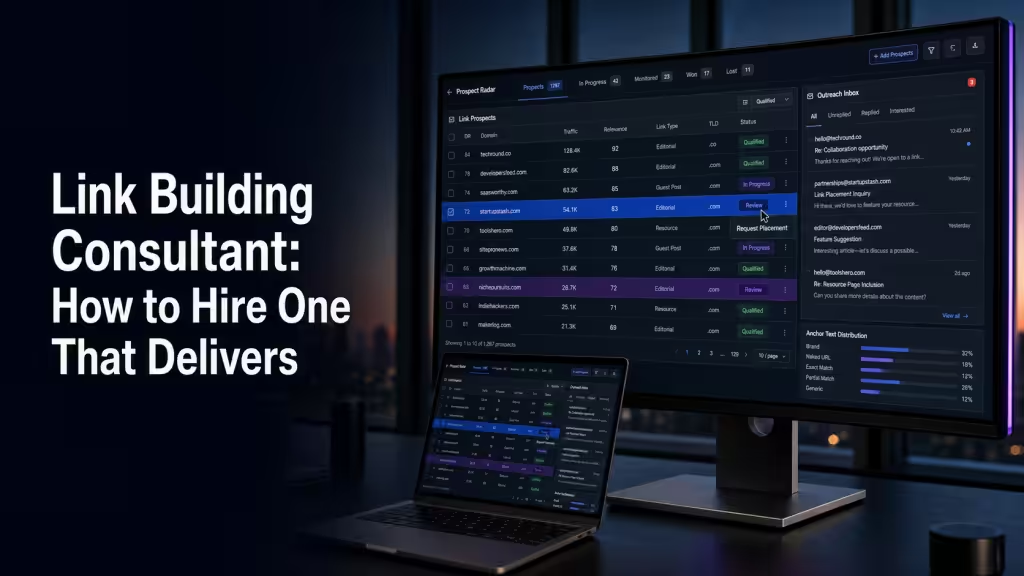
This is where consultants earn their fee. A good consultant qualifies every target against a checklist: topical relevance, organic traffic (not just DR), recent posting frequency, outbound link patterns, and whether the site has been hit by a Helpful Content update. Most “agencies” skip this, and you end up with links from sites that haven’t ranked since 2022.
4. Outreach and Negotiation
They write the pitches, manage the inbox, negotiate placement terms, and handle the back-and-forth on content edits. Quality consultants own the email account they pitch from, they don’t blast from a generic @gmail address that gets flagged as spam by every WordPress admin in the country.
5. Reporting and Anchor Discipline
Every placement gets logged with the URL, anchor text, target page, referring domain metrics, and (this matters) the date the link went live. Anchor text distribution gets reviewed monthly to prevent over-optimization. A consultant who can’t show you their anchor text spread across the last 12 months isn’t tracking it.
What a Consultant Should NOT Be Doing
Scope creep is the fastest way to waste consultant budget. If your consultant is also writing your blog posts, fixing your technical SEO, running your PR, and managing your social, you don’t have a consultant. You have a part-time generalist, and the link building is the first thing that suffers.
A link building consultant should not be:
Producing Your Link-Worthy Content
They can advise on what content earns links and even brief your writers, but writing 2,000-word guides isn’t their job. That’s a content marketer.
Managing Your Technical SEO
Crawl budget, schema, internal architecture, these influence link value but they’re a separate discipline.
Running Digital PR Campaigns
These overlap, but PR is its own craft with different KPIs, different relationships, and different timelines.
Buying Links on Private Blog Networks
If a consultant offers PBN access, walk. That’s a manual penalty waiting to happen.
The clearest scope a consultant should own: backlinks earned through editorial outreach, broken link building, resource page placements, unlinked mention reclamation, and HARO-style expert sourcing. Everything else is either a different role or a different vendor.
2026 Pricing Reality: What Consultants Actually Charge
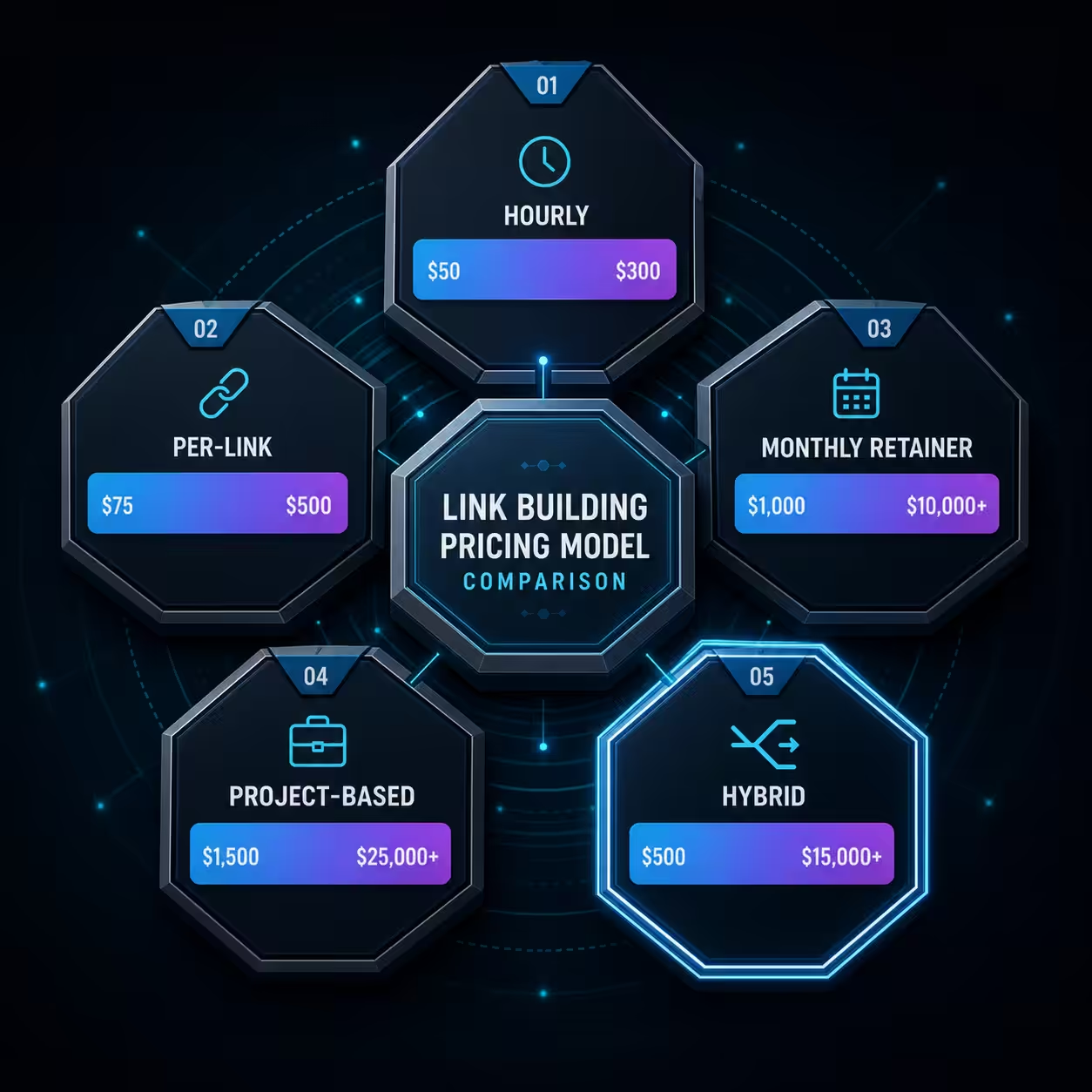
The pricing gap is wider than most buyers realize. Here’s what we see across the consultant market in 2026:
| Model | Typical Range | What You Get | Best For |
|---|---|---|---|
| Hourly | $150 to $400/hr | Strategy, audits, training your in-house team | One-off projects, link strategy reviews |
| Per-link | $200 to $900/link | Quality varies wildly by price tier | Predictable budget, defined link goals |
| Monthly retainer | $3,000 to $12,000/mo | Full strategy + execution + reporting | Sustained campaigns, 6+ month commitment |
| Project-based | $5,000 to $25,000 | Defined deliverables, fixed timeline | Campaign launches, link cleanup projects |
| Hybrid (base + per-link) | $1,500 base + $300 to $600/link | Strategy baseline plus volume flex | Variable monthly link targets |
The per-link pricing tiers tell you something specific. Anything under $200 per link is almost certainly resold from a vendor like FATJOE or The Hoth, you’re paying a markup on a commoditized product. The $400 to $700 range is where competent editorial outreach lives. Above $900 and you’re either paying for genuinely high-authority placements (think DR 80+ trade publications) or you’re being overcharged.
Across link campaigns we’ve run for B2B SaaS clients, the most cost-effective structure has been a hybrid retainer: a $2,000 to $3,000 monthly base that covers strategy, audits, and prospect research, plus a per-link fee that aligns the consultant’s incentive with placement volume. Pure per-link tends to push consultants toward easy, low-quality targets. Pure retainer can let momentum slow.
14 Questions That Expose Resellers in 30 Minutes
Most consultants pass the first 10 minutes of a discovery call. The next 20 minutes are where you find out who actually does the work. Run through these questions before you sign anything.
Strategy and Process
- Walk me through your prospect qualification checklist. What disqualifies a domain?
- How do you decide which of my pages to build links to first?
- What does your anchor text distribution look like across a typical 6-month campaign?
- Show me three placements you got for a client in the last 90 days.
Execution
- What email account do you pitch from, mine, yours, or a generic outreach domain?
- What’s your response rate, and how do you measure it?
- How do you handle a publisher asking for payment? Walk away, negotiate, or pay?
- Do you use any automation tools for outreach, and what’s the human-in-the-loop?
Quality Control
- What’s your replacement policy if a link gets removed or de-indexed within 90 days?
- How do you verify a target site’s traffic is real, not bot or expired-domain inflated?
- What’s the lowest-quality placement you’ve ever delivered, and why?
Reporting and Accountability
- Send me a sample monthly report from a current client (redacted is fine).
- How often do we talk, and what’s the agenda?
- What’s the one metric you’d let me fire you over if you miss it?
The last question is the most useful one. A consultant who answers “I don’t make guarantees” without giving you a single accountability metric is hedging. A good answer sounds like: “If I don’t deliver at least eight qualified placements averaging DR 40+ within the first 90 days, you don’t pay the next month.”
Red Flags: When to Walk Away
Four signals mean the consultant is reselling or worse, regardless of how polished the pitch deck is.
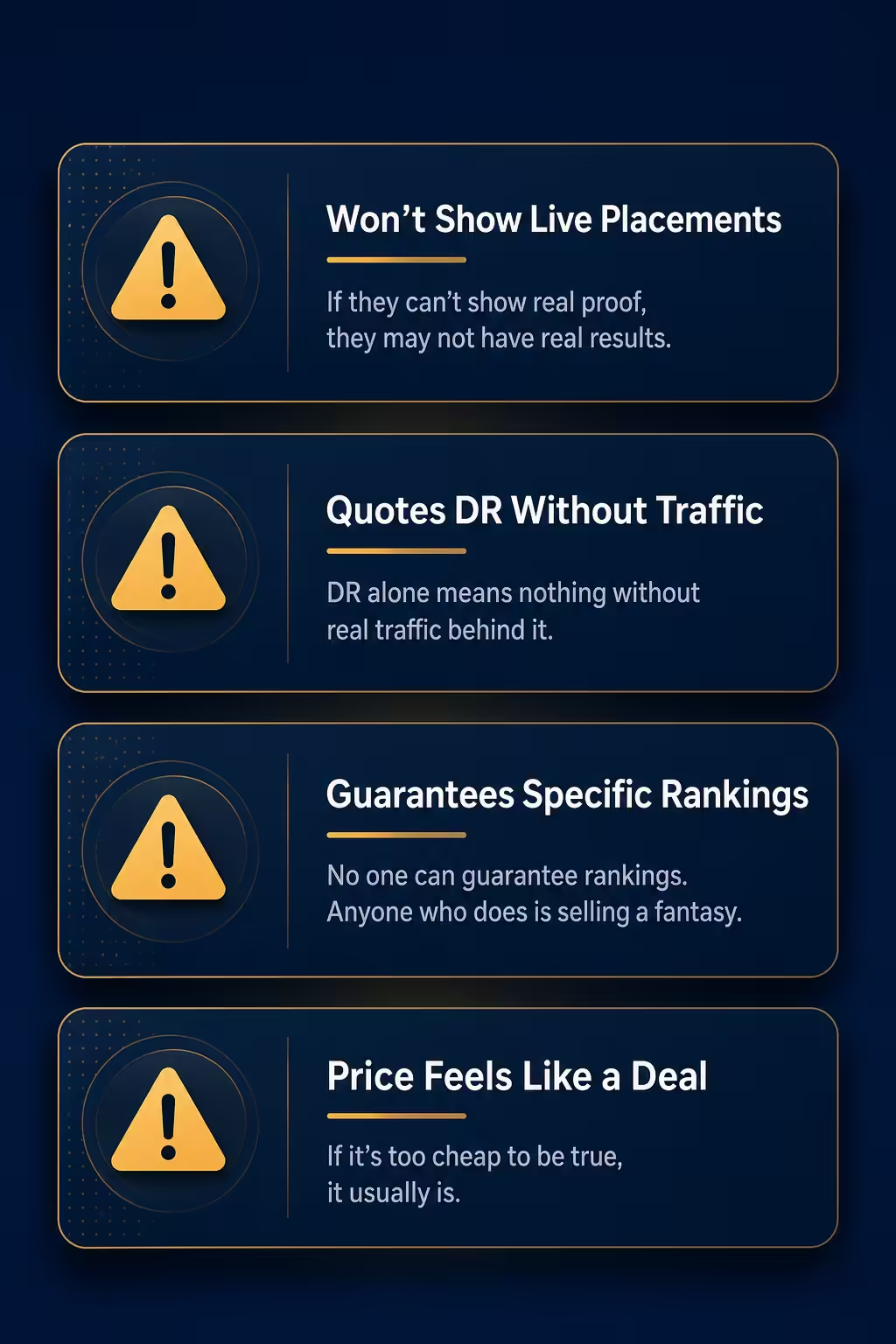
1. They won’t show you live placements. Every legitimate consultant has clients who would let them share recent wins. If they cite NDAs across the board, they’re either inexperienced or hiding placements they’re not proud of.
2. They quote DR or DA without organic traffic. Domain Rating means nothing if the site has no real audience. A site can sit at DR 70 and pull 200 visits a month. Ask for both metrics on every prospect.
3. They guarantee specific rankings. Nobody can guarantee rankings. Anyone who does is either lying or planning to use tactics that will eventually trigger a manual action.
4. The price feels like a deal. A consultant quoting $500/month for “10 high-quality links” is reselling Fiverr gigs with a markup. The math doesn’t work otherwise, competent outreach takes 3-6 hours per qualified placement, and no one’s labor is worth $8/hour.
One more pattern worth flagging: consultants who promise “AI-powered outreach at scale.” Outreach automation has its place, but at scale it produces the kind of pitch quality publishers delete on sight. The link building craft is still human-relationship work. Be skeptical of anyone selling otherwise.
Consultant vs. Agency vs. In-House: Which Model Fits
The right structure depends on three variables: your monthly link volume, your in-house bandwidth, and whether your competitive advantage is in execution or strategy.
Hire a Consultant When:
- You need 5-20 qualified placements per month
- You have someone in-house who can brief, review, and act on the consultant’s reporting
- Your strategy needs a senior brain, not a fulfillment team
- You want one accountable owner, not an account manager layer
Hire an Agency When:
- You need 30+ placements per month consistently
- You want link building bundled with content production, technical SEO, and digital PR
- You have budget above $10K/month and need redundancy if one person leaves
- Your team can’t manage a vendor relationship beyond high-level reviews
Build In-House When:
- Link building is a core, ongoing strategic function (publishers, marketplaces, large SaaS)
- You can afford a $90K+ specialist plus tooling ($500 to $1,500/month in Ahrefs, Pitchbox, etc.)
- You have enough proprietary data, research, or product news to fuel earned-link campaigns
- You need link velocity and editorial control coordinated tightly with content production
Most B2B SaaS companies between $5M and $50M ARR land on the consultant model for a reason, it’s the cleanest cost-to-quality ratio when you need senior strategic input but don’t have agency-scale volume needs. For a fuller breakdown of what to expect from contracted help, our contextual link building services guide covers placement quality benchmarks in detail.
How to Structure the First 90 Days With a New Consultant
The first 90 days set the relationship. Get this wrong and you’ll spend the next year fighting about deliverables. Get it right and you build a partner.
Days 1-14: The consultant runs a full backlink audit on your domain, plus competitor gap analysis on three named competitors. They deliver a written strategy document with target pages, anchor text plan, and prospect criteria. You approve or revise. No outreach yet.
Days 15-45: First outreach wave. Expect 2-4 placements live by day 45, fewer if your domain is new, more if you have existing authority. You review each placement before it’s pitched, not just after it lands.
Days 46-90: Cadence stabilizes. By day 90, you should have 6-12 placements live with a clean anchor text distribution. The consultant delivers a 90-day retrospective comparing actual results to the original strategy doc. This is your decision point on whether to extend, renegotiate, or part ways.
The biggest mistake new clients make is expecting volume in the first 30 days. Editorial outreach is slow at the start because the consultant is building publisher relationships from scratch on your behalf. Volume compounds month four onward. If you cut the engagement at day 60 because “results are slow,” you’ve prepaid for ramp-up and walked away before the compounding kicks in.
See where AI answers put your brand
Twenty minutes with a senior strategist: where the major engines point buyers in your category, who gets named instead of you, and a straight read on what a programme would change.
Book a strategy callWhat Good Reporting Looks Like
You should never have to ask a consultant “what did we get this month.” A competent monthly report includes:
- Every new link placed (URL, target page, anchor text, referring domain DR, referring domain traffic, date live)
- Outreach volume (pitches sent, response rate, conversion rate to placement)
- Anchor text distribution across the trailing 6 months
- Top-of-funnel prospect pipeline (qualified targets identified, in negotiation, declined)
- Notable observations, publishers who responded well, niches that are saturating, content gaps blocking link earnability
- Next month’s priorities and target pages
If the report is a screenshot of an Ahrefs backlink chart with no commentary, you’re not getting consulting, you’re getting fulfillment. The interpretation is the product.
Where Link Building Sits in 2026 SEO
Links still matter. Anyone telling you otherwise hasn’t looked at a SERP recently. What’s changed is that link quality compounds harder than it used to. Google’s Helpful Content System and SpamBrain have systematically devalued the kind of low-quality placements that used to move the needle. A consultant who’s still pitching directory submissions and PBN insertions is operating from a 2018 playbook.
The work that actually moves rankings in 2026 looks more like this: securing genuine editorial coverage on industry publications, earning links to data-driven research pages, reclaiming unlinked mentions on high-authority sites, and building topical authority through clusters of relevant placements rather than scattered high-DR drops. Our practitioner’s guide to link building in 2026 walks through the tactics that hold up under current algorithm conditions.
A good consultant knows which of these to prioritize based on your specific niche, competitive set, and content inventory. A reseller doesn’t make that distinction, they execute the same playbook regardless of client.
Frequently Asked Questions
How long does it take a link building consultant to deliver results?
Expect 30-45 days before the first placements go live, and 90-120 days before you see ranking movement. Editorial outreach is relationship work, pitches go out, publishers respond on their schedule, and content gets edited and published over weeks. Anyone promising faster results is either reselling pre-built placements or using tactics that won’t hold up.
What’s the difference between a link building consultant and a freelancer?
A consultant owns strategy, execution, and reporting end-to-end, typically at $3K, $12K per month. A freelancer usually executes specific tasks like outreach or prospect research at hourly rates. Consultants advise on what to do; freelancers do what they’re told. The price difference reflects who owns the strategy.
Can one consultant handle all my link building needs?
For most B2B companies needing 5-20 placements monthly, yes. Above 30 placements per month, the workload exceeds what one person can deliver at quality. At that point, you need either a small consulting team or an agency model with multiple specialists.
Should I pay per link or pay a monthly retainer?
Hybrid pricing works best for most clients, a smaller monthly base (covering strategy, audits, reporting) plus a per-link fee for actual placements. Pure per-link pushes consultants toward easy, low-quality targets. Pure retainer can let urgency slip. Hybrid aligns incentives without creating either failure mode.
What metrics should I judge a link building consultant on?
Three matter most: qualified placement volume (links from sites with real traffic and topical relevance, not just high DR), anchor text health (natural distribution, not over-optimized), and target page authority growth (the pages you’re building links to should gain organic traffic over 90-180 days). Generic backlink count is the worst metric, it rewards volume over quality.
Is it safe to hire a consultant from a low-cost market?
Geographic arbitrage works in some functions. Link building isn’t usually one of them. Outreach quality depends on writing pitches that sound like a peer talking to a publisher in your market, which is harder when the consultant isn’t native to that market. There are exceptions, but vet harder than you would for a local hire.
Can a link building consultant fix a manual action or algorithmic penalty?
Some specialize in link cleanup and reconsideration work, but it’s a different skill set than acquisition. If you’re recovering from a penalty, ask specifically for consultants with documented disavow and reconsideration experience. Don’t assume an acquisition specialist can handle cleanup.
What happens to my links if I stop working with the consultant?
Placements they secured for you stay live as long as the publisher keeps the content up. The consultant doesn’t “own” your links, you do. That said, the relationships they built with publishers leave with them, so a new consultant essentially starts the rolodex from scratch.
Hiring the Right Consultant
The consultants worth hiring share three traits: they qualify ruthlessly, they report transparently, and they say no to placements that won’t help you. The ones to avoid promise volume, hide their process, and quote rankings.
Run the 14 questions. Ask for three live placements from the last 90 days. Structure the engagement so the first 90 days have clear deliverables and a clean exit if it’s not working. Most importantly, treat the consultant as a partner who needs context from you, not a vendor you can throw a brief at and ignore for a quarter.
If you want a deeper read on what separates earned links from purchased ones, our breakdown of editorial link building that earns real authority covers the placement criteria that hold up across algorithm updates.