
Your brand doesn’t live in one search result anymore. It shows up differently across 10 AI engines, and that turns tracking into a new buyer problem.
The fix isn’t a single dashboard promising to cover everything.
The right solution is a multi-engine visibility stack: one primary tool, a fixed prompt set, and separate tracking for both citations and mentions. This guide ranks 10 tools by the factors that decide whether the data you get is reliable or noise: engine coverage, citation depth, prompt control, competitor benchmarking, alerts, and reporting.
Why Tracking Your Brand Across 10 AI Engines Matters Now
The 10 AI engines that matter for brand visibility in 2026 are ChatGPT, Google AI Overviews, Google AI Mode, Perplexity, Gemini, Microsoft Copilot, Claude, Grok, DeepSeek, and Brave Search. Each pulls from a different source mix, so visibility in one says nothing about the others.
A brand can dominate ChatGPT answers and vanish inside Google AI surfaces or Perplexity. We see this pattern constantly: a team celebrates a strong ChatGPT showing, then discovers Perplexity cites three competitors and never names them.
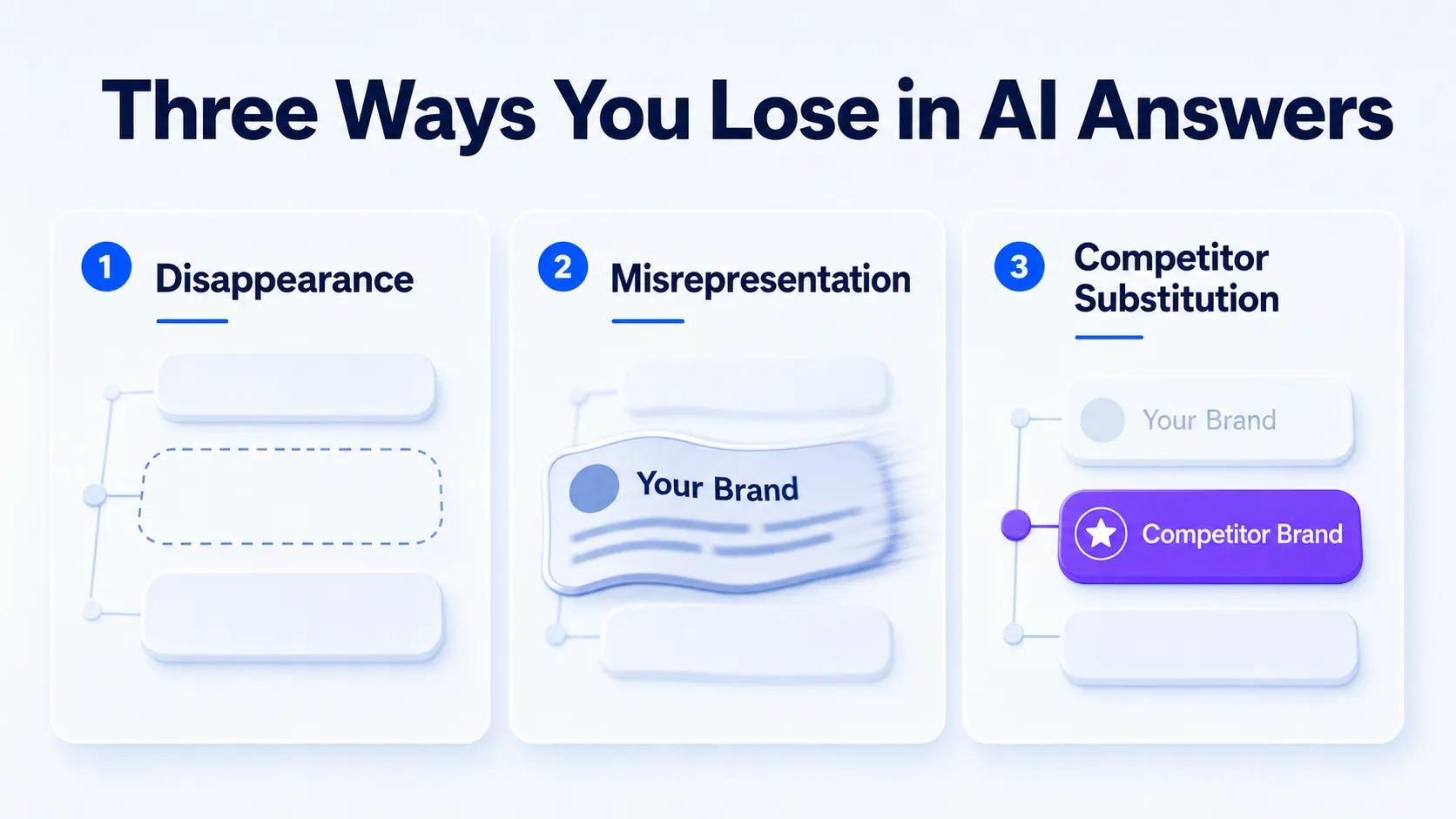
Three failure modes drive buyers to start tracking.
The first is disappearance, where your brand simply doesn’t appear for a query you should own. The second is misrepresentation, where an engine names you but gets your pricing, category, or capabilities wrong. The third is competitor substitution, where the engine recommends a rival in the exact answer you want to occupy.
None of these are traffic problems first. They’re shortlist problems.
When an AI engine builds a buyer’s consideration set, being absent or misquoted costs you pipeline before anyone clicks anything. If you want the full mechanics behind this, our guide on tracking brand mentions across AI platforms covers the workflow in depth.
This article is about the tools that catch those failures, not a conceptual tour of AI search.
How We Ranked the Tools and Platforms
We ranked these tools against seven factors that separate reliable multi-engine tracking from a pretty dashboard fed by noisy data. Many teams pick on dashboard polish alone, then find the numbers are unstable because prompt hygiene and entity disambiguation were weak underneath.
Here’s what each factor measures.
Engine Coverage
How many of the 10 target engines the tool actually monitors, not how many it lists in marketing copy. A tool that covers ChatGPT and Perplexity well beats one that claims 15 engines but samples each thinly.
Citation Tracking Versus Mention Tracking
A citation is a source the engine actually references. A mention is your name appearing in text. Tools that show source citations rank above tools that only count mentions, because citations tell you whether your own content earned the answer.
Prompt Control
The ability to run fixed prompts, prompt variants, and topic clusters consistently over time. Without stable prompts, trend lines are meaningless because you’re measuring different questions each run.
Competitor Benchmarking
Whether the platform compares your brand against named rivals, so you can see share of answer, not just your own presence in isolation.
Alerts and Anomaly Detection
How fast the tool flags a lost citation, a new mention, or a factual misstatement, before it hardens into a brand problem.
Historical Trends and Reporting
Whether the tool shows change over time and exports cleanly for stakeholders who want a trend line, not a raw snapshot.
Ease of Use
Whether a lean team can run it without a heavy services layer or a full-time analyst.
10 Best Tools to Track Your Brand Across 10 AI Engines
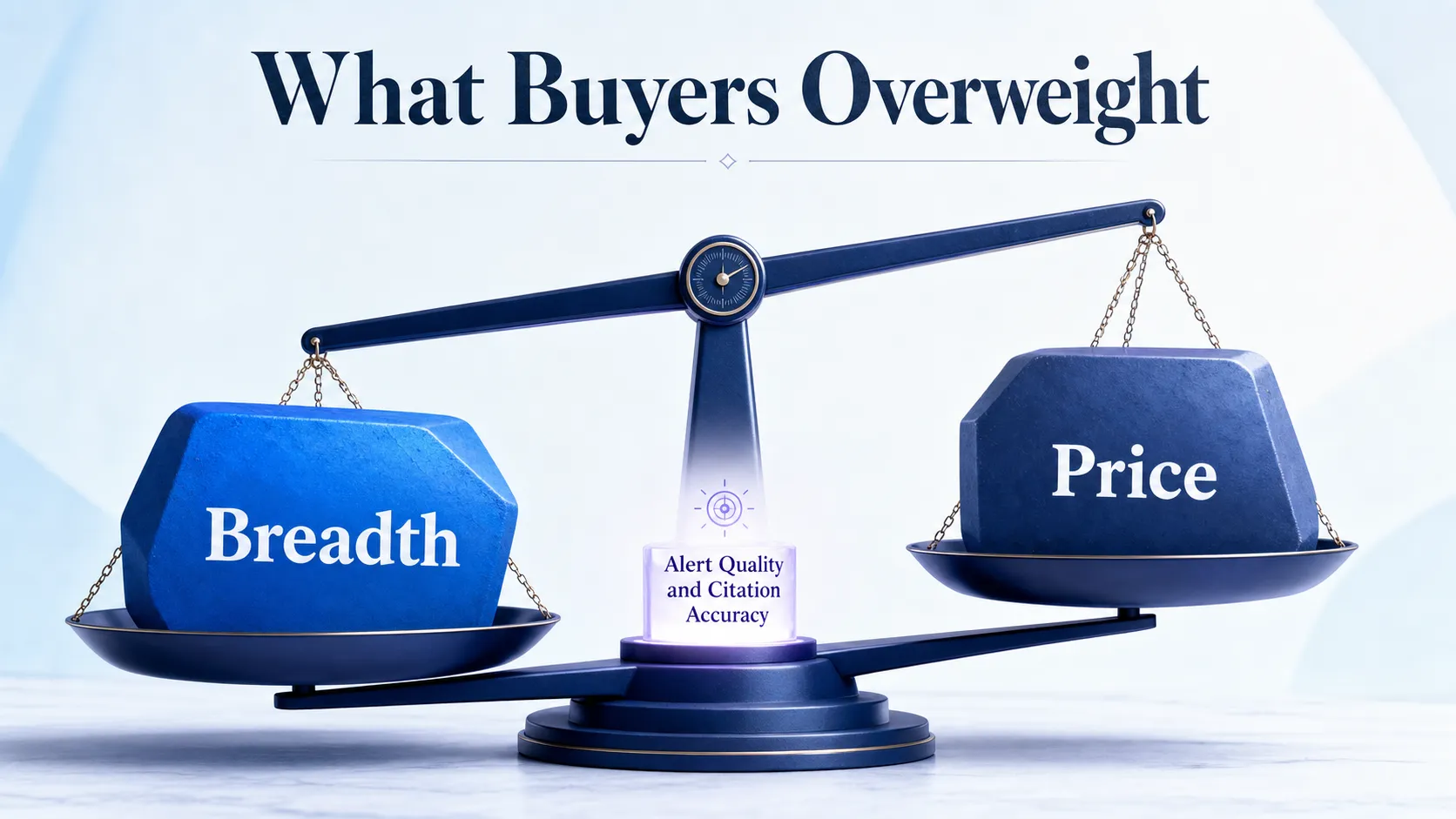
These 10 tools cover the range of buyer needs, from enterprise governance to a lean startup on a budget. Enterprise buyers tend to overvalue breadth, while small teams overvalue price and ignore alert quality. Read each entry for the one thing it does better than the tool above it.
1. BrandMentions: Best for Alerts When Brand Accuracy Changes
Disclosure: BrandMentions publishes this guide.
BrandMentions is brand monitoring software that extends into AI visibility, built for teams whose first priority is catching problems early. It watches for new mentions, missing mentions, and inaccurate references so you can respond before a misstatement spreads across engines.
The strength here’s speed of detection paired with practical brand defense workflows. Where a pure analytics suite gives you a monthly trend, this leans toward flagging the thing that changed today.
The honest limitation is that deep enterprise prompt-cluster analytics aren’t the core focus, so a large program running thousands of prompts may want a heavier suite alongside it.
- Best for: Teams prioritizing fast alerts and brand accuracy defense
- Pricing: $1,997 a month Startup, $4,997 Flagship, Enterprise custom
- Standout feature: Real-time-style monitoring across mentions and citations
- Ideal user: Startups and mid-market brands protecting reputation
2. Semrush: Best for SEO Teams Inside an Existing Stack
Semrush is a broad SEO platform that now includes AI visibility and brand monitoring, aimed at teams already running organic search inside it. If your workflow lives in Semrush, you get one place for organic and AI-channel monitoring instead of a second login.
The real benefit is adoption friction, which is close to zero for an SEO-heavy team. The tradeoff is that AI visibility is one module inside a large product, so it may not go as deep on prompt control as a purpose-built tracker. Our comparison of brand tracking software options puts this tradeoff in context.
- Best for: SEO teams wanting AI visibility in one familiar workflow
- Pricing: $139.95 Pro, $249.95 Guru, $499.95 Business per month, AI Toolkit add-on $99 per domain
- Standout feature: Combined organic and AI-channel reporting
- Ideal user: Content and SEO teams already on Semrush
3. Ahrefs: Best for Authority-Led SEO Teams
Ahrefs is a core SEO suite with brand mention and radar-style functionality that supports AI visibility work. It fits teams that want to connect content authority, backlinks, and brand discovery in one signal picture.
The advantage is that AI visibility ties back to the broader authority signals you already track, so a lost citation can be read against your link and content data.
It’s less of a dedicated answer-engine monitor and more of an SEO tool with visibility features layered on, which suits authority-focused teams more than pure GEO specialists.
- Best for: Teams tying AI visibility to authority and backlink signals
- Pricing: $129 Lite, $249 Standard, $449 Advanced per month
- Standout feature: Brand radar within a full SEO suite
- Ideal user: Authority-led SEO teams on Ahrefs
4. Peec AI: Best for Prompt-Level Control
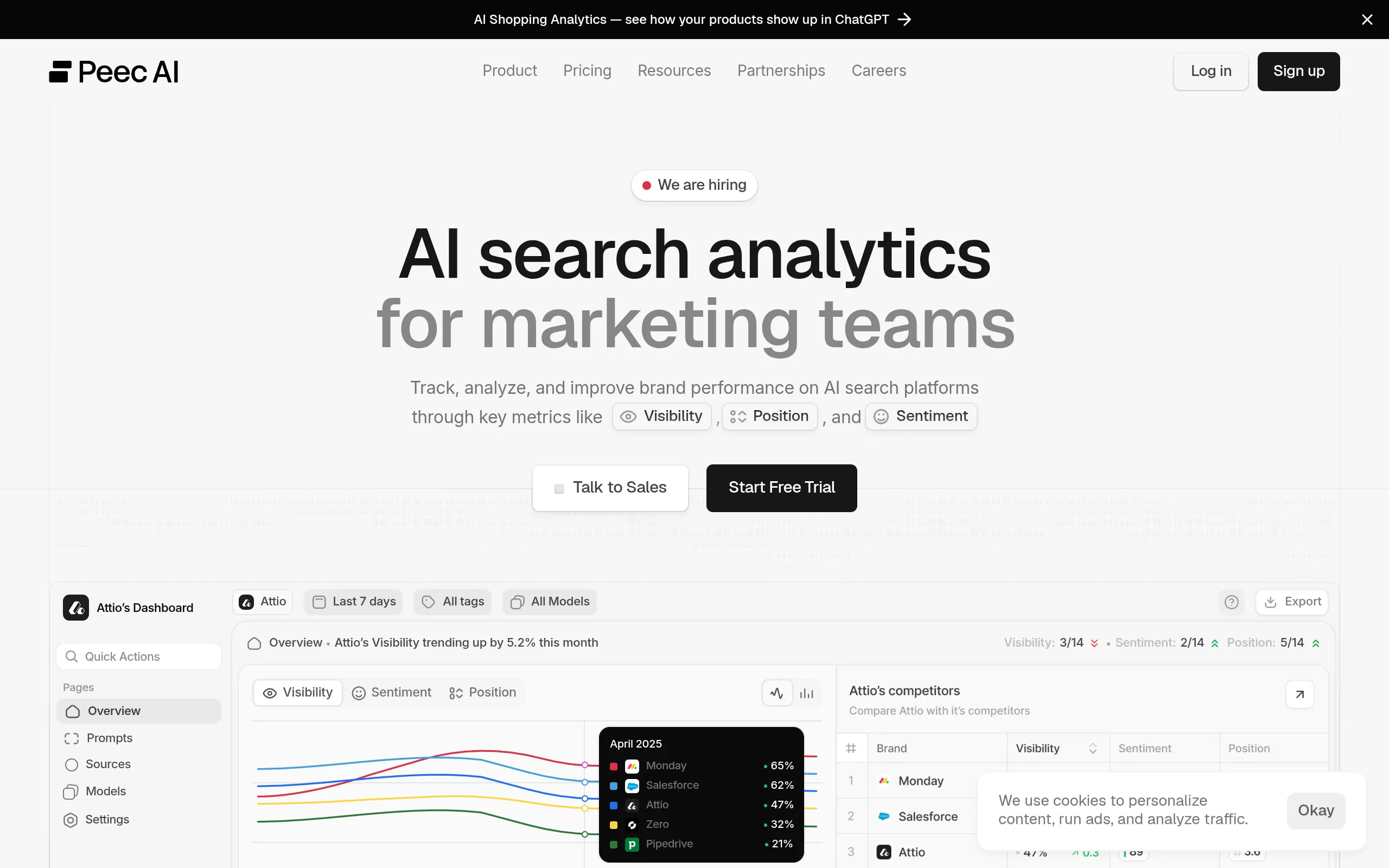
Peec AI is a visibility tool centered on prompts, citations, and share-of-voice comparisons, for teams where exact prompt wording matters. It gives you disciplined control over the questions you run, so outputs stay comparable across engines.
What sets it apart is its prompt management and competitive comparison logic, which reward teams that treat prompts as a fixed instrument rather than ad hoc queries. If your team runs sloppy, ever-changing prompts, the discipline the tool expects will feel like overhead until the trend data proves its worth.
- Best for: Teams that need strict prompt discipline and share-of-voice data
- Pricing: $95 Starter, $245 Pro, $495 Advanced per month, Enterprise custom
- Standout feature: Structured prompt libraries with competitor comparison
- Ideal user: Growth and content teams tracking specific queries
5. Scrunch AI: Best for Competitive Analysis and Recommendations
Scrunch AI is an answer-engine monitoring platform built to show where brands win, lose, or get displaced. It suits teams that want direction on what to fix next, not just a count of mentions.
The differentiator is operational: it points toward the gaps behind a lost answer, so the data reads more like a to-do list than a scoreboard. That prescriptive angle is its value, though teams wanting raw neutral data over interpretation may prefer a leaner tracker.
- Best for: Teams wanting competitive insight with next-step direction
- Pricing: $250 Core per month for brands, $500 Agency Core, Enterprise custom
- Standout feature: Displacement analysis across answer engines
- Ideal user: Brands actively fighting for shortlist inclusion
6. Writesonic: Best All-in-One for Visibility Plus Action
Writesonic is an AI marketing platform with brand visibility tracking across multiple AI engines plus adjacent content workflows. It fits teams whose monitoring output needs to feed content and optimization work directly.
Its edge is the action layer: tracking and execution sit in one place, so you can move from an insight to a content fix without exporting to a separate tool.
The flip side of an all-in-one is that the monitoring depth may trail a dedicated visibility platform, so evaluate whether the tracking alone meets your bar.
- Best for: Teams that want tracking wired into content production
- Pricing: $79 Starter, $199 Basic, $399 Growth per month on annual billing, GEO tracking from Basic up
- Standout feature: Combined visibility tracking and content workflows
- Ideal user: Lean marketing teams handling monitoring and content together
7. Nightwatch: Best for Lean Teams Wanting a Simple Workflow
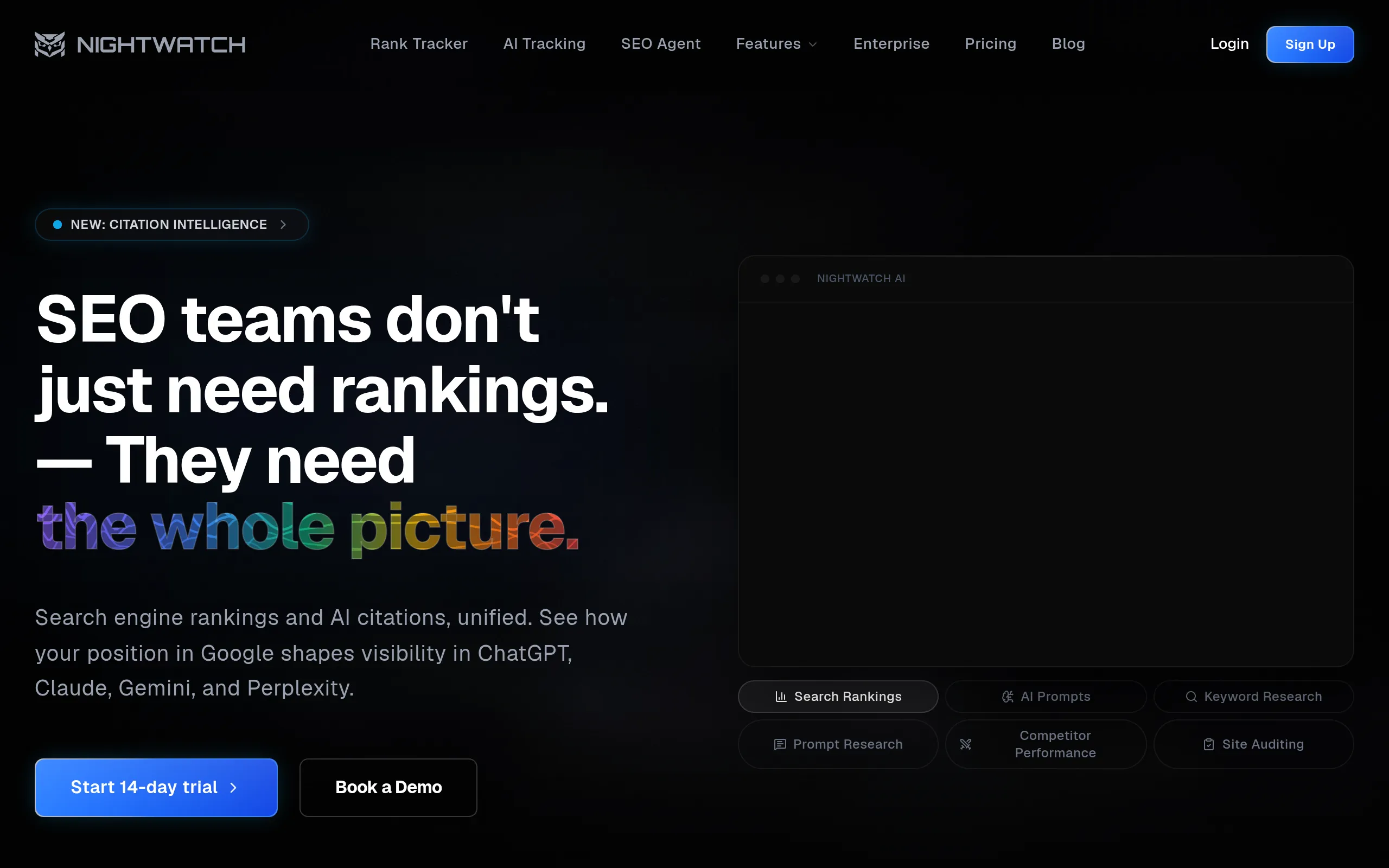
Nightwatch is a rank-tracking platform that extends into AI visibility use cases, built for smaller teams that want a manageable dashboard. It gives you a single operational home rather than a sprawling enterprise suite.
The benefit is day-to-day usability: a lean team can run it without a dedicated analyst. Because its roots are in rank tracking, its answer-engine depth is narrower than a purpose-built visibility platform, which is a fair trade for teams that value simplicity over breadth.
- Best for: Small teams wanting a simple, single-dashboard workflow
- Pricing: $39 Starter, $79 Standard, $199 Professional, $399 Enterprise per month
- Standout feature: Rank tracking extended into AI visibility
- Ideal user: Lean teams and solo operators
8. SEOmonitor: Best for Historical Reporting and Stakeholder Updates
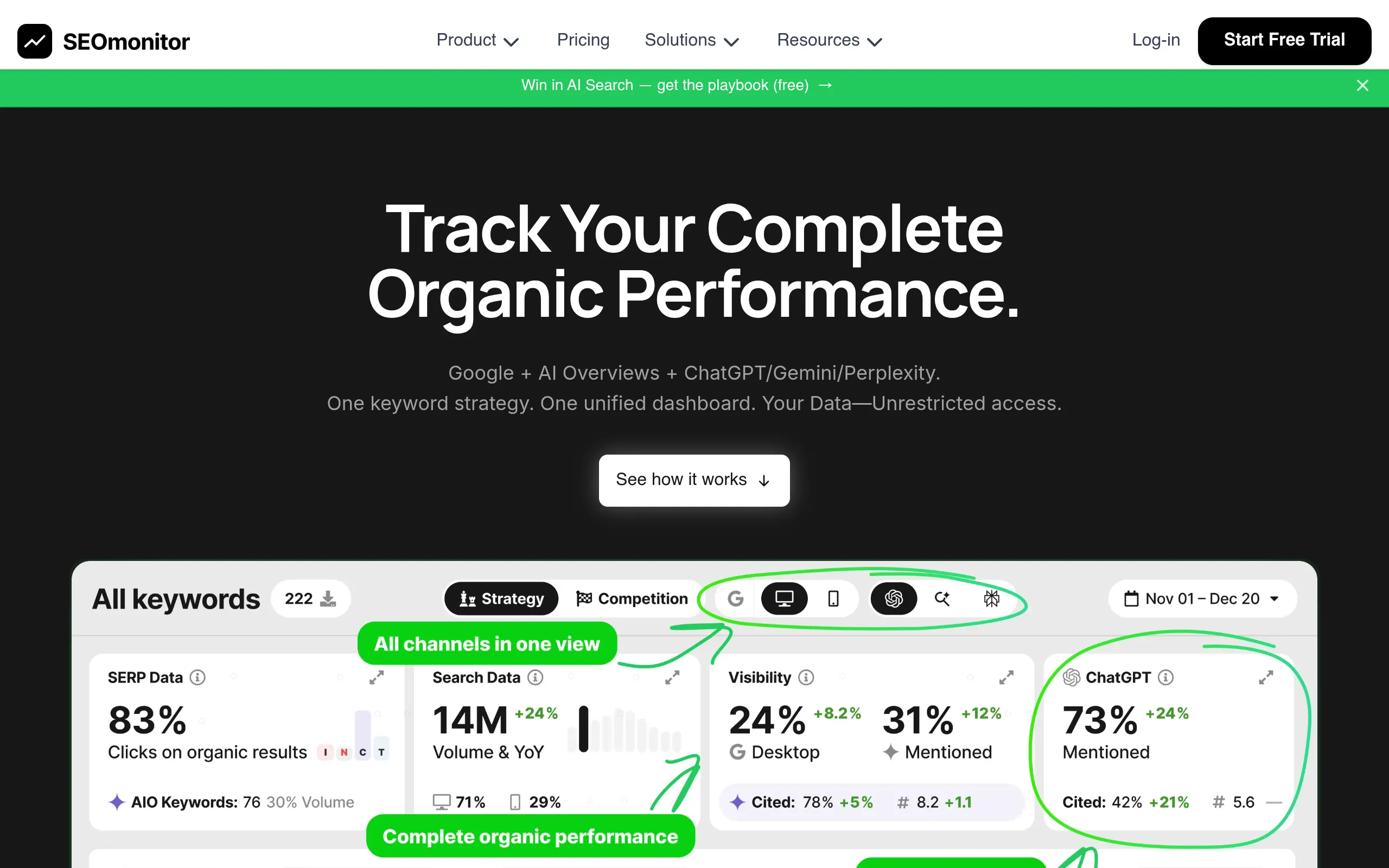
SEOmonitor is a reporting-friendly SEO platform that supports visibility monitoring and trend analysis. It fits teams whose leadership wants clean trend lines, not raw snapshots.
Its strength is historical context and reporting clarity, which makes monthly stakeholder updates far less painful. It’s less of a dedicated answer-engine monitor, so teams needing deep per-engine citation forensics will pair it with a specialist tool.
- Best for: Teams reporting visibility trends to leadership
- Pricing: Starter around $113 per month, Pro around $331, priced by keyword volume
- Standout feature: Clean historical trend reporting
- Ideal user: Agencies and in-house teams with reporting duties
9. OtterlyAI: Best Budget-Friendly Entry Point
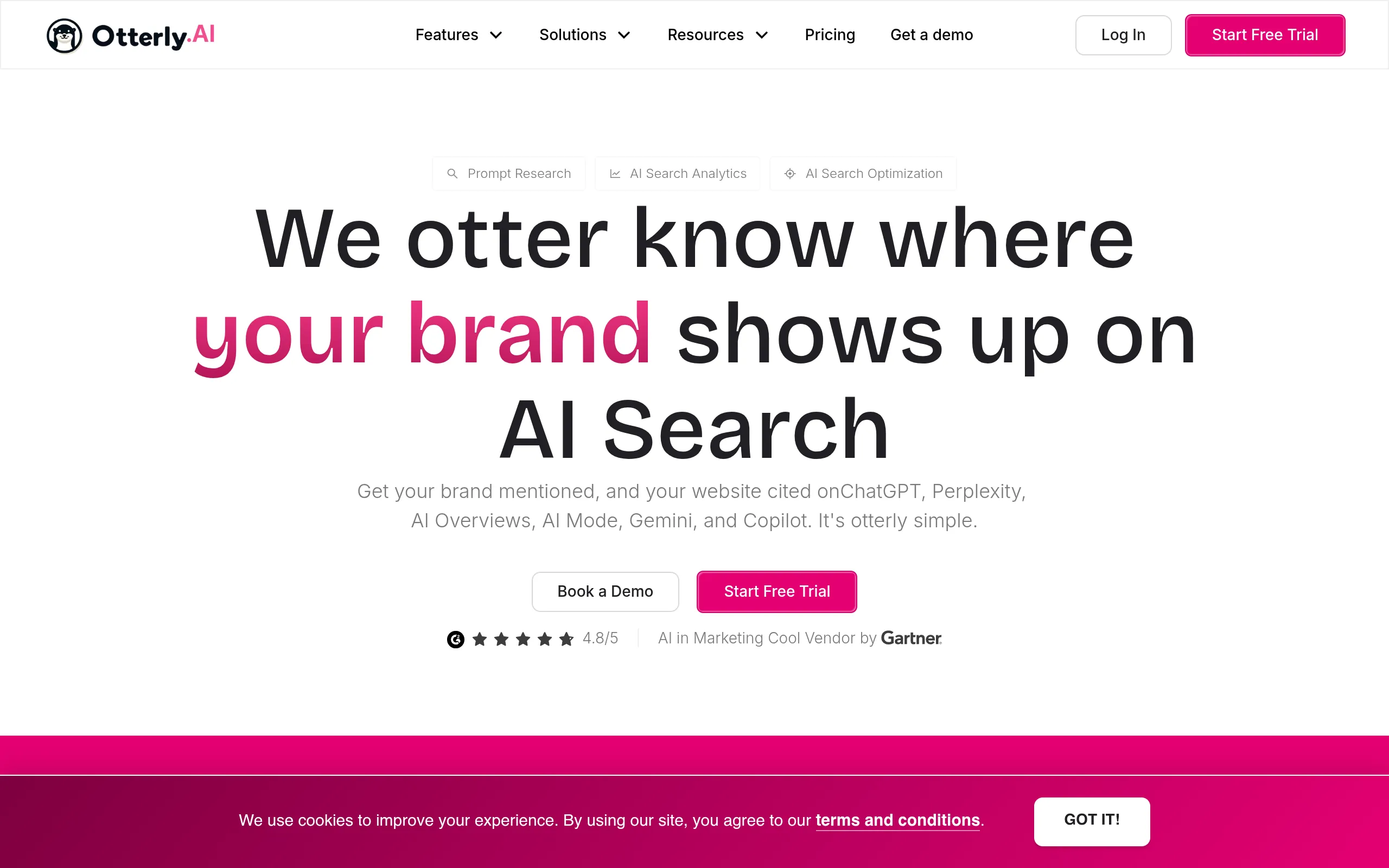
OtterlyAI is a lightweight AI visibility tracker focused on brand mentions, citations, and straightforward monitoring. It’s the natural starting point for teams that want to begin without an enterprise suite.
The value is a low-friction setup and a practical path to consistent monitoring. The candid caveat with any budget tool: coverage depth and alert sophistication trail the heavier platforms, so treat it as a strong first step rather than a forever home for a large program.
- Best for: Teams starting AI visibility monitoring on a budget
- Pricing: $29 Lite, $189 Standard, $489 Premium per month
- Standout feature: Fast setup for mention and citation tracking
- Ideal user: Startups and small teams testing the category
10. Profound: Best for Enterprise-Grade Multi-Engine Monitoring
Profound is an enterprise AI visibility platform built for large-scale prompt tracking, competitive benchmarking, and reporting across business units. It fits teams that need broad engine coverage, governance, and repeatable reporting at scale.
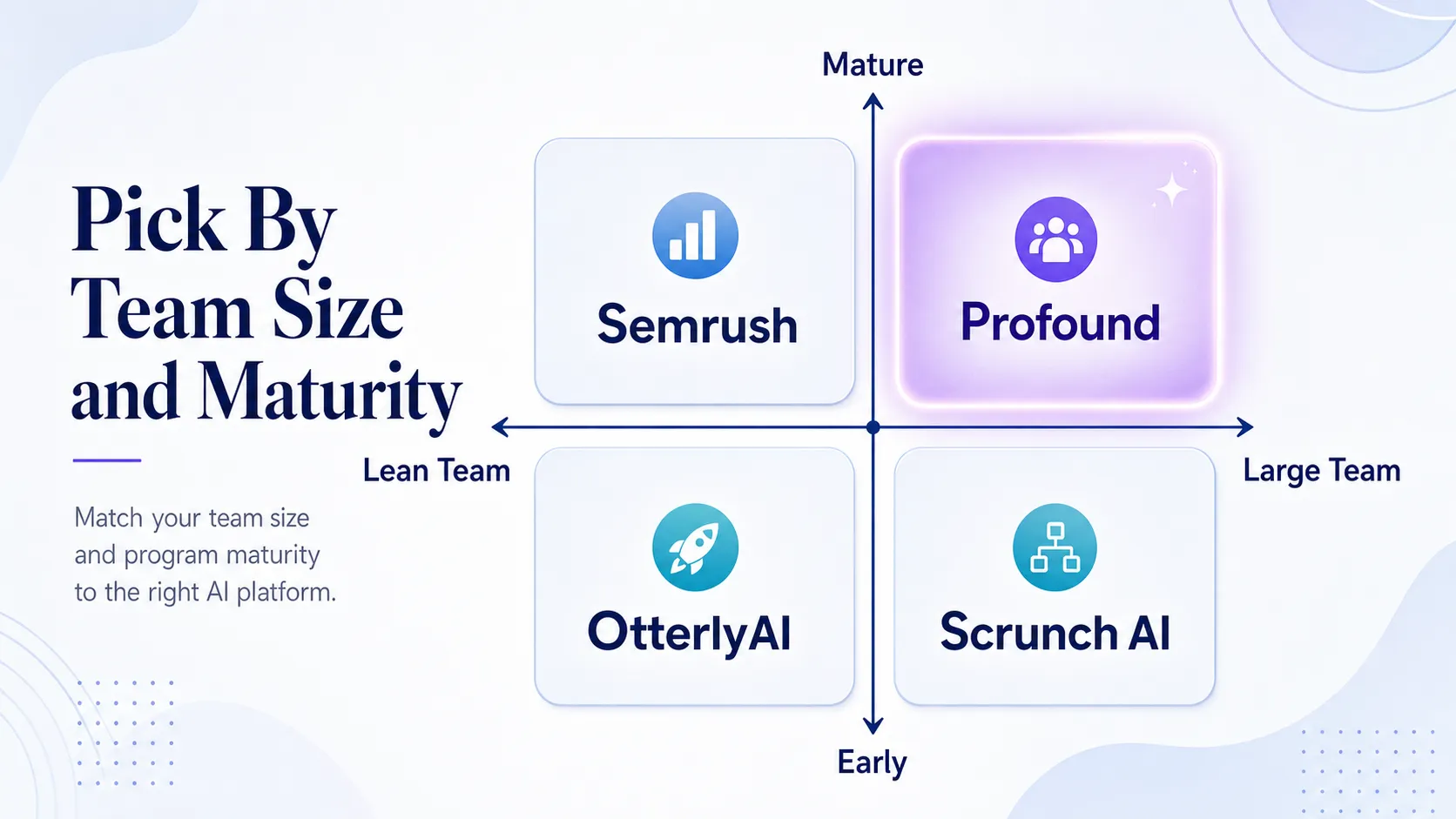
Its depth of analytics and enterprise workflows support serious multi-engine programs that smaller tools can’t. The tradeoff is straightforward: this is priced and built for scale, so a lean team will pay for breadth it may never use. Match the tool to your program size, not to its feature list.
- Best for: Enterprise teams running large multi-engine programs
- Pricing: $99 Starter, $399 Growth, Enterprise custom
- Standout feature: Deep analytics with enterprise governance
- Ideal user: Large brands with multiple units or markets
Comparison Table of the Top Tools
Use this table to shortlist without rereading the full rankings. Coverage and pricing shift quickly in this category, so labels stay simple. Note that “mentions” and “citations” aren’t interchangeable data types, so the citation column matters as much as coverage.
| Tool | Best For | Citation Tracking |
|---|---|---|
| BrandMentions | Alerts on accuracy changes | Strong |
| Semrush | SEO teams on one stack | Moderate |
| Ahrefs | Authority-led SEO teams | Moderate |
| Peec AI | Prompt-level control | Strong |
| Scrunch AI | Competitive analysis | Strong |
| Writesonic | Visibility plus action | Moderate |
| Nightwatch | Lean simple workflow | Limited |
| SEOmonitor | Historical reporting | Moderate |
| OtterlyAI | Budget entry point | Moderate |
| Profound | Enterprise scale | Strong |
How we picked: we scored each tool on the seven factors above, weighting engine coverage and citation tracking most heavily because they decide whether the data reflects reality. We didn’t run controlled head-to-head tests, so treat the labels as directional and verify current coverage against your own 10-engine list.
Best Tool by Use Case
The rankings translate into clear picks once you map them to your operating constraints: budget, reporting needs, stakeholder count, and workflow complexity.
- Best for startups: OtterlyAI for low friction, or BrandMentions when alerting on accuracy is the priority.
- Best for agencies: Peec AI or Semrush, because client reporting and competitor comparison carry the most weight.
- Best for enterprise: Profound, where governance, scale, and reporting depth matter more than price.
- Best budget option: OtterlyAI, with the caveat that coverage depth trails heavier platforms.
- Best for deep analytics: Profound for breadth, or Scrunch AI when you want actionability over raw scale.
- Best for SEO teams on a broader stack: Semrush or Ahrefs, because adoption friction is lowest.
What Good Multi-Engine Tracking Looks Like in Practice
Choosing a tool is the easy part. The reliable programs are boring and consistent, not constantly chasing every new model release. Here’s what disciplined tracking actually requires.
Pick one primary tool and define a fixed prompt set before you compare a single data point. Track both mentions and citations, but report them separately, because a mention without a citation tells you a very different story than an owned citation.
Run the same prompts on a consistent cadence so your trends are comparable across weeks. Watch for competitor displacement, not just your own absolute visibility, since a stable score can hide a rival climbing past you.
Use alerts for brand safety and sudden visibility losses, not as a vanity feed. And review historical trends monthly so short-term noise never distorts a real decision.
- Lock one primary tool and one fixed prompt set first
- Report mentions and citations as separate metrics
- Run identical prompts on a steady cadence
- Track competitor displacement alongside your own presence
- Reserve alerts for real risk, review trends monthly
If you want a deeper cadence model, our walkthrough on tracking brand mentions in large language models covers the operating rhythm engine by engine.
Choosing Your Stack and Starting the First Run
The question isn’t which AI engine wins. It’s which stack gives you reliable visibility across the engines that matter to your buyers. Consistency beats perfection here every time, because a mediocre tool run faithfully for six months teaches you more than a great tool run twice.
Pick one primary platform, lock your prompt set, and monitor the same 10 engines on a fixed cadence. The best teams treat AI visibility as a standing monitoring system, not a one-time audit.
Frequently Asked Questions
Which tool is best for tracking brand across 10 AI engines?
There’s no single best tool, because the right pick depends on your team size and priority. For fast alerts on brand accuracy, BrandMentions fits.
For enterprise scale and governance, Profound fits. For a budget start, OtterlyAI fits.
Match the tool to your program size rather than chasing the longest feature list.
What’s the difference between an AI mention and an AI citation?
A mention is your brand name appearing in an AI answer, while a citation is a source the engine actually references to build that answer. Citations matter more because they tell you whether your own content earned the answer, not just that your name floated through the text. Report them as separate metrics.
Can one platform track ChatGPT, Perplexity, Gemini, Copilot, and Google AI Mode?
Yes, several platforms cover those engines, but coverage depth varies more than marketing pages admit. A tool may list an engine while sampling it thinly.
Always verify actual coverage of your specific 10-engine list before you commit, and confirm it tracks Google AI surfaces separately, since Gemini and Google AI Overviews aren’t the same target.
How often should I check brand visibility across AI engines?
Run your fixed prompts on a consistent cadence, weekly for active programs and at least monthly for lighter ones. The exact frequency matters less than keeping it steady, because comparable trend lines depend on running the same questions at the same interval. Review the longer trend monthly so daily noise doesn’t drive decisions.
What’s the best budget tool for multi-engine AI brand tracking?
OtterlyAI is the strongest budget entry point for teams starting out, with low setup friction and both mention and citation tracking. The tradeoff is that coverage depth and alert sophistication trail the heavier platforms. Treat it as a solid first step, then move up once your program outgrows it.
Pick one primary tool, lock your prompt set, and start tracking your brand across the 10 engines that matter to your buyers. If you want to see where you stand before choosing, book a short strategy call and find out what AI actually says about your brand and your competitors.