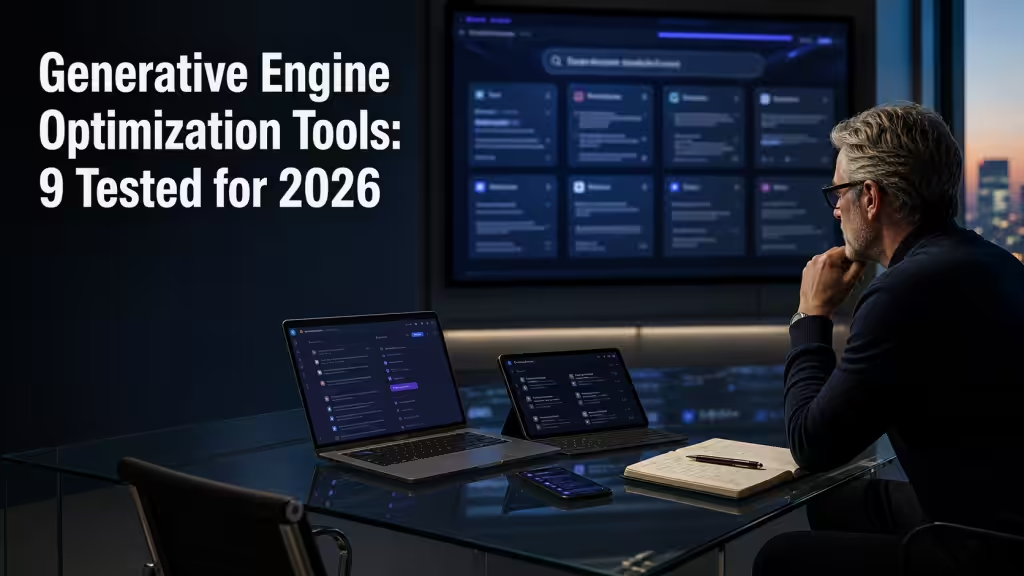

Most generative engine optimization tools sell the same promise: track your brand across ChatGPT, Perplexity, Gemini, and AI Overviews, then “improve visibility.” The promise is identical. The execution isn’t even close. After running side-by-side tests across nine platforms over the past four months, the gap between what these tools claim and what they actually deliver is wider than any vendor comparison page admits.
This guide is for marketing leaders evaluating which generative engine optimization tools are worth the budget in 2026, and which ones are recycled SEO dashboards with an AI label slapped on top. You’ll get the evaluation criteria, the pricing reality, the failure modes, and a clear answer for which tool fits which stage of team.
What You’ll Learn
- Which 9 GEO tools are worth considering across ChatGPT, Perplexity, Gemini, and Google AI Overviews
- The single capability that separates real GEO platforms from rebranded rank trackers
- Pricing reality, entry tiers start at $99/month, enterprise hits $5,000+/month
- Why prompt coverage matters more than model coverage (and how vendors hide this)
- The right tool for your stage: pre-Series A, growth-stage, and enterprise
- What to test in a 14-day pilot before signing any annual contract

What Generative Engine Optimization Tools Actually Do
A generative engine optimization tool tracks how AI systems. ChatGPT, Perplexity, Gemini, Claude, Google AI Overviews, describe, cite, and recommend your brand when users ask buying-stage questions. The good ones go further: they tell you why you’re invisible and which sources AI models pulled from instead of yours.
The category sits in a strange place. Half the tools in the space are observability platforms, they show you what’s happening across AI surfaces. The other half are workflow platforms, they help you fix it. A few try to do both, and most do neither well.
Here’s what a real GEO tool needs to handle:
- Prompt simulation at scale, running hundreds of unbranded buying queries against multiple models, multiple times, to capture variance
- Citation tracking, identifying which sources AI models pull from when answering category questions in your space
- Share of voice measurement, comparing how often you appear versus competitors across the same prompt set
- Sentiment and context analysis, not just “are you mentioned” but “how are you described”
- Diagnostic insight, explaining why visibility is low, not just reporting that it is
If a tool only does the first two, it’s a rank tracker with a new skin. The diagnostic and source-attribution layers are where the real money sits.
The Criteria Behind This Comparison
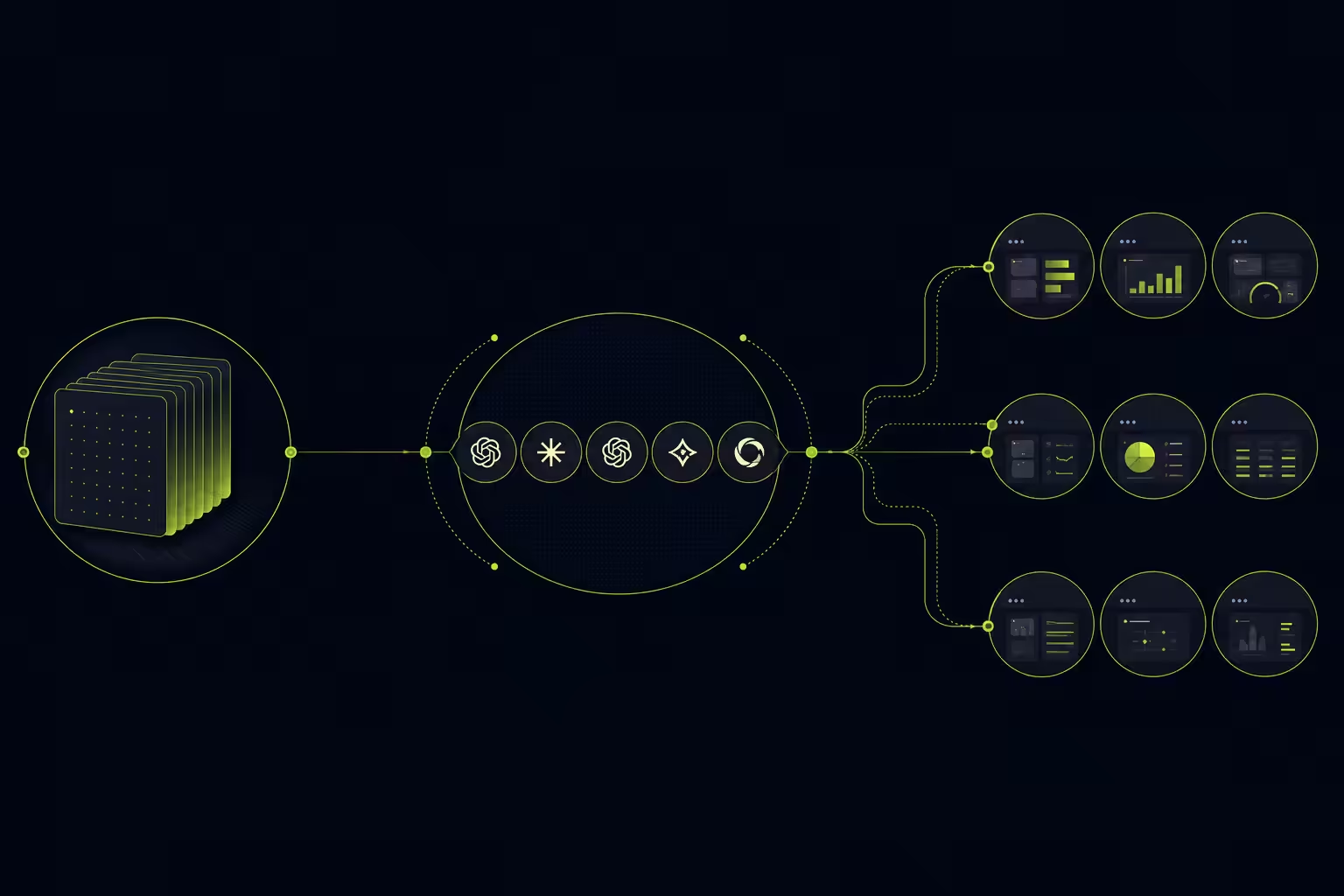
Most “best GEO tools” lists are built from feature pages and press releases. This one compares all nine platforms on the same five criteria:
- Prompt coverage, whether it runs unbranded buying-intent prompts at scale, not just branded checks
- Model coverage, whether it covers ChatGPT, Perplexity, Gemini, Claude and Google AI Overviews
- Trend tracking, whether it re-runs the same prompts on a schedule so you see trends, not snapshots
- Diagnostics, whether it can explain why a brand isn’t being cited and recommend a fix
- Exports, whether the data can leave the platform in a format your team can actually work with
Tools that look identical in demos can behave differently on real prompt sets, which is why these criteria matter more than any feature list.
The 9 Generative Engine Optimization Tools Worth Considering in 2026
These are ranked by how well they fit a defined use case, not by which paid the loudest. The verdict at the end of each section tells you who should buy it and who shouldn’t.
1. Profound. Best for Enterprise Observability
Profound built its name on capturing real front-end conversation data rather than simulating prompts. The platform tracks citations across ChatGPT, Perplexity, Gemini, and Google AI Overviews using a dataset its team claims is sourced from hundreds of millions of real user interactions.
What works: Citation source attribution is the strongest in the category. When ChatGPT recommends a competitor and not you, Profound shows the actual URLs the model pulled from. That’s diagnostic gold. The Query Fanout feature also expanded coverage in mid-2026, surfacing the sub-queries AI systems run behind a single user prompt.
What doesn’t: Pricing starts around $4,000+/month for serious tier coverage. The interface is dense, and onboarding takes 2-3 weeks before anyone on your team feels fluent. Smaller teams will drown.
Verdict: If you’re a Series C+ company with a dedicated AI visibility lead, Profound is probably your top pick. For everyone else, you’re paying for capability you can’t operationalize.
- Best for: Series C+ companies with a dedicated AI visibility lead
- Pricing: Not published (enterprise-scale)
- Standout strength: Strongest citation source attribution in the category — shows the actual URLs a model pulled from
2. AthenaHQ. Best for Attribution and ROI Reporting
AthenaHQ leans hard into one thing: connecting AI visibility to revenue. Where most tools stop at “you got mentioned 47 times this week,” AthenaHQ tries to attribute downstream pipeline impact through integration with HubSpot, Salesforce, and Segment.
What works: The attribution layer is genuinely useful for marketing leaders who need to defend GEO budget upward. Prompt coverage is solid, around 30+ models and surfaces tracked. Reporting templates make CMO updates fast.
What doesn’t: Citation source data is thinner than Profound’s. You’ll see that you got cited, less where the model pulled from. The pricing also escalates fast, entry tier around $1,200/month, growth tier around $3,000/month.
Verdict: Best for revenue-accountable marketing teams that need to prove GEO impact in dollars, not visibility metrics.
- Best for: Revenue-accountable marketing teams that need to prove GEO impact in dollars
- Pricing: ~$1,200/month (entry) to ~$3,000/month (growth)
- Standout strength: Attribution layer connecting AI visibility to pipeline via HubSpot, Salesforce, and Segment
3. Peec AI. Best for Lean Growth Teams
Peec AI is the tool we recommend most often to seed and Series A teams. It’s not the most powerful platform on this list, but it nails the 80/20 of what a small team actually uses.

What works: Clean interface. Fast setup, under an hour from signup to first useful dashboard. Tracks ChatGPT, Perplexity, Gemini, and Google AI Overviews with reasonable prompt depth. Pricing starts around $99/month, scales to $499/month for most growth-stage needs.
What doesn’t: Limited diagnostic depth. You’ll see your share of voice and competitor positioning, but root-cause analysis is shallow. Source attribution exists but isn’t as comprehensive as enterprise tools.
Verdict: If you’re under 50 employees and just want clear visibility data without a full-time analyst, Peec AI is hard to beat.
- Best for: Seed and Series A teams that need the 80/20 of GEO tracking without enterprise depth
- Pricing: $95 Starter, $245 Pro, $495 Advanced per month, Enterprise custom
- Standout strength: Clean interface with under-an-hour setup to first useful dashboard
4. Semrush AI Optimization. Best for Existing Semrush Customers
If your team already runs on Semrush, the AI Optimization toolkit is the easiest add. It’s not the deepest GEO tool on this list, but the integration with Semrush’s existing keyword, backlink, and content data is genuinely valuable for SEO-led teams making the GEO transition.
What works: Cross-references AI visibility with traditional SERP data, useful for spotting where your SEO presence isn’t translating into AI citations. Pricing is bundled into existing Semrush plans, with the AI add-on around $200-500/month additional.
What doesn’t: Citation source attribution is weaker than dedicated GEO platforms. Prompt coverage is narrower. The tool feels like an extension, not a primary platform.
Verdict: Strong choice if Semrush is already your home base. Probably not worth switching to Semrush just for this.
- Best for: Teams already running on Semrush making the GEO transition
- Pricing: ~$200-$500/month add-on to existing Semrush plans
- Standout strength: Cross-references AI visibility with traditional SERP data to spot where SEO presence isn’t translating to AI citations
5. Ahrefs Brand Radar. Best for Brand Mention Tracking at Scale

Ahrefs took its brand mention tracking infrastructure and pointed it at AI surfaces. Brand Radar is more about presence detection than full GEO workflow, but it’s strong at what it does.
What works: Tracks brand mentions across web sources AI models actively crawl, with sentiment analysis and competitor benchmarking. Strong for teams that want both traditional brand monitoring and AI citation tracking in one tool. Pricing starts around $129/month with the Ahrefs base plan.
What doesn’t: Less prompt-driven than dedicated GEO tools. Doesn’t simulate buying-intent queries the way Profound or AthenaHQ do, it monitors mentions rather than testing AI responses.
Verdict: Best for teams that want brand monitoring and AI visibility in one platform, with SEO data alongside.
- Best for: Teams that want brand monitoring and AI visibility in one platform alongside SEO data
- Pricing: Starts around $129/month (Ahrefs base plan)
- Standout strength: Tracks brand mentions across web sources AI models actively crawl, with sentiment and competitor benchmarking
6. Writesonic GEO Platform. Best for Content-First Teams
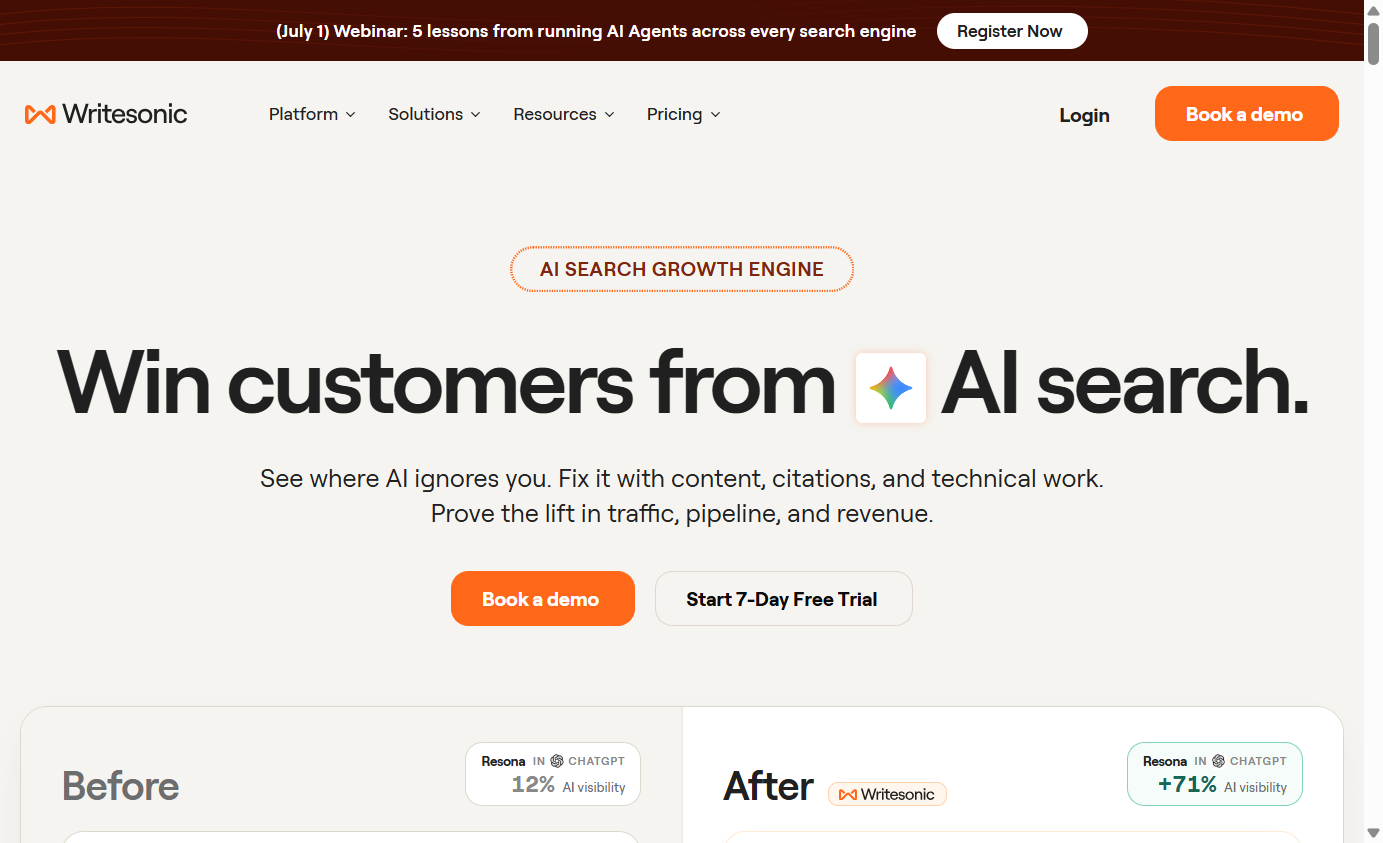
Writesonic’s GEO Platform combines visibility tracking with content optimization recommendations. The angle: tell you not just where you’re invisible, but what content gaps to fill.
What works: Content recommendations are actually usable, not generic. The platform identifies the specific topics, formats, and structural elements AI models prefer when citing in your category. Pricing starts around $299/month for growth-stage features.
What doesn’t: Citation source attribution is limited. The platform optimizes for being cited but tells you less about the citation graph itself. Some recommendations skew generic if your category is niche.
Verdict: Strong fit for content marketing teams who want a tool that tells them what to write next, not just what’s broken.
- Best for: Content marketing teams that want to know what to write next, not just what’s broken
- Pricing: Starts around $299/month (growth-stage features)
- Standout strength: Identifies the specific topics, formats, and structural elements AI models prefer when citing your category
7. Goodie AI. Best for Automated Optimization Workflows
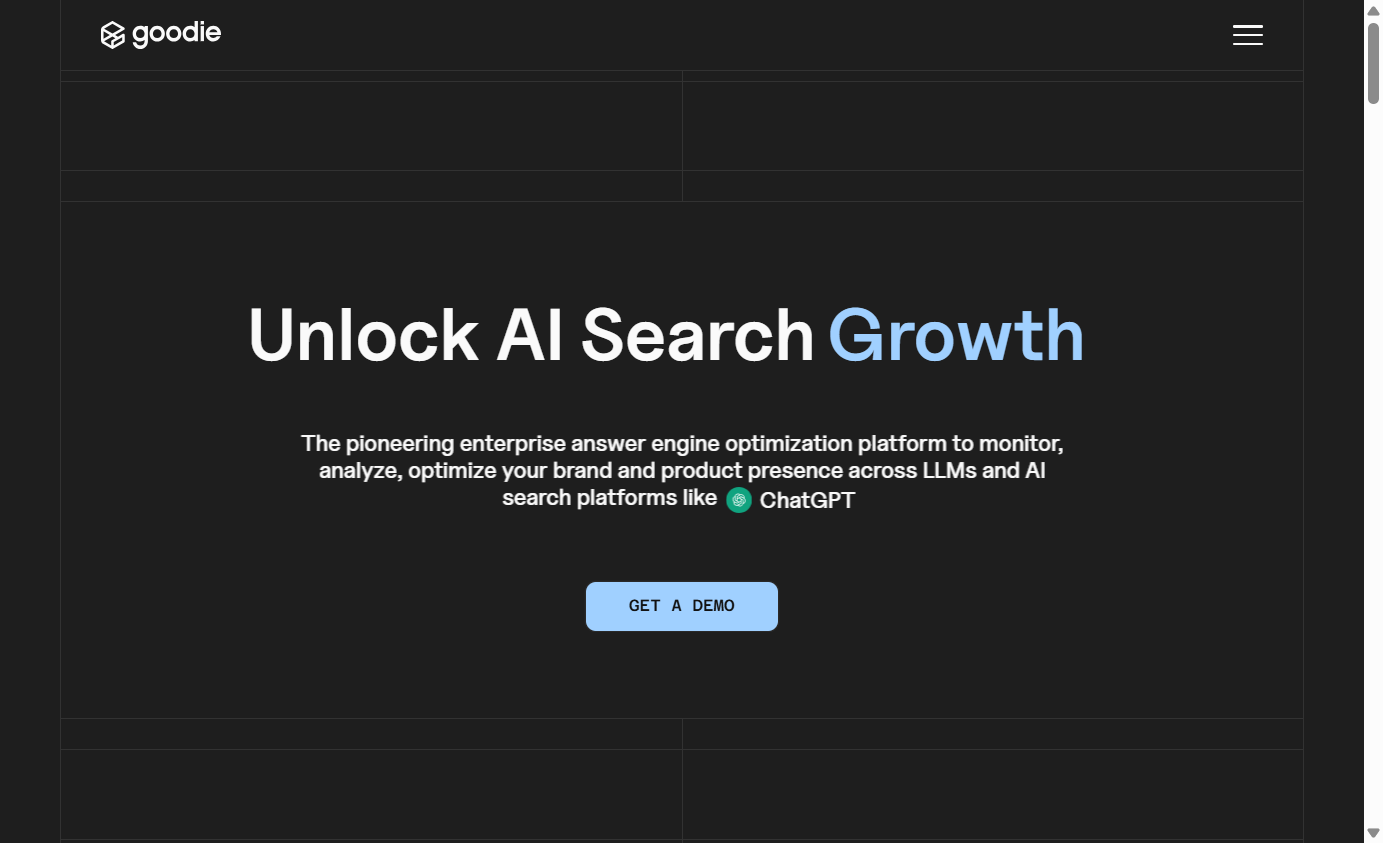
Goodie AI is the most workflow-heavy tool on this list. It doesn’t just track, it pushes recommended changes into your CMS, monitors the impact, and iterates.
What works: The automation layer saves real time for teams that want GEO without building a full content ops process around it. Integration with WordPress, Webflow, and HubSpot is solid.
What doesn’t: Some of the automated recommendations are aggressive, we saw schema changes pushed that needed manual review. Pricing is mid-market, around $499 to $1,500/month.
Verdict: Best for marketing teams without dedicated technical SEO support. Skip if you have a strong in-house SEO team that wants control over every change.
- Best for: Marketing teams without dedicated technical SEO support
- Pricing: ~$499-$1,500/month
- Standout strength: Pushes recommended changes directly into your CMS and iterates — automation, not just tracking
8. Rankscale AI. Best for Agencies Managing Multiple Brands
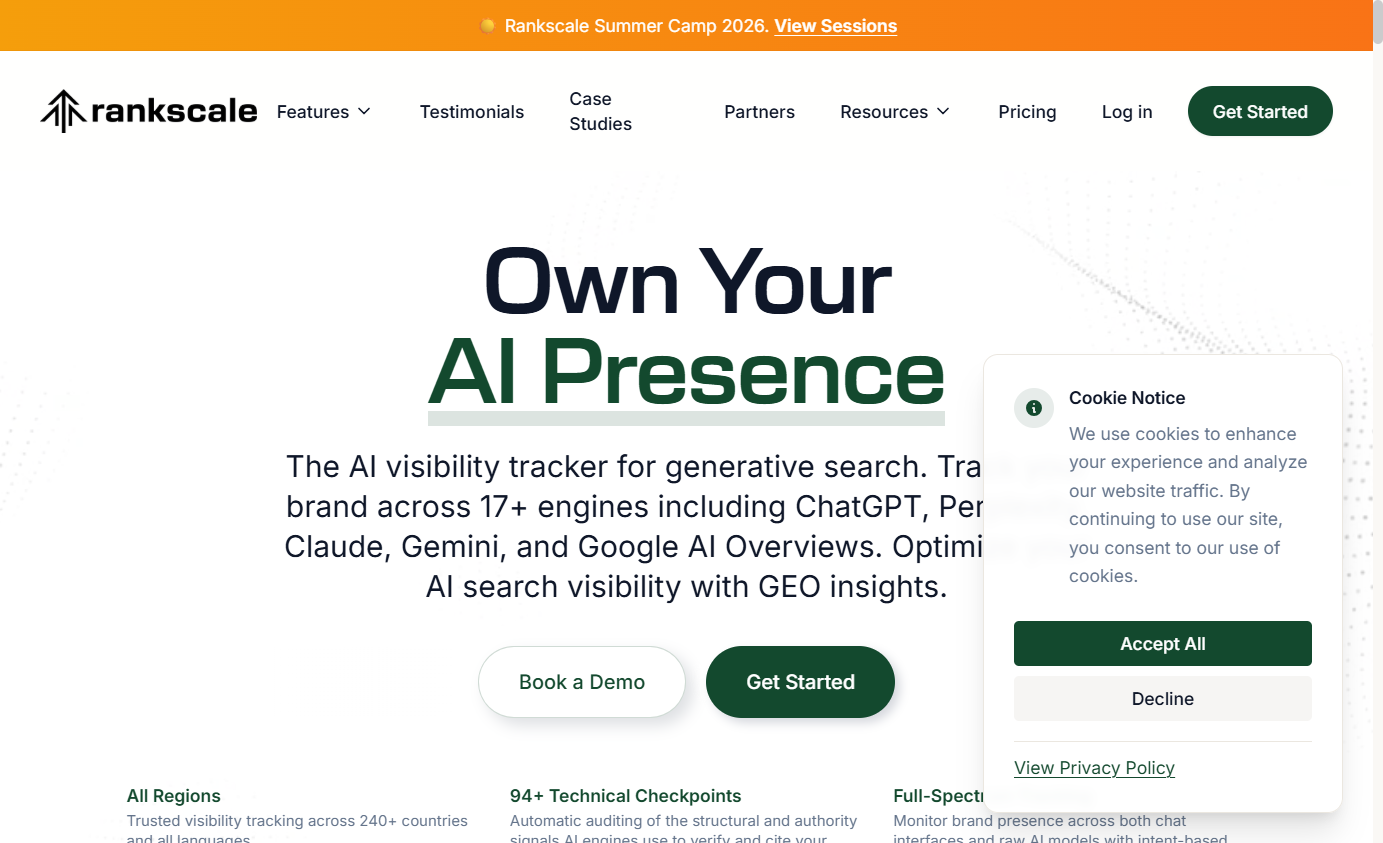
Rankscale AI was built for agencies. The multi-tenant architecture, white-label reporting, and per-client dashboards solve a real pain point for service businesses managing 10+ brands.
What works: Multi-brand management is genuinely leading. Reporting templates save hours per week per client. Pricing scales with seats and brands rather than locking you into enterprise tiers.
What doesn’t: Single-brand teams will pay for features they don’t need. Diagnostic depth is moderate, strong on tracking, lighter on root-cause.
Verdict: The clear winner for agencies and consultancies. Overkill for in-house teams.
- Best for: Agencies and consultancies managing multiple client brands
- Pricing: Scales with seats and brands rather than flat enterprise tiers
- Standout strength: Multi-tenant architecture with white-label reporting and per-client dashboards
9. Otterly AI. Best Free Starting Point
Otterly AI offers a free tier that gets you basic AI visibility tracking across major models. It’s not a long-term solution for serious teams, but it’s an honest entry point for understanding what GEO data looks like before committing budget.

What works: Free tier is actually useful, not crippled. Setup takes 15 minutes. Good for proving the concept internally before pitching budget.
What doesn’t: Limited prompt depth, no source attribution, basic competitor tracking. You’ll outgrow it within 3-6 months if you’re serious.
Verdict: Use it as a 30-day diagnostic tool before evaluating paid platforms. Don’t build long-term workflows on it.
- Best for: Teams proving the GEO concept internally before committing budget
- Pricing: Free tier available
- Standout strength: Genuinely usable free tier with 15-minute setup, not a crippled trial
The Capability That Separates Real GEO Tools From Rebranded Rank Trackers
If you take one thing from this guide: citation source attribution is the dividing line.
A rank tracker tells you “you weren’t mentioned.” A real GEO tool tells you “ChatGPT pulled from these five sources to answer that query, and three of them mentioned your competitor.” That second answer is what makes the data actionable. Without it, you’re staring at a dashboard that shows you’ve lost without telling you why.
When evaluating any GEO platform, ask one question in the demo: “For this prompt where my brand isn’t cited, can you show me the exact URLs the model pulled from?” If the answer is no, or if the rep pivots to talking about prompt volume, you’re looking at a tracker, not an optimization platform.
The reason this matters operationally: AI visibility isn’t won by publishing more content. It’s won by getting cited on the publications, forums, and source documents that AI models actually pull from. You can’t fix what you can’t see.
See where AI answers put your brand
Twenty minutes with a senior strategist: where the major engines point buyers in your category, who gets named instead of you, and a straight read on what a programme would change.
Book a strategy callHow to Pick the Right GEO Tool for Your Team
Forget feature matrices. The decision comes down to three variables.
| Team stage | Budget reality | What to prioritize | Tool profile that fits |
|---|---|---|---|
| Pre-Series A | Entry tiers from ~$99/month | Basic visibility tracking across ChatGPT, Perplexity, Gemini, and AI Overviews to confirm whether you appear at all | Lean observability platform that surfaces mentions and share of voice without enterprise overhead |
| Growth-stage | Mid-tier, between entry and enterprise | Prompt coverage (hundreds of unbranded buying queries run repeatedly) over headline model count, plus citation tracking | Tool that pairs observability with diagnostic insight into why visibility is low |
| Enterprise | $5,000+/month | Share of voice vs. competitors, sentiment and context analysis, and a workflow layer that helps you fix gaps | Platform doing both observability and workflow, not a rebranded rank tracker |
Your Stage
- Pre-Series A / under 50 employees: Peec AI, Otterly AI’s free tier, or Ahrefs Brand Radar if you already use Ahrefs. Don’t buy enterprise.
- Series A, B / scaling marketing team: AthenaHQ for revenue attribution, Writesonic for content workflow, or Goodie AI for automated optimization.
- Series C+ / dedicated AI visibility function: Profound for observability, AthenaHQ for attribution, or both.
- Agency / multi-brand: Rankscale AI, full stop.
Your Existing Stack
If you’re already deep in Semrush or Ahrefs, the integration savings of staying in-platform usually outweigh the marginal capability gain of switching to a dedicated GEO tool. Don’t tear down what works.
Your Use Case Maturity
Three questions cut through the noise:
- Do we know what prompts buyers in our category actually run? (If no, start with a tool that has prompt discovery built in.)
- Can we operationalize the data once we have it? (If no, choose a tool with workflow automation, not raw observability.)
- Are we trying to prove ROI or improve performance? (If proving ROI, attribution matters more than depth. If improving performance, depth wins.)
The right answer changes based on what you’re actually trying to achieve. Most teams skip these questions and end up paying enterprise pricing for capability they never use.
The 14-Day Pilot Test Before You Sign Anything
Every tool on this list will give you a trial or pilot. Use it. Here’s the pilot framework that catches the gap between demo and reality:
Days 1-3: Set up tracking with 30 unbranded prompts in your category. Run them across all available models. Note which prompts the tool surfaces vs. misses.
Days 4-7: For three queries where you’re invisible, ask the tool to identify the source URLs the AI pulled from. If it can’t, that’s a deal-breaker for serious GEO work.
Days 8-10: Export the data. Can your team actually use it in Notion, Sheets, or your existing reporting stack? Tools that lock data inside their UI are a long-term tax.
Days 11-14: Run the same prompts again. How much variance is there? If results swing wildly without explanation, the tool’s sampling methodology isn’t rigorous enough to make decisions on.
This is the same pilot framework we run for clients evaluating GEO platforms. The number of tools that fail the source-attribution test on day 4 is higher than any vendor would admit.
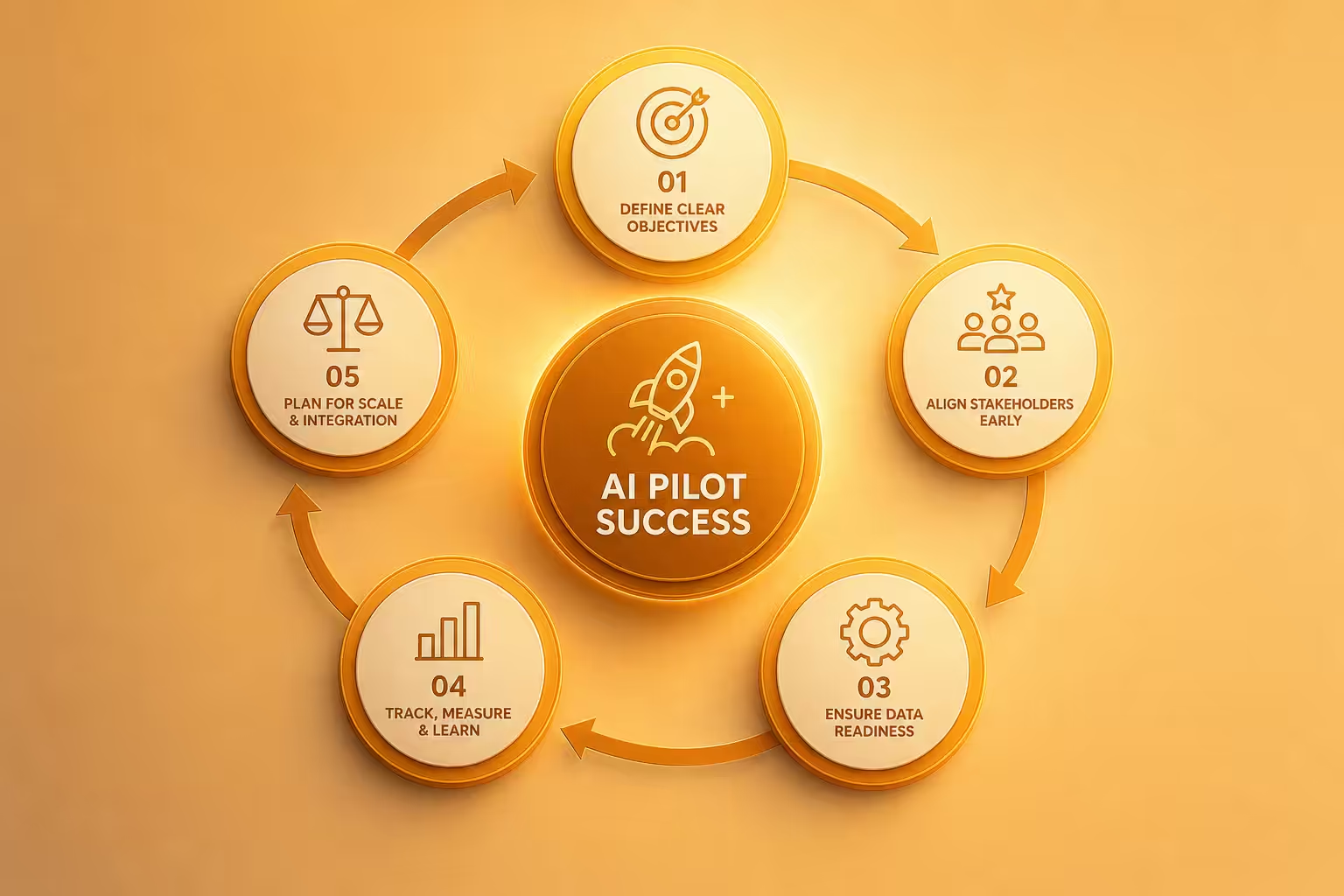
Tools sit one layer above strategy. Before picking a GEO platform, read the strategic framework behind generative engine optimization so you know which tool features actually matter for your team.
Related: generative engine optimization · tools for monitoring ChatGPT mentions · AI Overviews mentions tool
Frequently Asked Questions
What’s the difference between GEO tools and traditional SEO tools?
GEO tools track how AI systems describe and cite your brand in generated answers, while SEO tools track how your pages rank in traditional search results. The two are complementary, not interchangeable. SEO drives organic discovery; GEO drives AI recommendation. Most teams need both, but the workflows, data, and optimization tactics differ significantly.
Do I need a separate GEO tool if I already use Semrush or Ahrefs?
If your AI visibility needs are basic, tracking brand mentions and competitor positioning, the AI add-ons in Semrush and Ahrefs are usually enough. If you need deep citation source attribution, prompt simulation at scale, or revenue attribution, a dedicated GEO platform like Profound or AthenaHQ will outperform either tool’s AI module.
How much should I expect to spend on a GEO tool in 2026?
Entry-tier tools start around $99 to $300/month for small teams. Mid-market platforms run $500 to $1,500/month. Enterprise tools with full attribution, source tracking, and integration capability sit at $3,000 to $5,000+/month. Most growth-stage B2B teams land in the $500 to $1,500 range and get strong value there.
Which AI models do GEO tools typically cover?
Most major platforms track ChatGPT, Perplexity, Gemini, Claude, and Google AI Overviews. Some add Microsoft Copilot, You.com, and regional models. Coverage breadth matters less than coverage depth, a tool tracking five models with rigorous prompt sampling beats a tool tracking ten models with shallow sampling.
Can GEO tools tell me why my brand isn’t being cited?
The good ones can. Tools with strong citation source attribution will show you the URLs the AI model pulled from when answering a query, which usually reveals that competitors are mentioned on publications you’re absent from. Tools without this capability can only tell you that you weren’t cited, not why. That distinction matters more than any other feature.
How long before I see results from using a GEO tool?
The tool itself shows you data within hours. Actual visibility improvement takes longer, typically 3-6 months of consistent work on the underlying citation sources, content structure, and entity authority. AI models update their training data and retrieval indexes on different cycles, so improvement isn’t linear. Teams that quit at month two miss the compounding effect.
Are GEO tools worth it for B2B companies under 50 employees?
Yes, but not at enterprise pricing. A tool like Peec AI at $99 to $499/month gives small teams enough visibility data to make informed decisions about content and citation strategy. The mistake is jumping straight to Profound or AthenaHQ before you have the team to operationalize the data they produce.
Can I use GEO tools to track competitors?
Every tool on this list supports competitor tracking, that’s table stakes. The differentiator is depth: can the tool show you which competitors get cited on which sources, in which prompts, with what sentiment? Surface-level competitor tracking (“they got mentioned 47 times this week”) is far less useful than knowing which specific citation graphs your competitors dominate.
Pick the Tool That Matches Your Next Six Months
The biggest mistake teams make with generative engine optimization tools isn’t picking the wrong platform, it’s buying capability they’re not ready to use. A $4,000/month enterprise tool sitting unused is worse than a $99/month tool driving real decisions.
Start by answering one question honestly: what does your team realistically have the bandwidth to act on in the next quarter? If the answer is “we need to know if we’re invisible,” start with a basic tracker. If the answer is “we need to know why and fix it,” step up to a platform with source attribution. If the answer is “we need to prove this drives revenue,” buy for attribution capability above all else.
Run the 14-day pilot. Test the source attribution claim. Export the data. The tool that survives those three checks is the one that earns your annual contract.
Want a deeper look at the specific tactics that move AI citation rates? Read our practitioner guide on how to increase brand mentions in AI search results, it’s the playbook the tools on this list help you execute.