
A natural link building service is not a shortcut around SEO rules. It is a system for earning editorial links without gambling on spam. The service combines research, prospecting, outreach, and content support to earn links that publishers place because they judge your content useful, not because money or automation forced the link. That is the line that separates it from the link packages flooding inboxes.
You hire one when you need scale and quality control that your internal team cannot reach in time, and the rest of this guide shows you how the work actually runs and how to tell a legitimate provider from a risky one.
What Is a Natural Link Building Service?
A natural link building service earns links through editorially relevant outreach and content value rather than schemes, payments, or automation. A publisher links to you because the reference fits their content and helps their reader, and a service manages that process end to end: site audit, prospecting, outreach angles, content support, and placement verification.
The vocabulary trips people up, so settle it first.
A natural link is placed because a publisher decided your page deserved the reference. The same link gets called an earned link or an editorial link depending on who is talking, but they point at the same thing: the editor held control and chose to link.
Here is the misconception that costs buyers the most. Outreach is not automatically unnatural. If you pitch a journalist a data point, and that journalist judges it worth citing and links to your study, the link is natural even though you started the conversation. What makes a link unnatural is the absence of editorial judgment: paid placements with no disclosure, automated comment drops, irrelevant directory submissions, or links inserted by networks that exist only to pass authority.
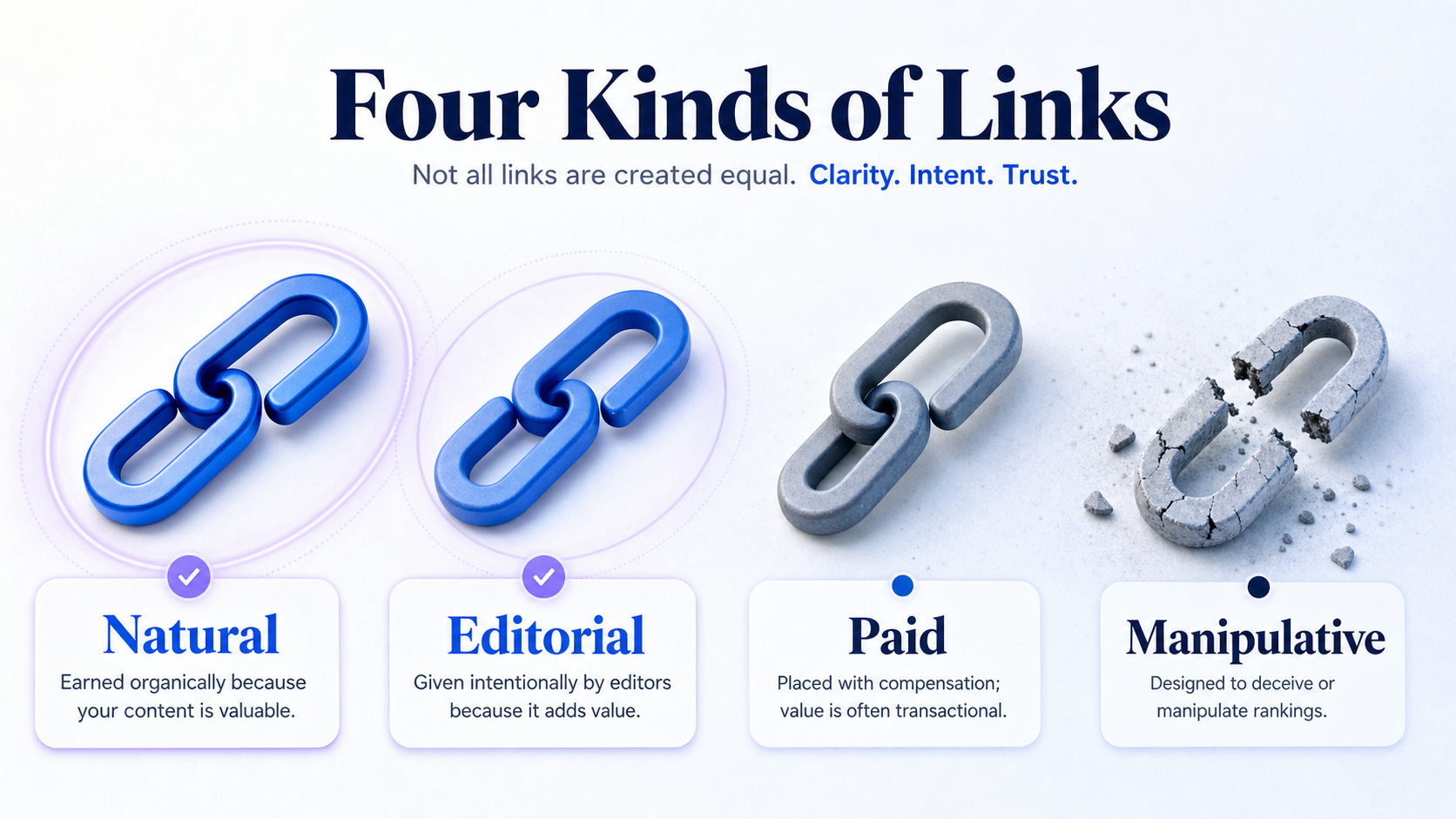
Three plain examples make natural links concrete. A reporter writing about email deliverability cites your benchmark study and links to it. A niche marketing blog references your guide as further reading inside a tutorial. An industry roundup quotes your founder and links the quote back to your site. In each case, the publisher chose the link.
| Link type | Who controls the link | Why it is placed |
|---|---|---|
| Natural | Publisher | Reference genuinely helps their reader |
| Editorial | Publisher or editor | Fits the content and meets editorial standards |
| Paid or manipulative | Buyer or a network | Money, automation, or a scheme forced the link |
If you want the foundation underneath all of this, our practitioner guide to link building covers how links pass authority in the first place.
Why Natural Link Building Matters
Relevant editorial links build authority that holds up over time, which is the whole point. Search engines and AI answer engines weigh links from topically relevant, trusted sources far more heavily than raw link counts, and those links keep their value because no algorithm update is hunting for them.
The business case is straightforward when you frame it honestly.
You get safer growth. Editorial links sit inside relevant content on real sites, so they carry almost none of the penalty risk that link schemes invite. You also build credibility, because a citation in a publication your buyers read does double duty: it helps rankings and it puts your brand in front of the right audience.
Links from relevant sites drive more than rankings. A reference in an industry newsletter or a respected blog sends referral traffic and brand discovery, which is why a good campaign treats placement relevance as a business decision, not just an SEO one.
Teams usually outsource this for one reason: scale and quality control, not because link building is impossible in-house. When you lack publisher relationships, outreach bandwidth, or the time to vet every site, a service supplies the machinery. The honest tradeoff is speed. Natural link building is slower than buying a bulk package, and it should be, because the durability comes from the same editorial scrutiny that makes it slow.
How Natural Link Building Works
A legitimate natural link building campaign runs through six repeatable stages, each with a quality gate before the next begins. The work moves from understanding your site to earning placements to reporting on what landed.
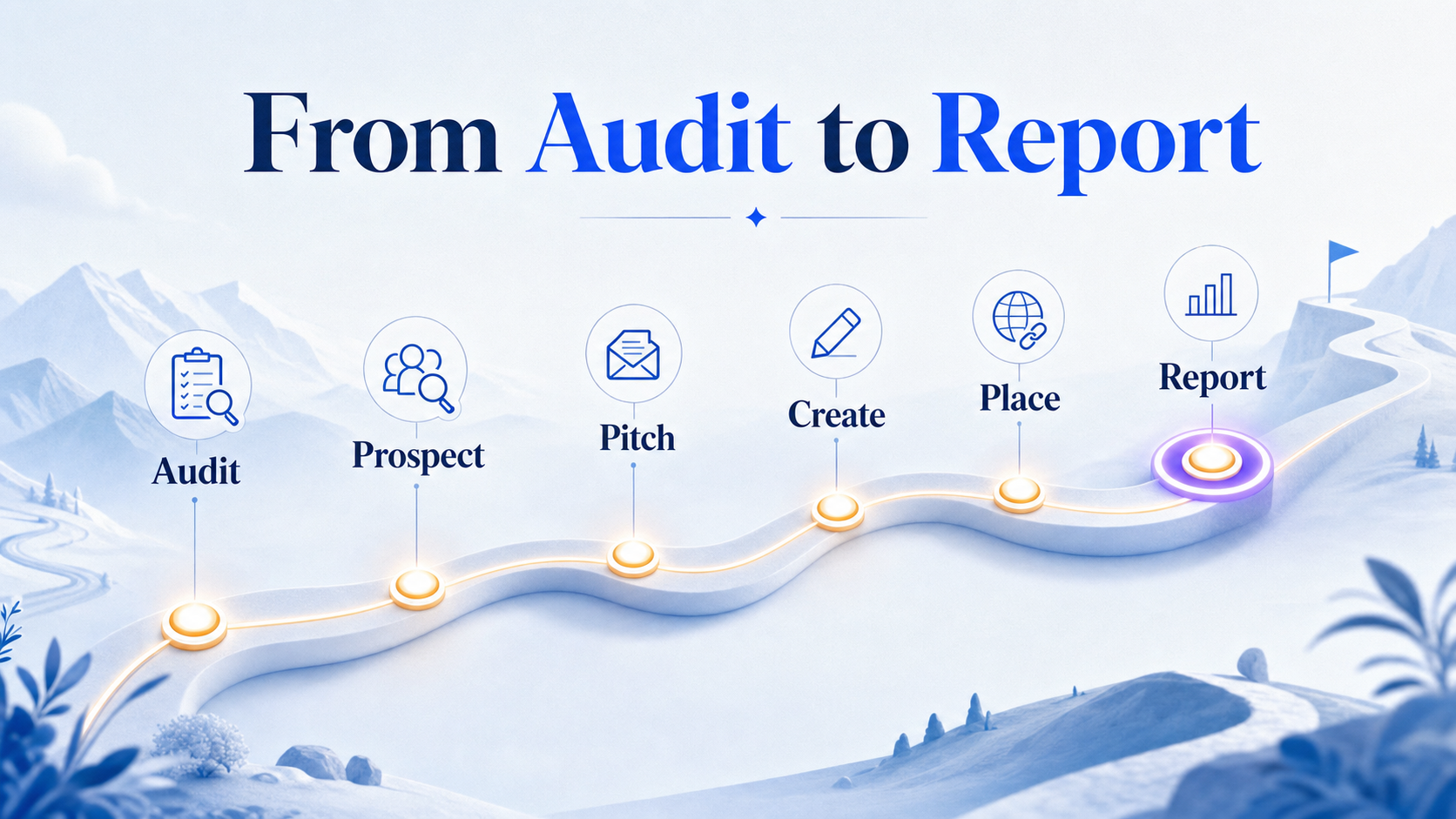
1. Audit the Foundation
The service reviews your site, your goals, your topic areas, and your existing backlink profile to find gaps and define what a relevant placement looks like for you.
2. Build a Prospect List
Targets are chosen on relevance, real traffic, editorial fit, and whether a placement opportunity genuinely exists, not on a domain metric alone.
3. Craft Outreach Angles
The pitch matches the publisher: a data point for a journalist, an expert quote for a roundup, or a resource worth referencing for a niche editor.
4. Create or Refine the Asset
The thing being pitched gets built or sharpened, whether that is a guide, a study, a tool, a quote, or a brand mention worth a link.
5. Secure and Verify Placement
Once a link goes live, someone checks the anchor text, confirms the link is contextual, and verifies it is indexable.
6. Report and Remediate
You see live links, lost links, placement quality, and the replacement process for anything that drops.
Quality control is where the real difference lives. A serious provider screens every prospect manually for topical fit, traffic, and indexability before a single email goes out, and watches anchor balance so the profile never tilts toward exact-match text. Pitching publications that AI engines and search crawlers never read is wasted effort, so the source list gets checked first. For the broader mechanics across tactics, our 2026 link building walkthrough goes deeper on each stage.
Key Components and Types of Natural Link Building
Most services run several methods at once, and strong campaigns usually mix two or three rather than leaning on one tactic. Each method earns its “natural” label only under specific conditions, and each carries a way to go wrong.
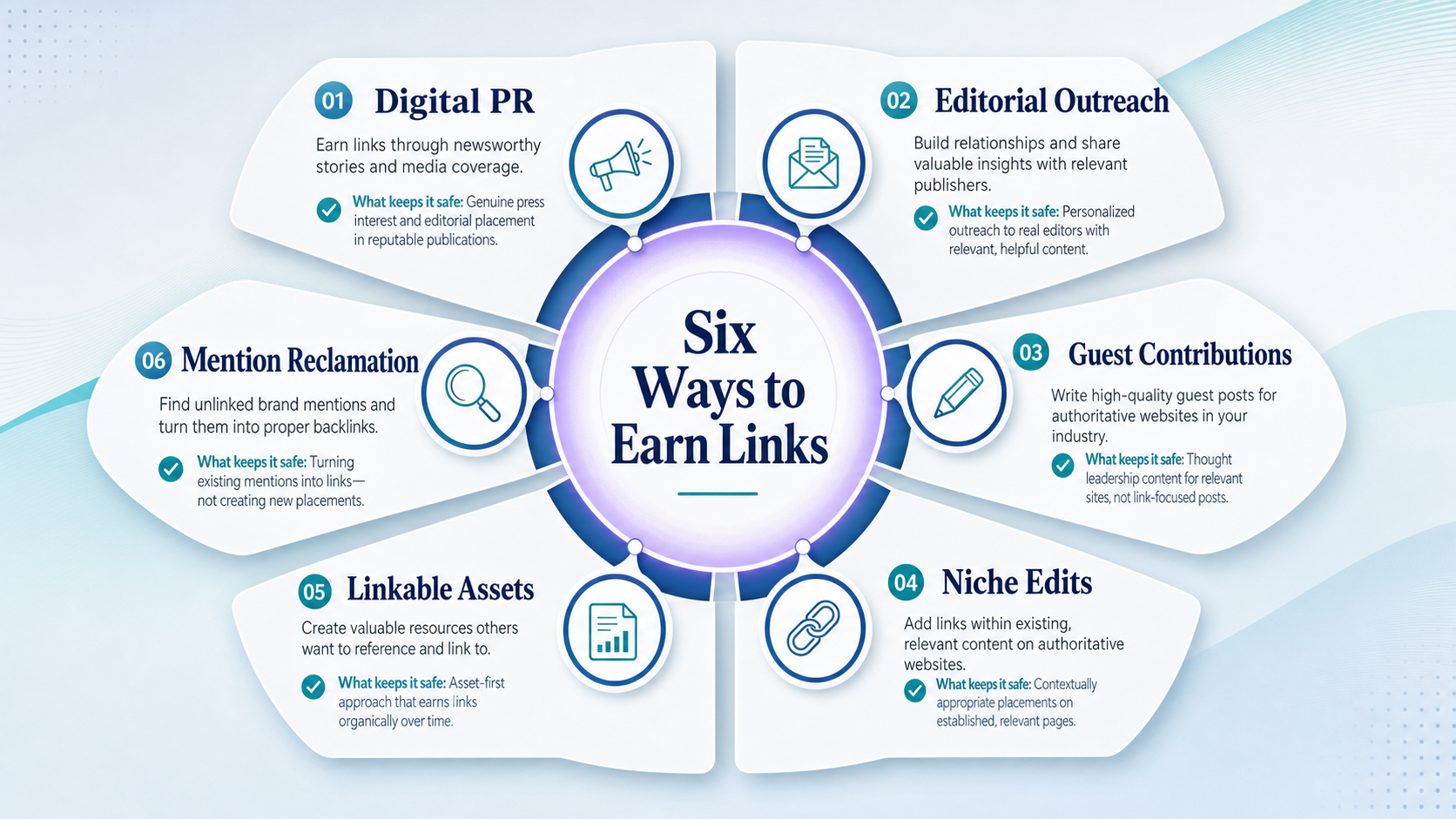
Digital PR
Digital PR earns editorial coverage through newsworthy, data-led, or story-led outreach to journalists and editors. It is natural when the angle is genuinely interesting to the publication’s readers. It turns risky when “PR” is a cover for paying for placements that carry no real news value. Our roundup of digital PR agencies worth considering shows what credible providers look like.
Editorial outreach
Editorial outreach pitches your content to resource pages, expert quote requests, and relevant list inclusions. It works when the pitch genuinely fits the target page and improves it. It fails when the same template hits hundreds of unrelated sites hoping a few say yes.
Ethical guest contributions
A real guest contribution means content that passes through editorial review on a site whose audience overlaps yours. That is different from thin, brokered guest posts placed on a network of sites that accept anything for a fee. The editorial review is the dividing line.
Contextual niche edits
A niche edit adds a link into existing content. It counts as natural only when the surrounding content is relevant and the edit actually improves the page for a reader. If the page has nothing to do with your topic, the edit is manipulation. Our breakdown of guest posting versus niche edits covers when each tactic fits.
Linkable assets
Linkable assets are original resources that attract citations on their own: studies, tools, calculators, templates, and reference guides. They are the most durable source of natural links because publishers keep citing them long after the outreach stops.
Unlinked mention reclamation
Reclamation turns existing brand mentions into links. When a site already names your brand without linking, a polite request often converts the mention to a link, and it is natural because the mention was earned first. See our guide to unlinked mention reclamation services for how this works at scale.
| Method | Best use case | What makes it natural | Caution flag |
|---|---|---|---|
| Digital PR | Brands with data or a story | Genuine news value | Paid placements dressed as news |
| Editorial outreach | Sites with relevant resource pages | Pitch fits the page | Mass templated emails |
| Guest contributions | Audience-overlapping publications | Real editorial review | Brokered network posts |
| Niche edits | Topically relevant existing pages | Edit improves the page | Irrelevant page placement |
| Linkable assets | Most categories | Earns citations unprompted | None when truly original |
| Mention reclamation | Brands already getting mentioned | Mention earned first | Forcing links onto critical coverage |
Common Mistakes and Misconceptions
The biggest buyer errors come from misreading what “natural” means, and the biggest losses come from trusting polish over process. Sort the myths from reality before you sign anything.
| Myth | Reality |
|---|---|
| All outreach is unnatural | Outreach is natural when the publisher reviews the link and the placement is relevant |
| Natural means passive and accidental | Natural means editorially chosen, and earning it takes active, deliberate work |
| High DA or DR proves a link is good | Authority metrics are gameable; relevance, real traffic, and editorial fit matter more |
| Cheap bulk packages are a safe shortcut | Bulk placements share the patterns search engines flag, so they carry real risk |
Watch for the red flags that signal a service is selling schemes behind clean branding. Private blog networks, irrelevant placements, over-optimized exact-match anchors, and sitewide footer links all point at manipulation. So does vague or missing reporting.
A service can look polished and still be unsafe. If a provider hides its source sites, will not explain how placements get approved, or dodges questions about content standards, treat the polish as a warning, not a reassurance. Templated placements, identical anchor clusters, and undisclosed site networks are the patterns that quietly sink a backlink profile. If you are weighing insertion-based tactics specifically, our guide to niche edit link insertion services covers what to scrutinize.
See where AI answers put your brand
Twenty minutes with a senior strategist: where the major engines point buyers in your category, who gets named instead of you, and a straight read on what a programme would change.
Book a strategy callHow to Choose a Natural Link Building Service
The fastest way to vet a provider is to ask process questions and listen for whether they can answer in plain language. A legitimate service explains its quality control without hedging and shows you examples of approved placements. A risky one talks about volume and rankings instead.
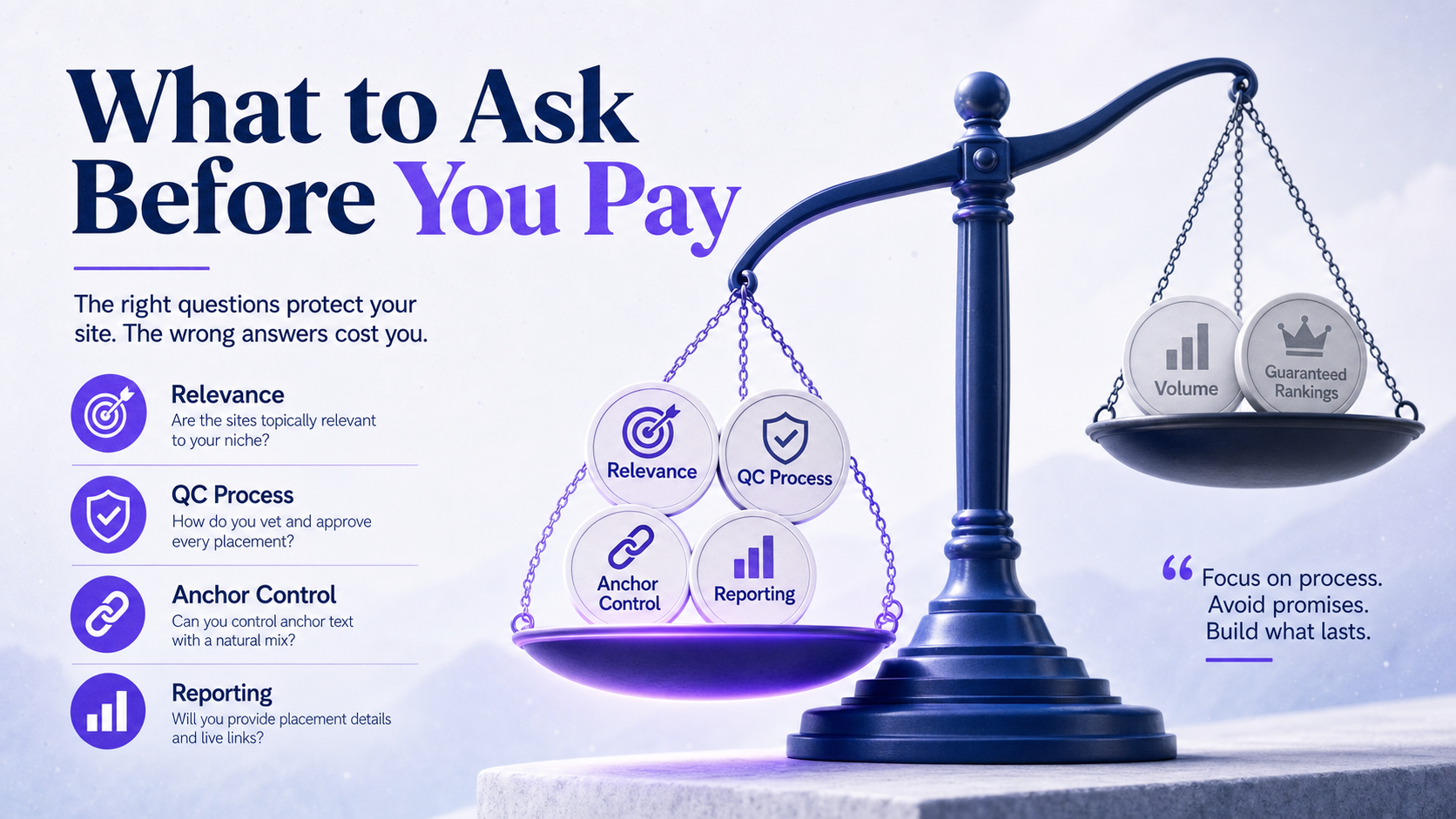
Run every provider through these questions before you pay.
- How do you qualify prospects before outreach begins?
- What counts as a relevant placement, and who approves it?
- How do you select anchor text, and how often is it branded versus exact-match?
- What does reporting include: live URLs, source quality notes, traffic estimates, and a replacement policy?
- Do you use manual outreach, content review, and publisher vetting?
- How do you avoid PBNs, irrelevant sites, and brokered placements?
Match the delivery model to your need. In-house teams give you the most control but scale slowly. Agencies trade some control for speed and existing publisher relationships. Freelancers can be cost-effective for a narrow scope but rarely scale. If you lean toward hiring an individual, our guide to hiring a link building consultant covers what to expect.
The practical rule holds across all three models: a good provider can explain its quality control in plain language and show you placements it already approved. If it cannot, the model does not matter.
What Earns Your Trust Before You Buy
A natural link building service should earn relevant, editorial links through a controlled, white-hat process you can inspect. Sustainable link building trades speed for durability and lower risk, and that tradeoff is the feature, not the flaw. Run one simple test before you commit: if the provider cannot explain relevance, quality control, anchor management, and reporting in plain language, do not buy. Transparent process, relevant placements, and defensible reporting are the standard, and anything short of all three is a pass.
Frequently Asked Questions
What is the difference between a natural link and an editorial link?
There is no practical difference; both terms describe a link a publisher placed by choice because the reference helped their content. “Natural” emphasizes that no scheme or payment forced the link, while “editorial” emphasizes that an editor approved it. People use them interchangeably, and a good service earns links that qualify as both.
Are guest posts considered natural link building?
Guest posts are natural only when the content passes real editorial review on a site whose audience overlaps yours. A bylined article that an editor accepts because it genuinely serves their readers earns a natural link. A thin post placed on a network of sites that accept anything for a fee does not, no matter how the service labels it.
How long does a natural link building service take to work?
Most campaigns show meaningful authority gains in 3 to 6 months, with compounding effects after that. Outreach, editorial review, and publication cycles all take time, and a provider promising instant results is usually selling bulk placements instead. The slower pace is what keeps the links durable.
Is a natural link building service safe for SEO?
A legitimate natural link building service is safe because it earns relevant, editorially placed links rather than links from schemes search engines penalize. The risk lives in the execution, not the model. Verify the provider screens sites for relevance and traffic, controls anchor text, and reports transparently, and the safety follows from that process.
How much does a natural link building service cost?
Pricing varies widely by method, placement quality, and provider model, so the honest answer depends on what you are buying. Ask for per-placement pricing tied to relevance and traffic criteria rather than a flat bulk rate, because a low price often signals the kind of placements that carry the most risk.
Use these questions as your checklist to vet any natural link building service before you pay for a campaign. If a provider cannot walk you through relevance, quality control, anchor management, and reporting in plain language, keep looking until one can.